The second major hunting event of the year began for me on December 19, 2025…
The second major hunting event of the year began for me on December 19, 2025 — the “Christmas hunting season”.
In summer, around July-August, I get two weeks of vacation, and now, in December, during the Christmas holidays, I likewise get two consecutive weeks to indulge my passion for bowhunting.
In the week leading up to this period, every day I had to step out of the house, I’d carry some package, crate, bag, tool, or other item to the car that I might need during the hunt.
So by the dawn of December 19, only the last items remained — things used for everyday purposes too: laptop, USB charging station, toiletries kit, slippers, and of course a few treats characteristic (for me) of the Christmas season only, such as fattened goose liver in its own fat, or some handmade bejgli.
So by Friday morning, December 19, every dent of the car was packed full, and it was only waiting for the end of the workday so I could set off toward the hunting lodge I’d rented for two weeks.
It would be a serious task just to list everything that got crammed into the car — as if I were setting off on a long, solitary expedition to the North Pole.
Still, let me try to summarize the bigger packages:
– Of course, the Pelikan Air 1745 bowcase with the bow, arrows, quivers, release, and small accessories
– Archery accessory bag (nocks, inserts, fletching, glues, fletching jig, etc.).
– A small, cute Pelikan pistol case for the range finder, the precision scale, the diamond sharpener.
– A rolling Osprey Sojourn 60 travel bag full of clothes (but only up to the mid layer).
– A medium-sized Stihl case with accessories for the two chainsaws (chains, files, batteries, charger, tools…).
– A Stihl MS 500ii with a 63cm bar, and an MSA300 with a 40cm bar
– Eder Powerwinch 500, a Honda-engine anchor winch.
– A separate gear box for the winch accessories (connecting chains, pulleys, shackles, redirect pulleys, carabiners, etc., and inside the gear box a smaller gear bag functions as a rope sack, protecting the 60m 8mm dyneema winch rope and the pulley system made of 2 Petzl Spin L2 double pulleys).
Of course, fuel and chain and engine oil for both combustion-engine tools.
– Manfrotto Pro Light Cineloader Large gear bag with a ready-assembled gimbal video kit.
– Manfrotto Pro Light Cineloader Small photo bag for the feeder light, batteries, and phone gimbal.
– Telescopic light-mount pole (Rode mic pole).
– A large, multi-compartment bag for all sorts of hunting gear (scent products, battery chargers, game calls — wild boar — and other lure calls, etc.).
– A laptop bag for the laptop, its charger, and the mouse.
– Sitka Fanatic bibs and jacket, Sitka Incinerator bibs and jacket, a brutally thick Rascher coverall, and equally thick Hubertus stand trousers.
– And of course, my flute couldn’t stay home either.
On foggy, damp evenings, next to a fire glowing in the fireplace and radiating the gentle warmth of burning logs, there’s nothing better (let’s be precise: there are few things better) than playing sonatas (Bach’s C major BWV 1033, the G minor sonata BWV 1020, E-flat major BWV 1031, etc.), or wonderful melodies (Pachelbel’s Canon), beautifully, just for my own pleasure.
When the week finally came to an end, the weight of the world’s atlas fell from my shoulders, and I put the pedal to the metal, arriving at the accommodation, the hunting lodge, at 7 p.m. (19:00), where — as agreed — a few crates of dry firewood were waiting to light the fireplace.
On the morning of December 20, I still went out to the feeder and prepared the stand for the night hunt.
At 3:30 p.m. I already went out to the stand, since it starts getting dark around 4:00 p.m.
I was prepared for a misty, drizzly, damp, cool night.
Anyone who spends even ten minutes outside in air saturated with moisture will find their clothes quickly turning damp and wet. Because of this, I can’t just hang the spare clothing next to me, because by the time I’d need it, it would have gotten evenly, thoroughly soaked.
This is where the SeaToSummit DryBag serves me well. It’s a bit more of a hassle and “noisier” to get dressed out of it if needed, but I can put on dry clothes.
The completely unpredictable game movement of previous days made the prospects for the night’s outing somewhat uncertain, but honestly it doesn’t matter to me whether game comes or not — I simply become part of the forest, and in quiet solitude contemplate the affairs of the world.
From time to time I switched on the heating of the stand cushion, thanks to which the multi-layer passive insulation wasn’t left as my only “weapon” against the night cold.
For such a damp, misty, cool night I had to put on a serious amount of clothing, which was nearly bordering on limiting my mobility.
The conditions of the night were no problem, but unfortunately the expected game movement didn’t materialize tonight.
Aside from the unfortunate, sickly doe that had taken up residence near the feeder — in poor health, with large bald patches — nothing came to the feeder.
As for her, I decided: it’s not for me to decide her fate.
Life is a precious treasure, and there’s only one of it.
Let nature have the honor of deciding this poor little doe’s fate!
In the morning, shortly before seven o’clock, the Falcam Maglink magnetic buckle quietly received its magnetic pair, tied to the 2.8mm dyneema haul-up cord (less than 1% stretch), and the bow began its dignified descent from eight meters up.
“When the battle is over, even the noblest sword loses its worth,
and soon finds itself hanging idle”
December 22, 2025.
According to the weather forecast, the night will be cloudy, overcast, but no longer foggy or misty.
Because of this, the morning’s events unfolded according to the usual schedule.
Since there had been problems with the feed supply in the recent period, I decided not to let this task out of my hands either.
A decent fellow who lives not far from here and has been helping me for years had, at times, been “careless”, and at other times had loaded this year’s, undried, high-moisture-content corn into the hopper.
Well, all sorts of cob pieces and twigs naturally caused obstructions for the dispenser, and the high-moisture corn settled and stuck together inside the hopper around the outlet opening, so the spreader head wasn’t able to distribute the kernels evenly.
Since this decent fellow hadn’t dealt with such a large hopper and such a precise spreader head before, I don’t blame him.
He’s just not used to it.
Of course I was annoyed, this and that…
But instead I’ll take the task of filling the hopper into my own hands.
The corn coming out of the grain dryer, with 12-15% moisture content, is dry enough that it absorbs the small amount of condensation forming on the inner wall of the hopper without starting to mold.
What’s more, with each dispensing the grain level in the hopper drops by 3-4cm, so the continuously trickling kernels keep the inside of the hopper nicely clean in a kind of self-cleaning way.
So, after all this, winch down, refill, winch up.
It took roughly 10 minutes to fill the hopper to the brim.
After that came preparing the stand for the night.
Backpack, stand side-bag, charged battery for the seat heating.
The usual preparations.
I set off from the lodge at 3:30 p.m., already dressed in the many layers of clothing. (From spring through autumn I don’t usually dress in advance, because during the approach to the stand quite a few bloodthirsty parasites can climb onto my clothes from the tall undergrowth, and during the long sit they have time to find the most comfortable way to tap my precious blood.)
In winter, other considerations apply.
Mostly, that during the change of clothes, on one hand I shouldn’t parade around — even if only briefly — in nothing but my underwear atop the tree, and on the other hand, putting on a serious amount of clothing on a severely limited half a square meter shouldn’t make me overheat.
Beforehand, the MyHunt app forecast a wind from the northwest, which isn’t ideal, because the air current moving from my direction only just barely misses the feeder, but since everything else seemed normal, I committed myself to the whole night.
Nothing happened until midnight. Shortly after midnight I hear quiet crunching from the direction of the feeder.
Either a roe deer, or it could be that cunning survivor, the badger.
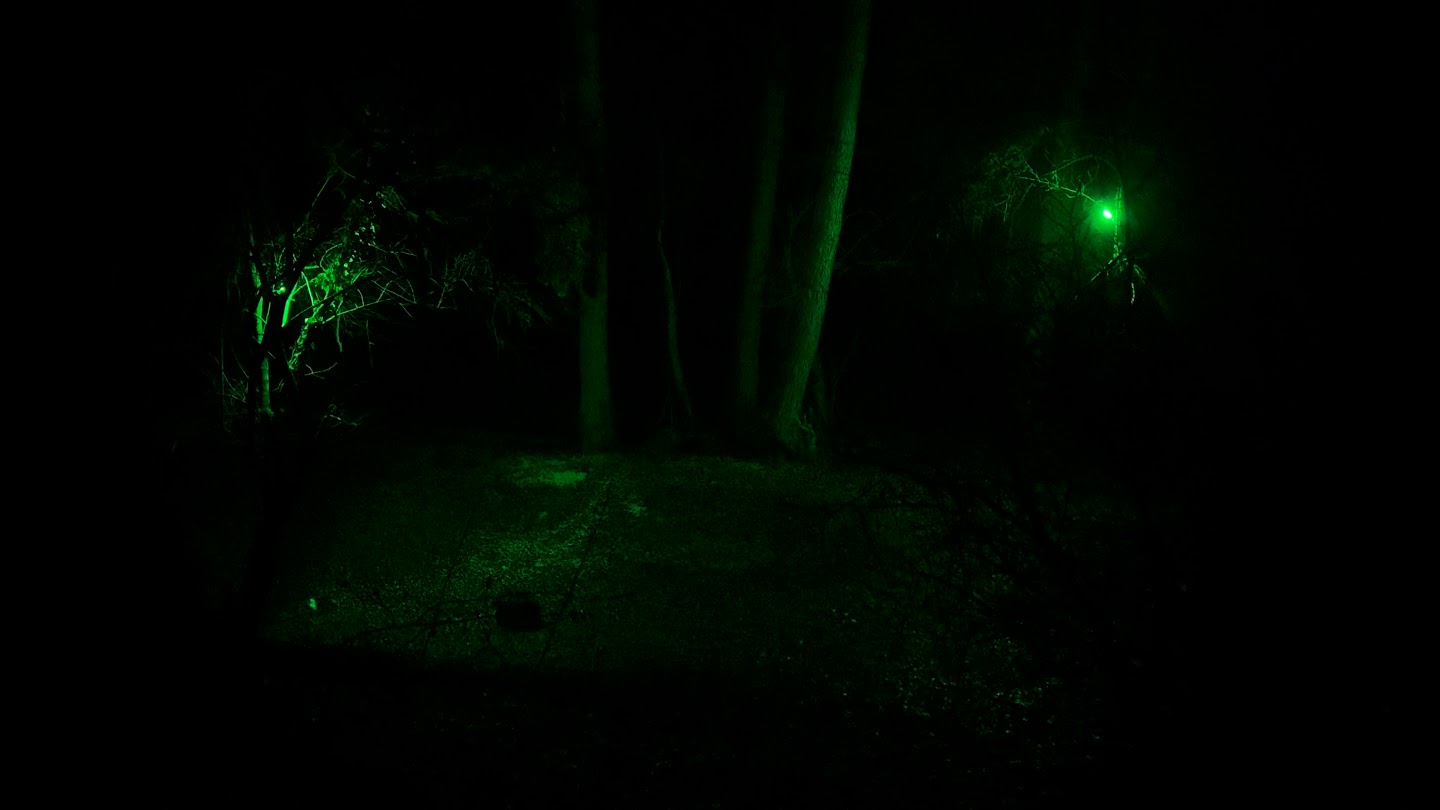
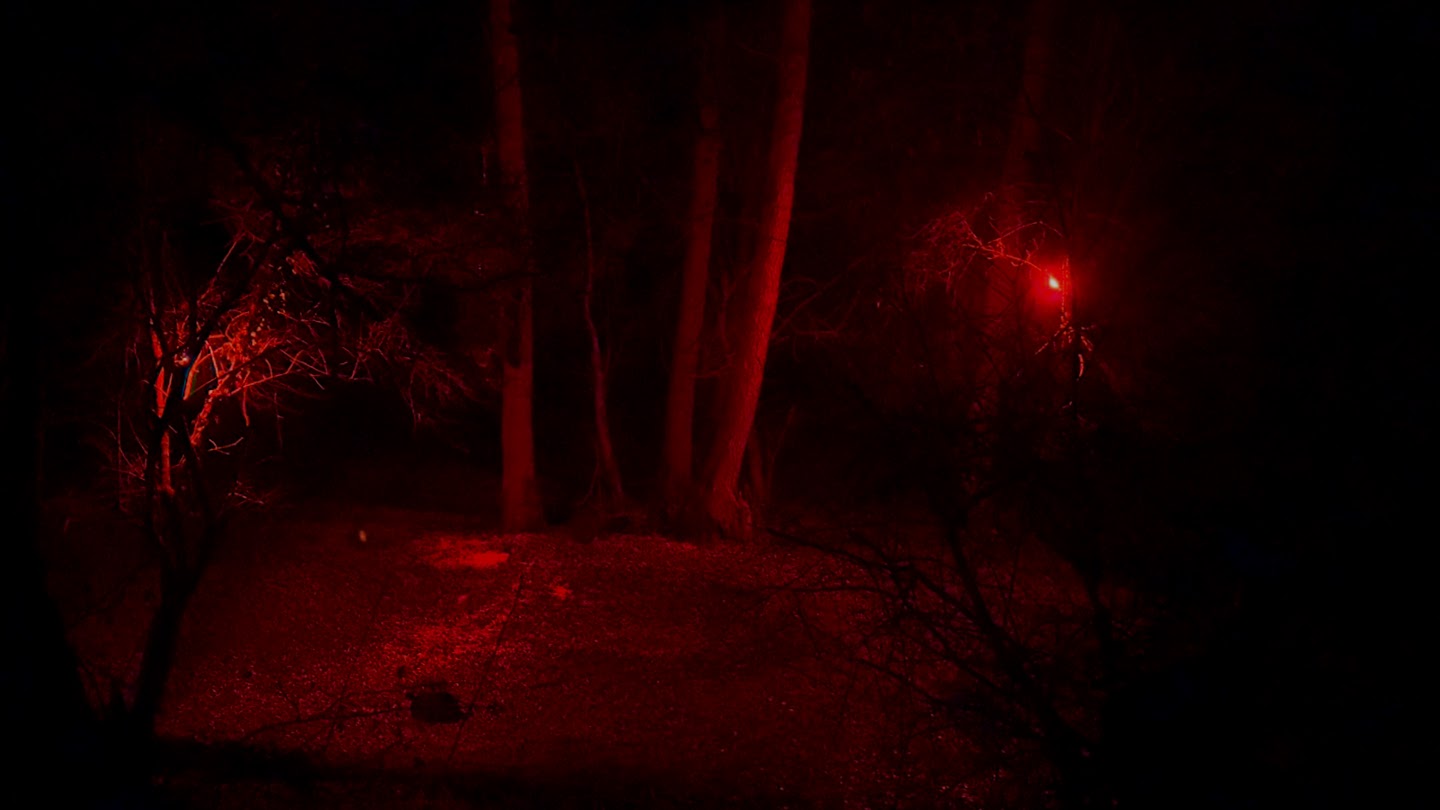
I look around with the thermal camera and spot the badger rummaging in the leaves raked up at the edge of the feeder, picking through them.
I watched the fine animal for a long while — a beautiful coat, a mature, sizeable, healthy specimen.
Pulling up the SidusLink app on my phone from the background, I was delighted to find I didn’t have to fuss with reestablishing the connection to the lights.
The earlier annoying “bug” in the software has been fixed. In fact, it’s gotten better than before.
Once it connects, upon settling into the stand, with the lights hung 25-30m above the feeder, it maintains the connection continuously, even if the phone sits in sleep mode in the background for long hours.
The badger didn’t react to even the faintest light of the feeder lamp (immediately).
Only half a minute later did it lift its head, and whoosh — it had already abandoned its nighttime feast.
“No way,” I thought.
Against a thermal riflescope it wouldn’t stand a chance, but the fact that a thin, flickering candle-flame’s worth of light, no more, held 3m above the feeder was enough to drive it off — that’s caution of the finest order.
Not for nothing is it a predator.
This strategy visibly keeps it alive.
As a nighttime experience, it was good.
After that, nothing for many long hours. Neither near nor far.
After 3 a.m. the poor sickly doe arrived, her still-summer red coat, matted in clumps in places, missing in large patches elsewhere, a sorrowful sight.
Despite her deteriorated health, this little animal wasn’t careless.
For about twenty minutes she stood motionless in the thick of the trees, then finally began to shake her ears and scratch herself here and there.
Since this little animal eats so little, she poses no threat to the large amount of corn on the feeder, but for other animals she’s a reliable “probe,” and they might come to the feeder with greater confidence because of her.
But nothing came.
At 6:30 the hunter left his stand and “descended to the ground.”
December 24, 2025.
Christmas Day, and it rained all night, it’s raining now, and it’ll rain all day.
Later on, even freezing rain is possible.
Today I’m certainly not sitting out for the night.
Since I couldn’t have spent my rare and precious free time more usefully anyway, I put out the “piglet” at 24m — the average distance from the stand to the feeder — in the yard.
I judged the result acceptable from a hunter’s point of view.
After two days of continuous rain, the ground had gotten so waterlogged that I could only reach the hunting grounds through spinning wheels, splattering mud, and sliding around.
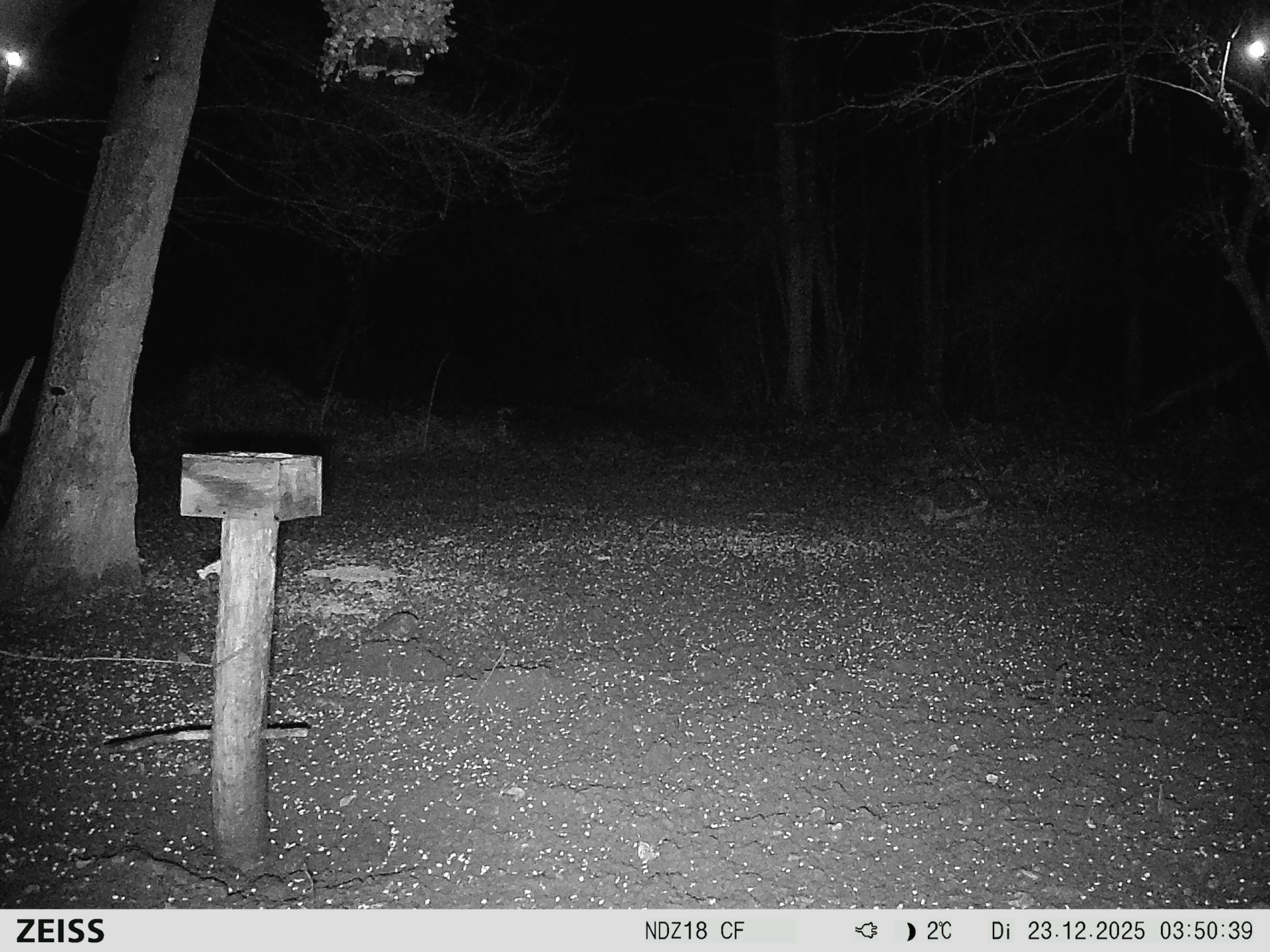
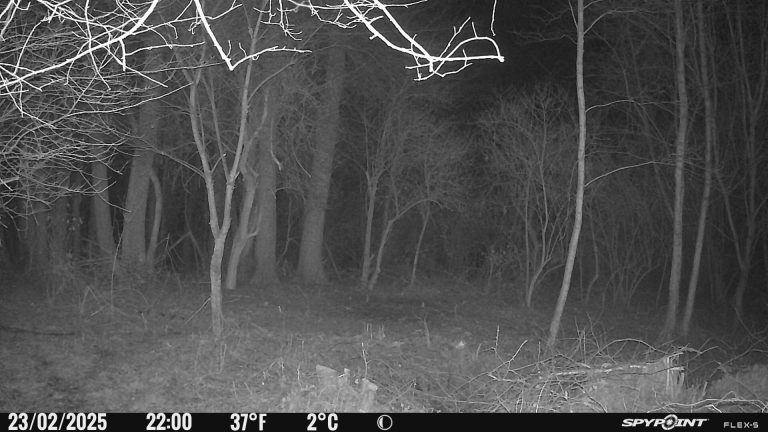
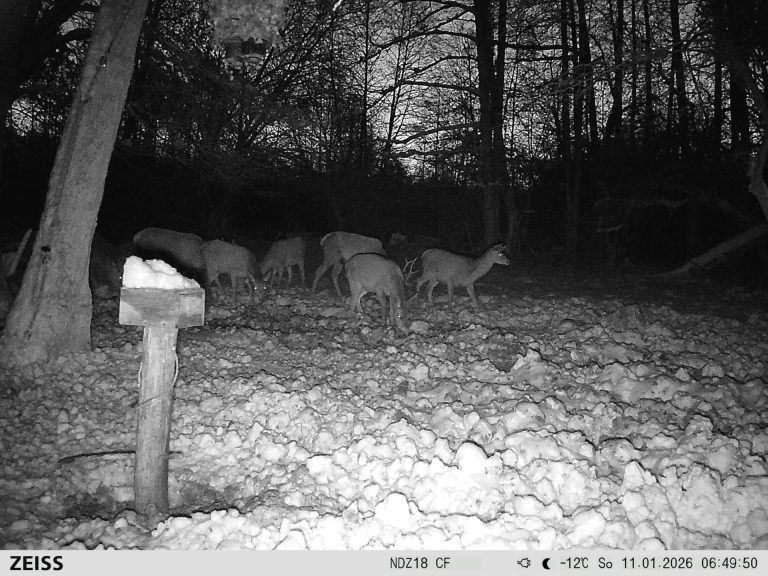
What’s more, according to the cameras, both the feeder and the area around the big wallow have gone quiet and lifeless.
I don’t know what could have happened.
Unfortunately, it’s not that the cameras are bad — the forest’s game simply isn’t here.
And my chances are slim even when there’s regular activity at and around the feeder, so paranoid is the local game population here (a direct consequence of thermal-camera “typing”).
And if there’s already a thick layer of corn on the feeder, because the automatic dispenser just keeps dispensing, dispensing, but for days there’s been nothing to eat up the dispensed grain, and the camera records nothing, then it’s completely pointless even to sit out.
I need some faint chance, some hope, too.
Maybe next year…
To be continued…