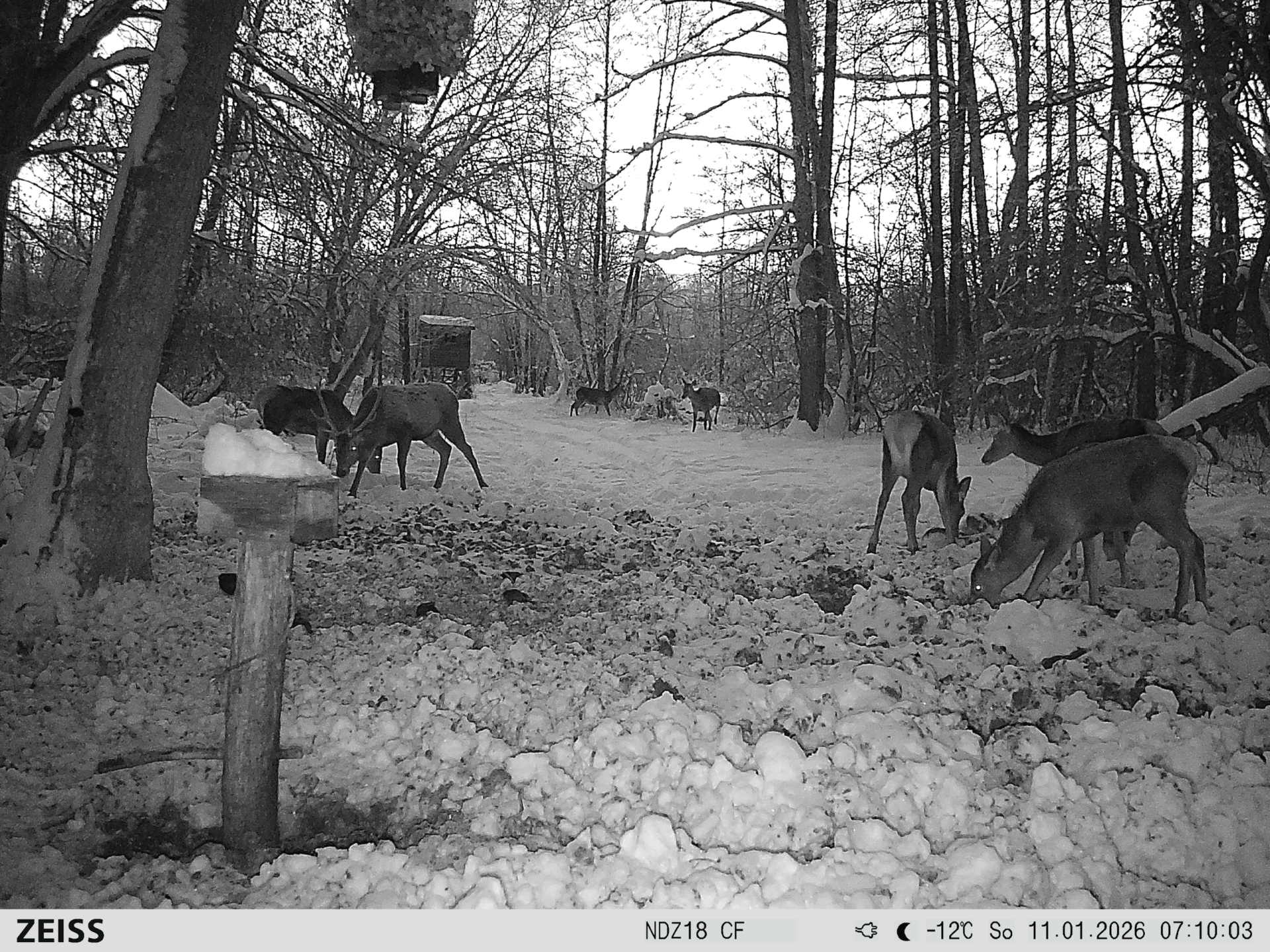
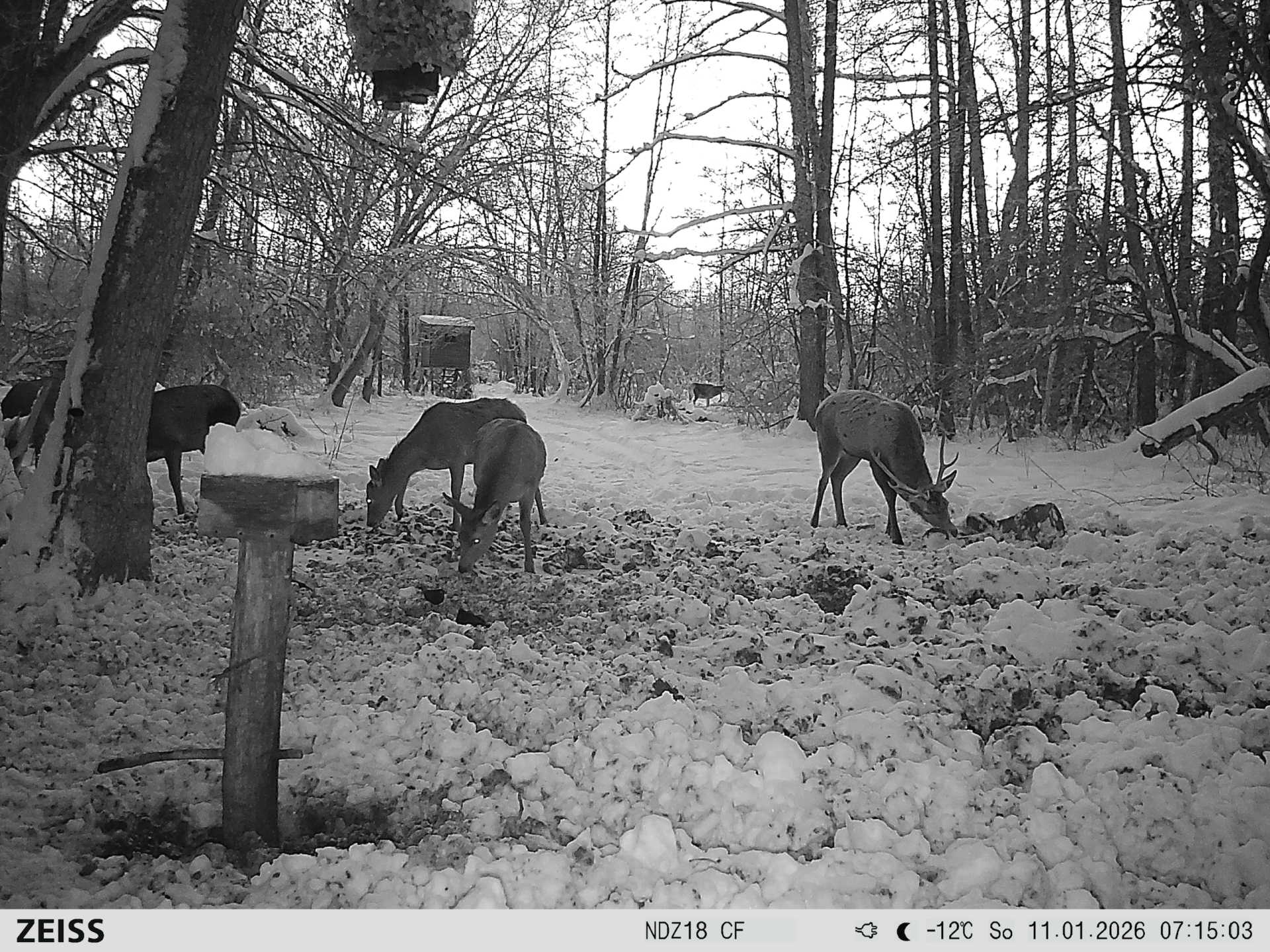
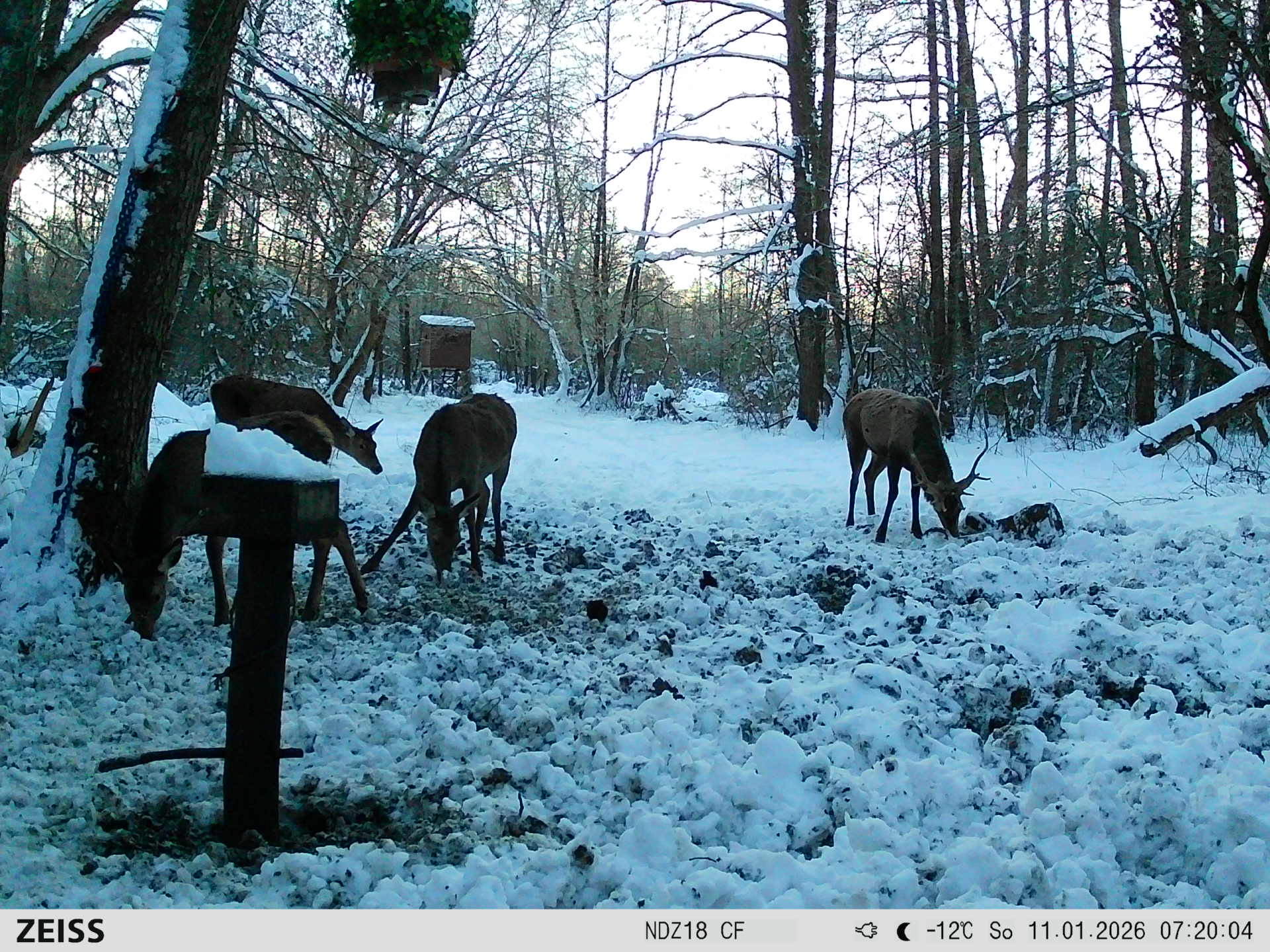
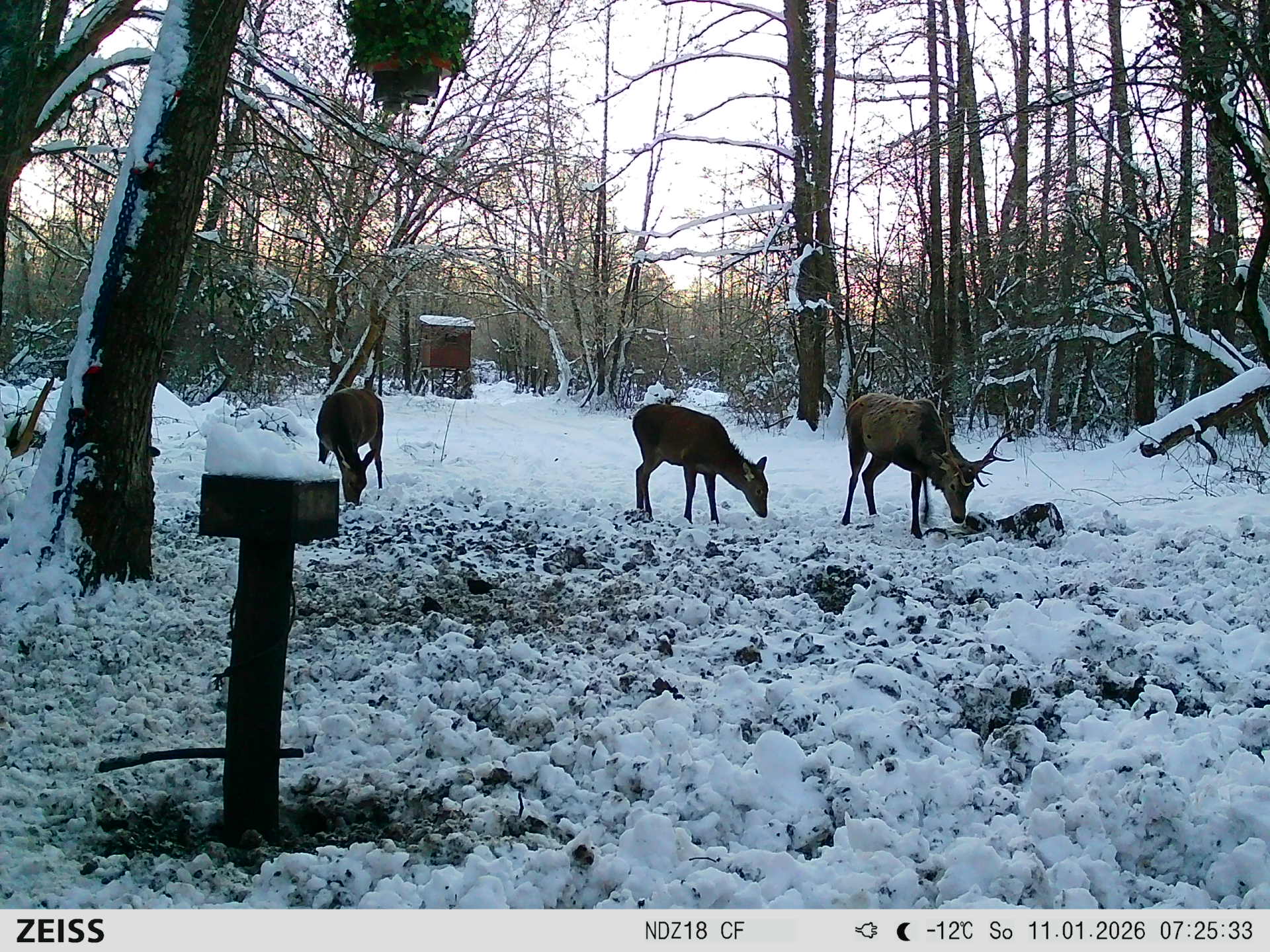
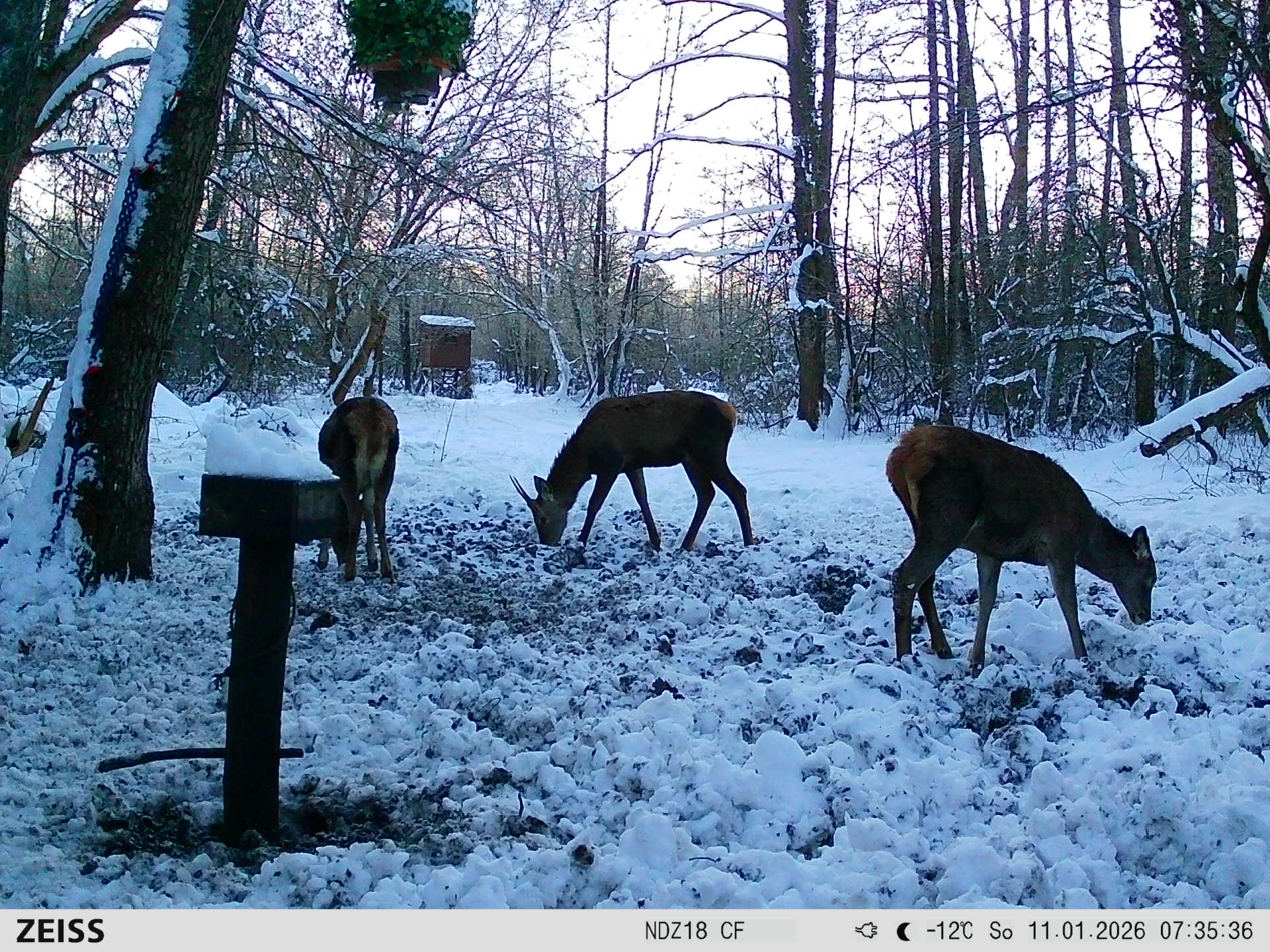
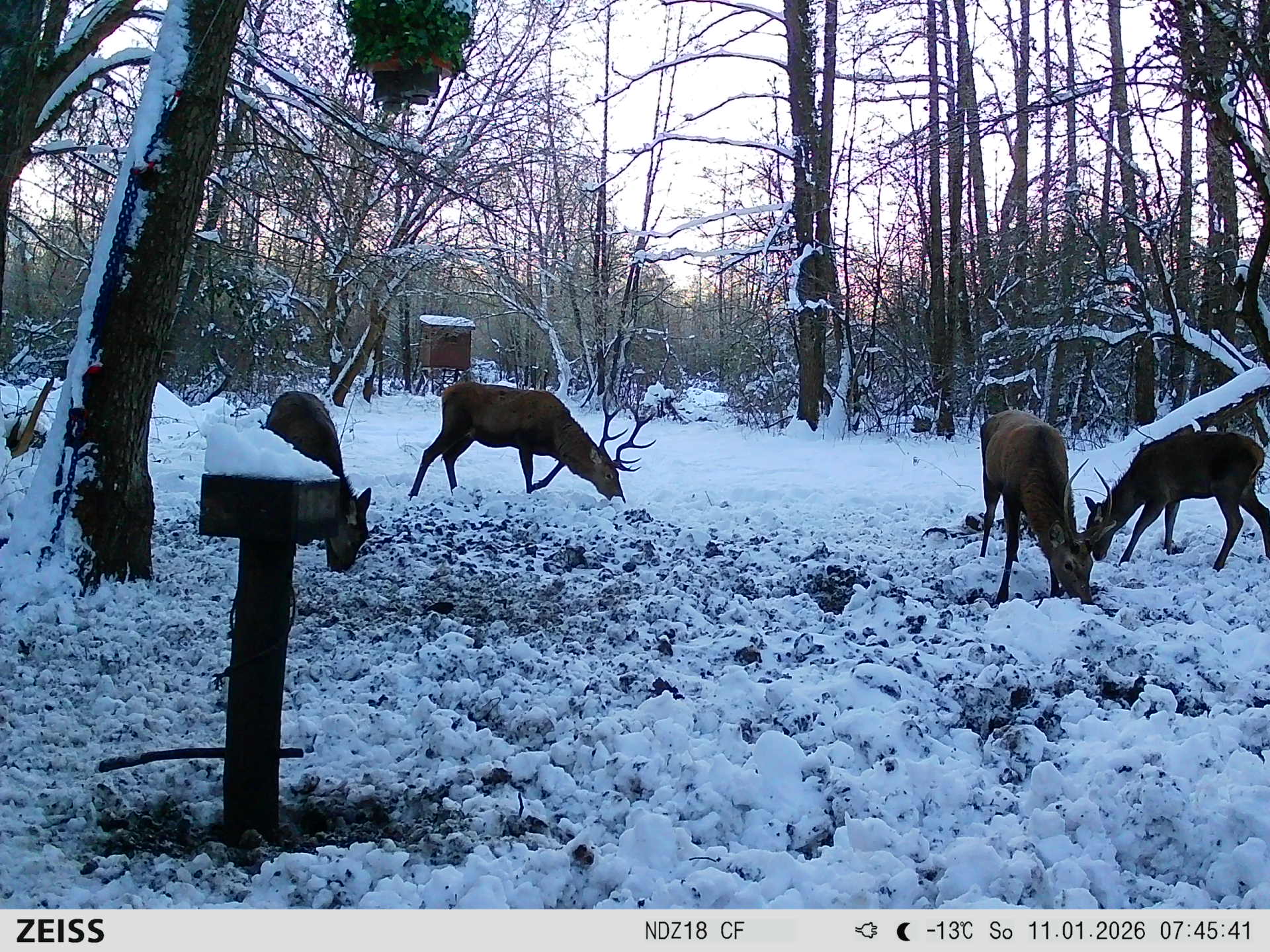
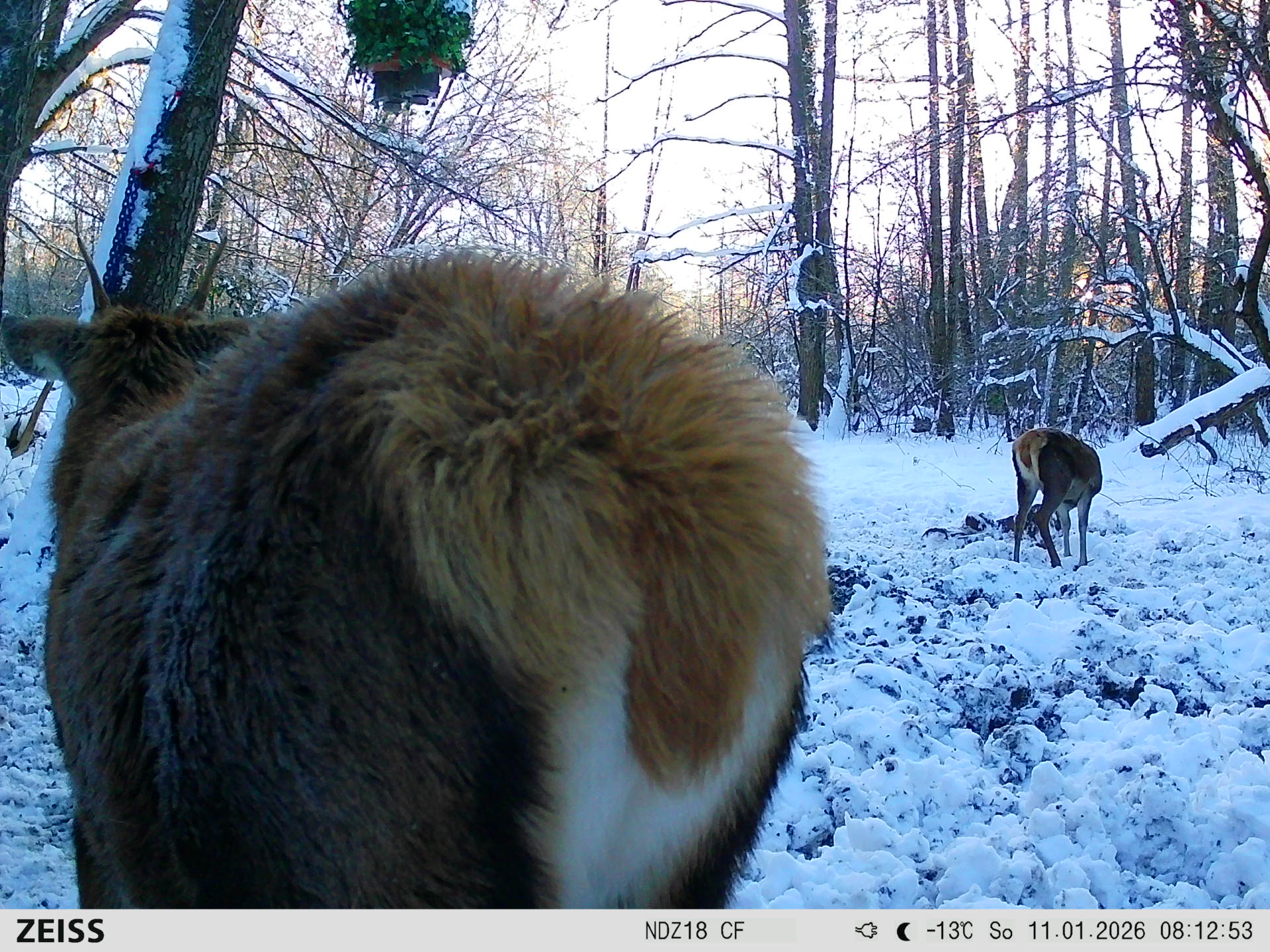
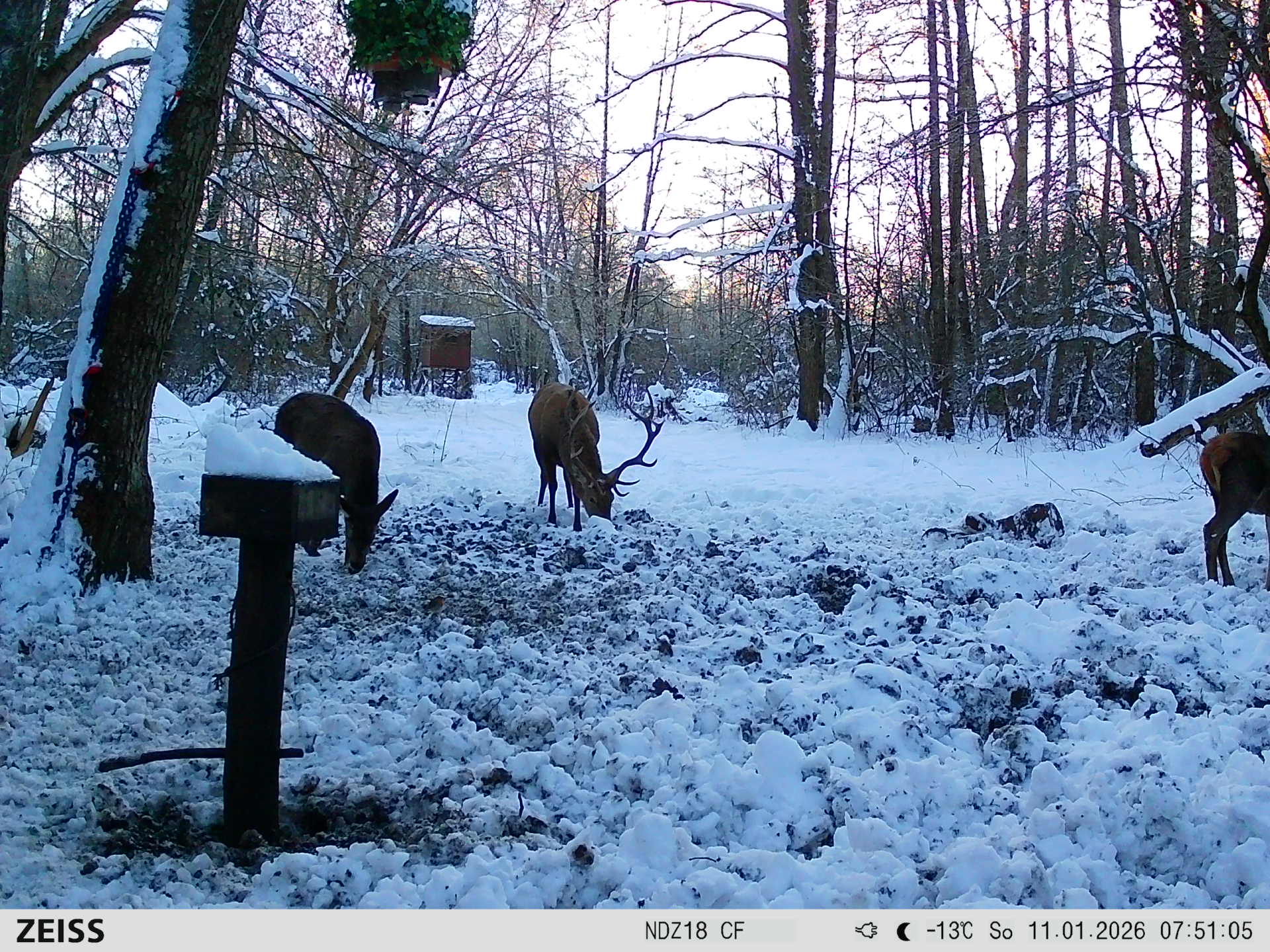
The hard, frosty nights of recent days have driven the forest’s wildlife to…
The hard, frosty nights of recent days have driven the forest’s wildlife to roam far wider areas than usual in search of a food source that could maintain body temperature and supply energy.
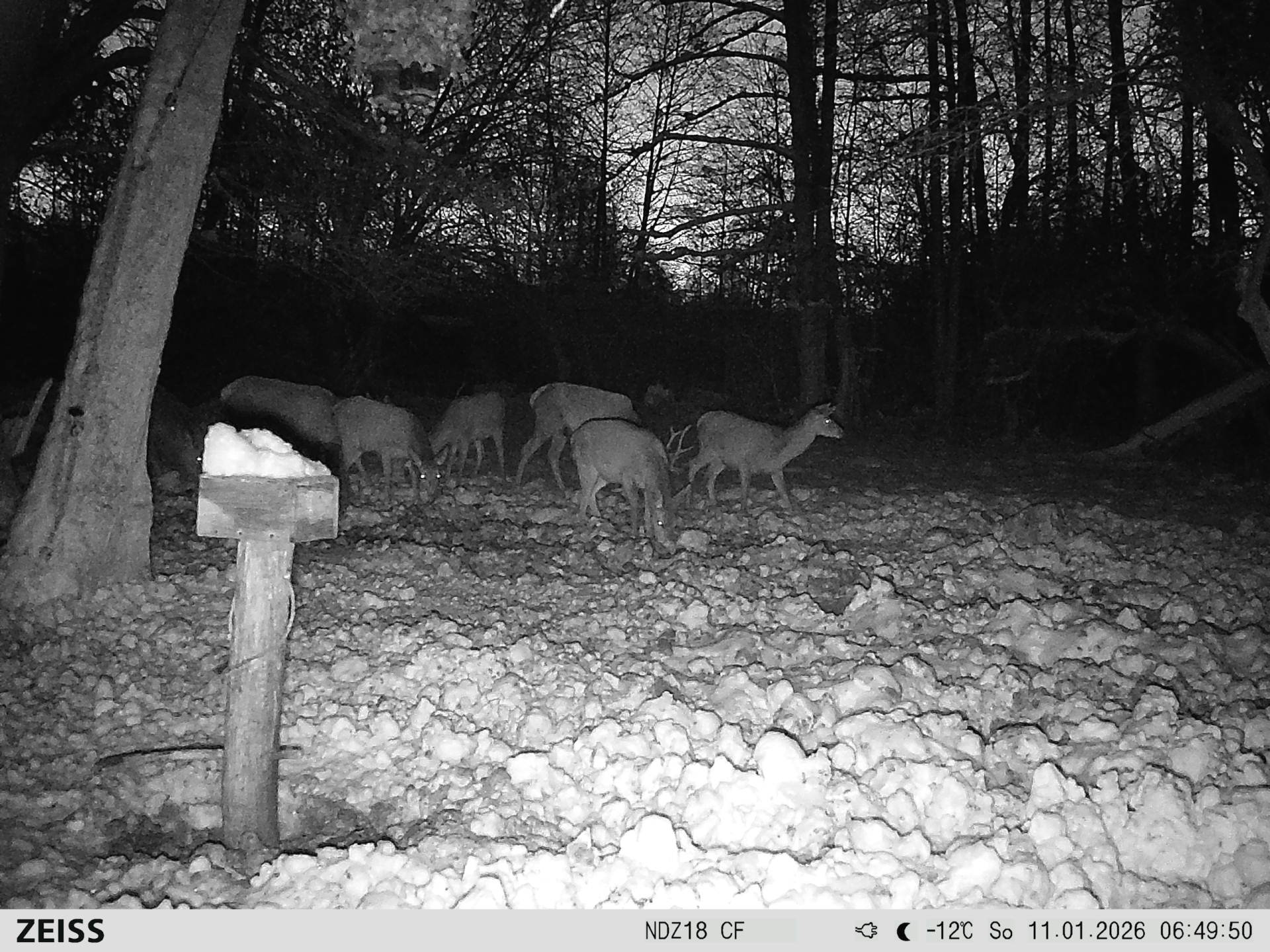
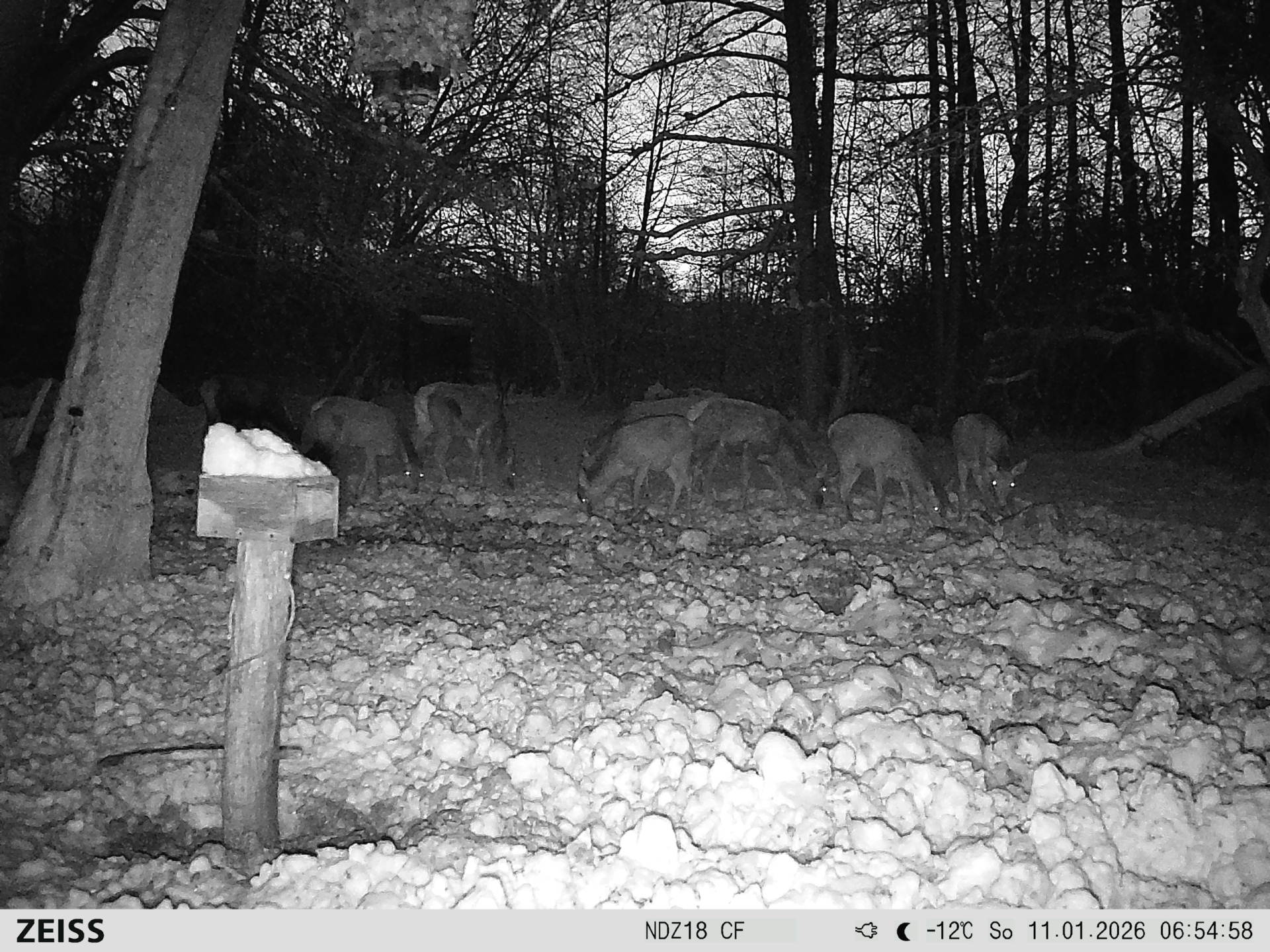
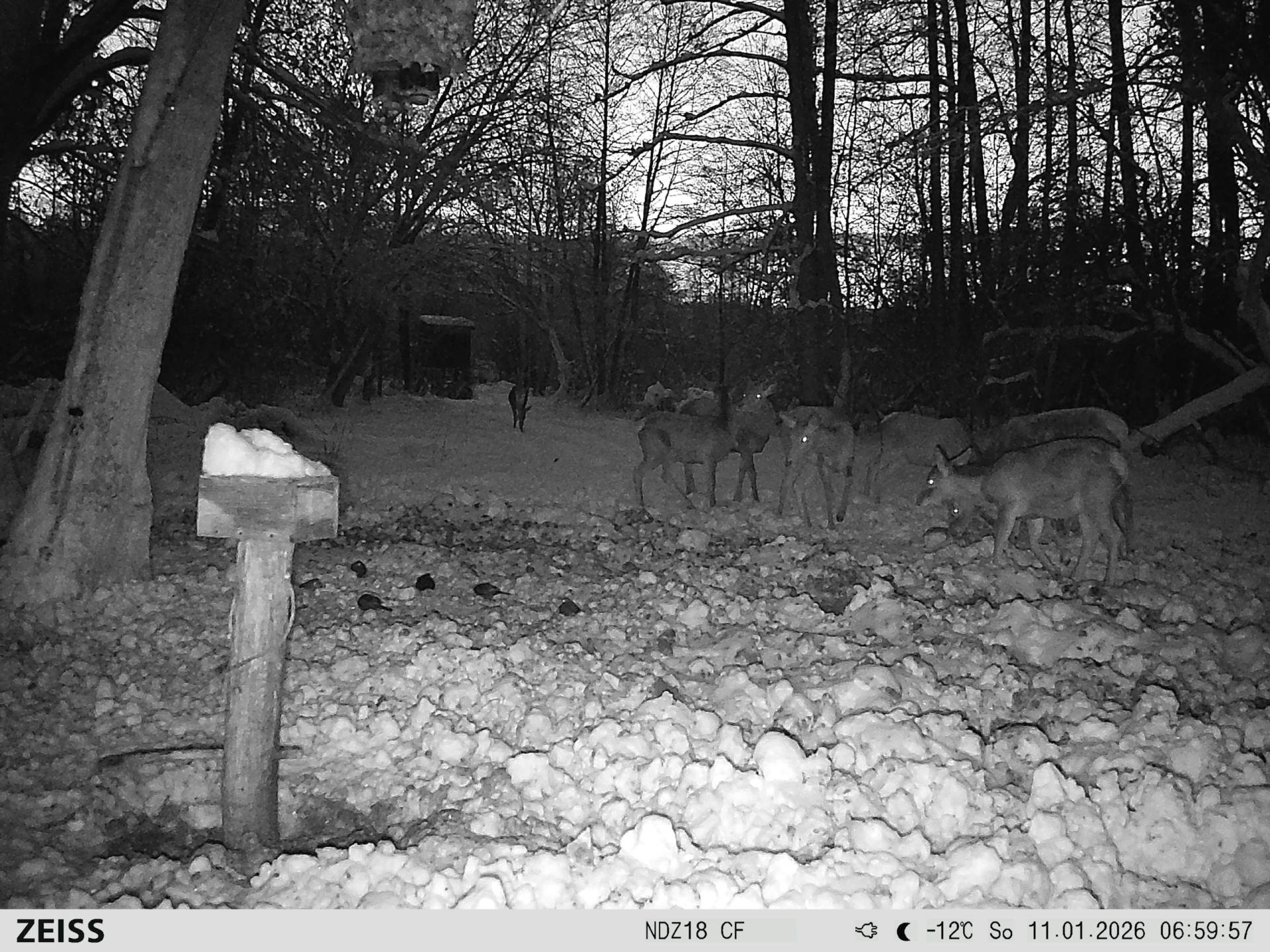
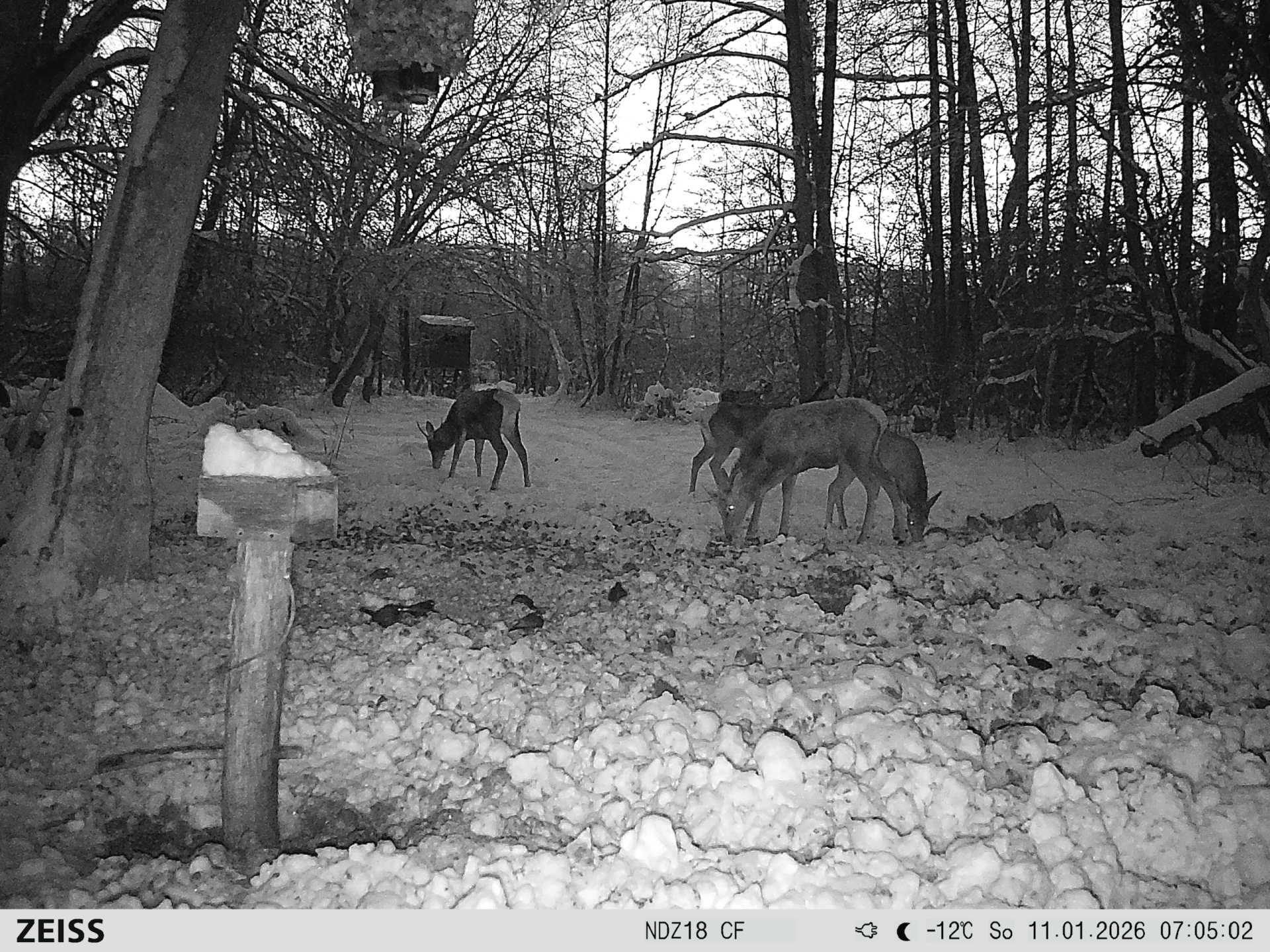
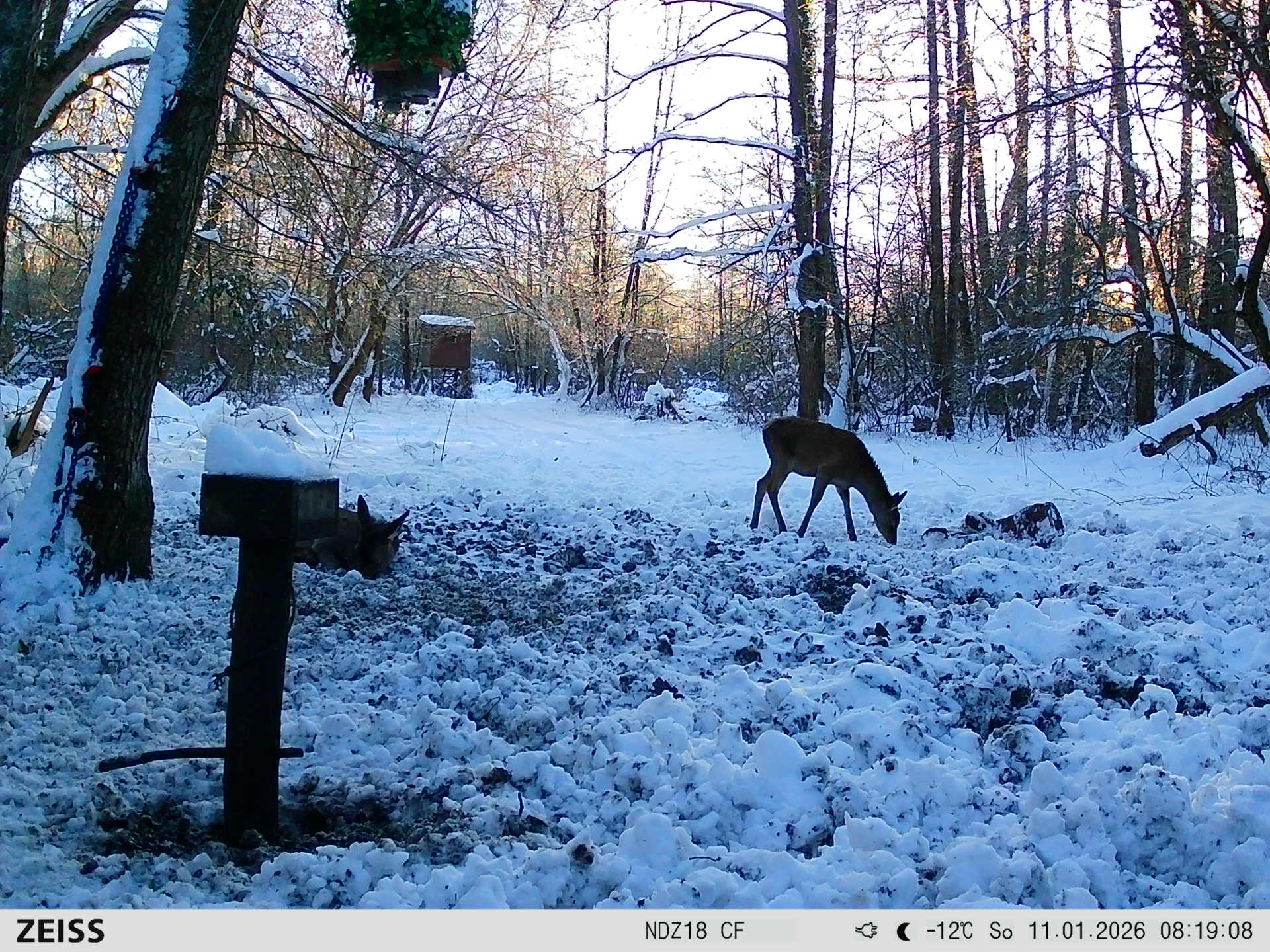
My Zeiss Secacam 7 has been recording this fascinating activity at the feeder I built and maintain myself, capturing images at 5-minute intervals since dawn today.
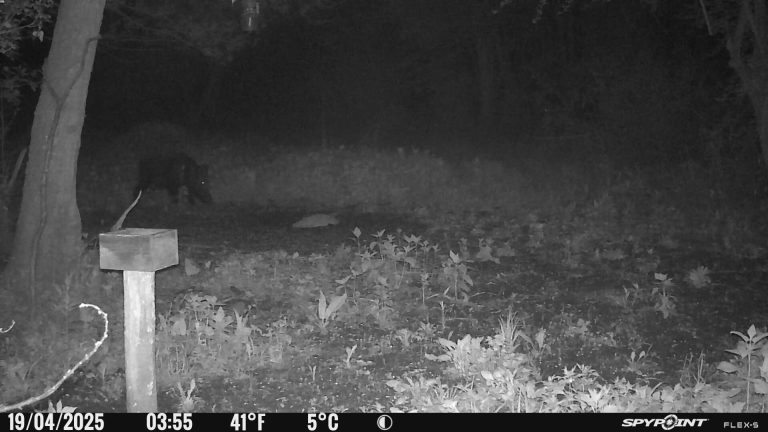
Since I renewed the feeder (in April 2025), this was the first time the red deer herd that regularly frequents the big green wallow showed up here, along with numerous fallow deer and roe deer that I had never managed to capture on camera before.
This is especially exciting, since these species – red deer (Cervus elaphus), fallow deer (Dama dama), and roe deer (Capreolus capreolus) – often travel greater distances in winter to gain energy, as their natural food (buds, bark, roots, etc.) becomes scarce under the snow.
Another interesting phenomenon can be seen in the photo taken at 08:19: a deer lying comfortably on the ground, as if resting on "underfloor heating."
When refilling and servicing the feeder (removing the spreader head), some corn inevitably spills out under the tank. Sometimes I deliberately let out a smaller amount and spread it a bit around the feeding area.
The point is that over time, the corn that accumulates here and goes unused gets trampled into the soil, where it starts to ferment. This process – known as anaerobic fermentation – is carried out by microbes (bacteria and fungi), with the corn’s moisture content and the soil temperature helping the fermentation along. The result: a small amount of heat generation (up to 5-10°C warmer than the surrounding soil), plus small amounts of volatile alcohols, lactic acid, and other compounds forming, which attract game.
Not only wild boar (Sus scrofa) but deer as well are happy to make use of this "natural underfloor heating," as it helps them maintain their body temperature in the -12°C cold, reducing their energy expenditure.
From a wildlife management perspective: supplemental winter feeding in Hungary is regulated under the Game Protection Act (Act LV of 1996), and primarily helps populations survive harsh winters, when mortality can rise by as much as 20-30% due to natural food shortages. Benefits: it increases the survival rate, improves condition (e.g. better reproduction in spring), and reduces agricultural damage, since game are less inclined to gnaw on trees.
From a nature conservation perspective: feeders contribute to maintaining biodiversity, but must be handled carefully so as not to disturb natural selection.
For example, fallow deer and roe deer are sensitive to increases in population density, which can create competition with other species (e.g. birds, for food).
In protected forest areas in Hungary (e.g. Natura 2000 sites), feeding can help preserve species, but the risk of mold must be avoided, as it can produce toxic aflatoxins in the corn that endanger the animals.
Alternative: increasing natural food sources, e.g. through forest regeneration.
From a forestry perspective: feeders protect forests from excessive browsing, since deer and roe deer often strip bark from young trees (e.g. oak, beech) in winter, which can cause up to 50% damage in plantations.
Benefit: reduces economic loss, supports sustainable forest use.