According to the footage, the red stag’s day began well before the wallowing, in the woodland next…
According to the footage, the red stag’s day began well before the wallowing, in the section of forest bordering the wallow. That’s the spot where I also have my automatic feeder and a bird waterer carved into an old, felled poplar stump.
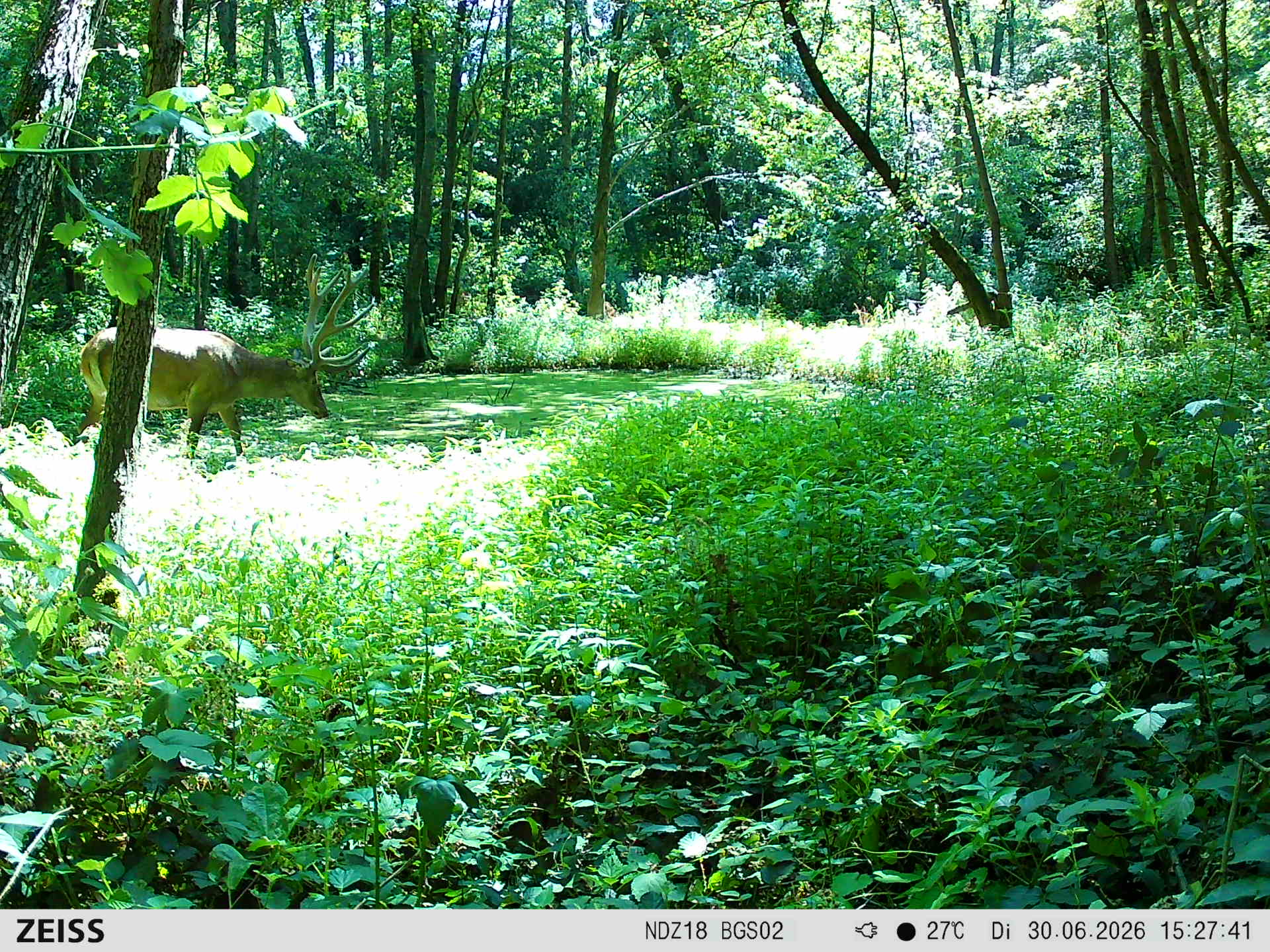
At 15:27, one of the wallow’s cameras caught him on the sun-drenched, duckweed-covered bank of the small pond, head lowered, picking his way through the shoreline vegetation in his reddish-brown summer coat; the thermometer read 27 degrees at that moment.
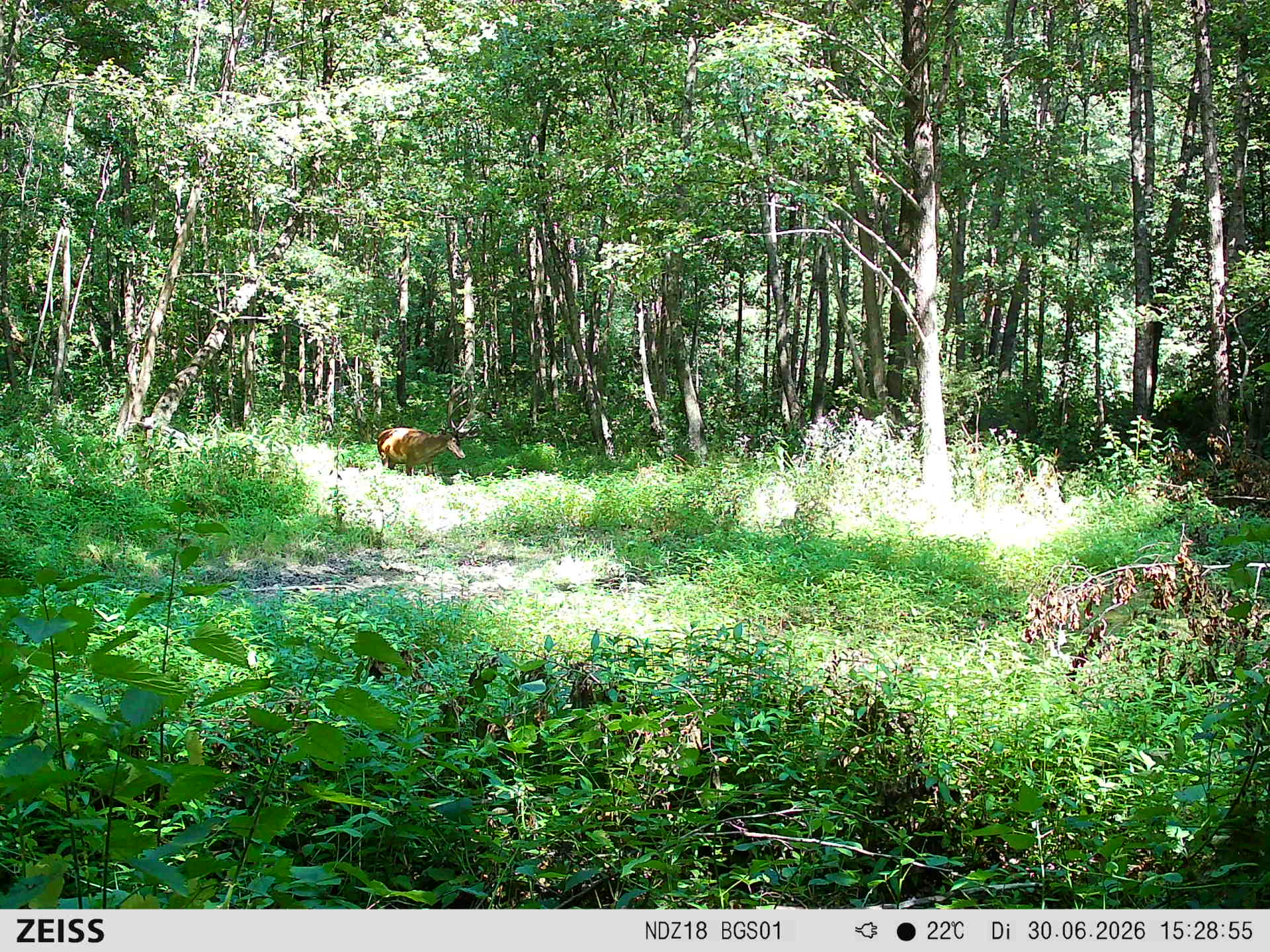
Barely a minute later, at 15:28, he already appeared at the shaded edge of the wallow clearing, where it was only 22 degrees – showing that the sunny bank of the water source and the cool shade of the mud bath are two well-known but climatically very different stations of the animal’s daily range, lying only a few dozen steps apart.
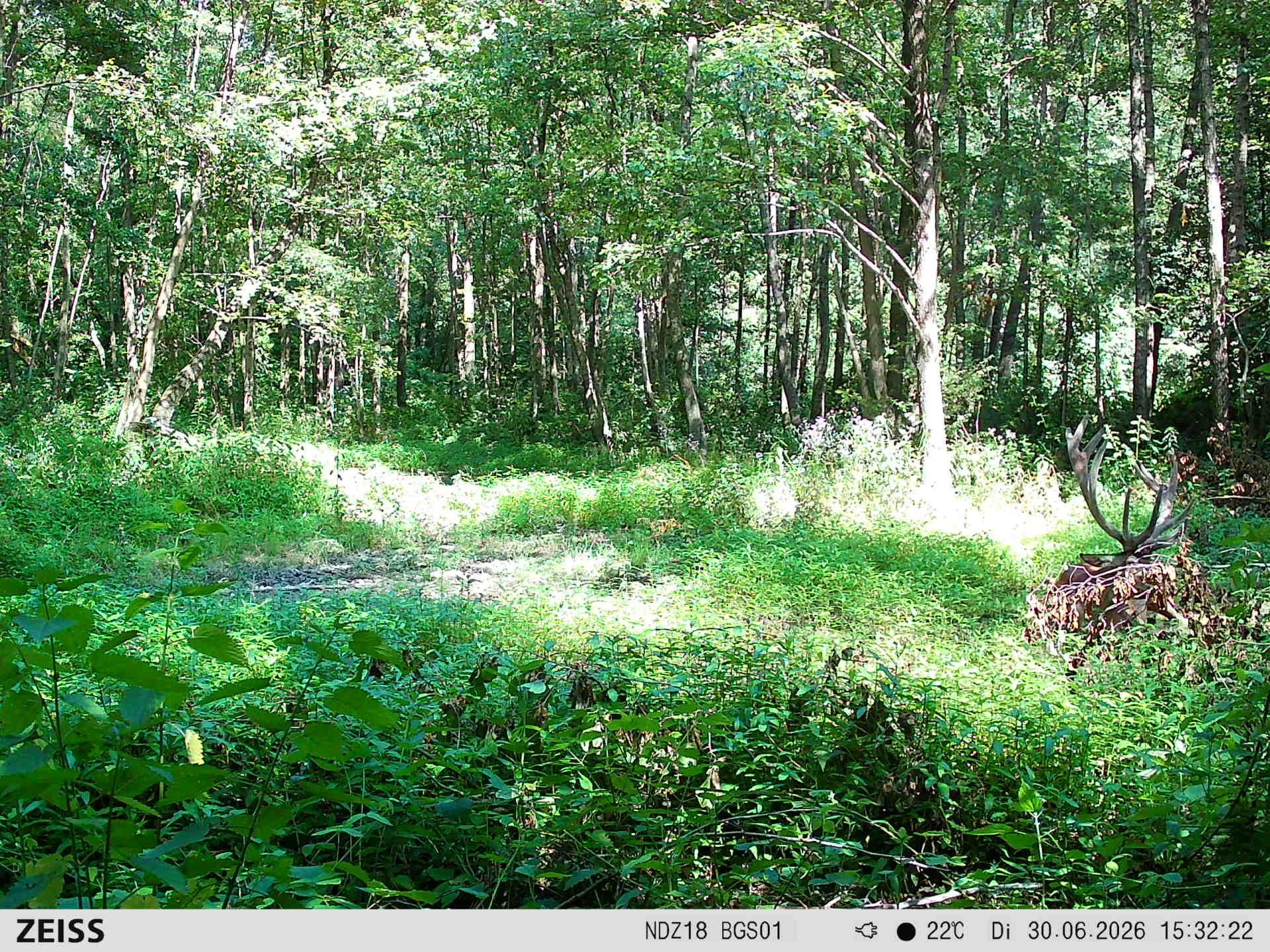
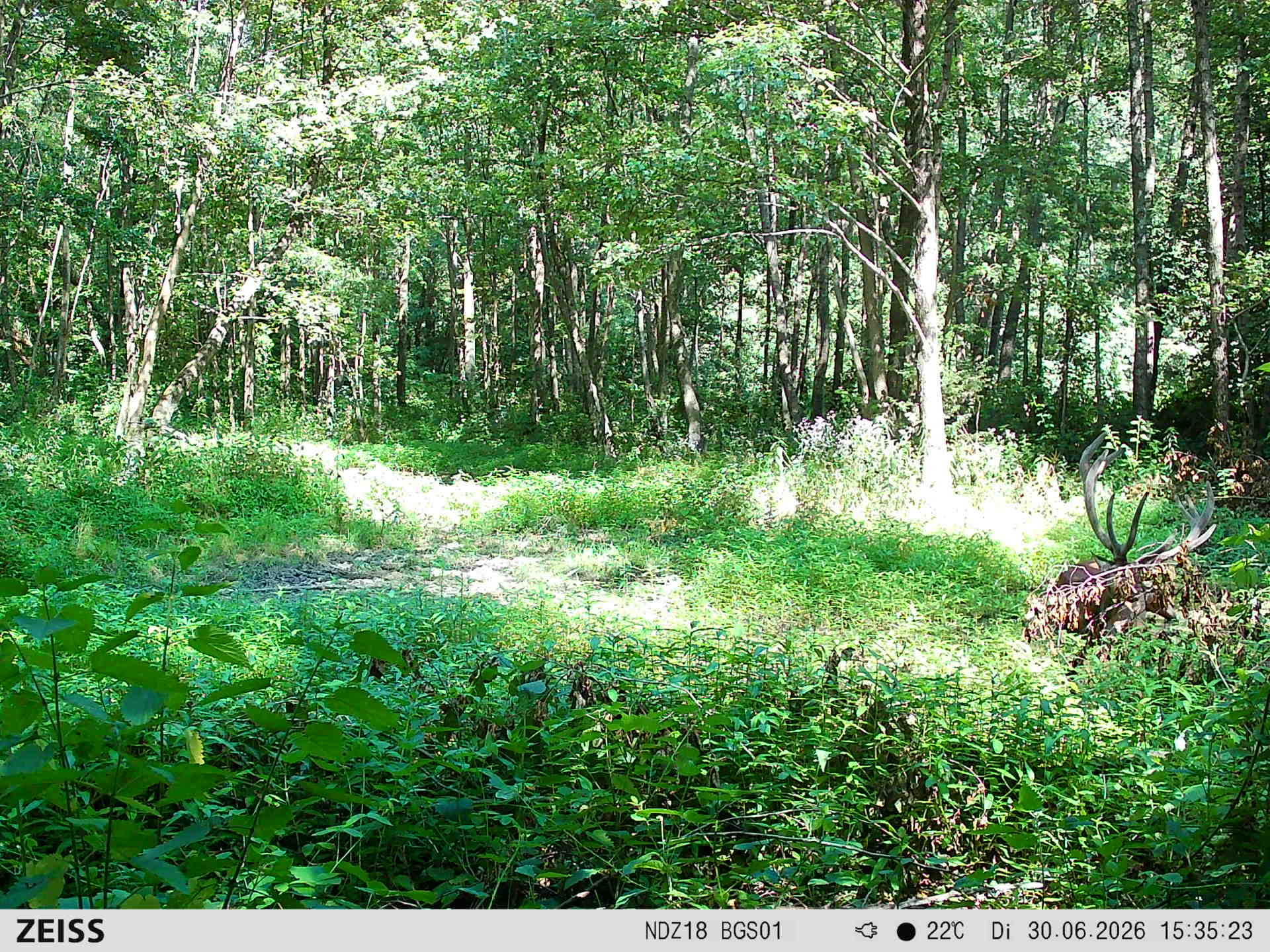
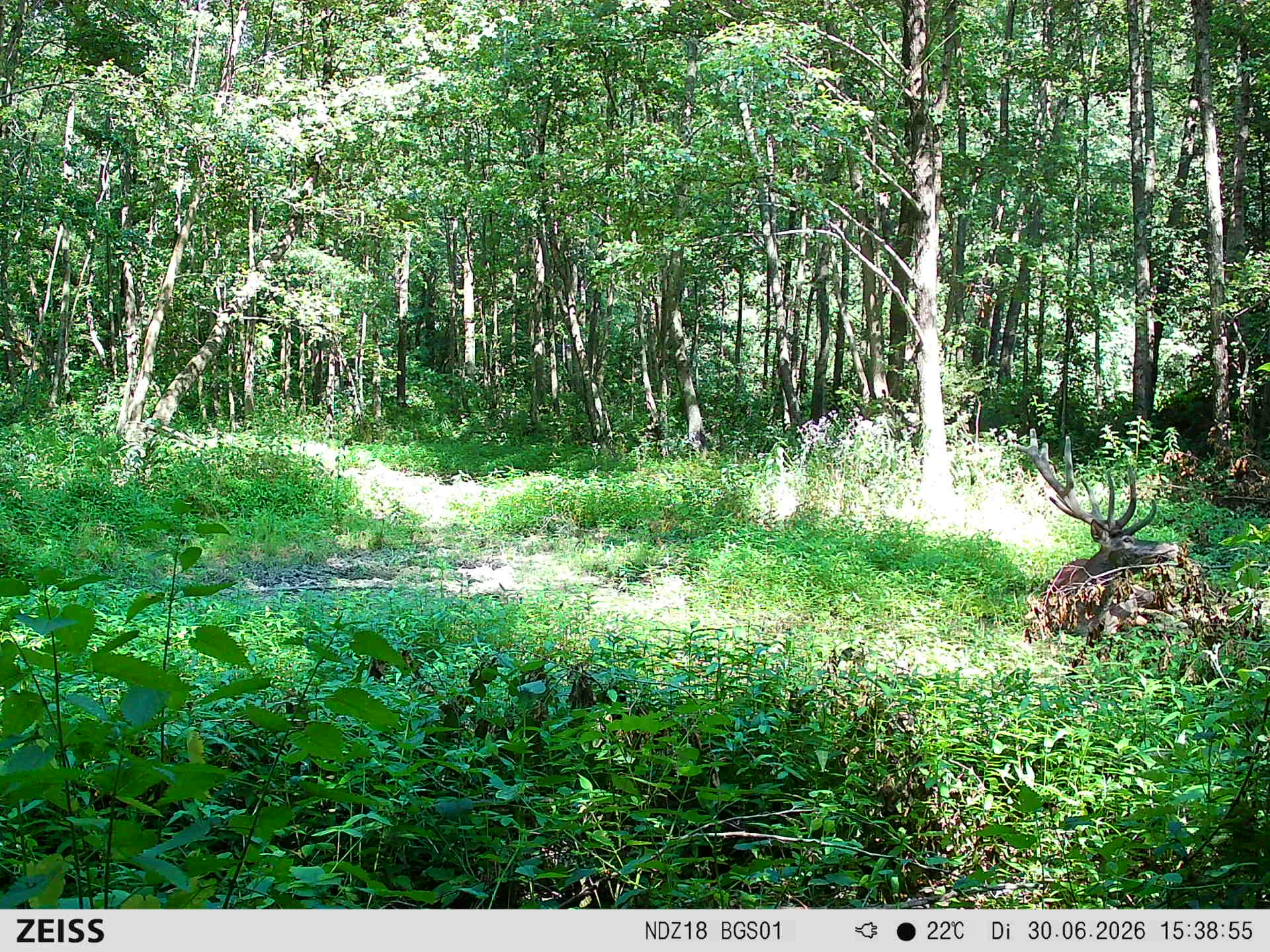
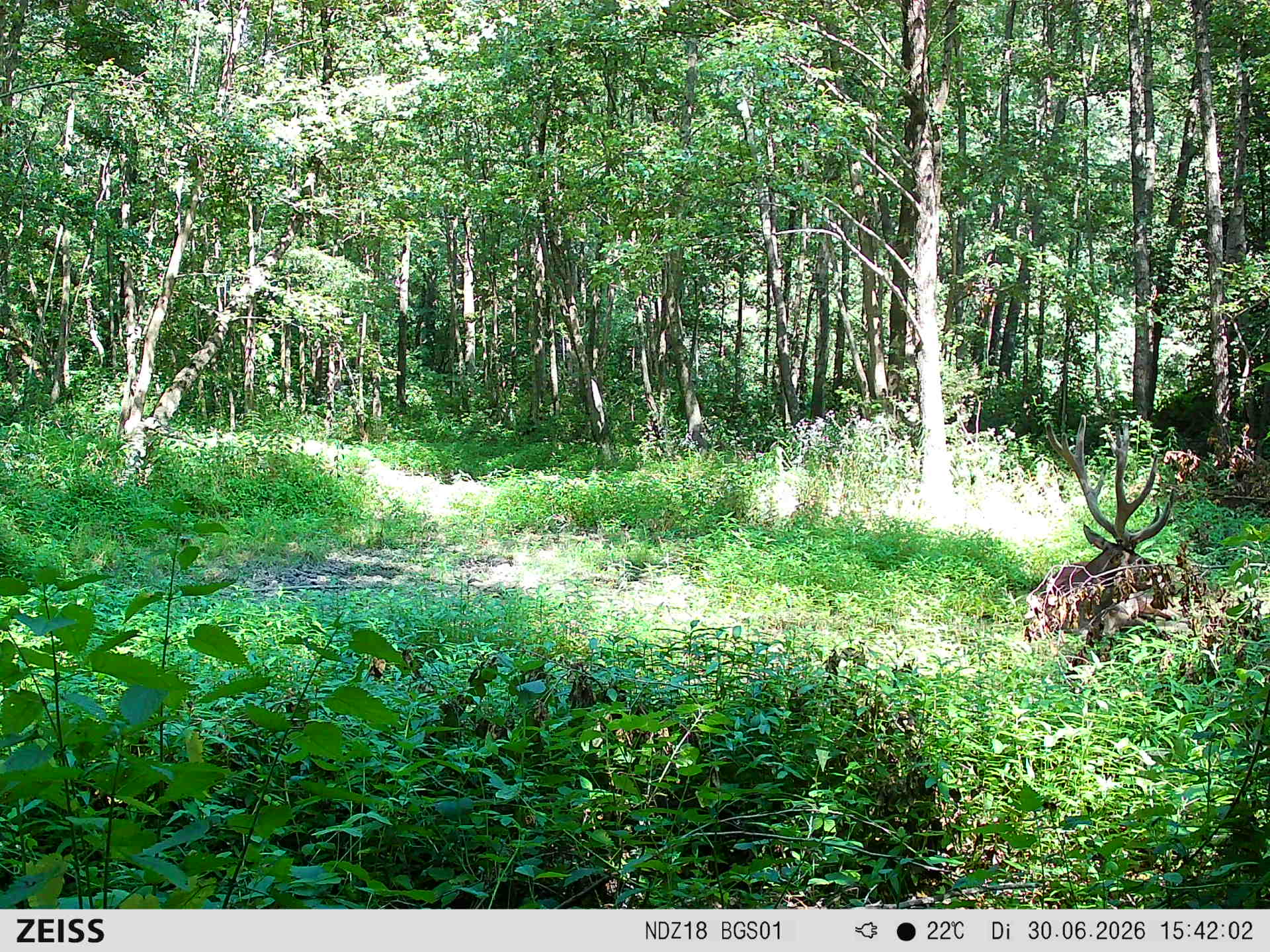
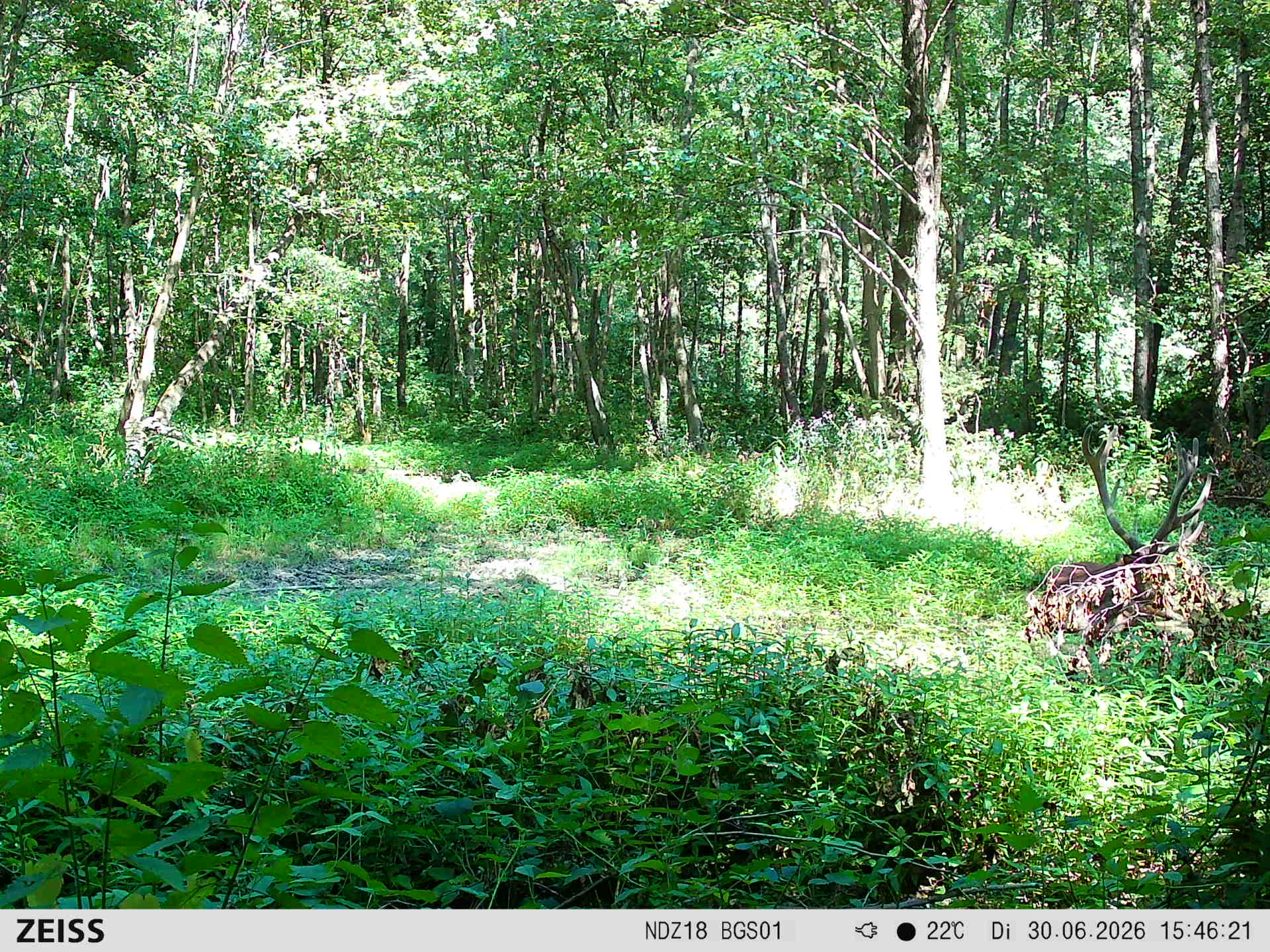
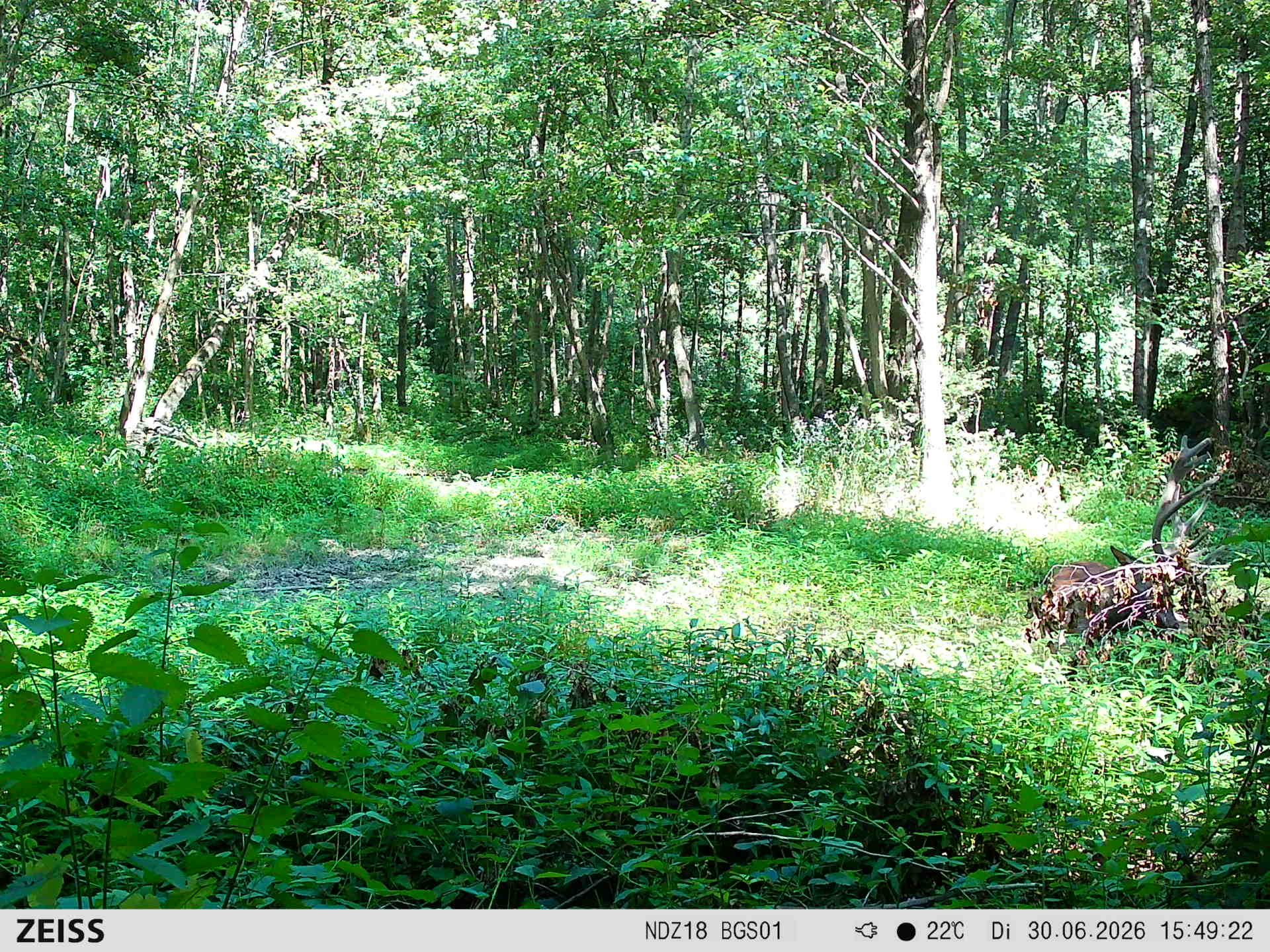
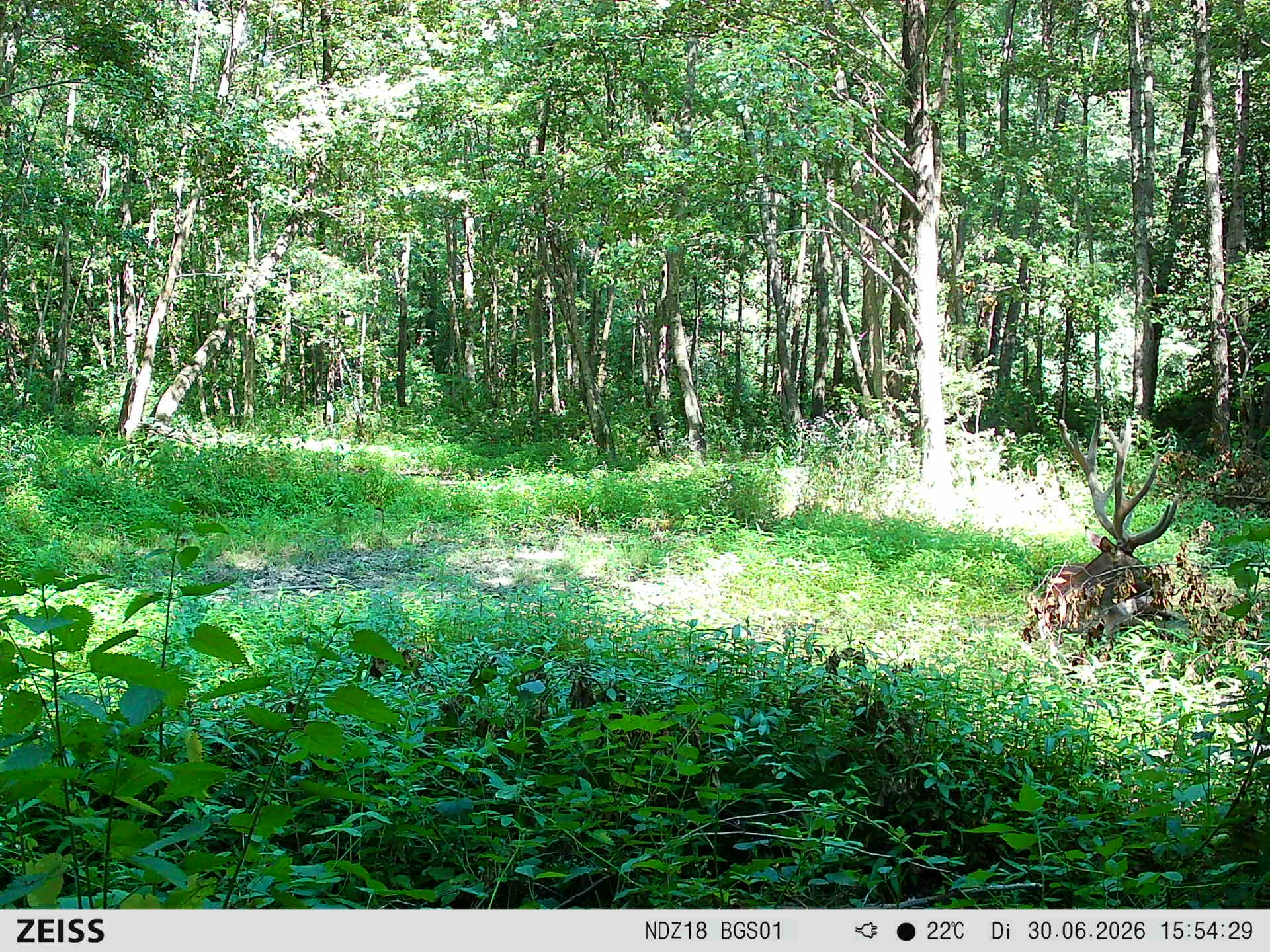
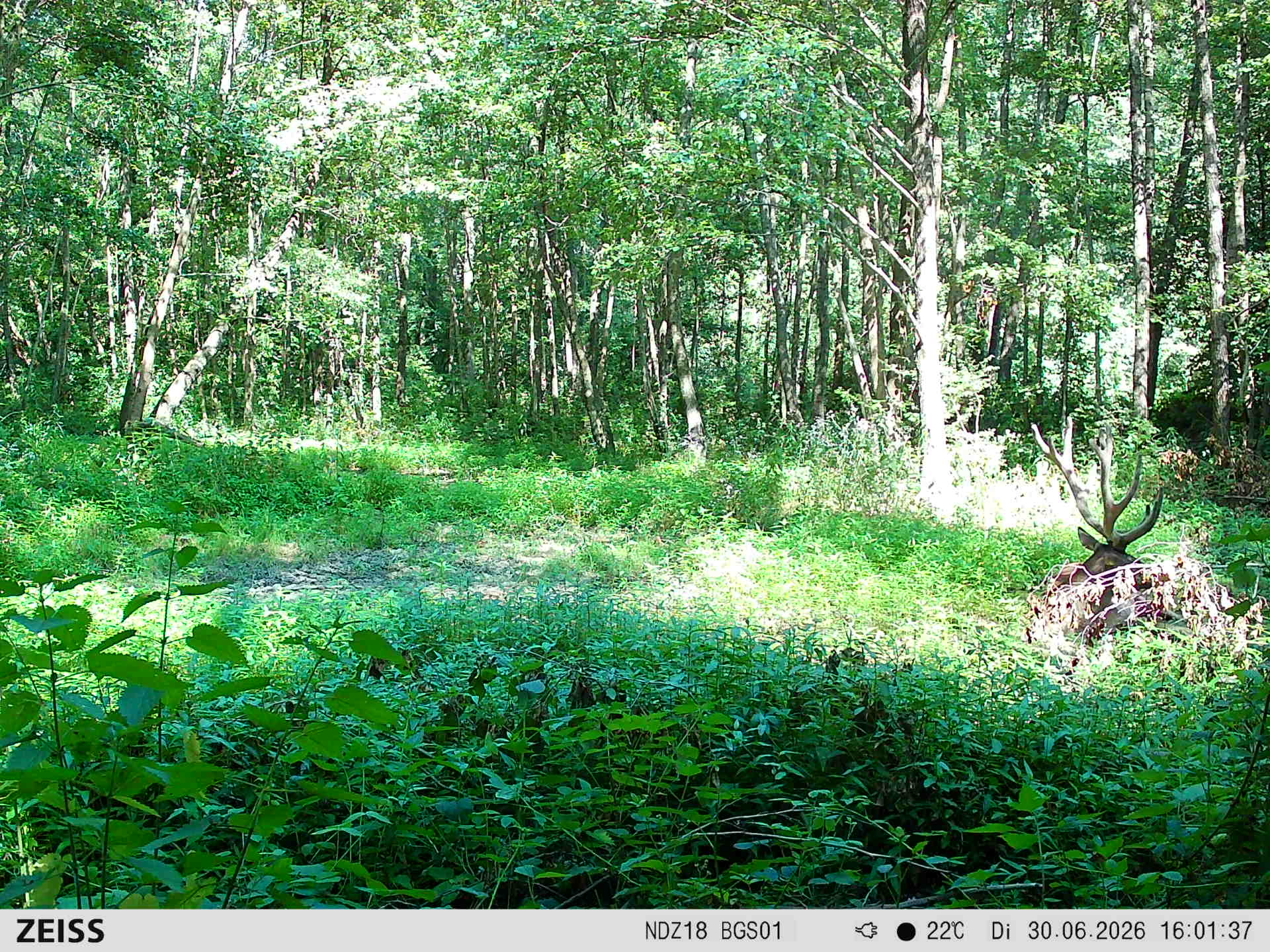
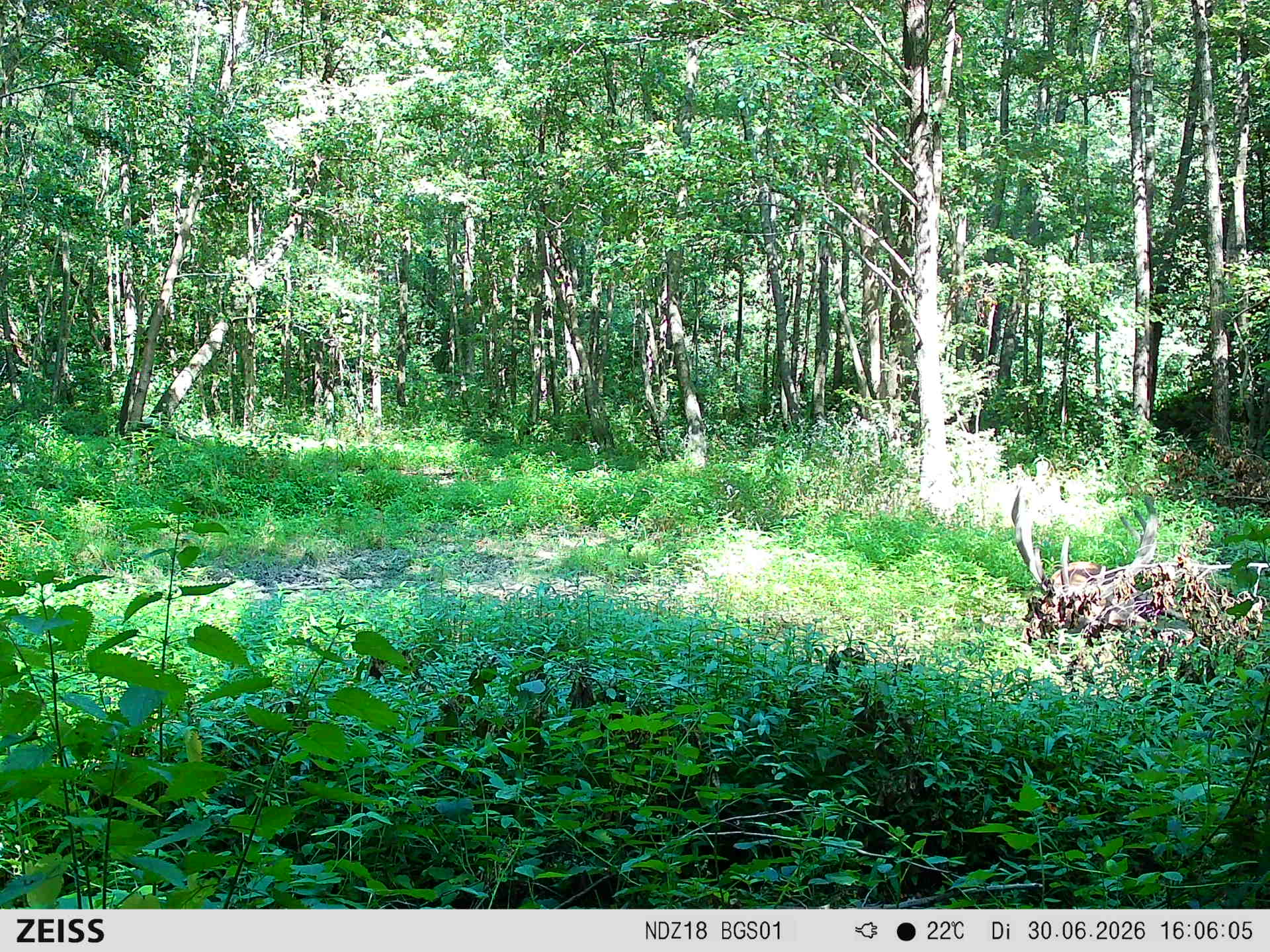
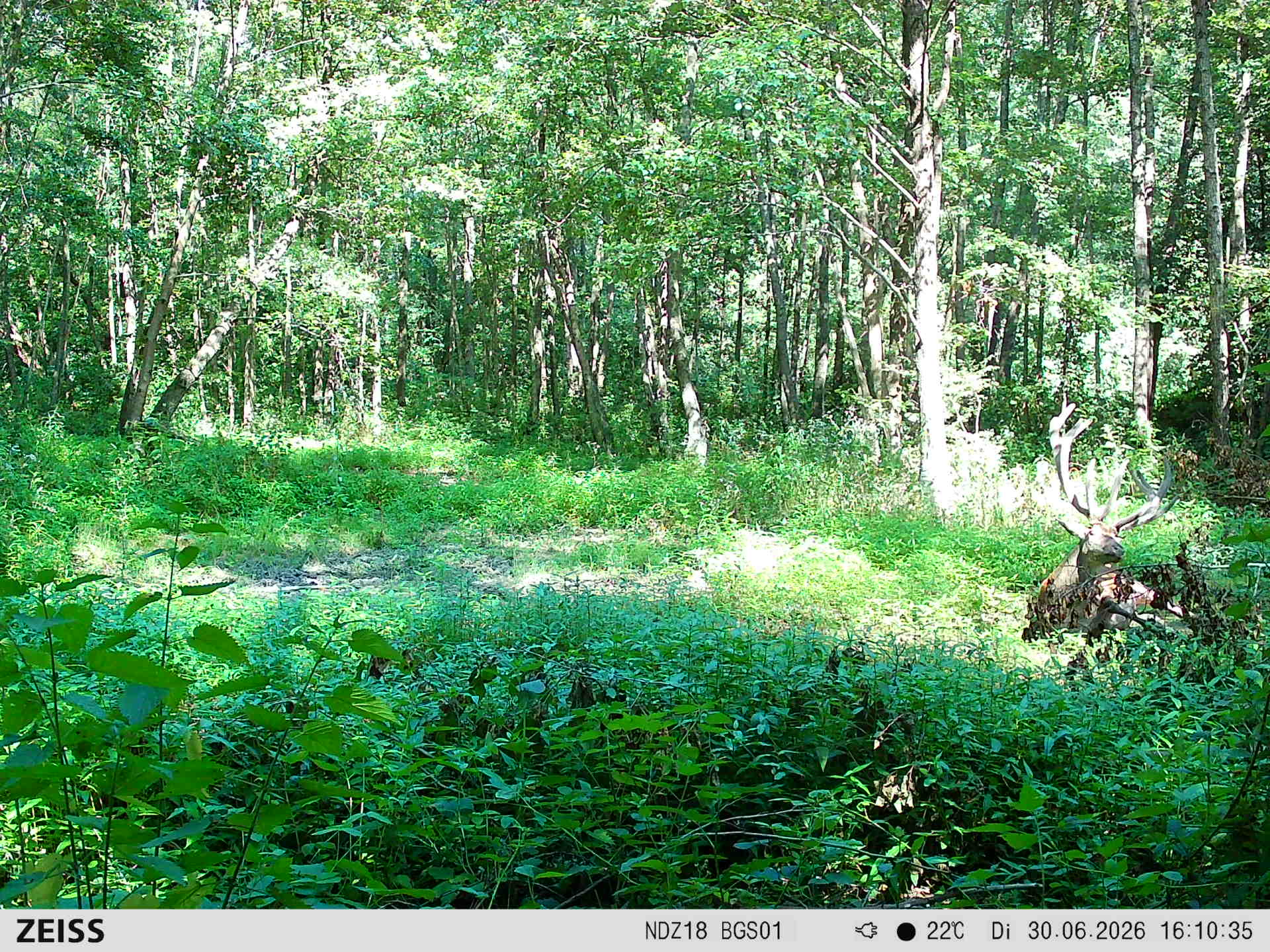
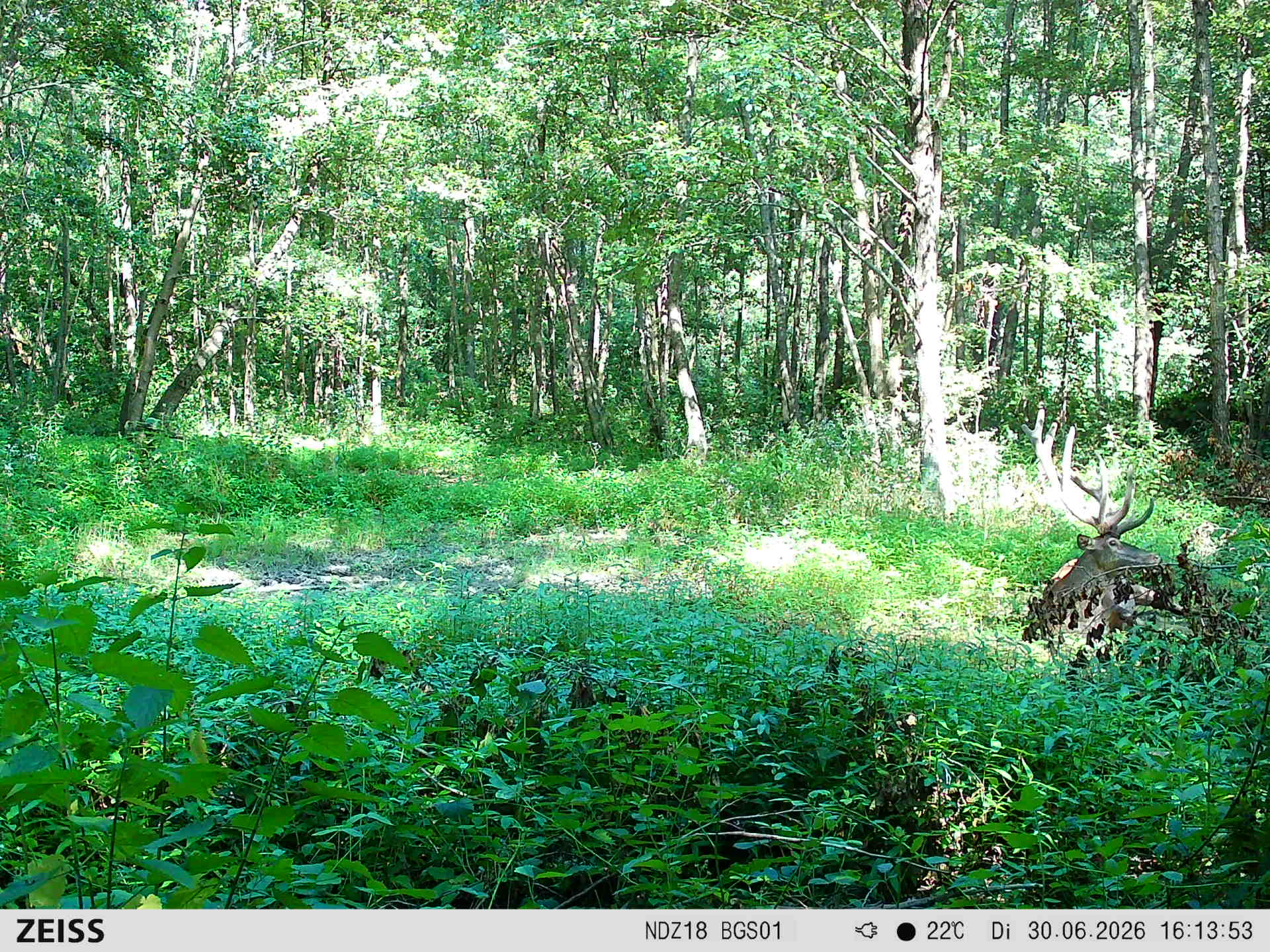
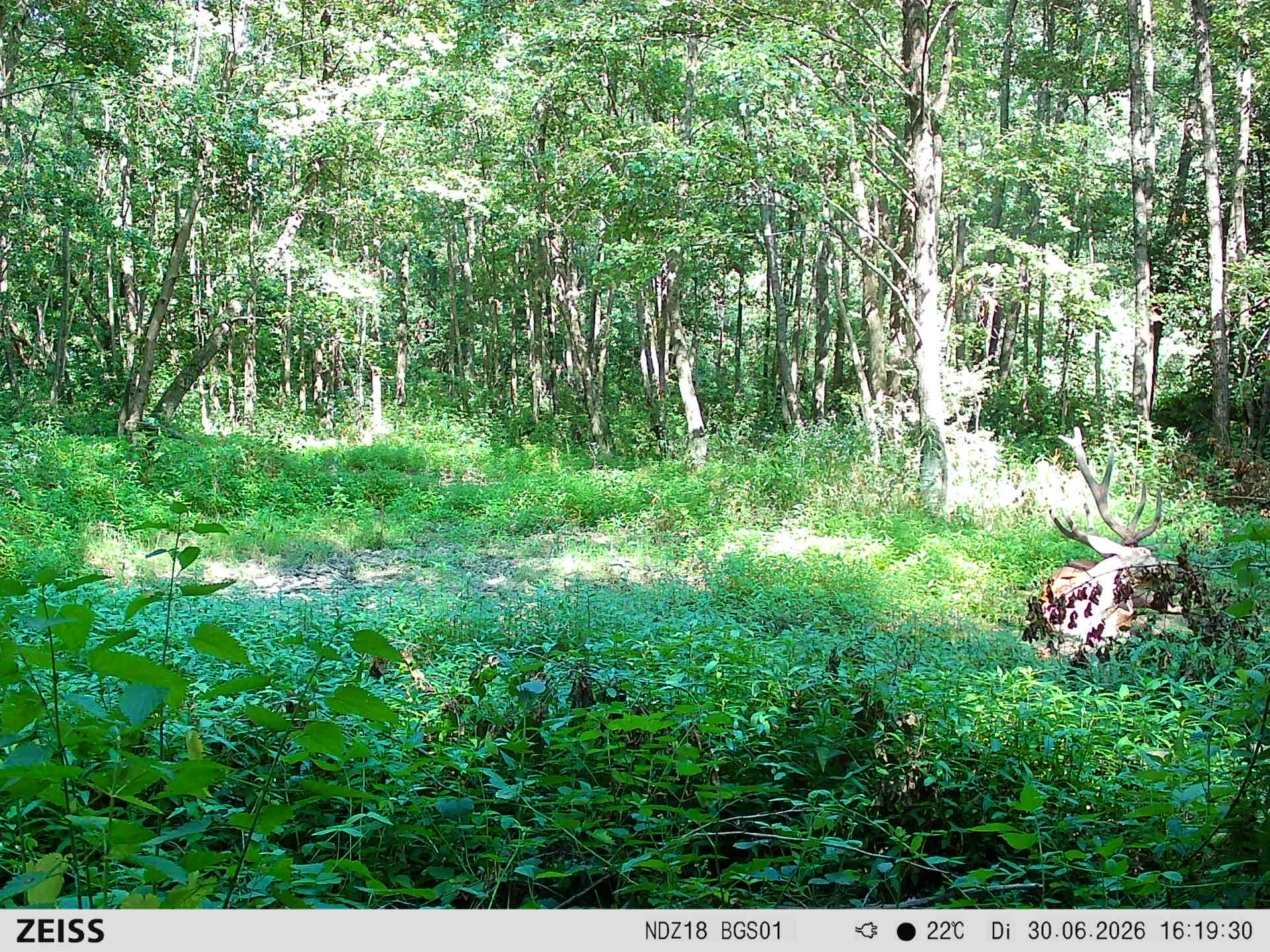
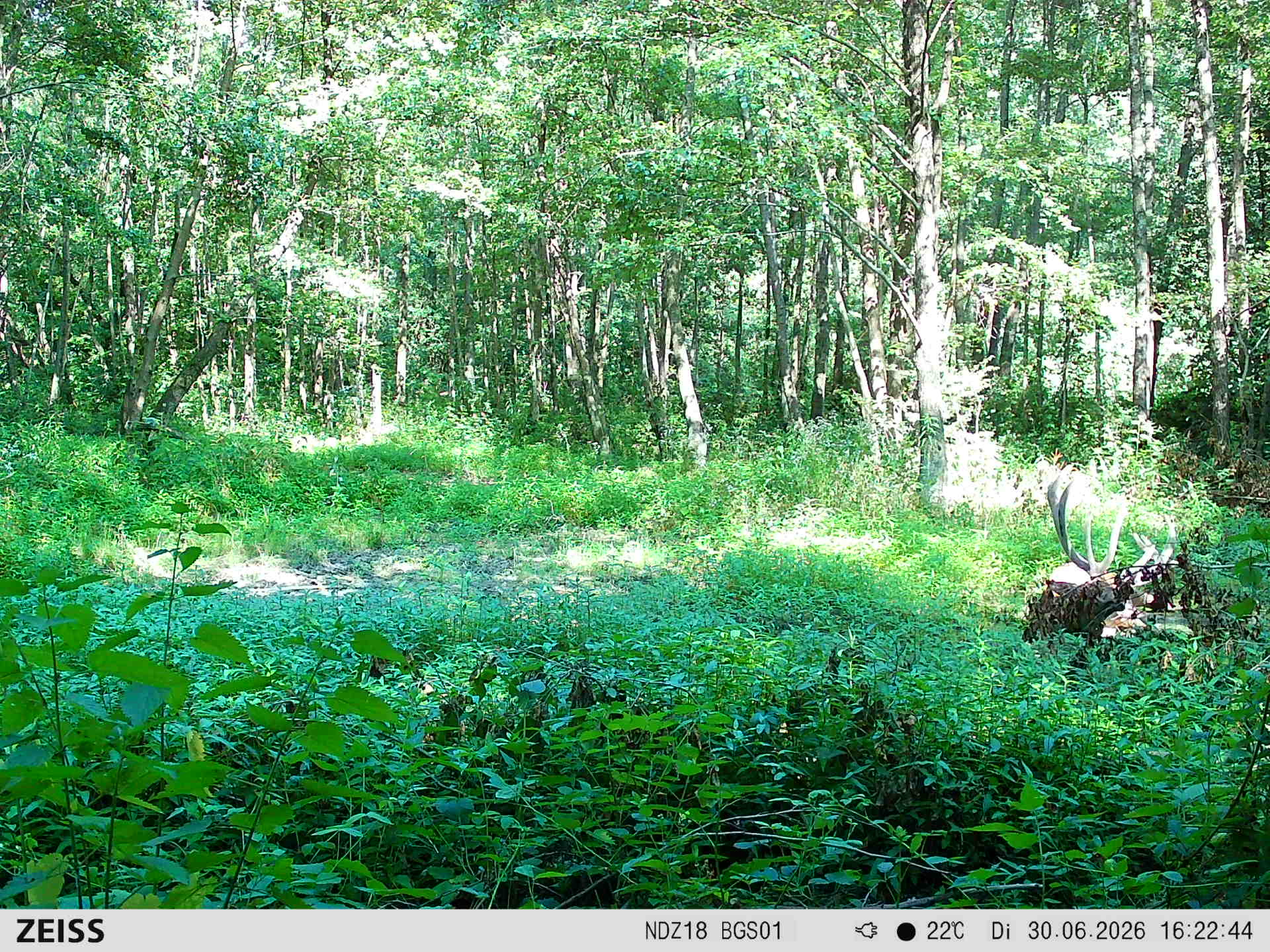
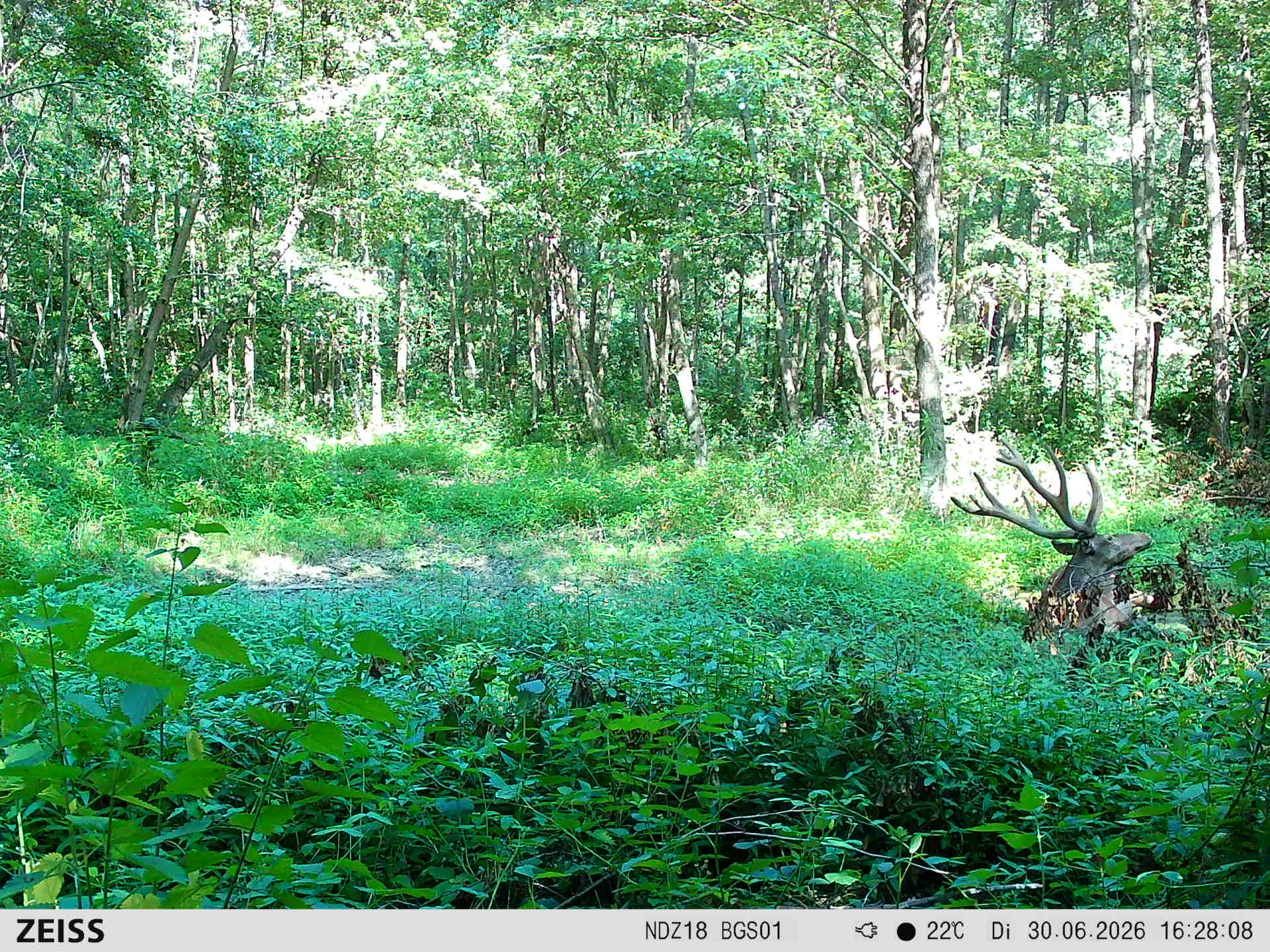
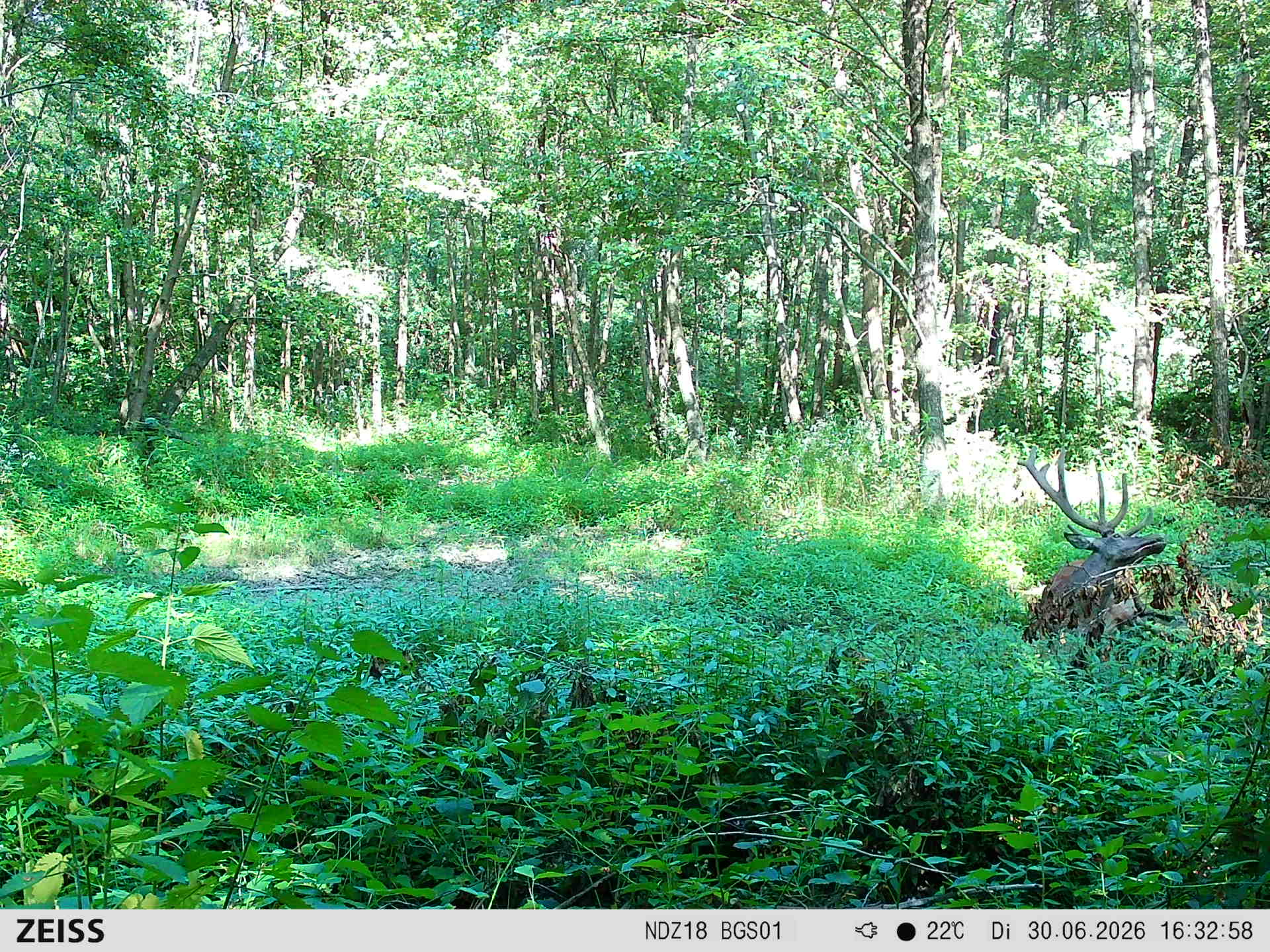
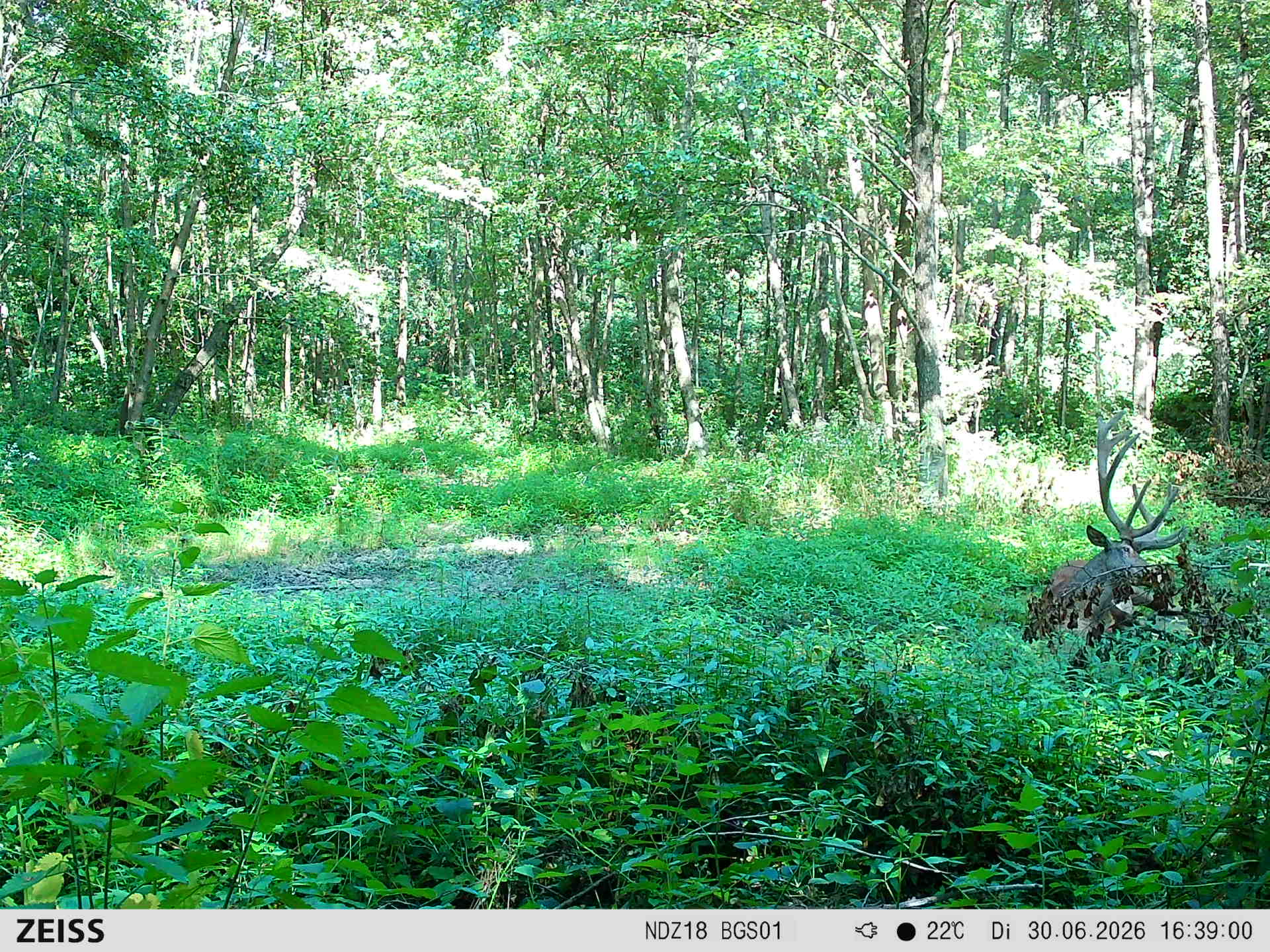
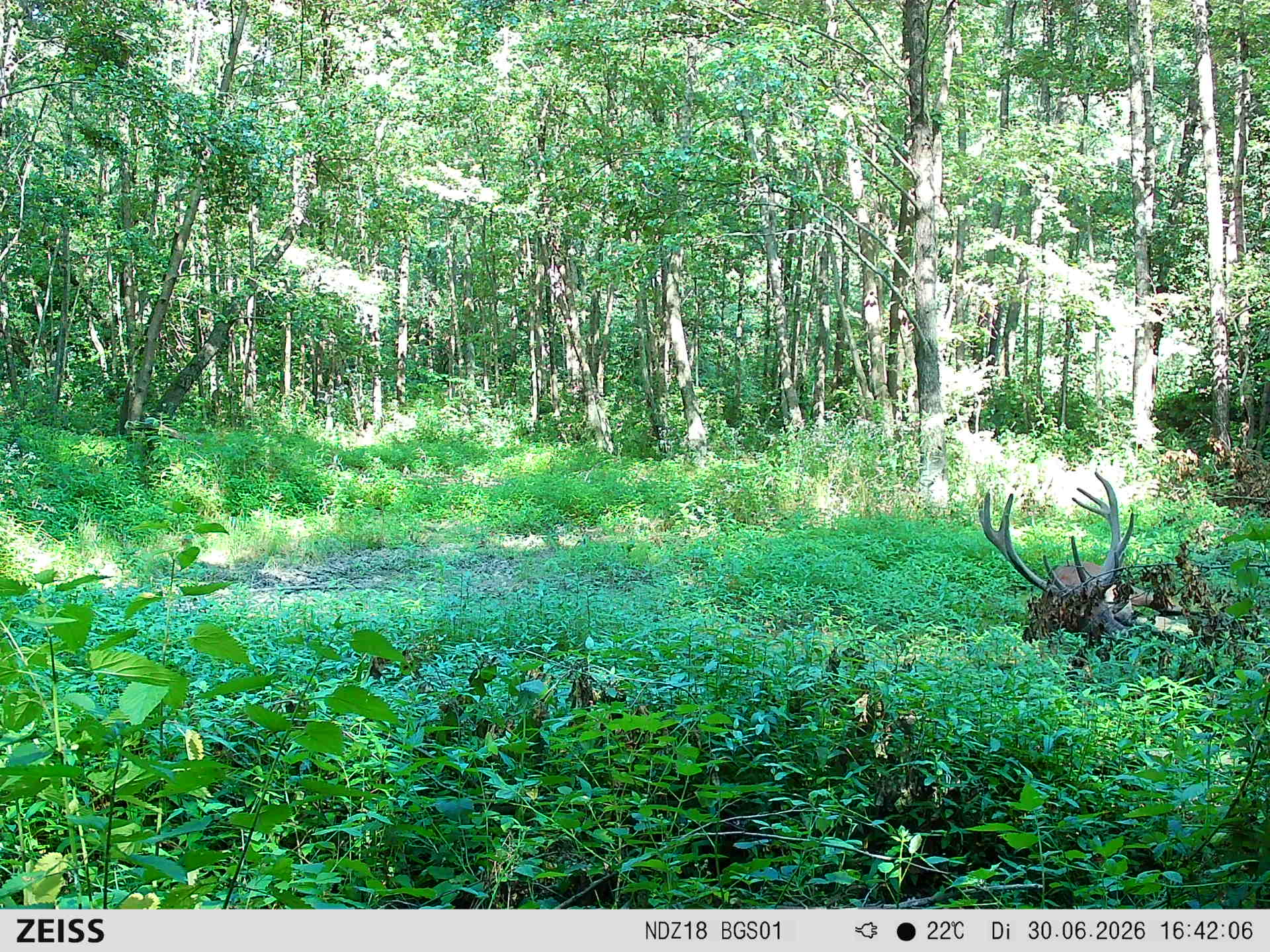
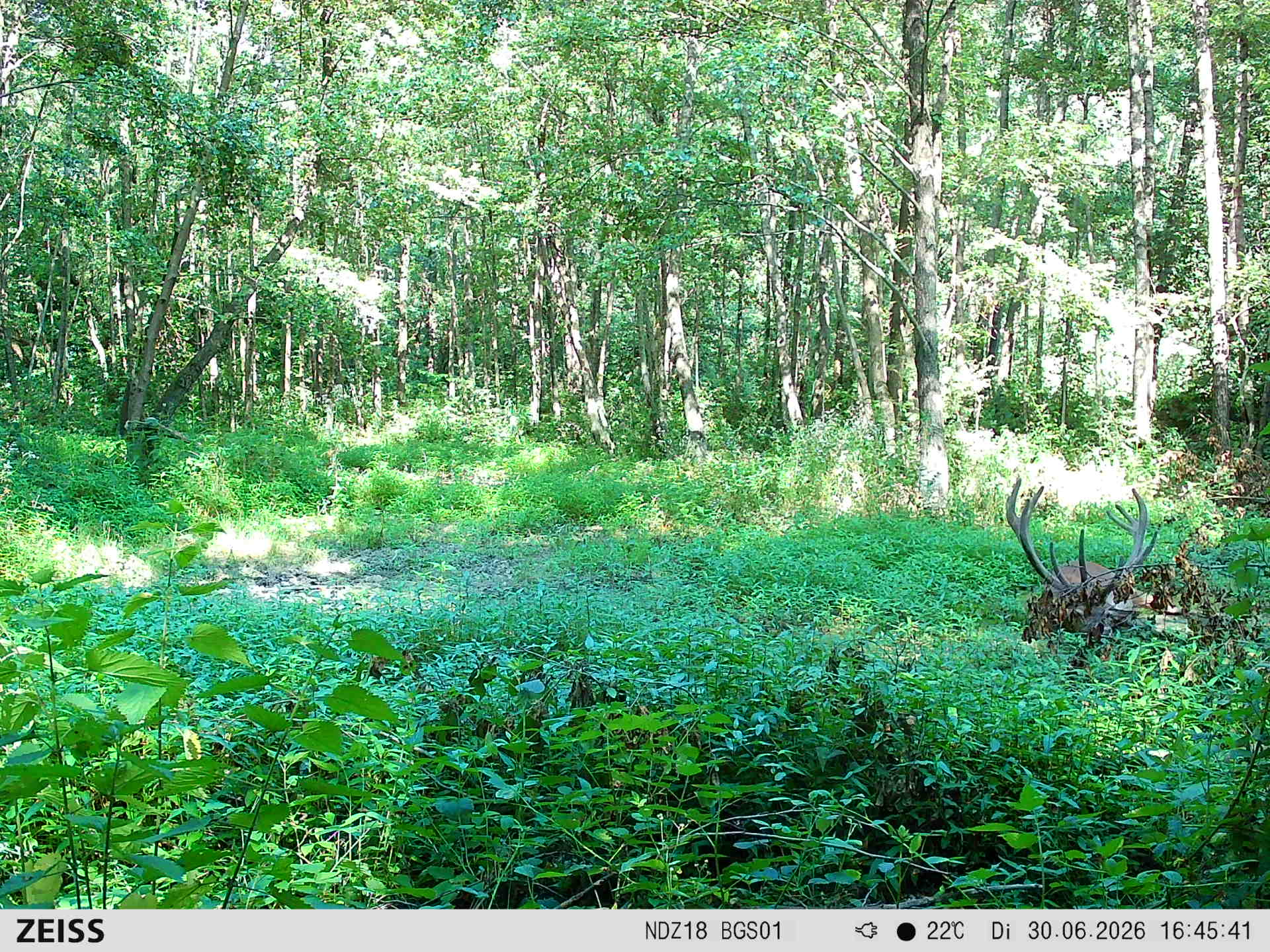
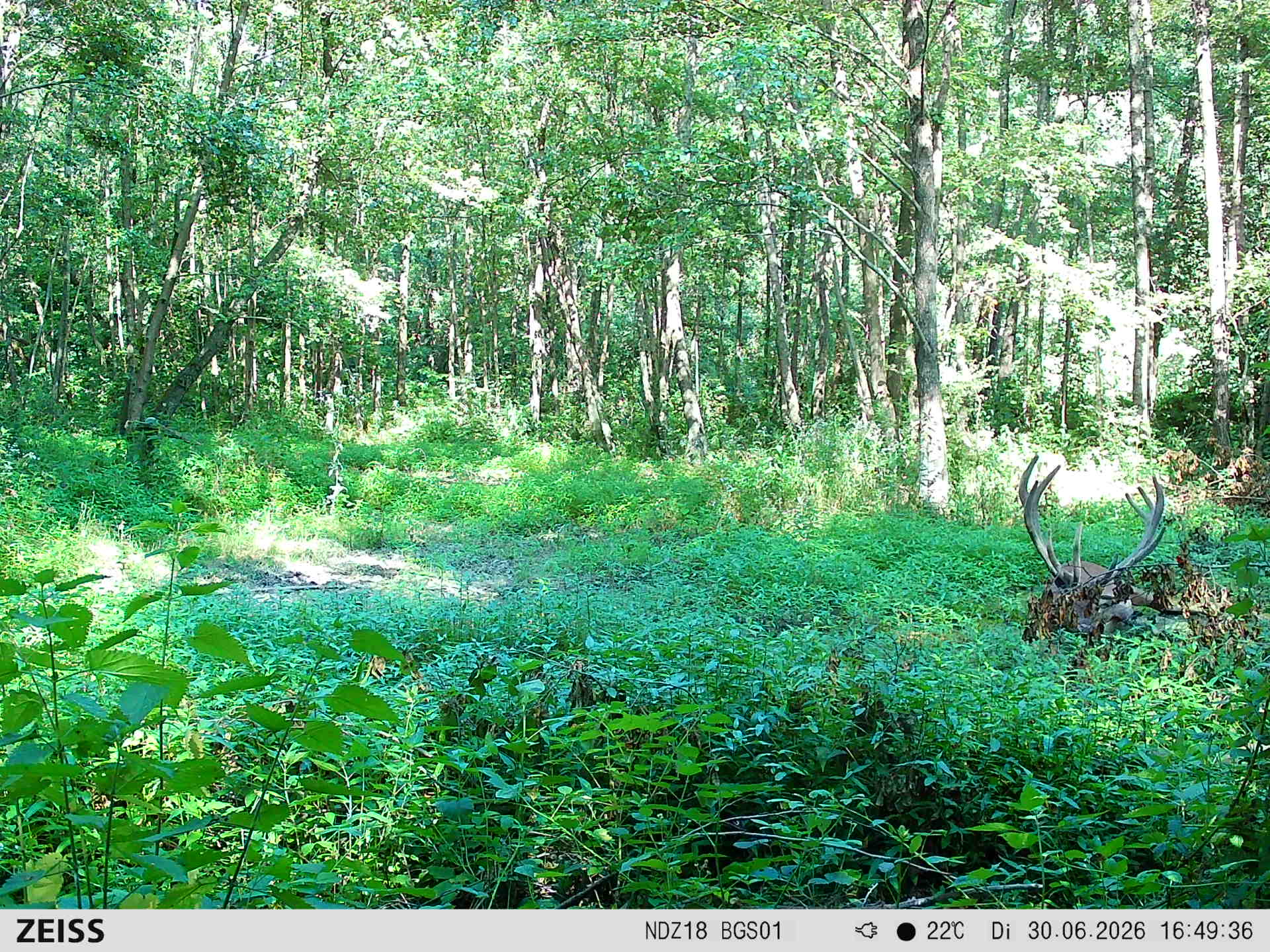
The actual rest began at 15:32 and continued, aside from small head movements, essentially uninterrupted until 16:49 – more than an hour. During this time the camera captured almost exclusively the towering antler crown, rising majestically out of the green sea of lush undergrowth thick with nettles.
The dense canopy shade and the cool mud provided perfect protection against both the heat load of the summer afternoon and the blood-sucking insects, allowing the stag to chew his cud undisturbed.
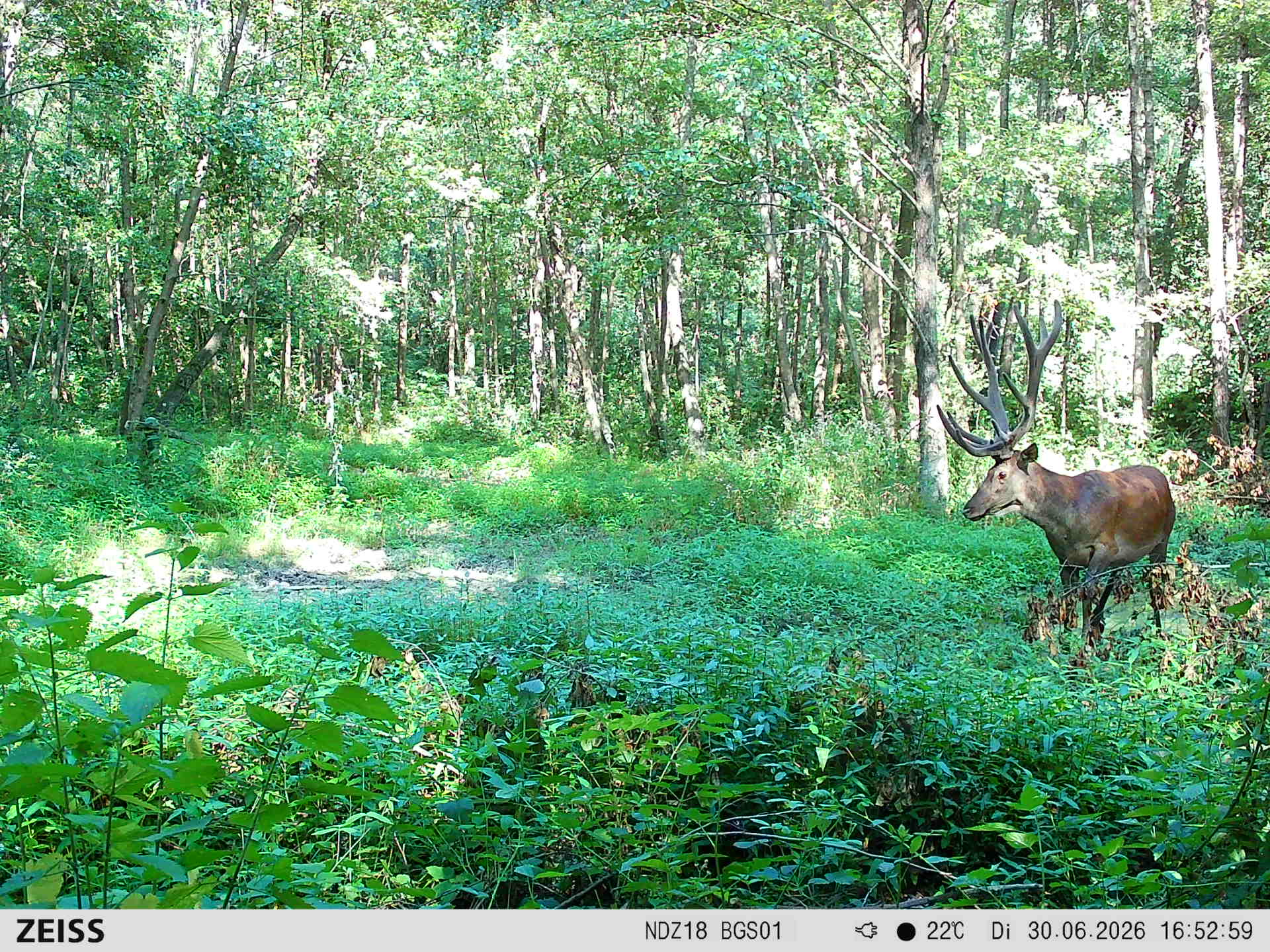
At this point in midsummer the antlers are still clearly in velvet; final hardening and the rubbing off of the drying velvet will only happen in August – but the beam structure already carries remarkable promise for the rest of the season.
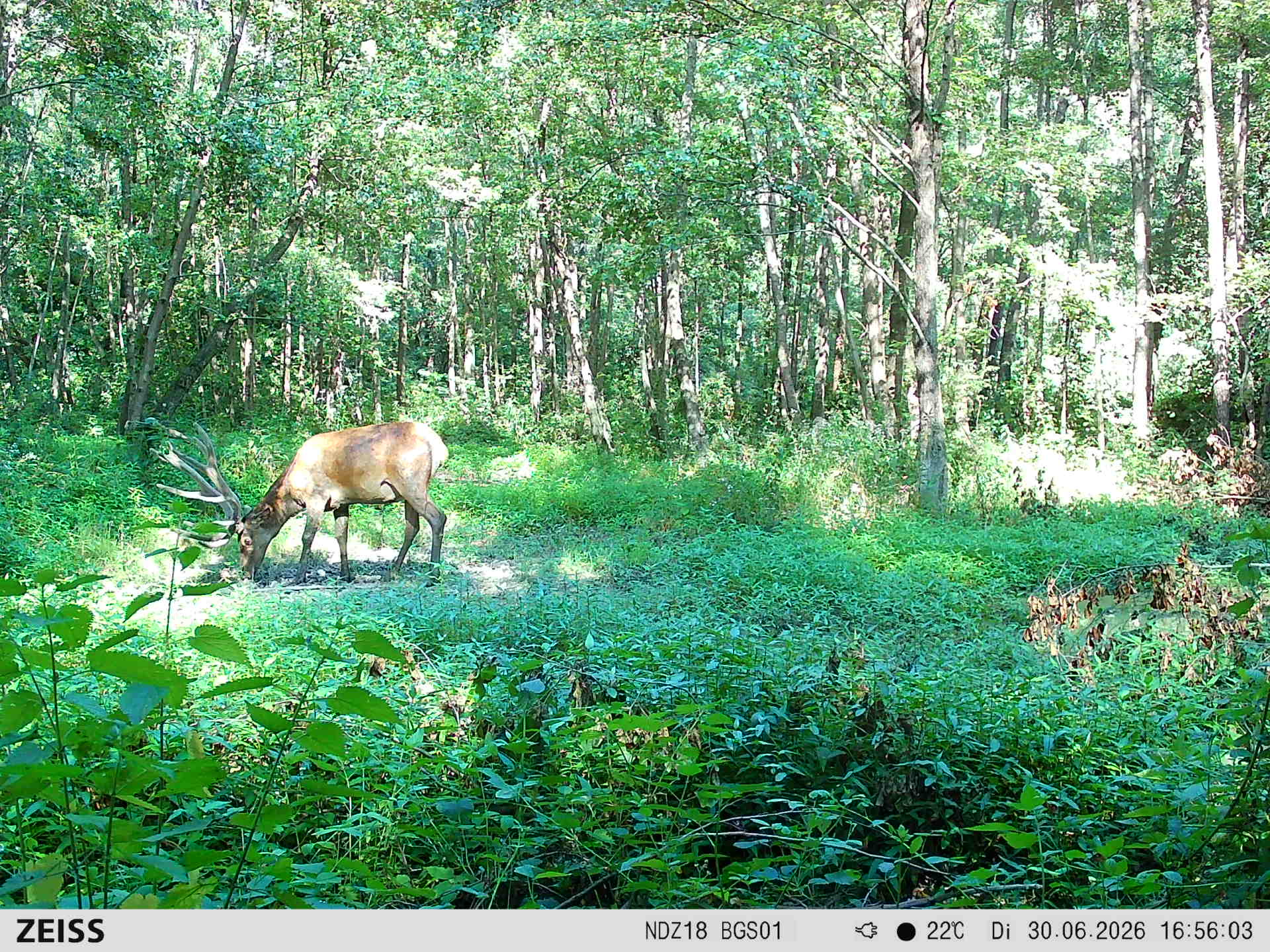
At the end of the rest, at 16:49 he first lifted his head more alertly, and at 16:52 he got to his feet and, with a few cautious, watchful steps, left the immediate area of the mud bath. A few minutes later, at 16:56, he was already feeding again, head lowered, grazing at the edge of the clearing – nicely closing out this long, carefree afternoon rest.
This chronicle of a few hours, assembled from small moments, embodies exactly the kind of understanding that bowhunters stand behind trail cameras for: not the fleeting sight of the trophy, but the habitat, the daily rhythm, and the real, undisturbed life of the game are what’s at stake. Every single recording is a piece of the mosaic of the stag’s condition, habits, and antler development – and at the same time a quiet invitation to observe, with humility, patience, and genuine respect, the natural rhythm of the forest, the field, and the wildlife living within it.