09.12.2025
09.12.2025
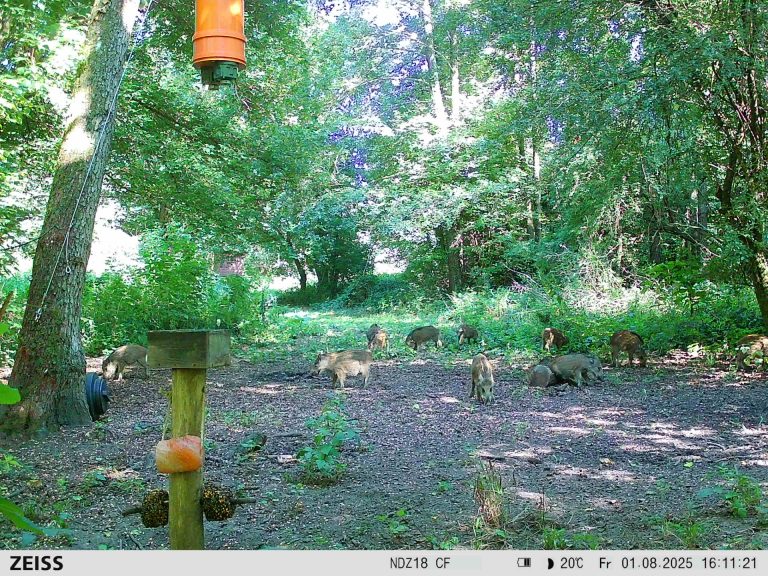
At night, shortly before midnight, I managed to make a shot on a piglet standing about 24 meters away, and the sounder of 11 piglets — no sow among them — barely flinched at the dull sound of the bow shot.
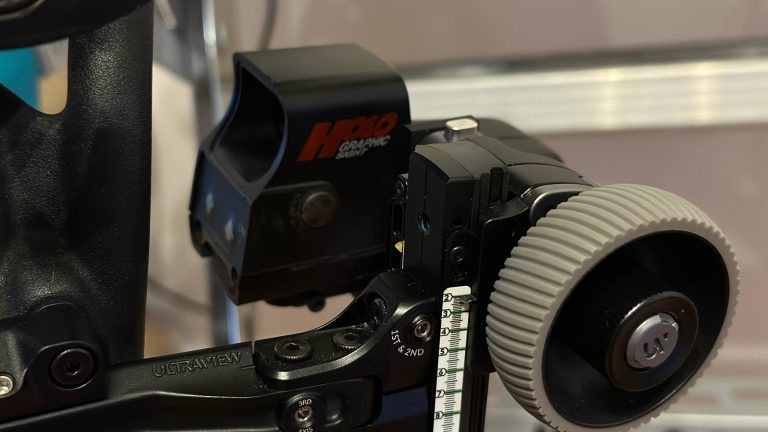
As it turned out later, the sight was set to 22.5 meters, not 25 as I had thought.
At night, in pitch darkness, it’s impossible to make out the marks on the sight.
The piglets went right on methodically hoovering up the scattered corn afterward, as if nothing had happened.
Meanwhile, I started whittling away at a little verse, inspired by Sándor Petőfi’s poem “The Tisza”:
"In the solemn silence,
only the soft rustle of their cautious nibbling could be heard,
or now and then a piglet let out a little grunt."
. . .
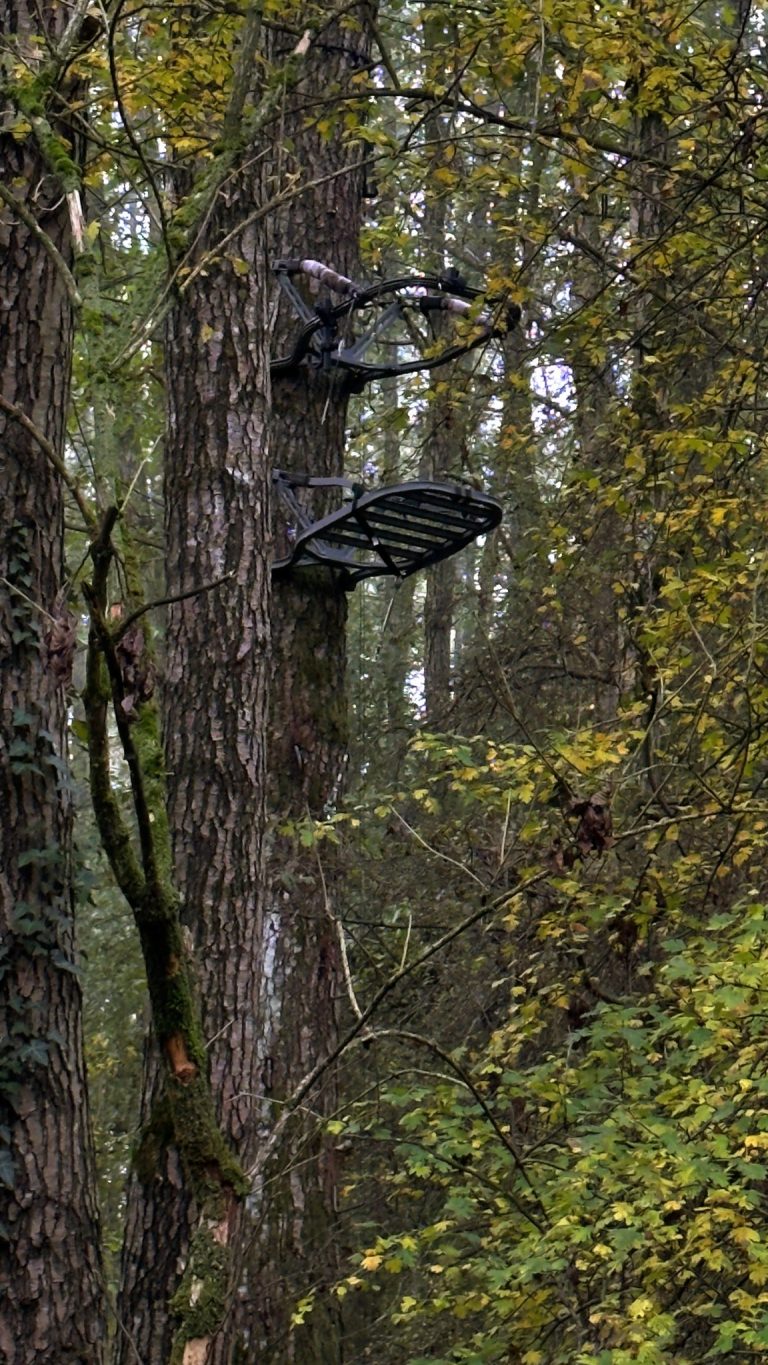
Since on the first hunt of every month I add useful bits of gear to my fixed tree stand that stays out year-round, winter and summer alike (a bow holder mounted to the tree and its fittings, a two-arm bracket for the arrow quiver and the spotlight, . . . ), this morning I only brought back to the lodge the bare essentials.
09.13.2025
Today’s night hunt went the usual way: in perfect silence and with endless patience.
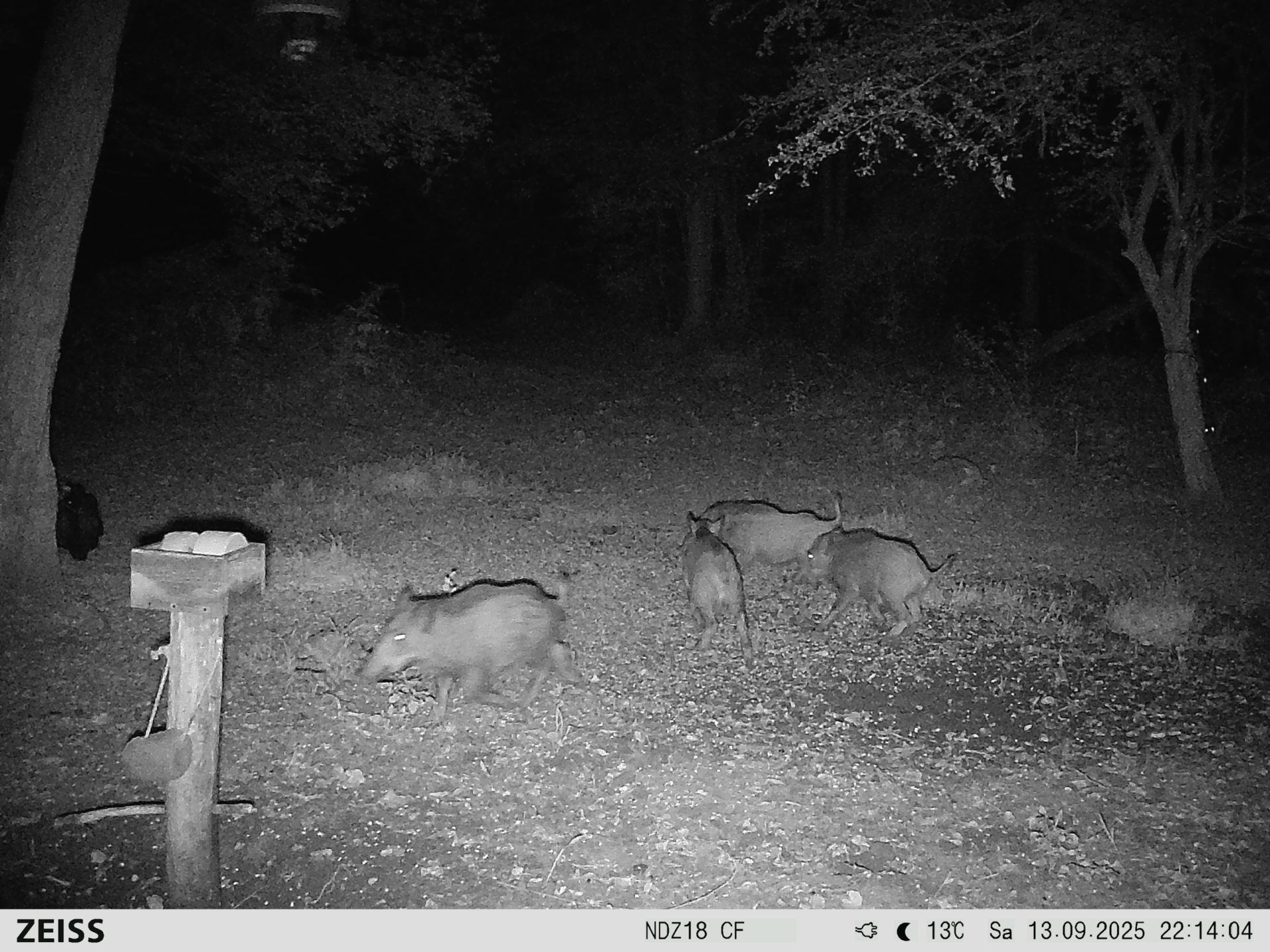
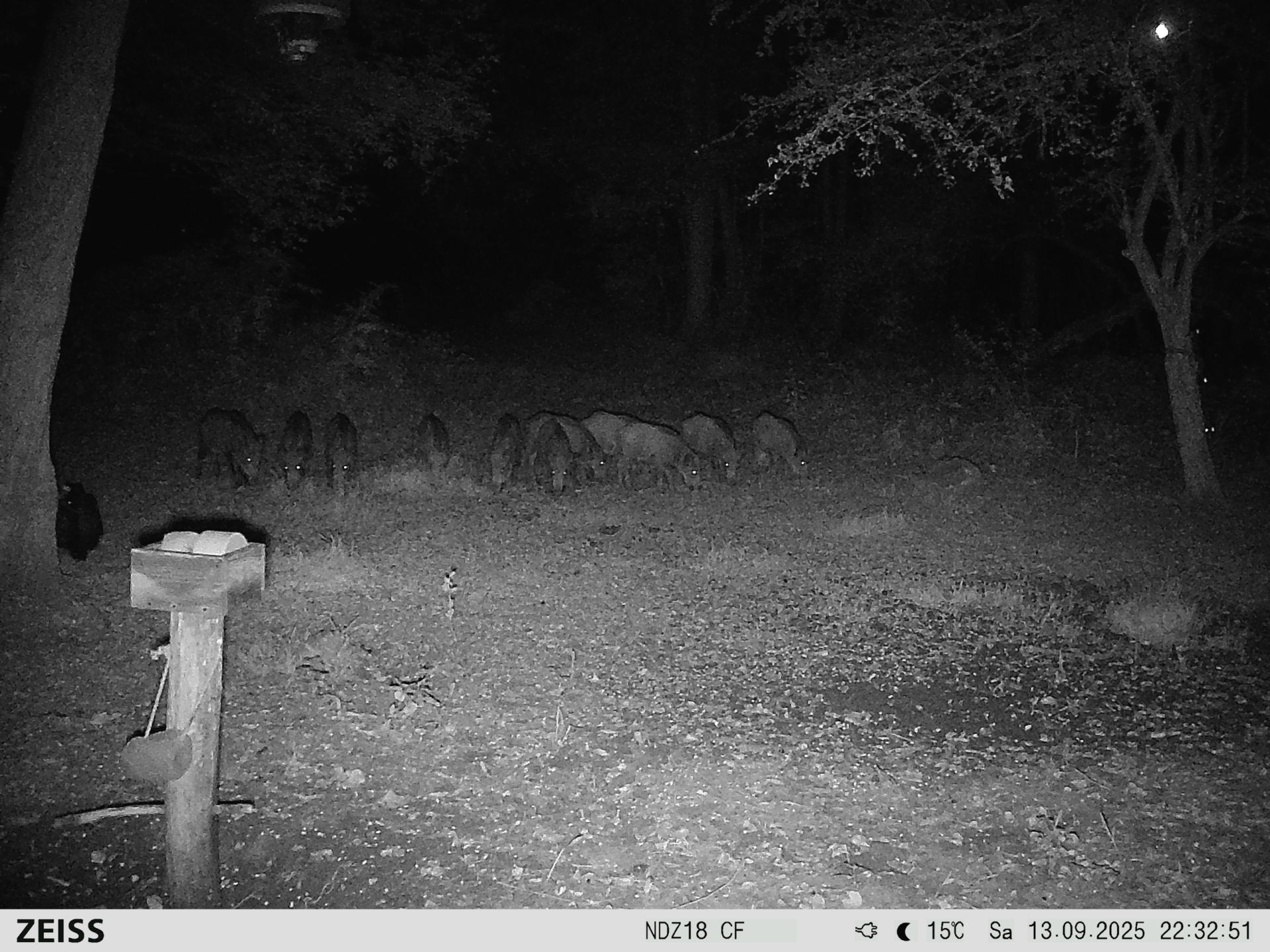
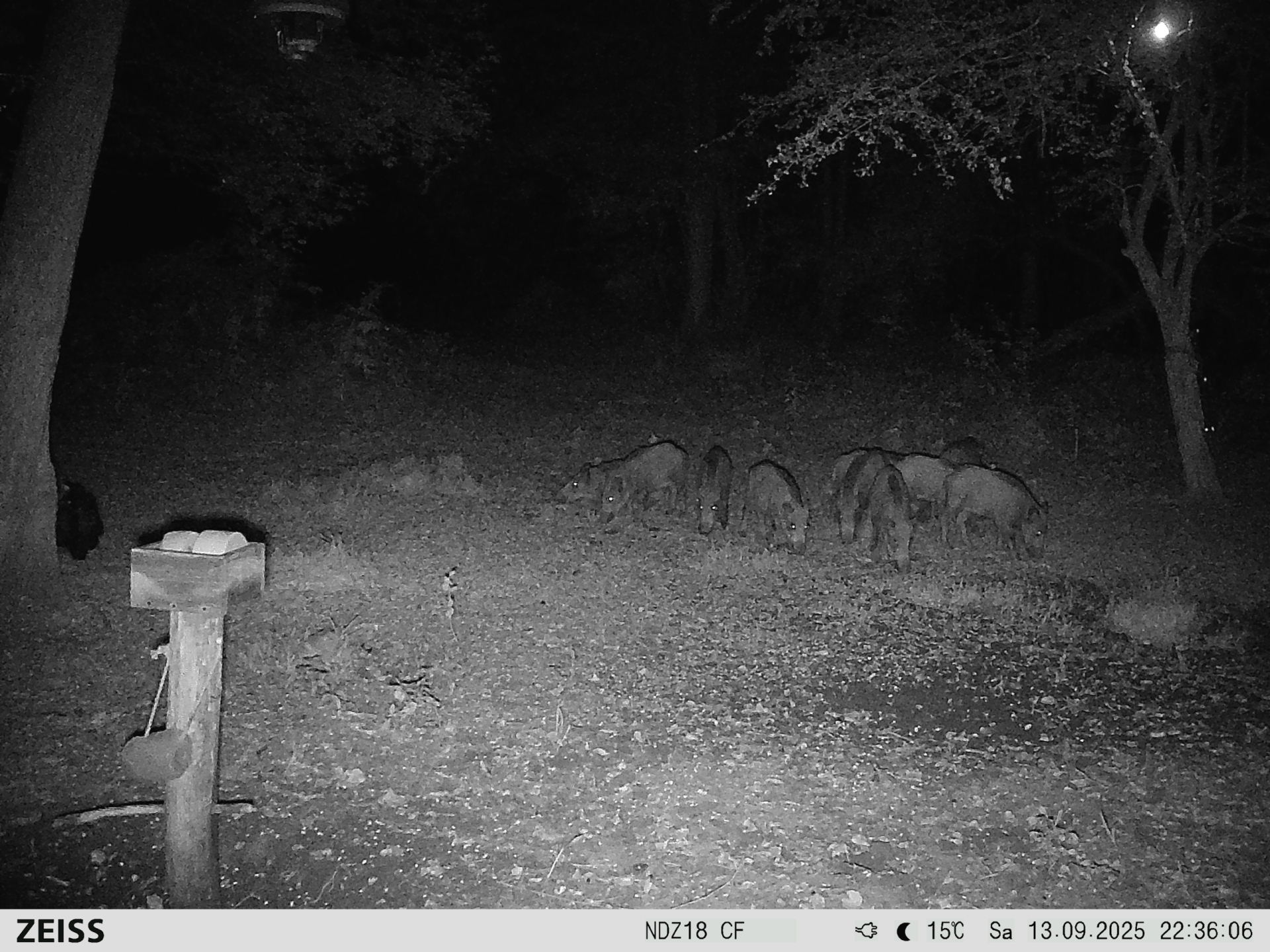
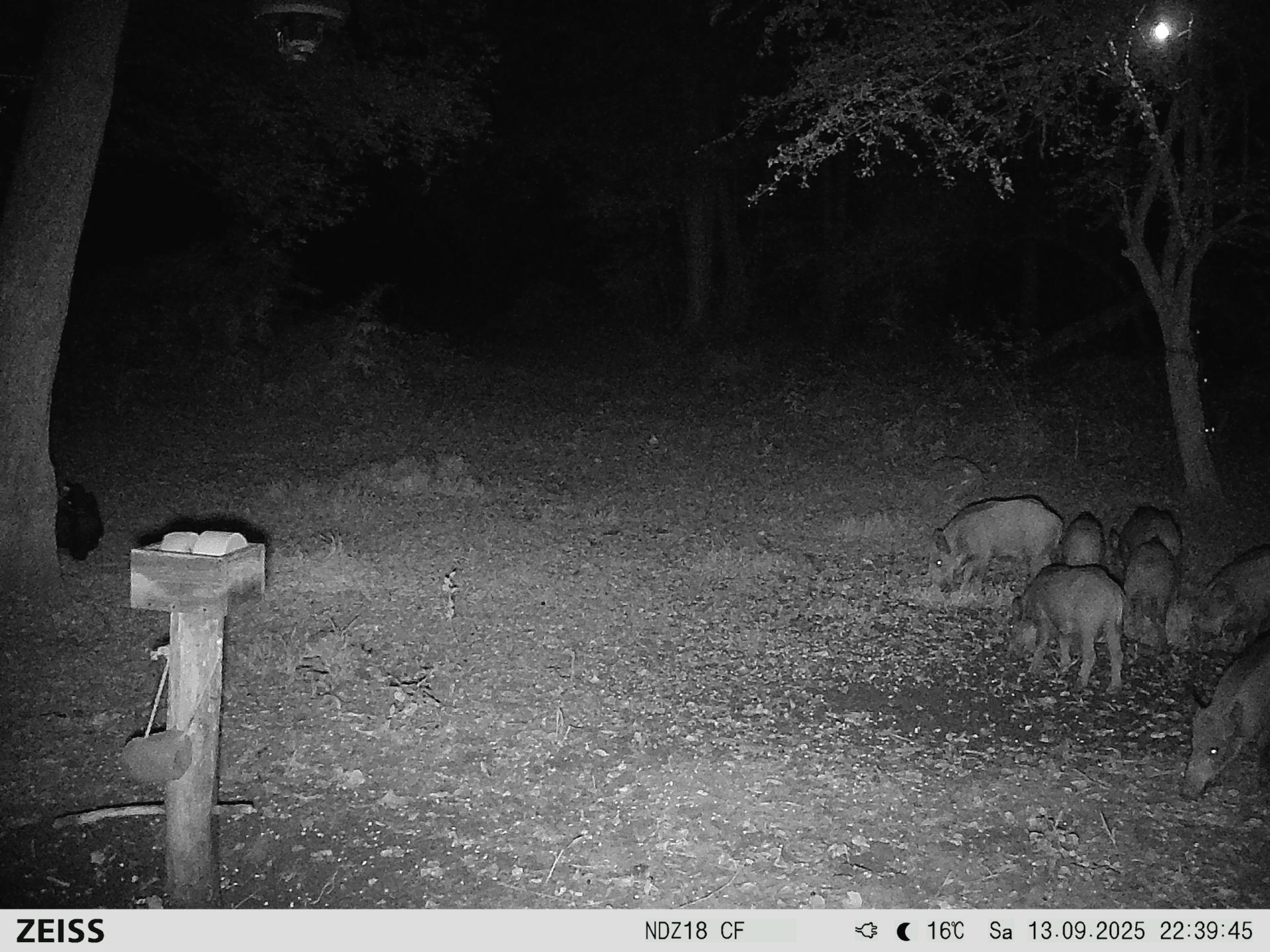
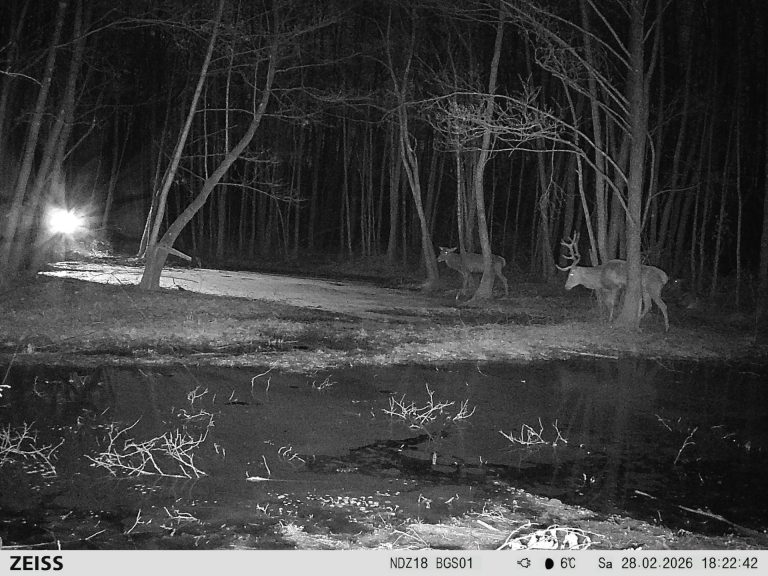
The sounder of 11 piglets, no sow among them, arrived silently tonight after 10 p.m. — with no advance warning at all. (For occasions like this I set my cameras nearby to send instantly and to a one-minute inactivity window, so that, if possible, I get real-time word of game movement well ahead of time.)
They approached in total silence under the foliage, like little ghosts.
I only noticed that they were chewing discreetly, almost politely quiet, staying tucked behind cover behind the feeder, blending into the darkness of the forest like shadows.
Carefully I started up the Sidus Link app on my phone, hoping it would quickly find the two lamps set up to light the feeder.
Since the last update it takes a bit longer to find the lamps’ Bluetooth channel.
Luckily the connection between the app and the lamps was established almost instantly.
Then, with a medium green light (R0, G80, B0) at the lowest intensity, I tried to make the goings-on at the feeder visible, but even to this they reacted immediately:
startled, they jumped a few meters away, then after a few minutes of quiet they settled back down and went on eating.
I changed strategy so as not to spook them.
I switched to the previously proven red light (R255, G4, B0) at its lowest setting — this disturbs the game less at night.
From 25 meters away, 8 meters up, I watched their reaction through the thermal camera: no movement, no alarm at all.
“This’ll do,” I thought, “we’ll carry on with this.”
The thermal camera, its job done, went back to hanging idle. I gave myself time for my eyes to adjust to the dim light.
I slowly raised the intensity of the red light over about four minutes, step by step.
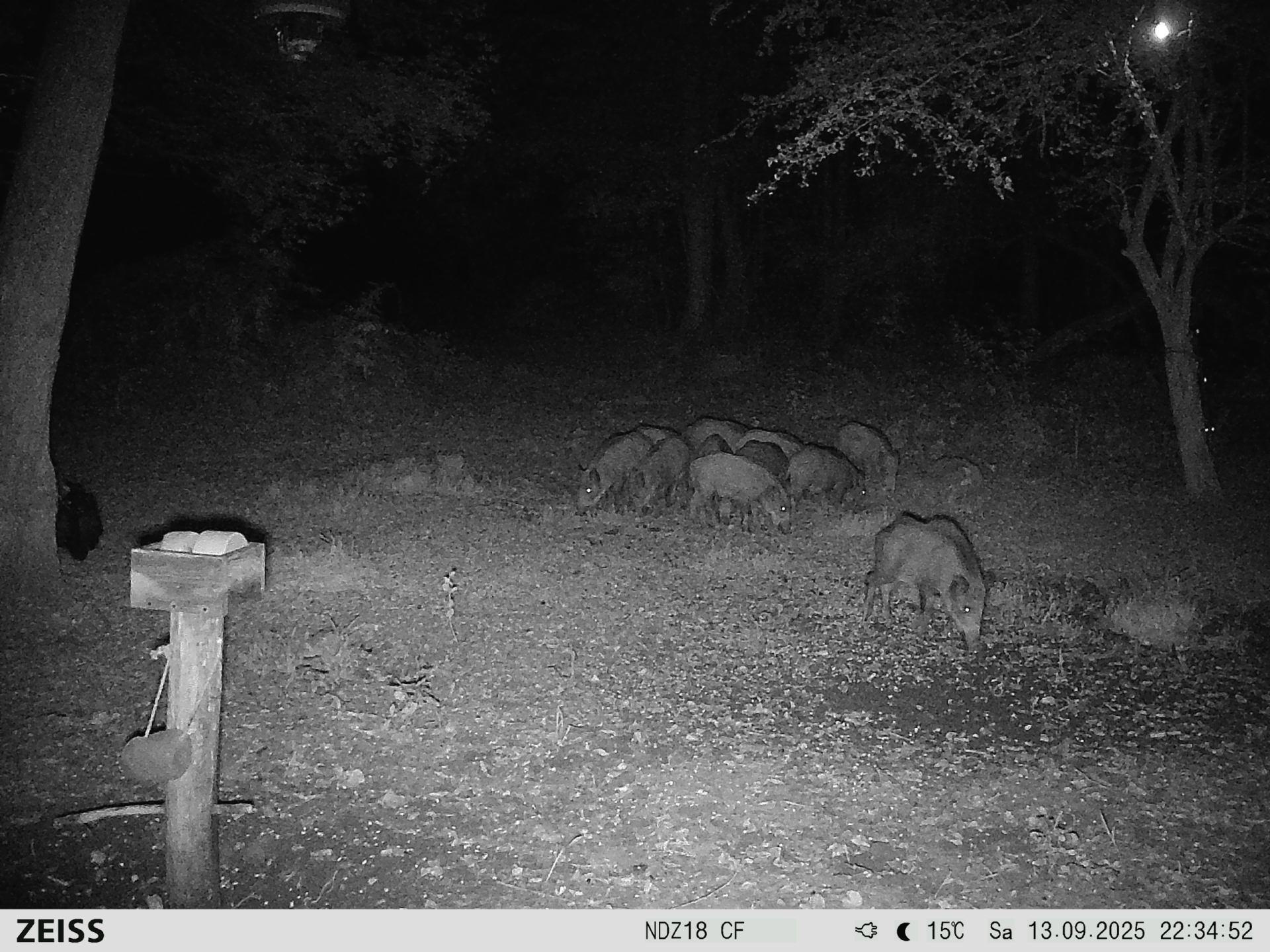
By the halfway point of the intensity I could already clearly see the piglets:
small shapes moving, stopping wherever they found corn.
From here I still had to raise the intensity further — if I’d left it as it was, there wouldn’t have been enough light through the sight for an accurate aim.
While it was still light I had set the sight to 22.5 meters, a middle value between the feeder’s distances of 20 and 26 meters.
The piglet I picked stood at 24m, and yesterday’s mistake flashed through my mind.
I didn’t correct the 22.5-meter setting by holding a bit high; instead, by feel, I adjusted very finely on the spot so I could place an accurate shot from 24 meters.
The piglets kept eating calmly, and I waited motionless for the right moment.
The silence of the night was broken by the swift-flying arrow
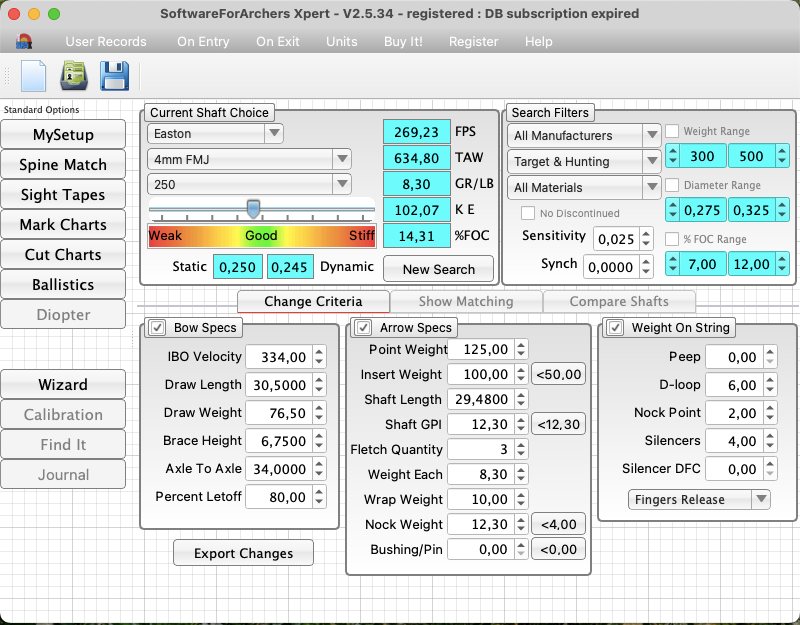
(Easton FMJ 4mm 250 spine, 634 grains total, with a G5 Megameat mechanical broadhead — not exactly a piglet-hunting setup)
and the dull thud of impact.
After the hit the piglet broke off from the sounder and ran into the thicket of trees and undergrowth across the way.
The rest of the piglets, disciplined and well used to each other, headed back the way they’d come.
A few moments later the forest fell quiet again — only the rustling made by the wounded piglet’s movement could still be heard, and then that too faded.
I hung my bow back up and sat back down on the stand.
I didn’t move, listening for every sound that might help me find the piglet.
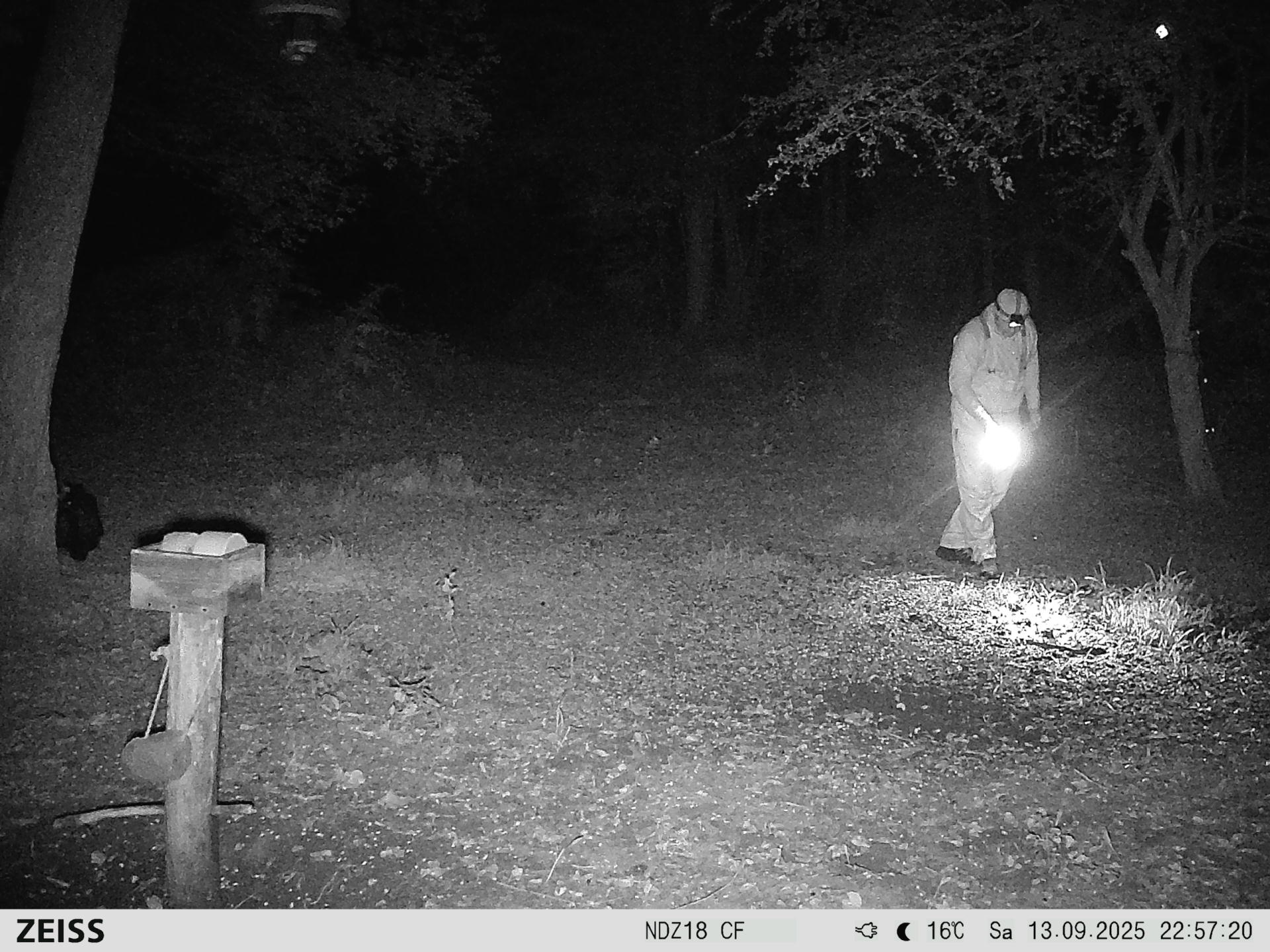
After ten minutes, once I was sure the sounder had moved off, I quietly put on my headlamp, then took the tracking light and my hunting knife out of my backpack.
I also took off my warm top — since now came the searching and active moving about.
The air felt warmer.
The piglet had covered maybe twenty meters after the shot, leaving behind a thickening blood trail in the leaf litter and the fresh, sprouting shoots.
I moved carefully through the dense forest — branches brushed my face, and at every step I watched for signs.
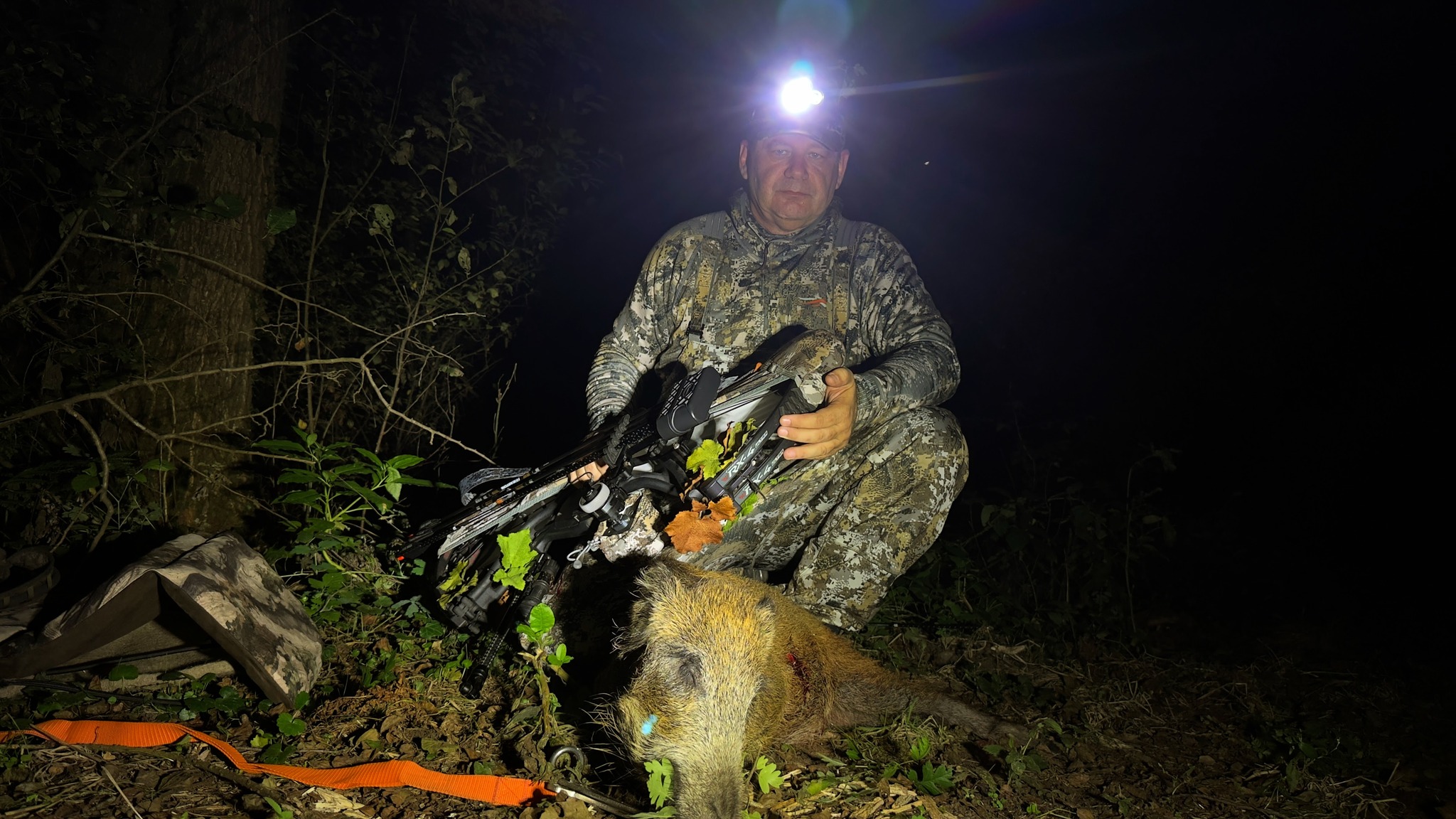
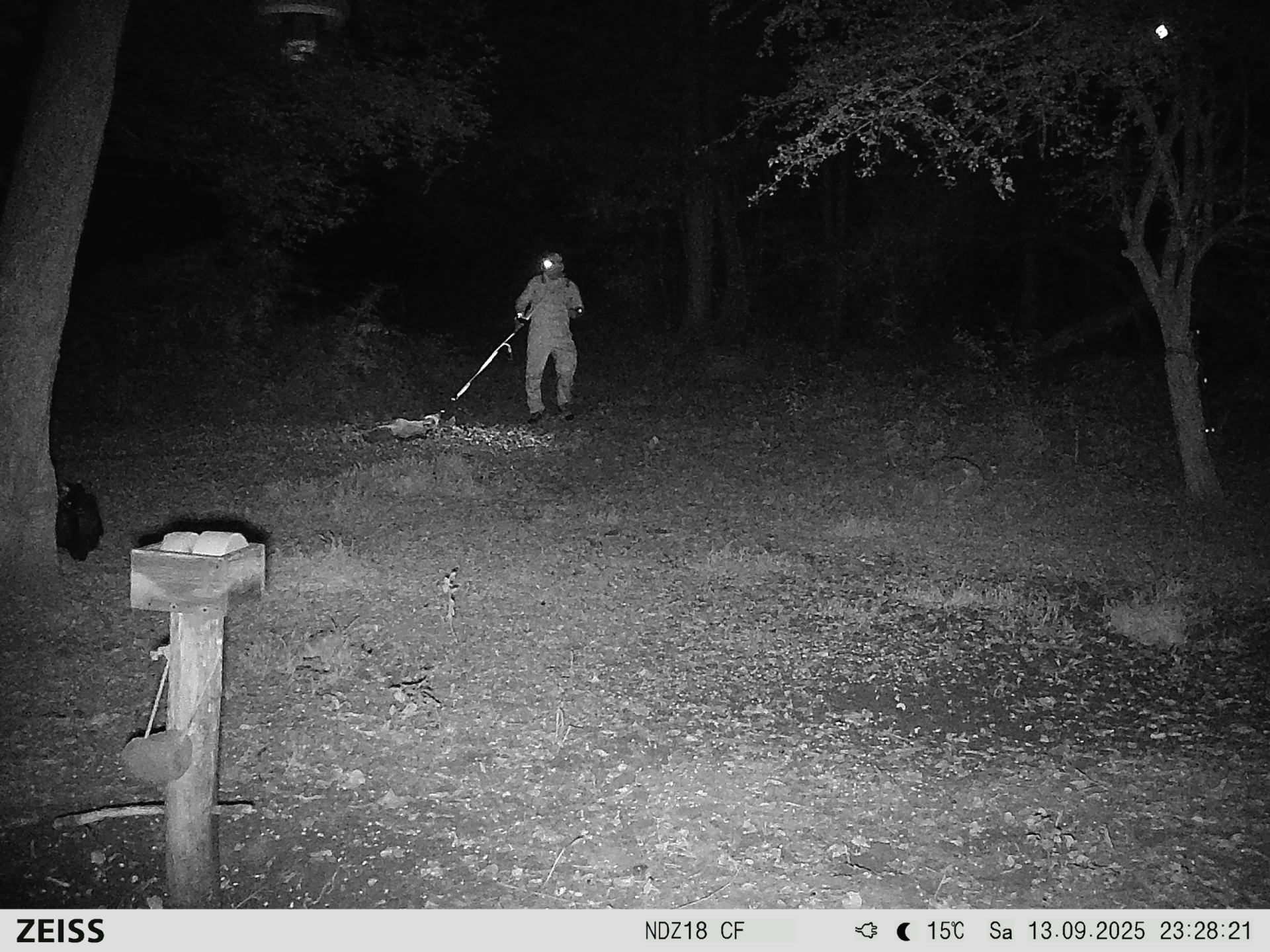
After roughly five minutes of searching I found it: lying motionless, having barely left its first bed.
The shot had broken through the last two ribs, hitting the rear part of the lung and a piece of the liver, on the horizontal midline of the body.
(So the distance correction on the sight turned out, provably, to be spot on.)
The arrow passed through slightly angled, exiting toward the rear on the other side.
At the point of the shot it had buried itself deep in the ground.
The G5 Megameat mechanical broadhead made a large wound, and the heavy bleeding brought the animal down quickly.
(The tracking video is unedited footage showing the details.)
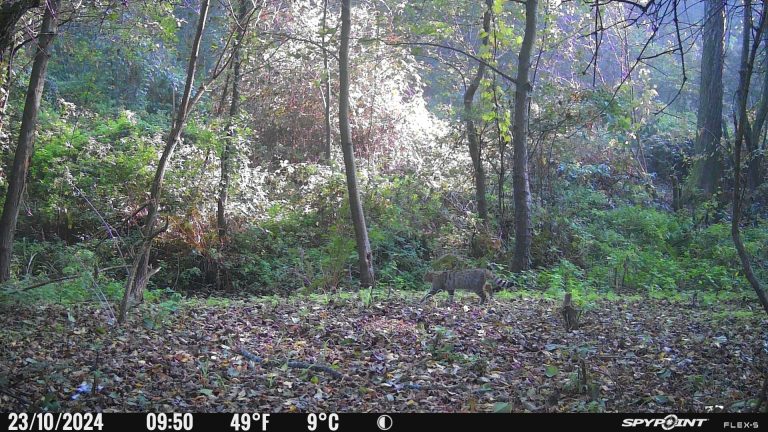
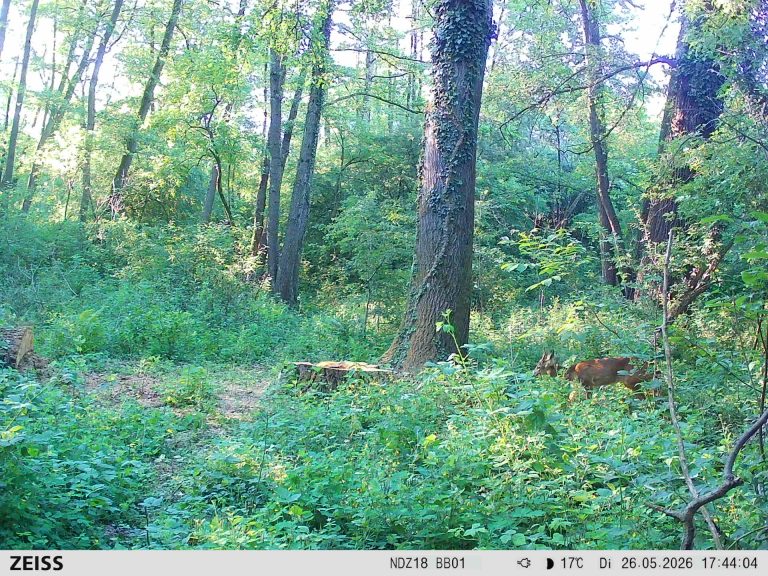
The photos show the moments of the hunt in chronological order.
Respect and peace to the game!