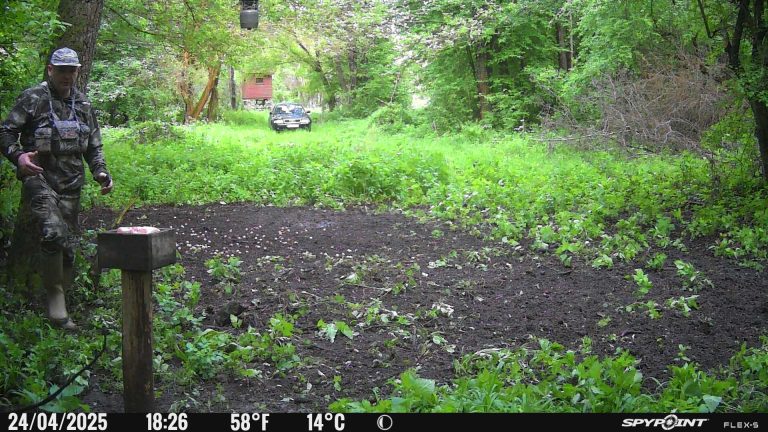
Since the most recent successful hunt — whose trace will no doubt linger at the site for a long time —…
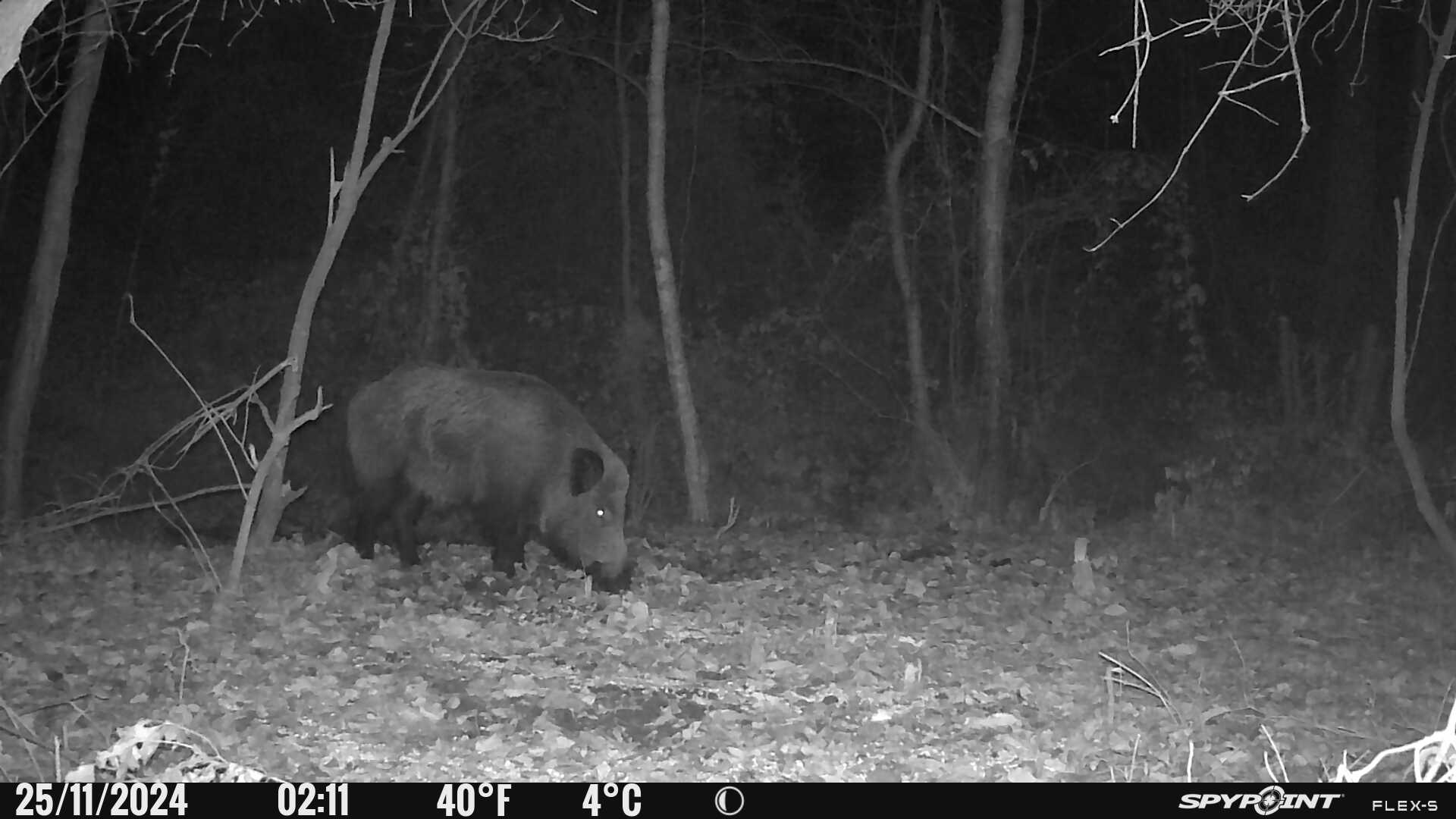
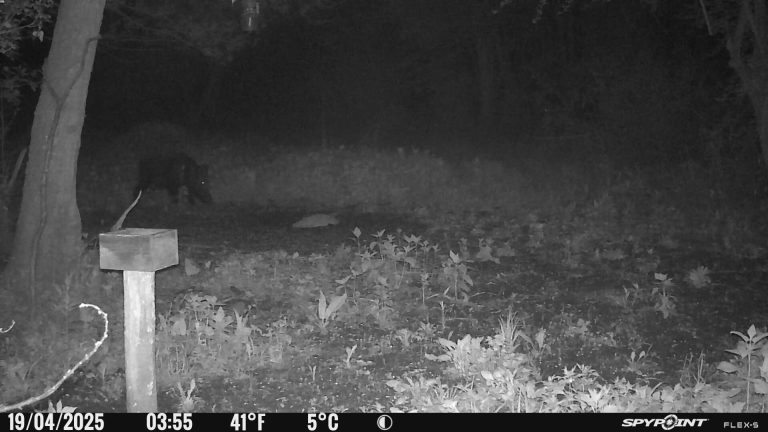
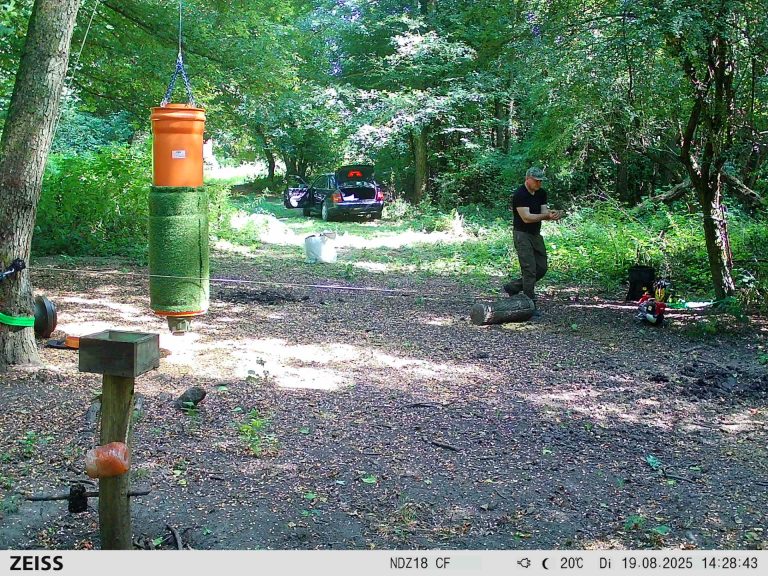
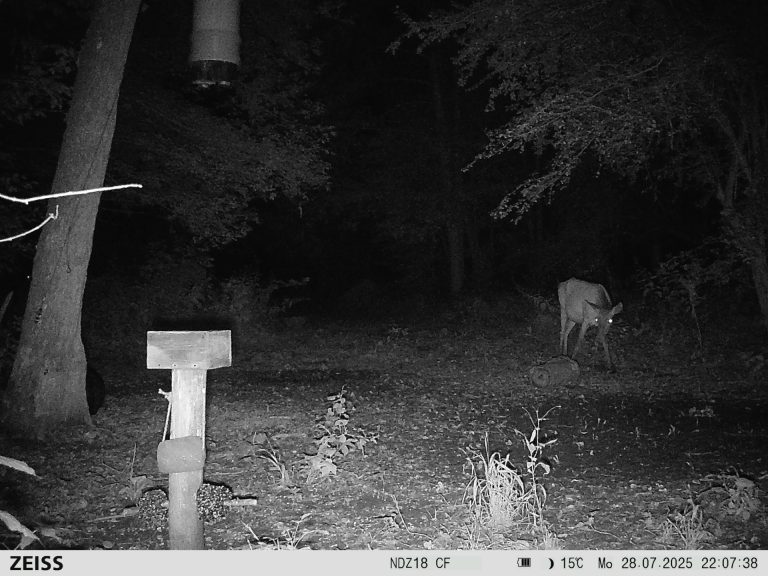
Since the most recent successful hunt — whose trace will no doubt linger at the site for a long time — this young boar came to this feeder for the first time.
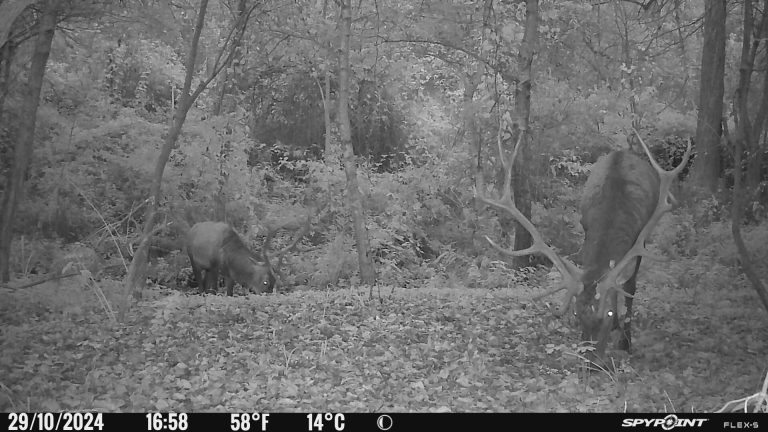
With the dwindling acorn crop under the oaks and the frosty nights, the game is nicely forced onto the regularly fed feeders.
In this area, this is truly when the patient hunter has a real chance.
It’s worth noting that this isn’t just about a shivering hunter, trembling in every limb from the frosty night-time minus temperatures, fervently praying for survival — it’s much more about someone who, in perfect silence (motionless for hours), yet alert to even the faintest rustle, comfortably spends the time of the stand hunt on a stand with a floor area of half a square meter, nearly 10m up the tree.
For this, quality, deliberately layered clothing is essential.
For me, based on the experience of recent years’ frosty winter nights, this clothing is the result of continuous refinement and consists of the following:
Bottom:
– ThermoFunction TS300 men’s base layer
– LENZ heated socks
– Thermowave 3in1 men’s base layer
– Sitka fanatic bib pants / Hubertus men’s stand pants Iceland
(depending on temperature)
– Baffin Apex snow boots
Top:
– Thermowave 3in1 long-sleeve base layer
– LENZ heated vest
– Sitka fanatic hoody
– Devold Egga grid merino cardigan
– Sitka traverse jacket
– CamelActive fleece vest
– Fjällräven Polar Expedition fleece top
– Sitka fanatic beanie
One-piece suit:
– Rascher "Thermofleece" men’s stand suit (genuine Polartec, quiet and remarkably thick)
Accessory:
– Sitka hand-warmer muff + 2 x instant thermopads
On top of all this, or rather underneath it :), I also sorted out two-stage seat heating for the SUMMIT Viper Pro climbing treestand.
/ I fitted the original seat cushion with a zipper at the front, then replaced the poor, deforming polyfoam padding with a highly insulating 20mm thick VFG wool felt layer, a layer cut from a Thermarest Z Lite sleeping pad, and a 4mm thick multi-wall polycarbonate sheet.
Naturally, the latter serves only as a flexible stiffening element.
Directly under the cover fabric, I placed an aftermarket 12V car seat-heating insert, which in harsh weather is powered by a 12V 33Ah leisure battery.
Then there’s also my trusty Stanley Master thermos (tested to hold heat for 24h) close at hand, full of hot tea.
I only turn on the sock and vest heating when truly necessary, and only during the last two hours, and even then in interval mode (3 minutes heating, 15 minutes pause) and only on setting 2, otherwise the small batteries would run out prematurely.
This way I can hold out even 16 hours without trouble, even around -10C to -12C . . .
Granted, this is already such a thick layer of clothing that I can only just barely still draw my 76-pound bow.
It’s perhaps also worth mentioning that I bring the clothing used on the stand in a 20L and a 35L SeaToSummit Big River Dry Bag, waterproof.
The small items go in the smaller bag, the bulkier ones in the larger bag.
After changing, the empty large bag goes into the small bag, along with the arriving clothing, boots, and the bow’s protective cover.
If the weather is humid or damp, then also the extra one or two spare top layers, which aren’t needed yet at the start of the stand hunt.
This way I ensure myself a change of dry clothes, and this method also perfectly solves scent-free storage of the arriving clothing.