1. Ecological Camouflage and Anthropogenic Structural Adaptation
1. Ecological Camouflage and Anthropogenic Structural Adaptation
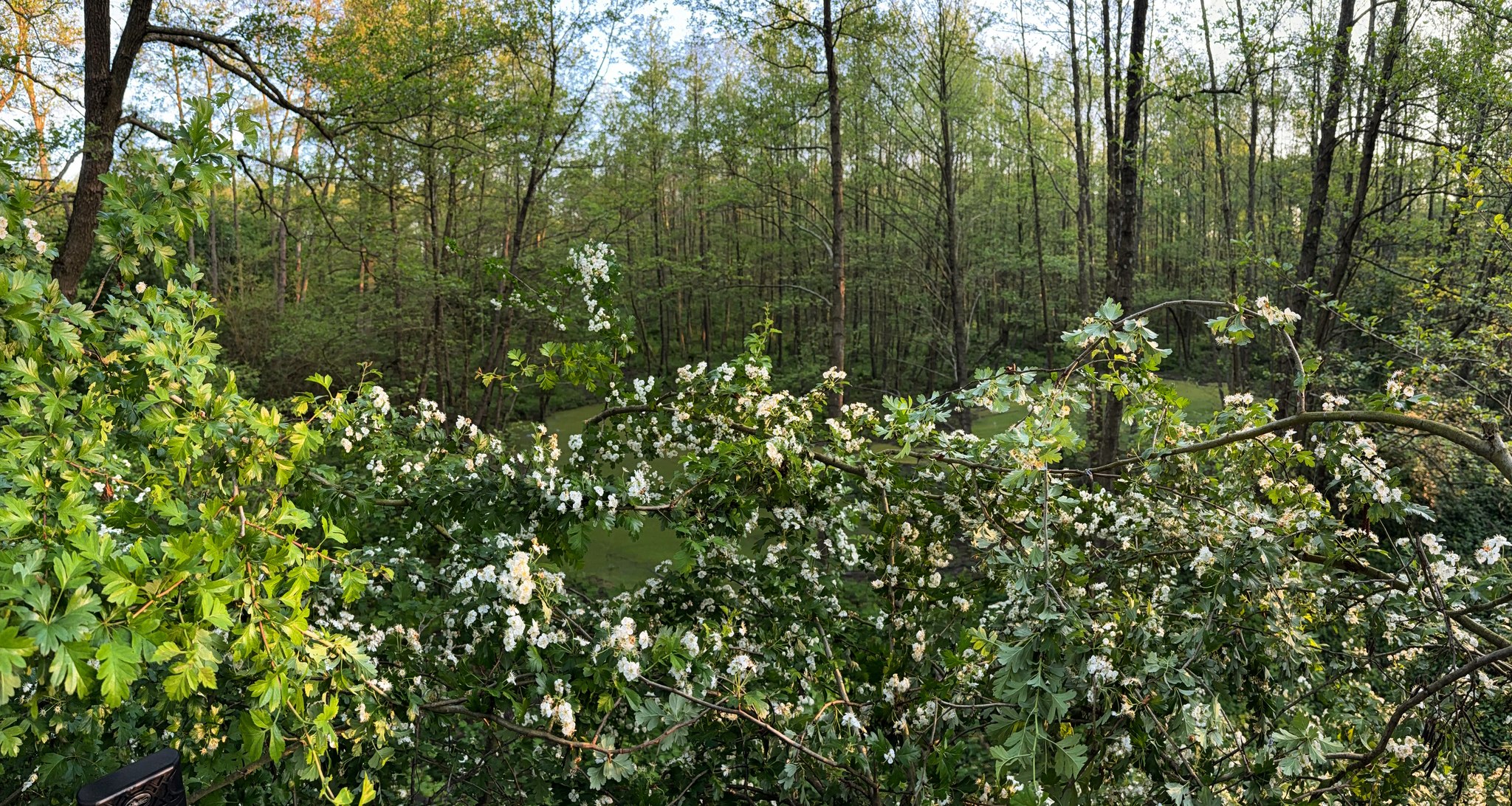
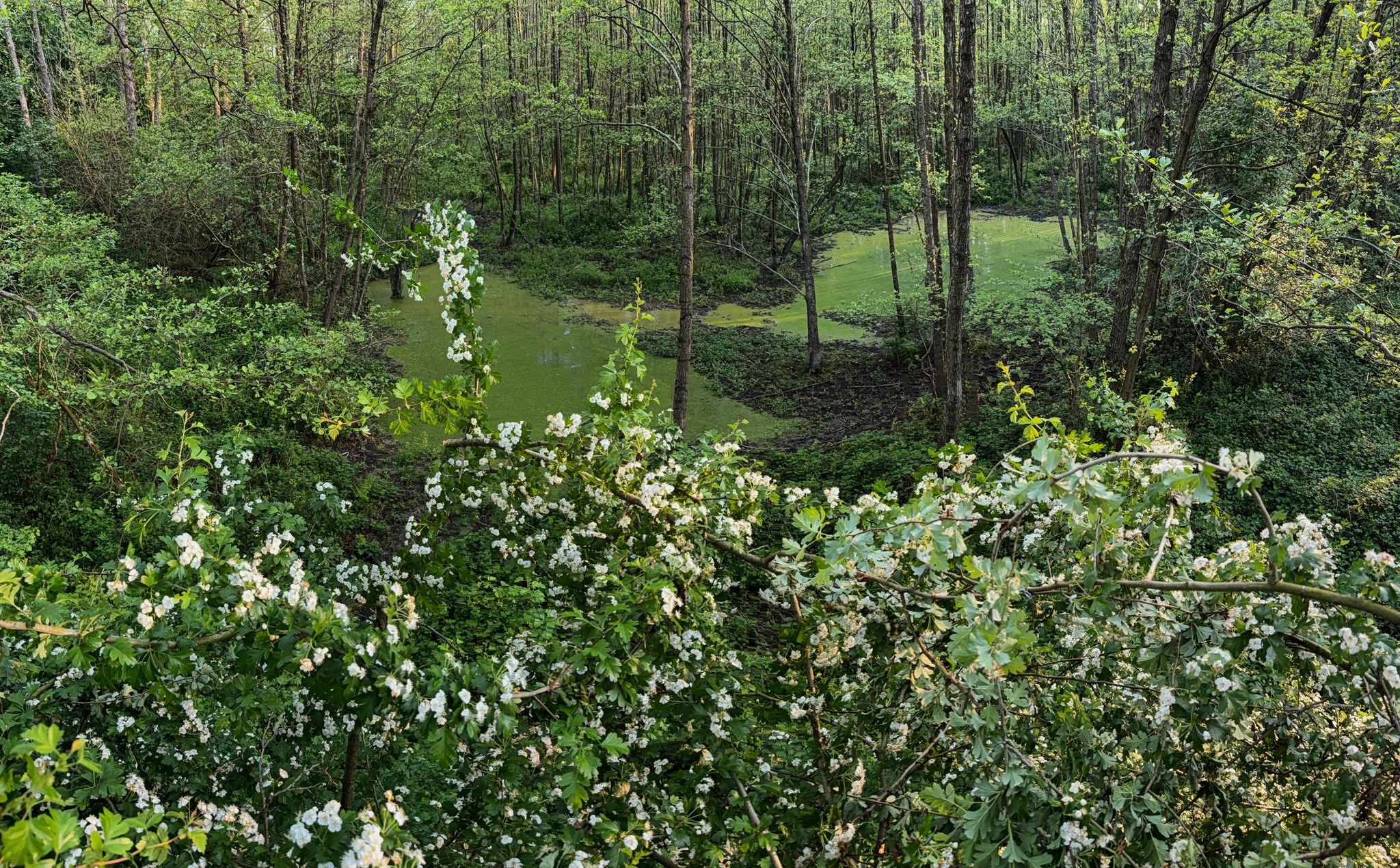
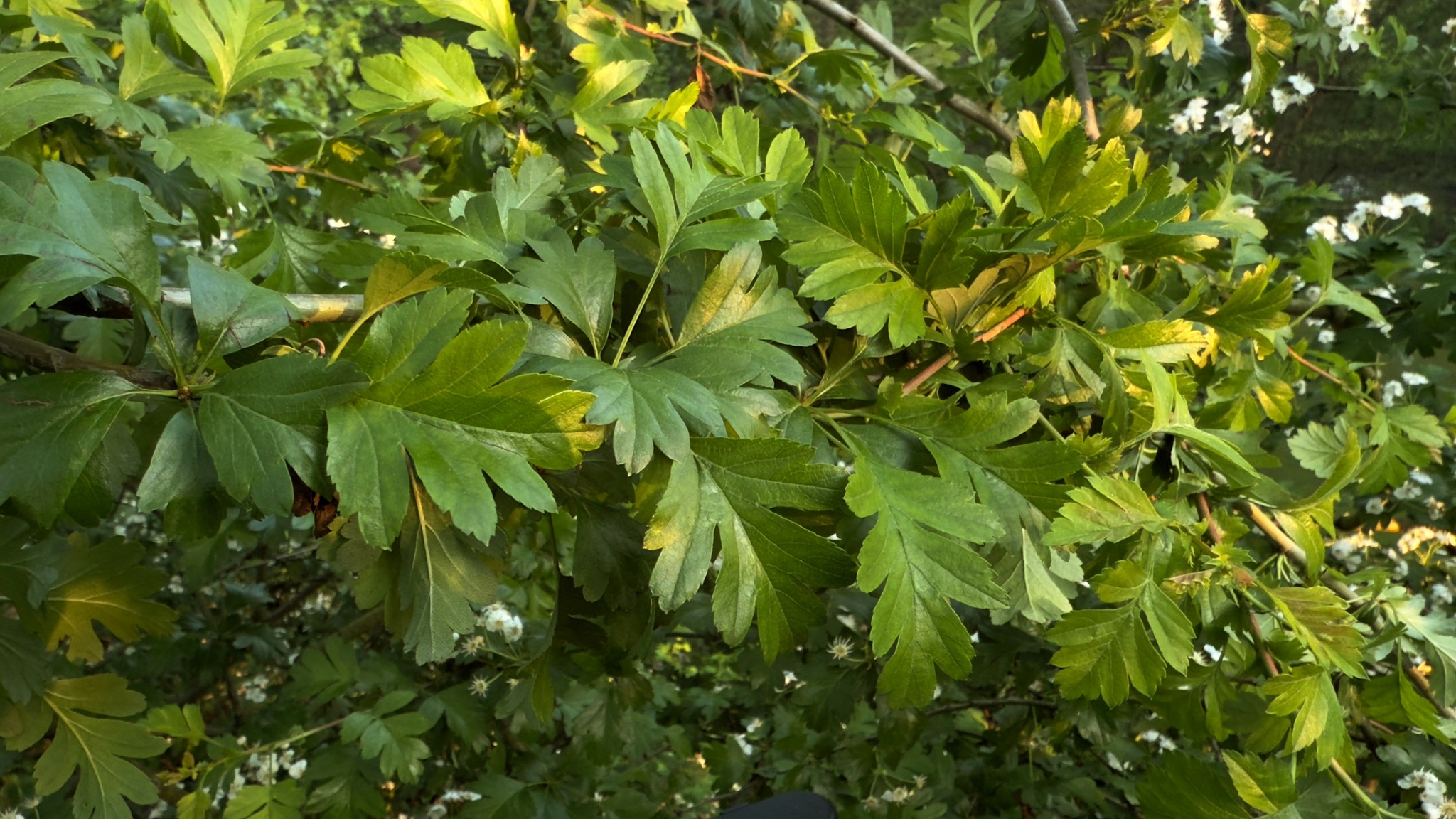
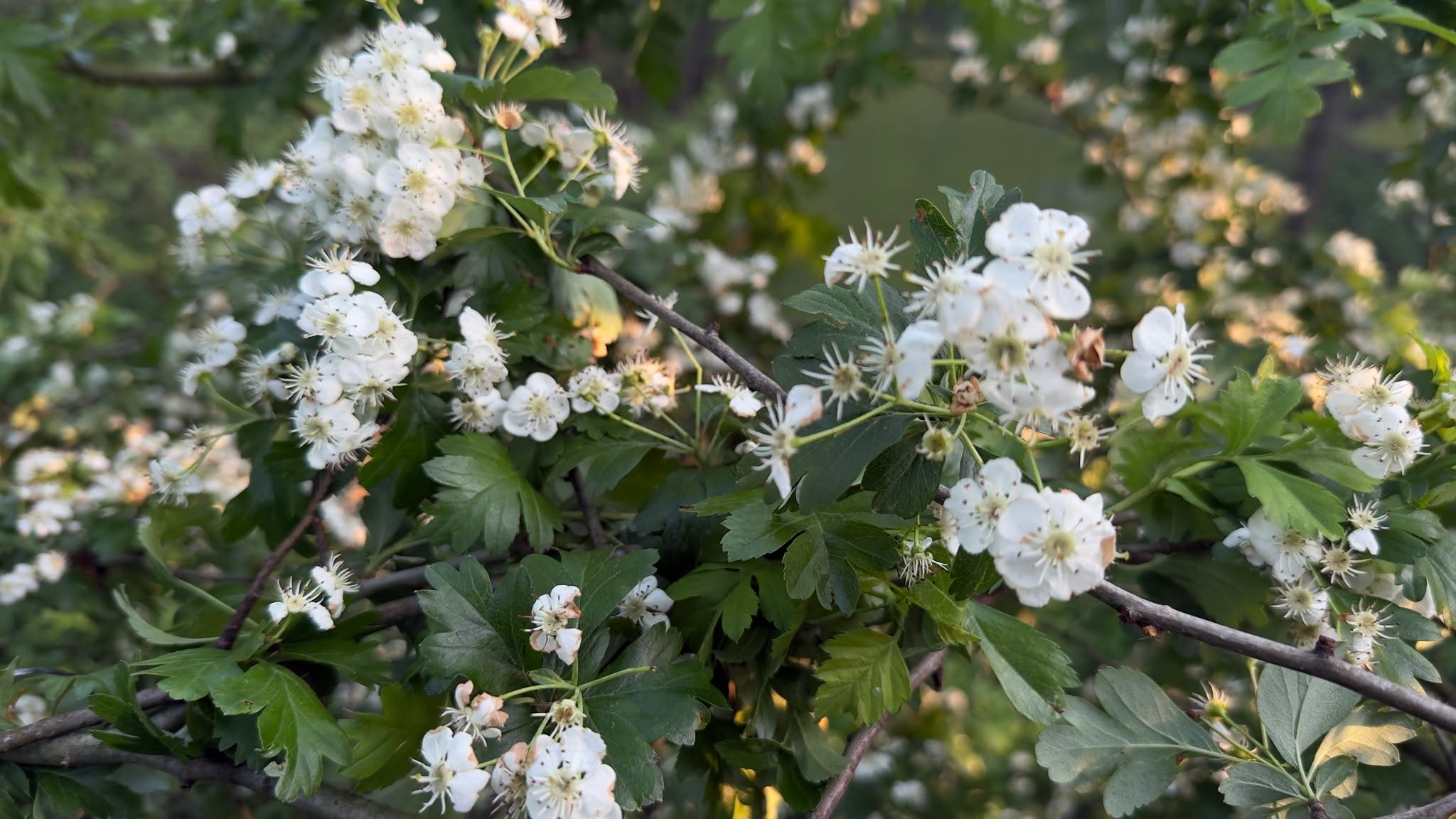
The design of the hunting stand is based on the principle of the “dynamic concealed interface,” which achieves optical, acoustic and olfactory integration with the local vegetation (e.g. as can be seen in the images included as illustrations: a hawthorn bush, Crataegus monogyna, growing beside an alder tree with a trunk diameter of 40–45 cm).
1.1. Mimetic Concealment and Microhabitat Modification
Bending and tying down the branches of the bush so that they blend into the vegetative matrix reduces the anthropogenic silhouette effect.
The method temporarily affects the bush’s lateral light penetration, but the hawthorn’s regenerative capacity (1–2 growing seasons) ensures phenological stability.
Windbreak effect: the modified branches reduce scent dispersal (olfactory masking), minimizing the game’s alarm reflex.
1.2. Edge Effect and Ecological Balance
Modifying the bush creates an anthropogenic edge effect, which entails a slight microclimatic change (redistribution of soil moisture) but is not invasive to the local ecosystem.
2. Ethological Strategies and Distance Optimization
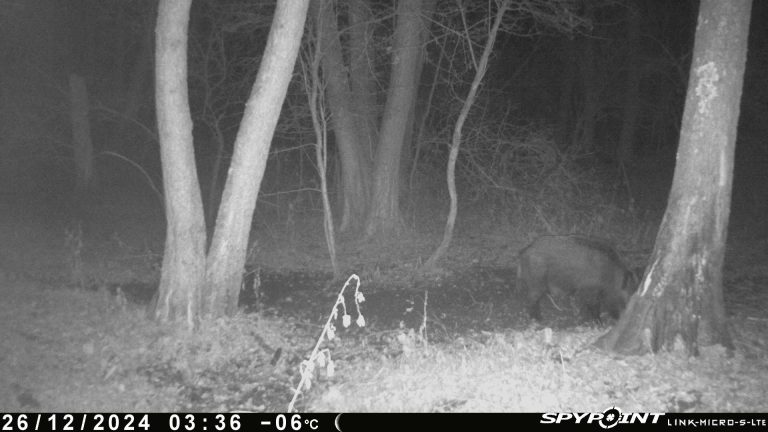
The design of the hunting position is based on the behavioural-ecological characteristics of wild boar (Sus scrofa).
2.1. Safety Perception and Vigilance Zone
The 15–40 m distance lies within the wild boar’s “safety bubble,” where the perception of threat is delayed.
The 18–35 m shooting distance exploits the “frozen behaviour” phenomenon (immobility in response to noise), allowing time for a precise aim.
2.2. Application of Optimal Foraging Theory (OFT)
Minimum distance (18 m): maximum hit probability and energy efficiency (reduced arrow loss).
Maximum distance (35 m): the compound bow’s “safe harvest zone,” where the arrow’s long flight time and minimal noise do not trigger the flight reflex.
3. Ballistic Performance and Technical Parameters
3.1. Kinematic Data
Speed: 82.07 m/s (269.23 fps)
Mass: 41.15 g (634.8 grain)
Kinetic energy (KE): 138.34 J (102.07 ft-lbs)
3.2. Penetration Capacity and Ethical Thresholds
The 138.34 J KE significantly exceeds the 65 J threshold of European ethical guidelines, ensuring:
Hydrostatic shock: immediate loss of consciousness when the “vital zone” (heart-lungs, ~75 cm²) is hit.
Pass-through effect: the arrow penetrates the thick coat (1–2 cm) and fat layer (2–3 cm), promoting faster bleed-out.
Impetus comparison: 3.376 kg·m/s (versus 2.96 kg·m/s for the 32.4 g arrow at 91.44 m/s).
4. Ethical and Ecological Considerations
4.1. Humane Dispatch and Disturbance Minimization
The >100 J KE ensures rapid exsanguination, reducing the animal’s suffering.
<30 dB noise level: it does not reach the habituation threshold of wild boar, preserving the area’s “foraging hotspot” character.
4.2. Long-Term Ecosystem Synergy
Seasonal re-trimming of the bush (every 2 years) promotes plant regeneration, avoiding habitat fragmentation.
The static stand replaces mobility (e.g. a tower), minimizing soil compaction and vegetation degradation.
5. Summary: The Ecological-Ethical Synergy of Precision Hunting
The design embodies a “low-impact hunting” philosophy, where technology (high-KE bows) and ecological awareness (mimetic camouflage) converge. The 18–35 m distance is not merely a ballistic optimization, but a respect for “game-ethological resilience,” enabling sustainable game management.
“Precision hunting is a dialogue with nature — every arrow is a question, to which the game answers.”
– Adapted from the work of José Ortega y Gasset.