🌿 A Whitsun Forest – Game Management, Field Tuning, and a Bowhunter’s Patience
🌿 A Whitsun Forest – Game Management, Field Tuning, and a Bowhunter’s Patience
I spent the Whitsun weekend not only hunting, but also tending the land, observing – and enjoying that rare quality of time you only get when you spend a whole day in the quiet of the forest, free of any expectations or hurry.
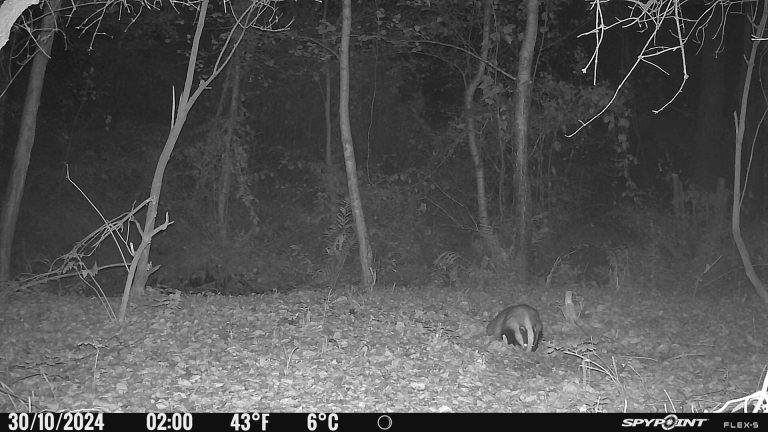
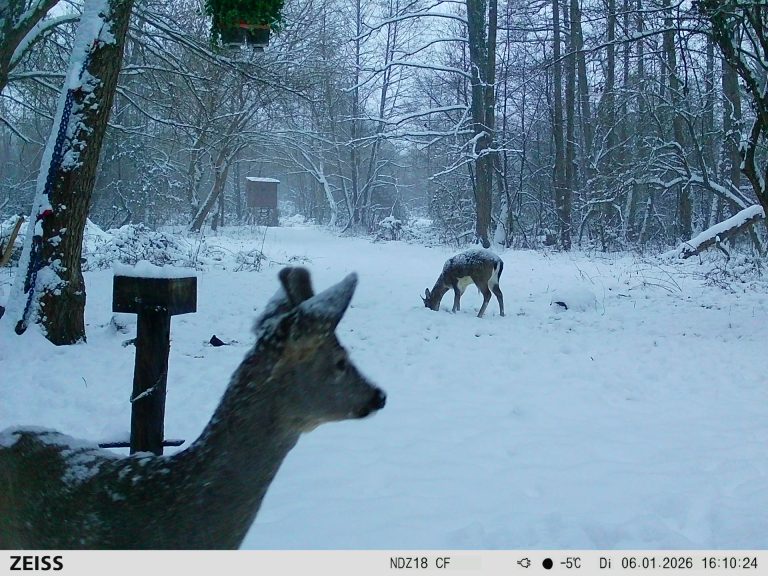
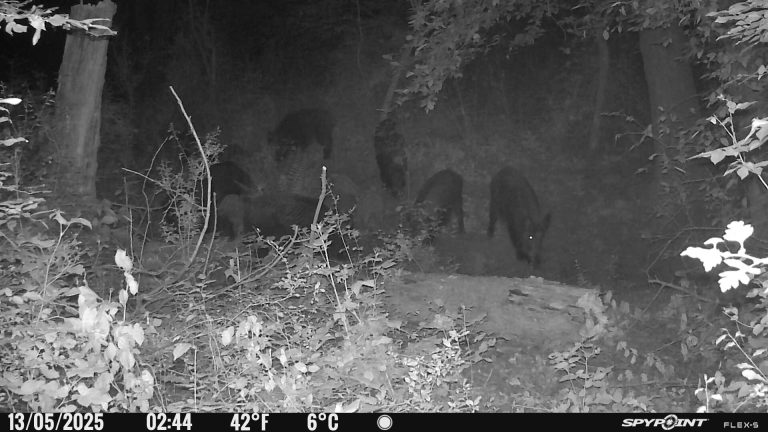
In game management, camera placement is reassessed and can change dynamically depending on the seasonal movement of the game, as well as the discovery of new spots that the animals find pleasant, calm, and safe.
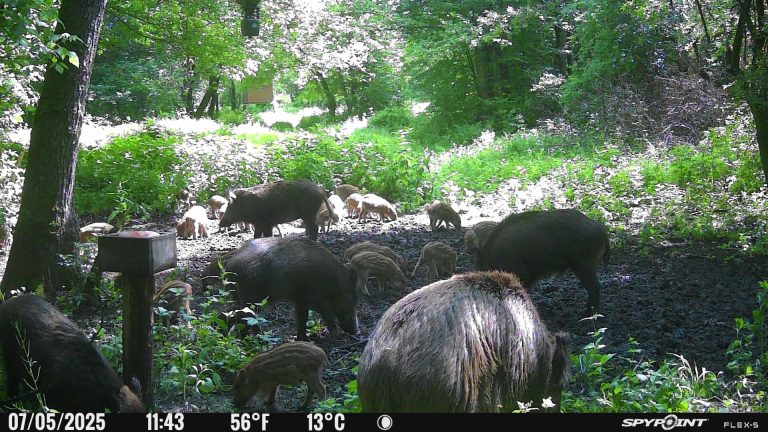
In this case, one of the Zeiss cameras was moved from one end of the wallow (a natural clay depression that big game use for bathing, ectoparasite removal, and thermoregulation) to a position overlooking the bird waterer, where visitation pressure – and thus its value for observation – had temporarily proven higher.
Deliberate rotation of trail cameras is a basic principle of effective game management: the equipment is not infrastructure set out once and left in place, but a dynamically adjustable monitoring system.
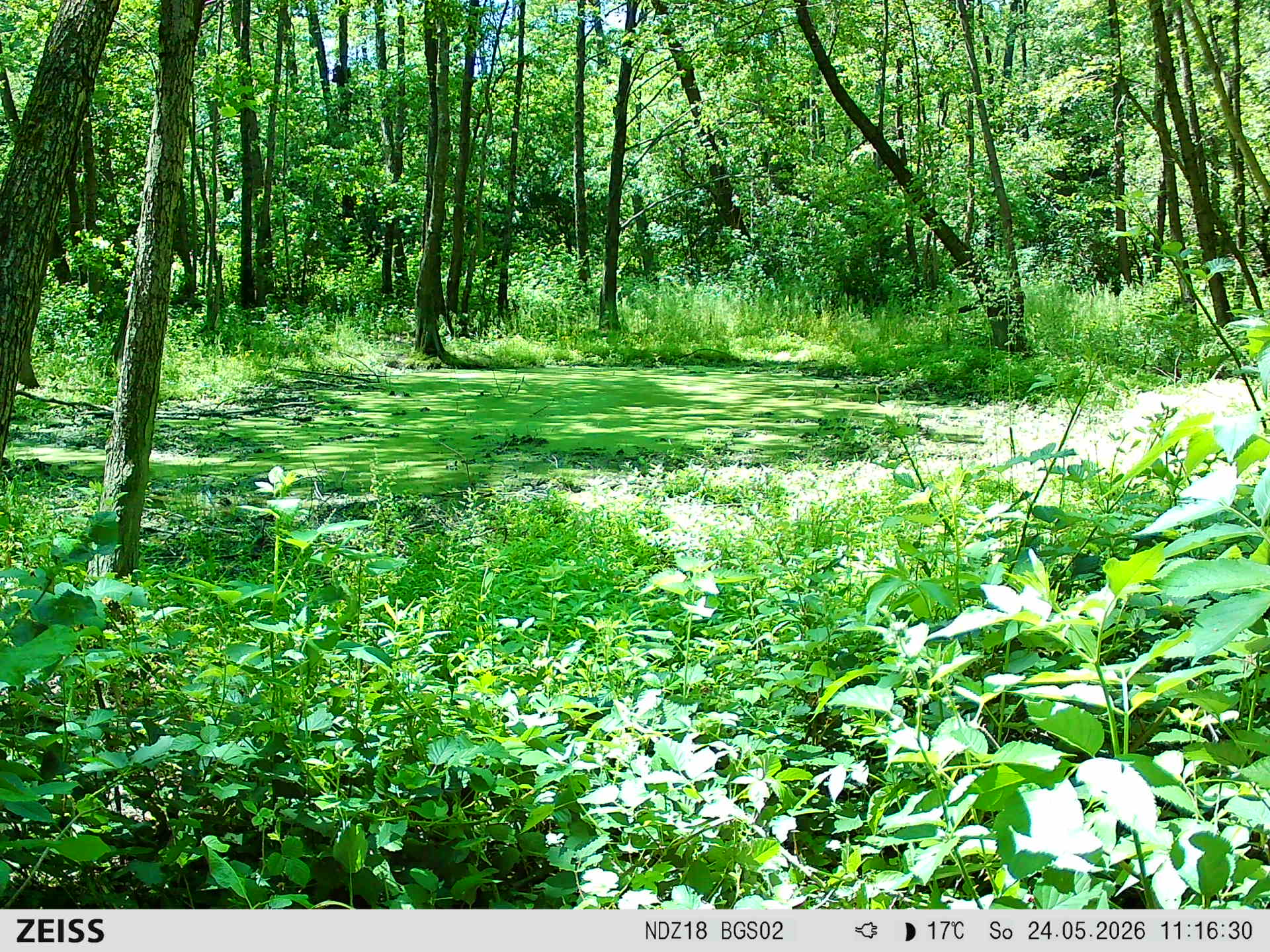
After a month – following the arrival of the ordered camera – a new camera was put back in place, and the wallow is once again under surveillance; the footage from May 24, 2026 (NDZ18 BGS02, 17°C, 11:16) shows exactly the condition of the site: duckweed covers the water’s surface, lush undergrowth lines the bank – a classic forest standing-water microhabitat that the game uses both as a drinking spot and as a wallow.
Salt lick post replacement – acacia as the interim solution, ash as the permanent one
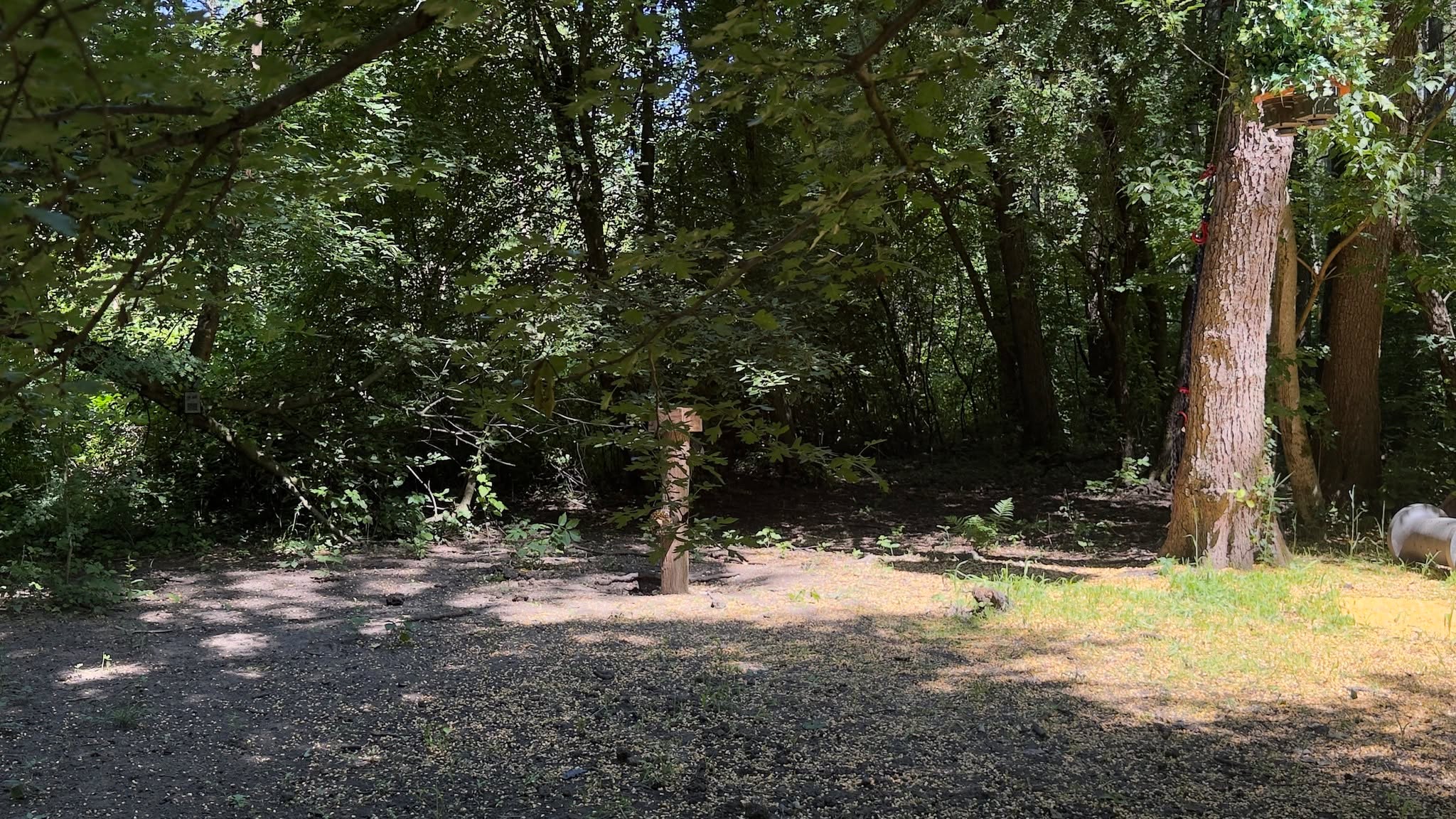
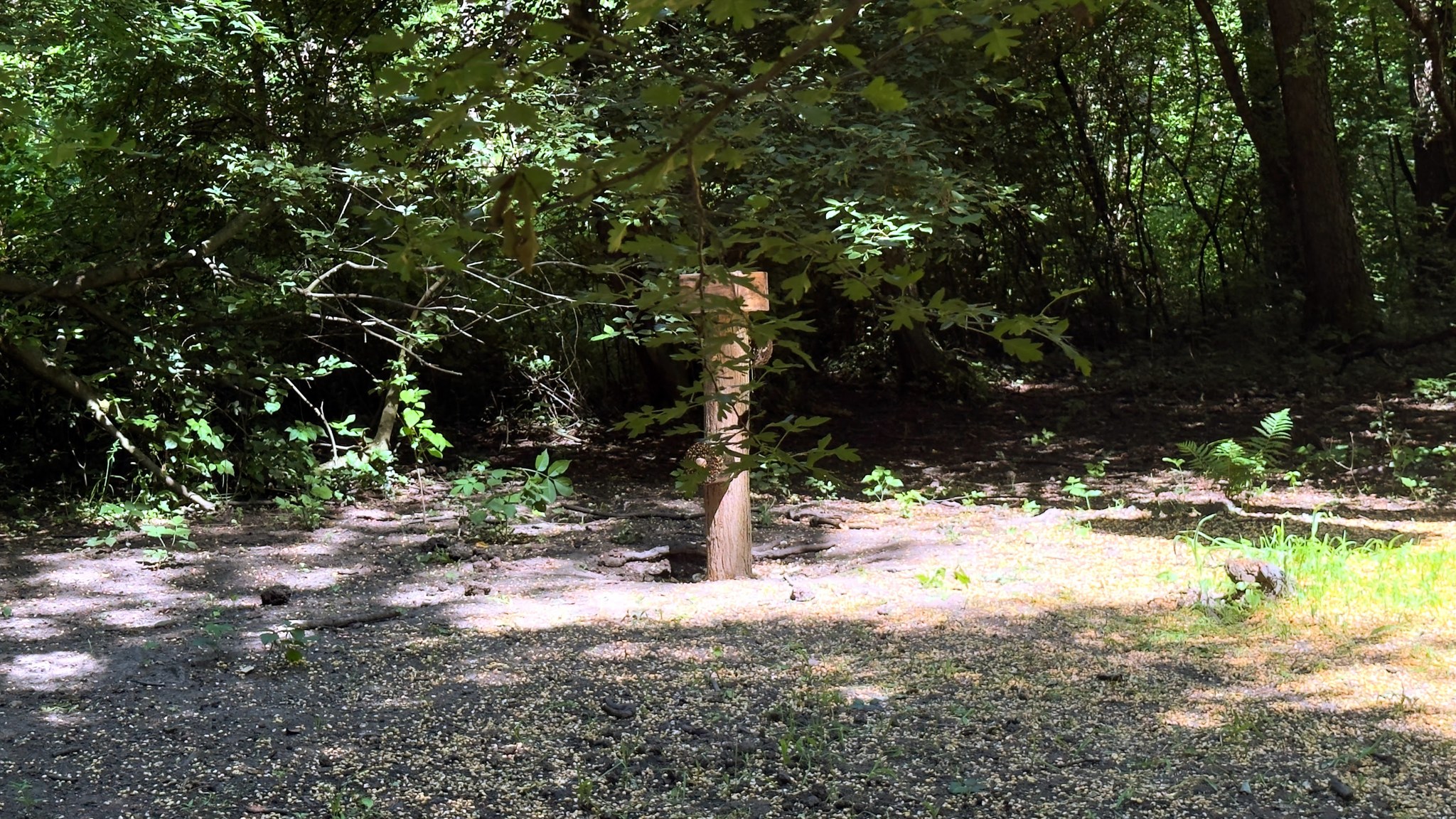
I replaced the old, half-rotted salt lick post with acacia (Robinia pseudoacacia).
Acacia is an excellent weather-resistant, railway-sleeper-grade timber species that is remarkably resistant to rot – thanks to its natural rotenone and robinin content.
As an interim solution, it is flawless.
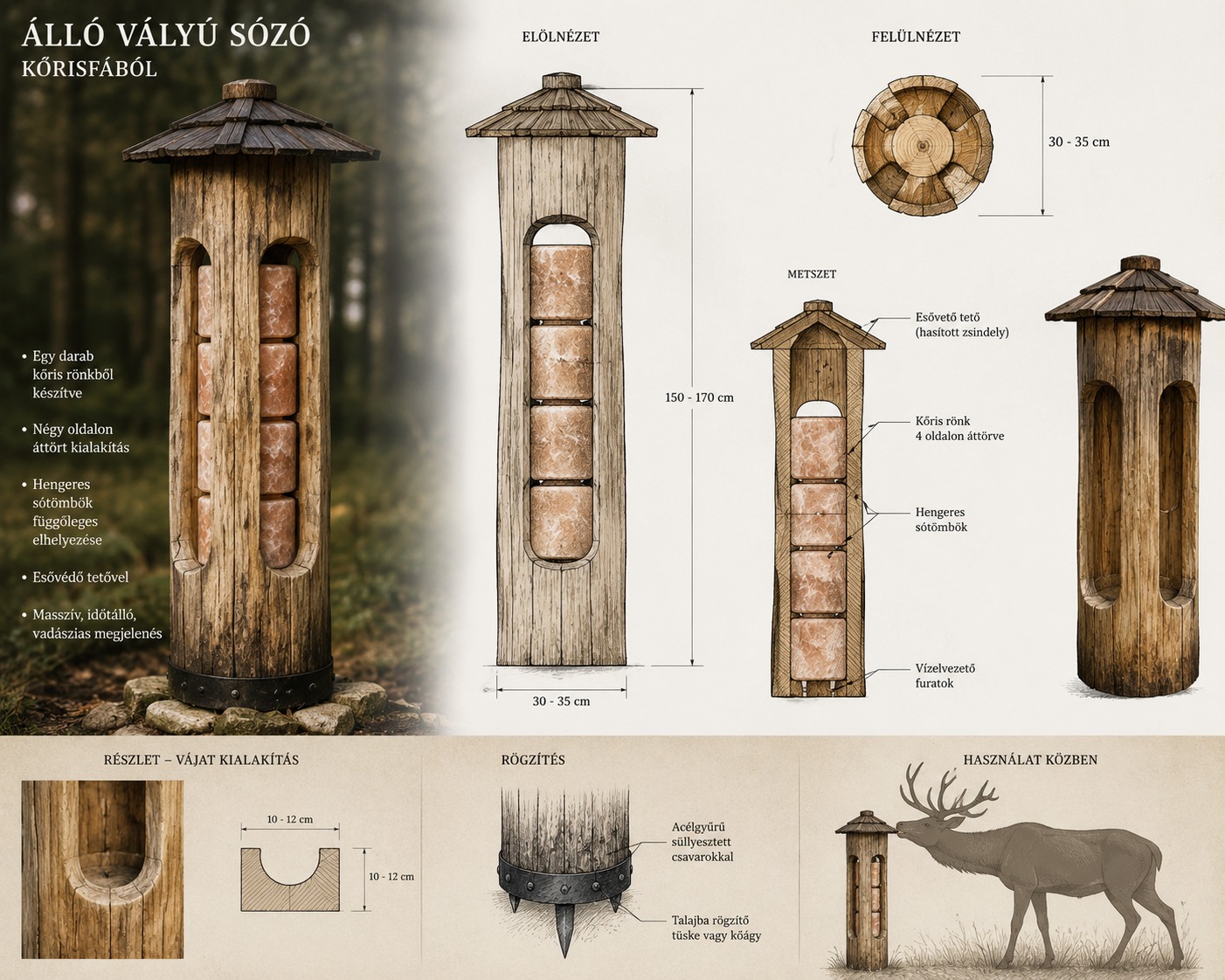
The final, planned construction will be made of ash (Fraxinus sp.), carved with a chainsaw: an upright salt lick holding 3 cylindrical salt blocks, each 10 cm thick, in a log carved and pierced on 4 sides, with 2 cm spacer discs to ensure ventilation, and a rain-protecting roof.
The part sunk into the ground is about 100 cm, with a maximum above-ground height of 120 cm. Ash, for this function, is the optimal choice both aesthetically and in terms of durability for a hunting ground’s long-term equipment infrastructure.
The feeder as a game-management and observation point
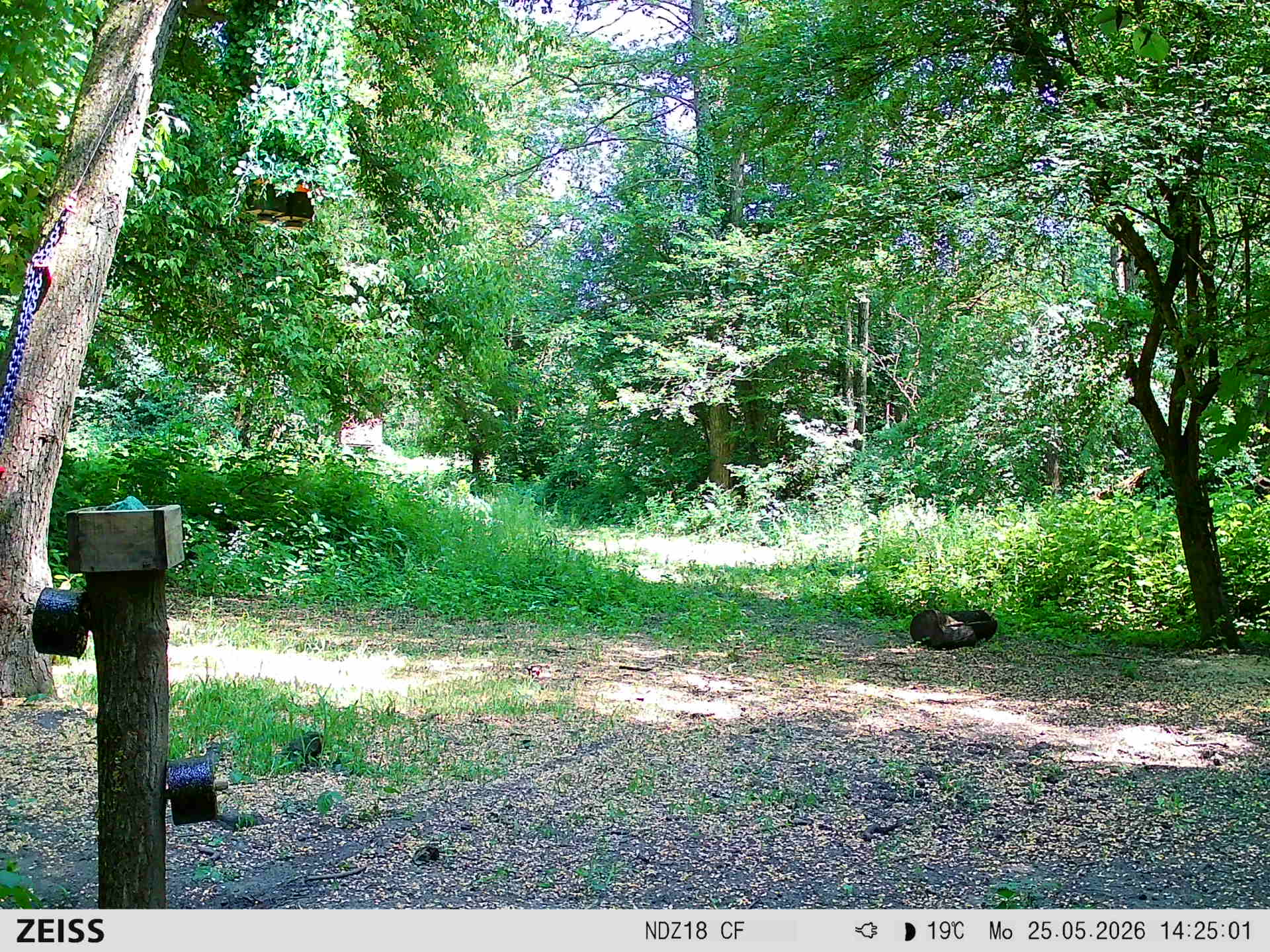
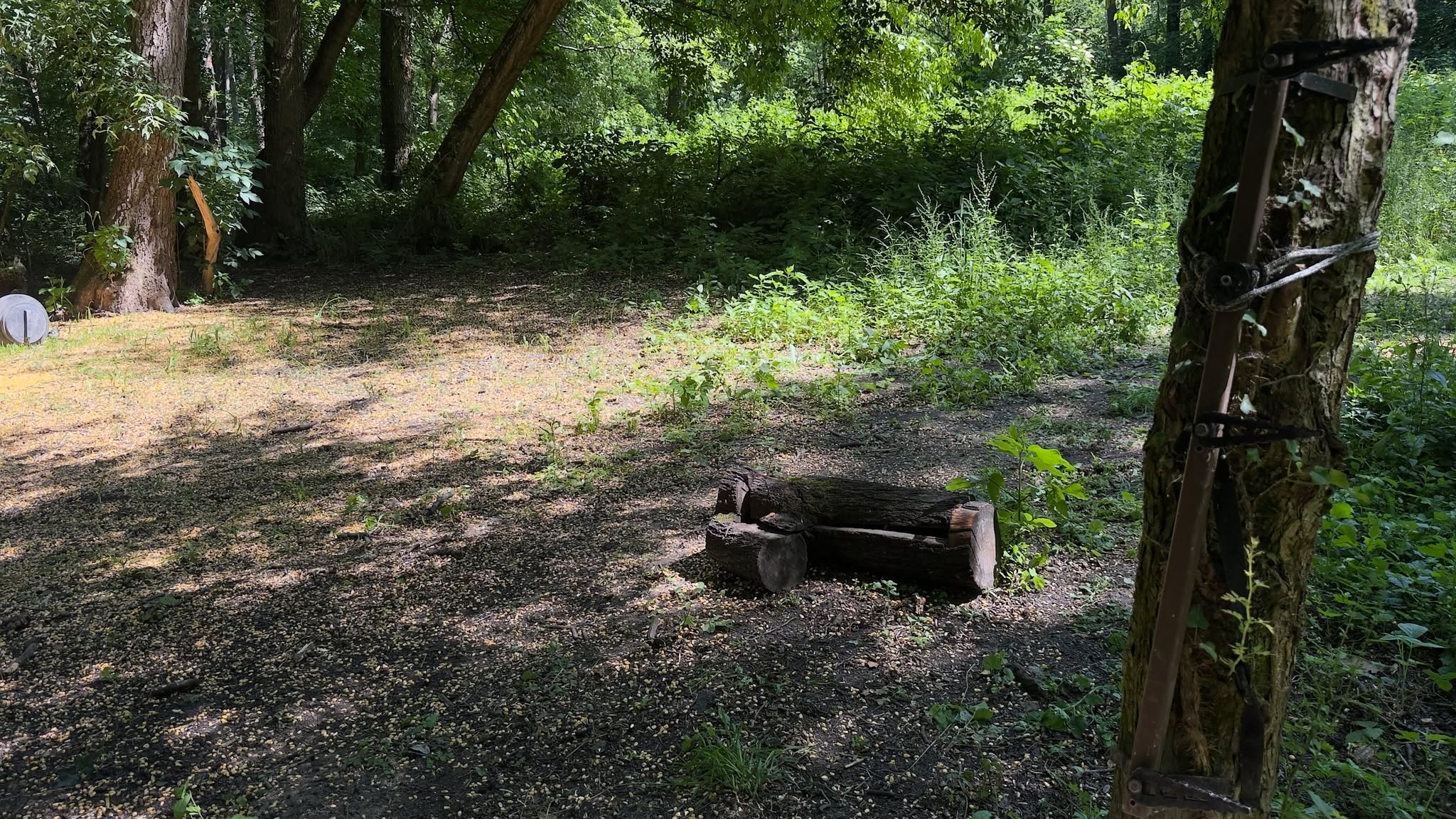
The large poplar log – which I had placed on the site earlier, originally intended as a winch platform for raising and lowering the feed container – functions as a shaded, naturally concealed resting spot and, at the same time, as an observation post in front of the feeder.
From there I watched the feeder’s daytime traffic all through.
What was visible: not big game, but a community of forest birds – finches, jays, tits, great and lesser spotted woodpeckers, nuthatches, buntings, goldfinches – pecking and cracking open the corn.
This is not a trivial detail in itself: bird presence is a daytime indicator of the feeder’s activity, and indirectly signals the absence of predators in the immediate foreground as well.
Habitat shaping through a bowhunter’s eyes: the hawthorn maneuver
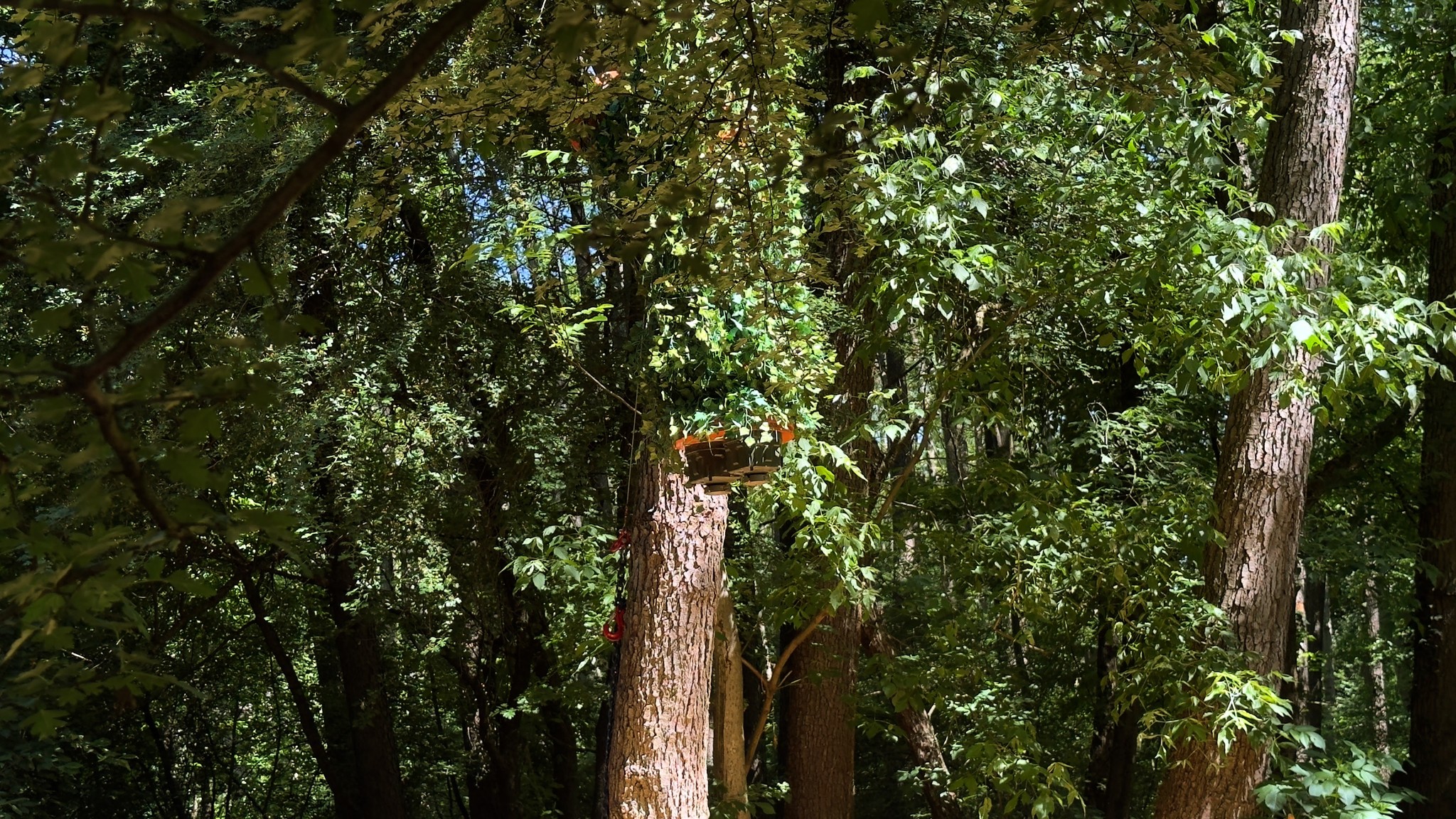
Perhaps the most elaborate element of the field tuning was the intervention in which I used a winch to turn a leaning, large-crowned hawthorn bush (Crataegus sp.) by a meter and a half, secured it with steel cable, and pulled its leafy branches down with cord – with the aim of improving upward cover for my stand overlooking the feeder, while preserving an open, unobstructed view and shooting lane from the 8-meter height.
This is exactly the design logic that fundamentally distinguishes bowhunting from firearm hunting: effective shooting range is 20-40 m, shooting angle and cover matter down to the millimeter, and every terrain element – tree, bush, branch – is a potentially critical variable.
In this case, the hawthorn was not an obstacle but a resource: a natural, fitting element of cover that needed not to be cut down, but repositioned.
Nor is this a trivial note from a biodiversity standpoint: hawthorn is an excellent habitat element – its berries provide a food source, its thorny structure offers nesting protection for several bird species – and the repositioned bush retains its functionality for the wildlife population; indeed, the denser foliage created by the lowered branches actually improves this function.
Birdhouse, waterers, log path – the site as a system
Taken together, the work carried out sketches a deliberately developed habitat system:
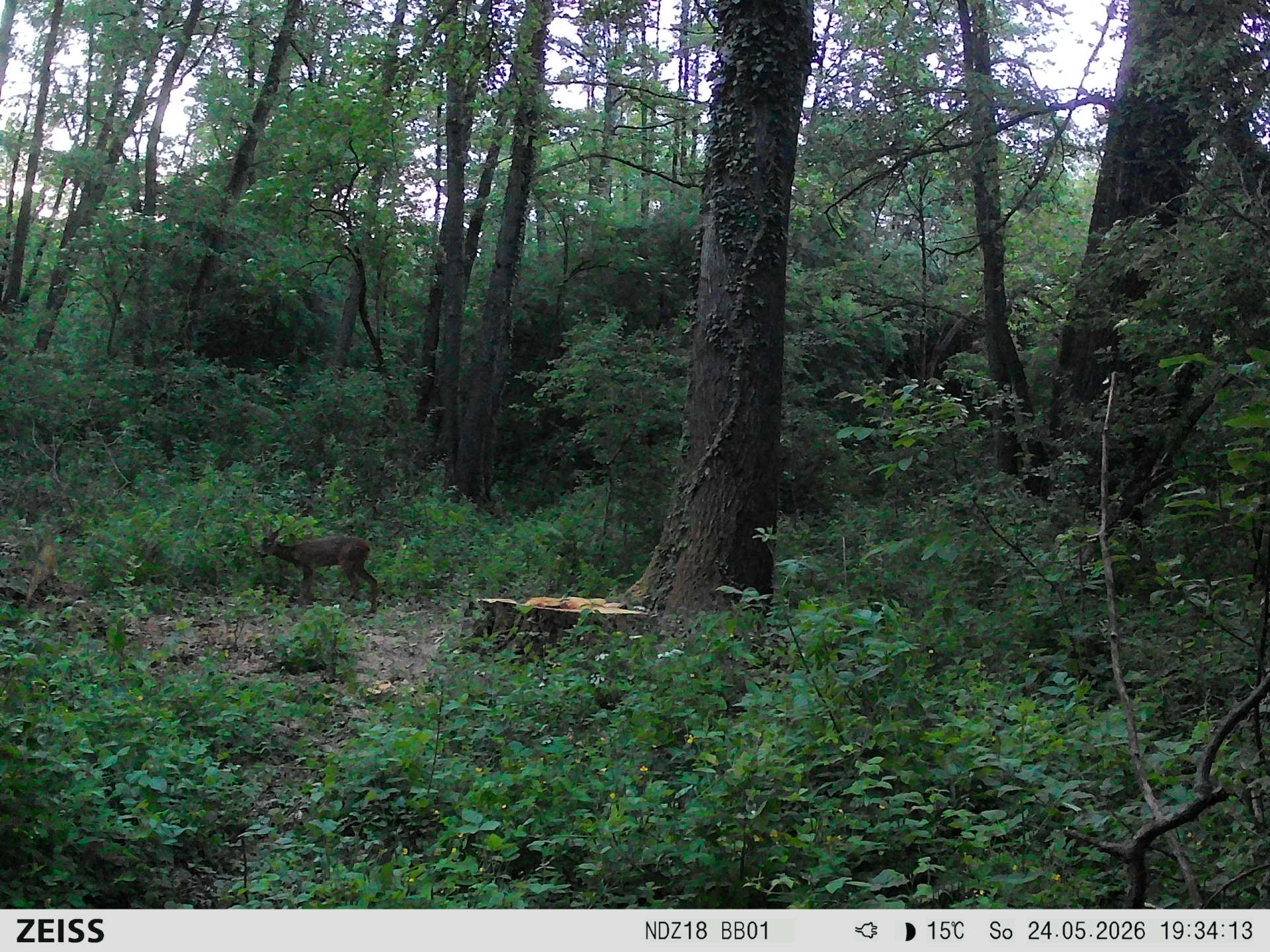
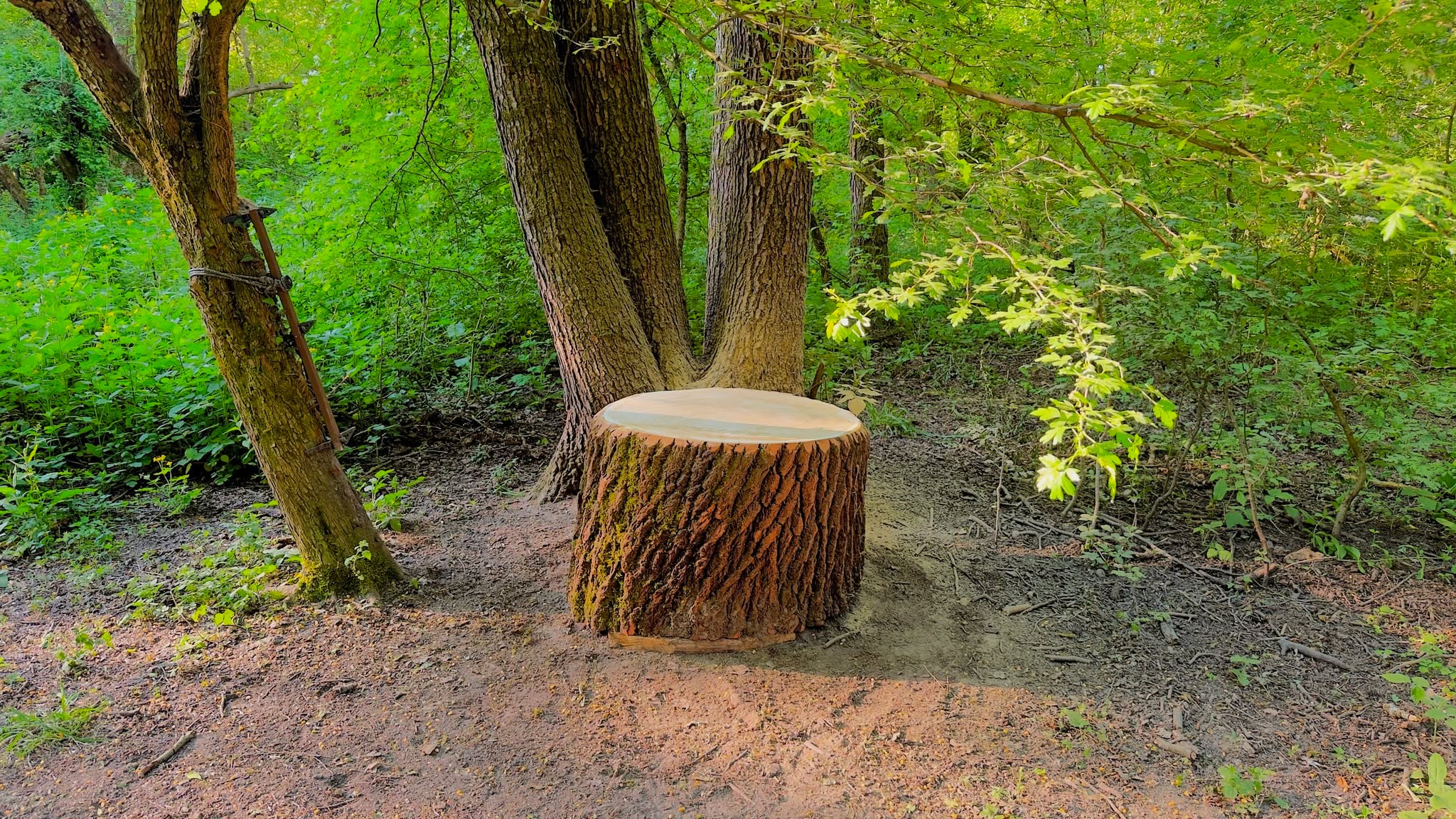
– The natural drinking basin carved into the stump (a hollowed-out mini basin that collects rainwater) provides water for small game, birds, and insects alike – it even caught the attention of the Zeiss camera.
– The birdhouse mounted on the tree trunk offers a nesting opportunity for woodpeckers and other cavity-dwellers, while preserving the deadwood structure.
– The row of log slices laid out forms a stable, natural-material walkway on the wet ground, one that doesn’t cut a foreign element into the forest’s succession either.
A closing thought
There is a moment – and this Whitsun day was about exactly that – when a person simply sits on an old poplar log, listens to the murmur of the forest, the buzzing of insects, the chirping of birds, and realizes: what he imagined as a child has come true.
His own (leased) piece of land, shaped with his own hands, planned through a bowhunter’s eyes – not for the view, but for a true forest presence.