It’s mid-February now, and the red deer rut is long behind us.
It’s mid-February now, and the red deer rut is long behind us.
Within a few weeks, the stags’ testosterone levels plummet, and bone-resorption sets in.
At the junction of the antler pedicle and the bony outgrowth – precisely where their connection transforms at the microscopic level – resorption begins.
The bony trabeculae gradually lose their strength, the tissues weaken, and a so-called separation zone forms, which specialists call the abscission plane.
At that point almost nothing is holding the antler anymore: a walk, a careless shake of the head, and the massive crown simply drops off the forehead.
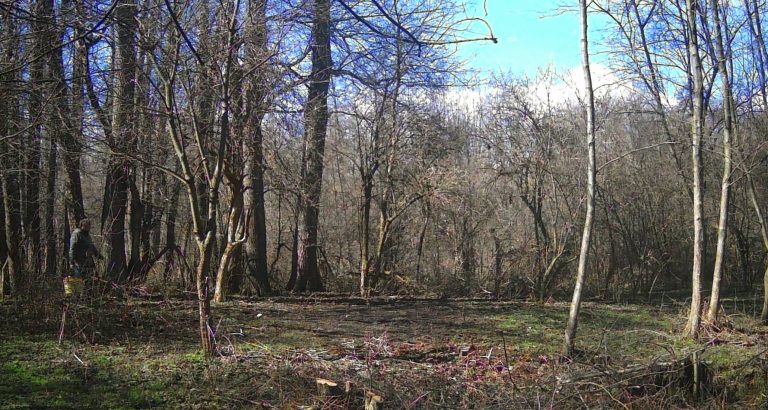
This is the period when people from the surrounding villages – old and young alike – come out and flood into the forest.
Everyone is looking for the previous year’s shed antlers, and in doing so, unwittingly disturbs the peace of the wildlife’s world.
They leave a trail of human scent behind for weeks . . .
At this time, the footage from the cameras set up on the property shows almost nothing but “human activity.”
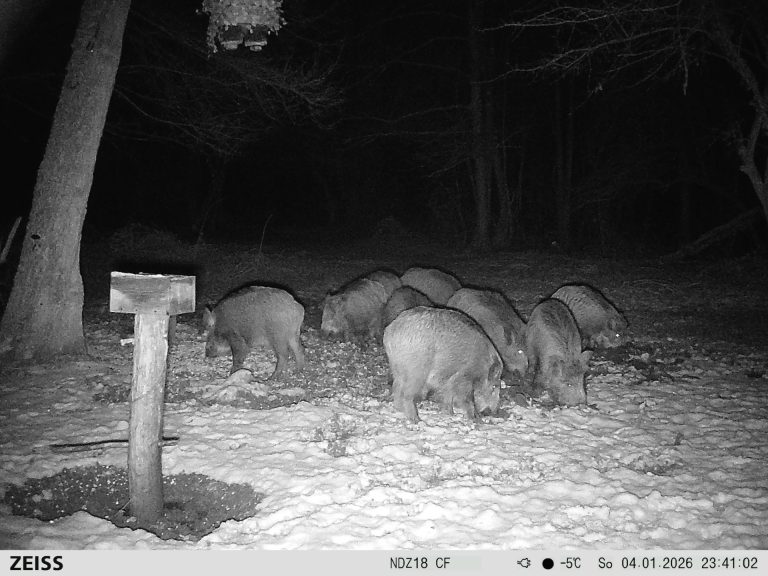
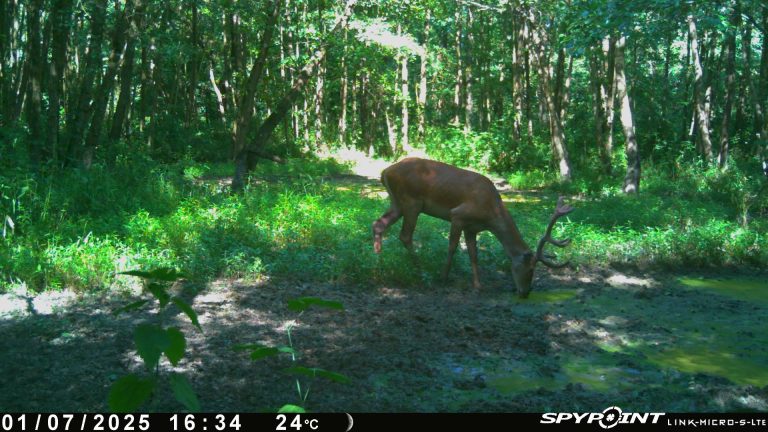
The big green wallow, where a large group was still peacefully grazing and cooling off just weeks ago, is now silent and empty.
And under the automatic feeder, the corn just piles up, because whatever used to come there has moved elsewhere.
The game – smarter than we might think – withdraws to a quieter, calmer place.
So what can one do at a time like this?
Not much.
You just have to wait until the villagers gather up what nature has shed, and gradually retreat back to their own homes.
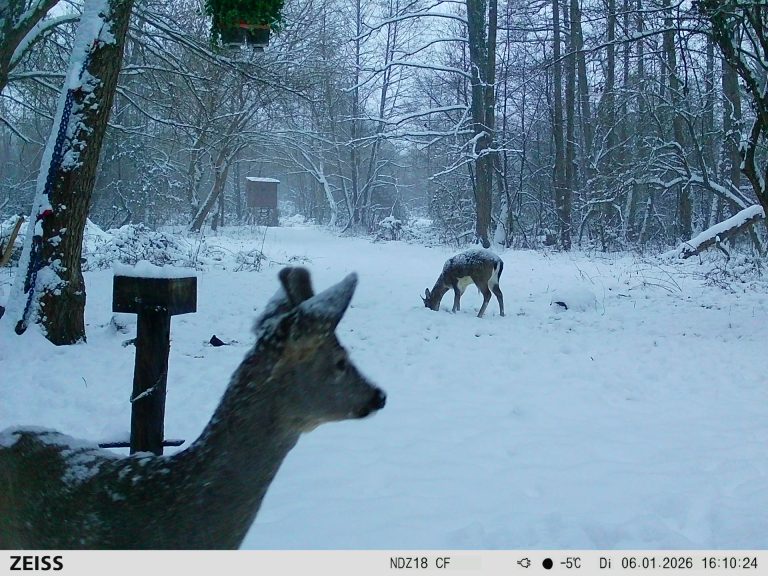
Fortunately, I can leave today’s modern cameras out with a much easier mind, of course only if I’ve hidden them thoroughly. On one hand, by the time anyone notices a lens peeking out, the picture is already long gone up to the cloud, and my phone sends me a notification about the captured image.
On the other hand – and this is the bigger reassurance – Zeiss has a special service called the “Theft Replacement Service.”
This isn’t a classic insurance policy, but a discounted replacement program.
In practice, it means that if someone can credibly prove a theft, they can buy a new camera, identical or equivalent, at around an eighty percent discount off the manufacturer’s webshop list price.
What’s more, Zeiss blocks reported stolen cameras, so no one can reactivate them — since the activation key doesn’t live in the device itself, but on a separate card included with the manual.
Moreover, if someone did try to switch the device on, the system would receive the last GPS coordinates, and the position would immediately become known.
Over time, the local people have figured out that it’s better to leave the cameras alone.
It causes more trouble than it’s worth.
They steer well clear of them.
So for now, in these weeks, it’s quiet.
There’s no significant game movement on the property.