The small pool shaped from the stump of a large poplar felled in a storm, mostly intended as a…
The small pool shaped from the stump of a large poplar felled in a storm, mostly intended as a "birdbath," is proving very useful to big game as well during the great summer heat.
Thanks to the recent smoothing work done with a milling disc (Kaindl Super-Carver V9 Milling Disc for Angle Grinder 115/125) to remove the rough saw marks, the waterer can now hold more than 25L of water, enough to retain some water even during weeks-long dry spells.
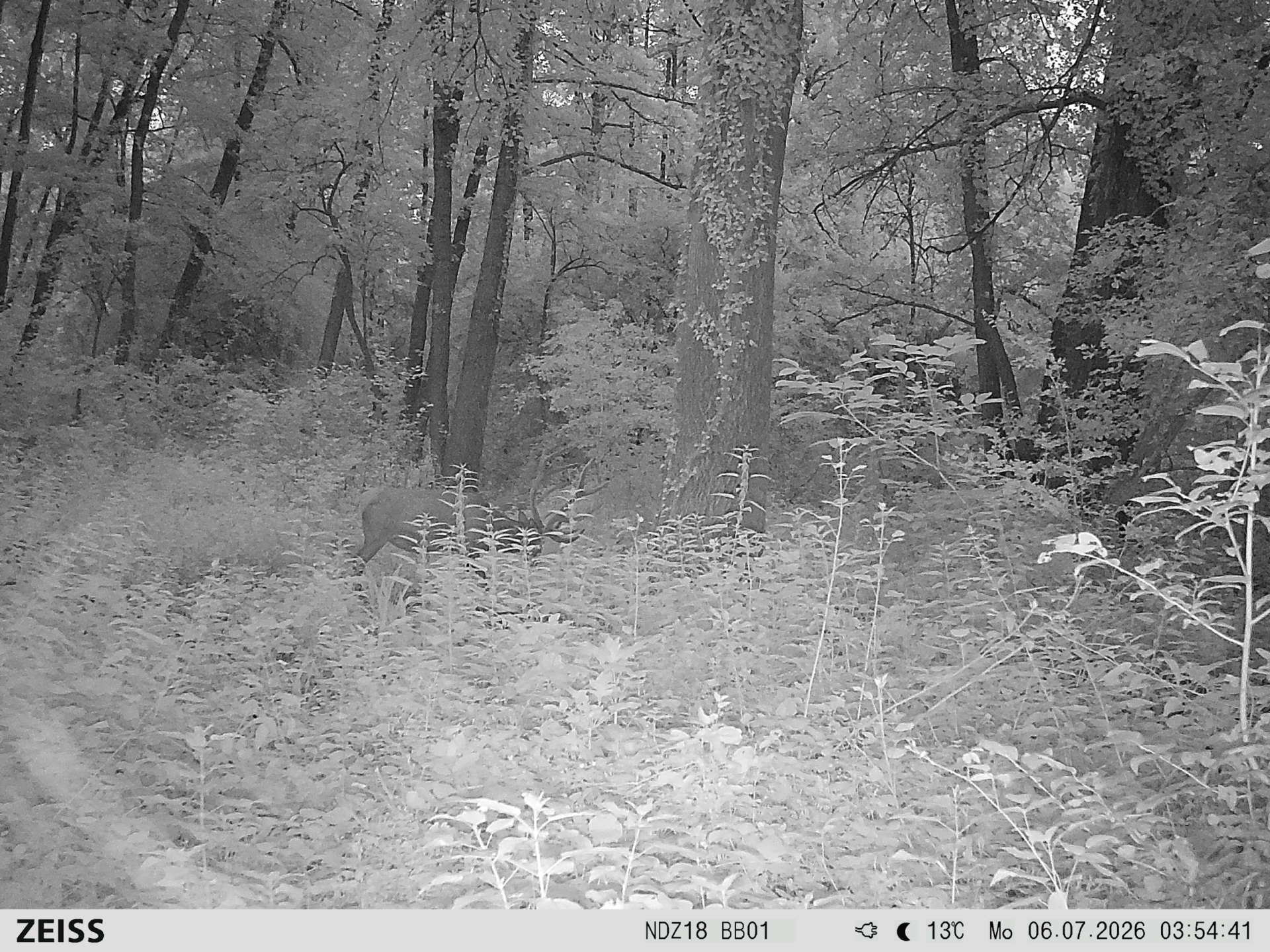
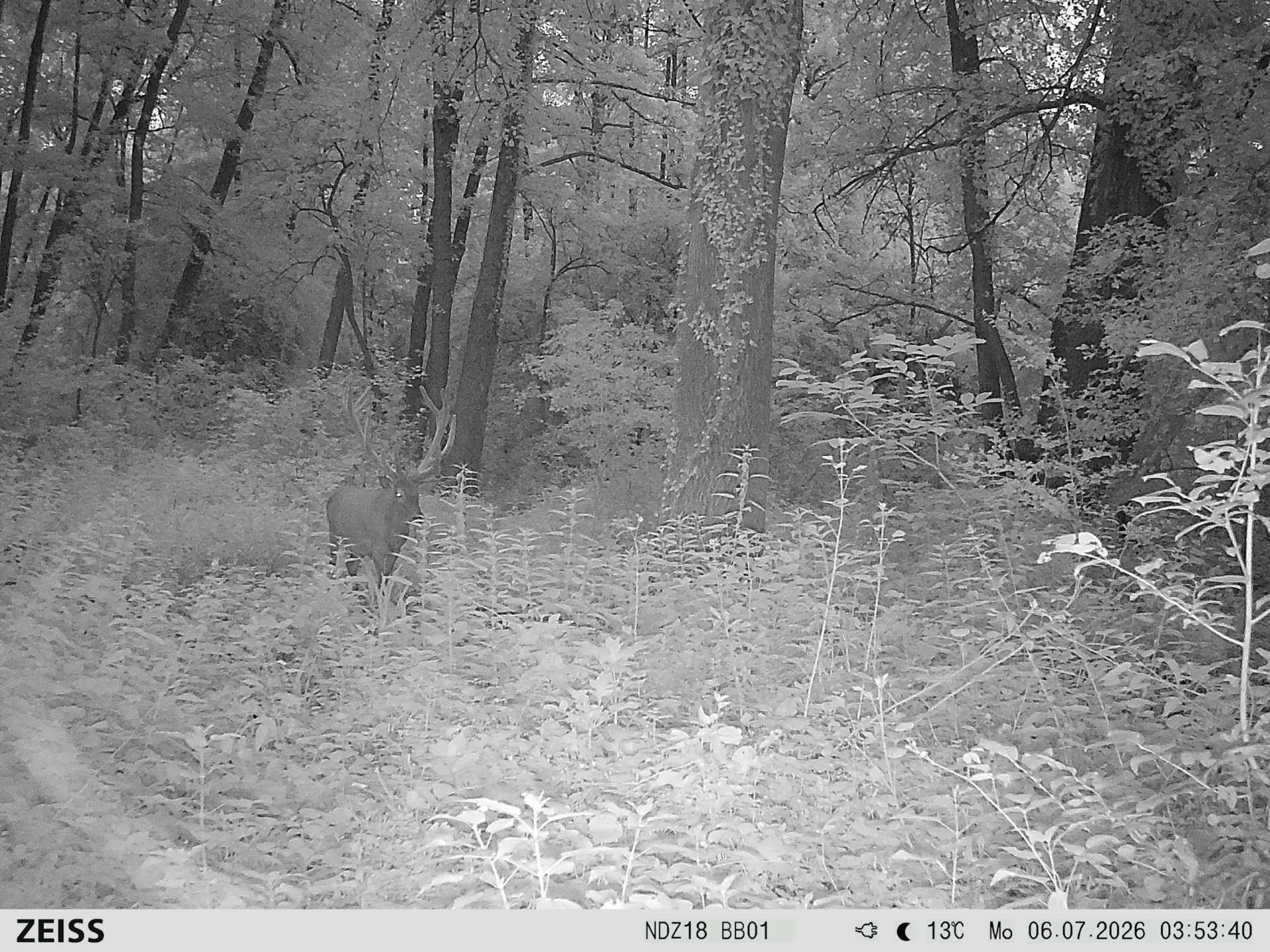
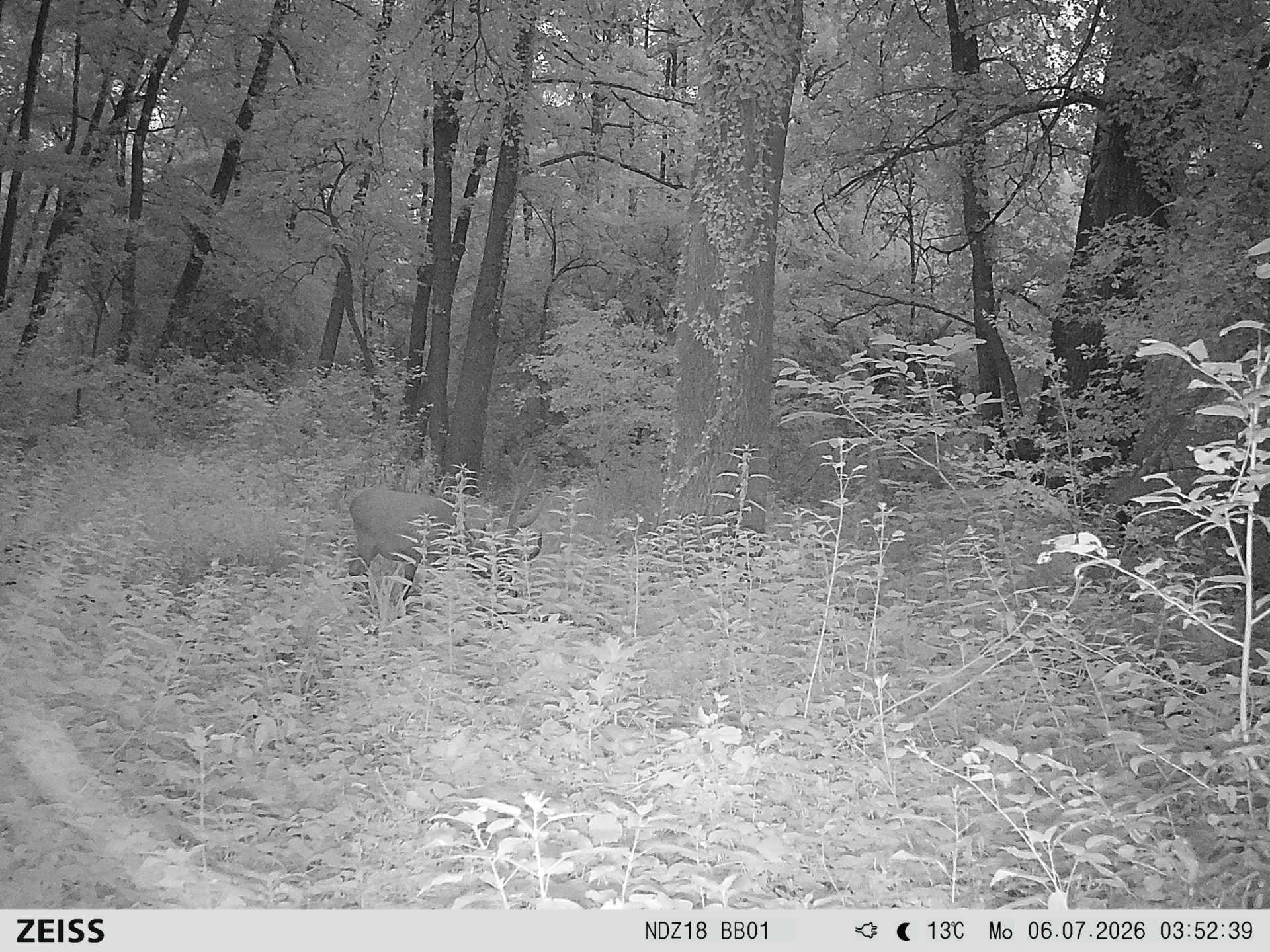
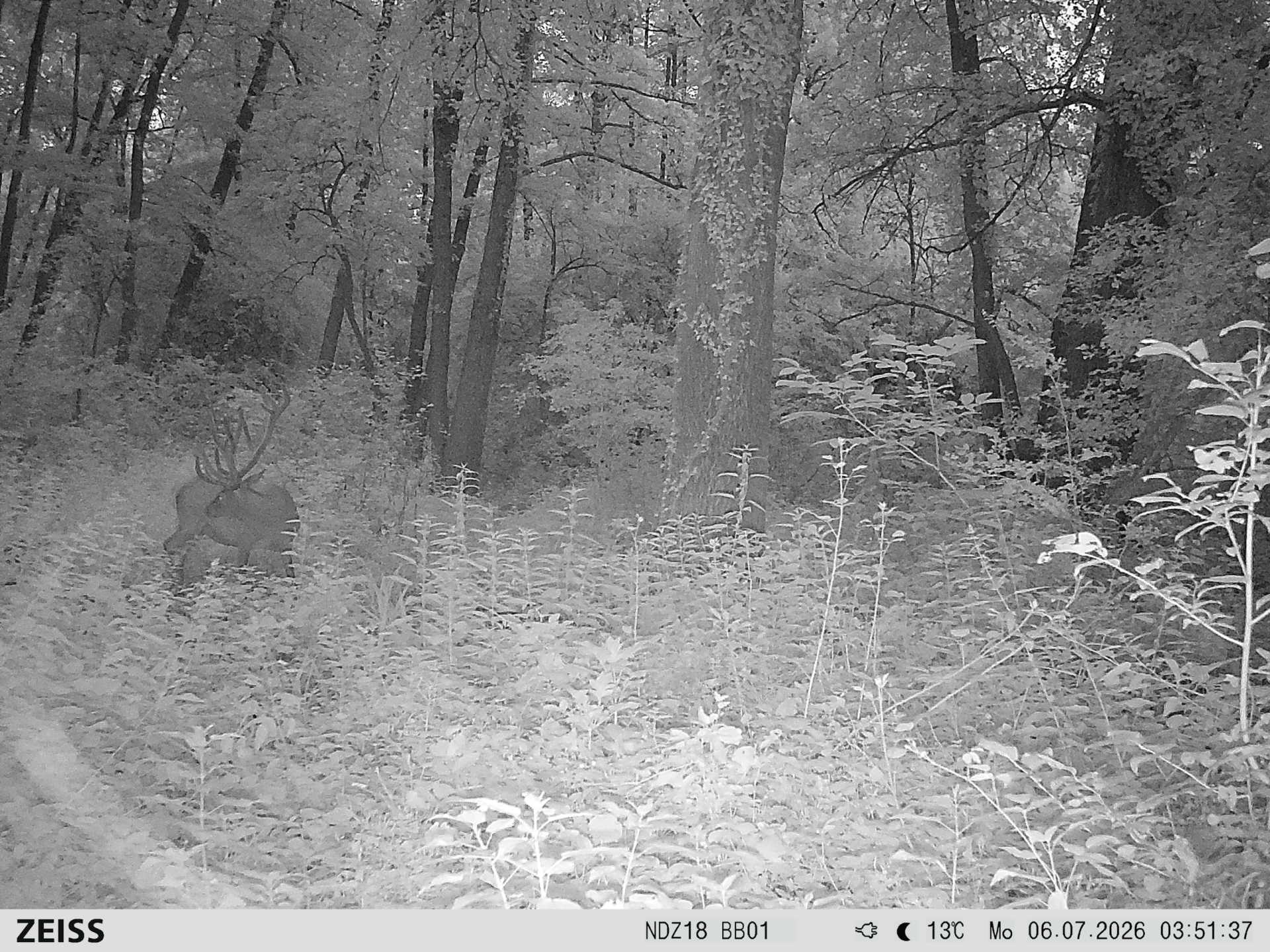
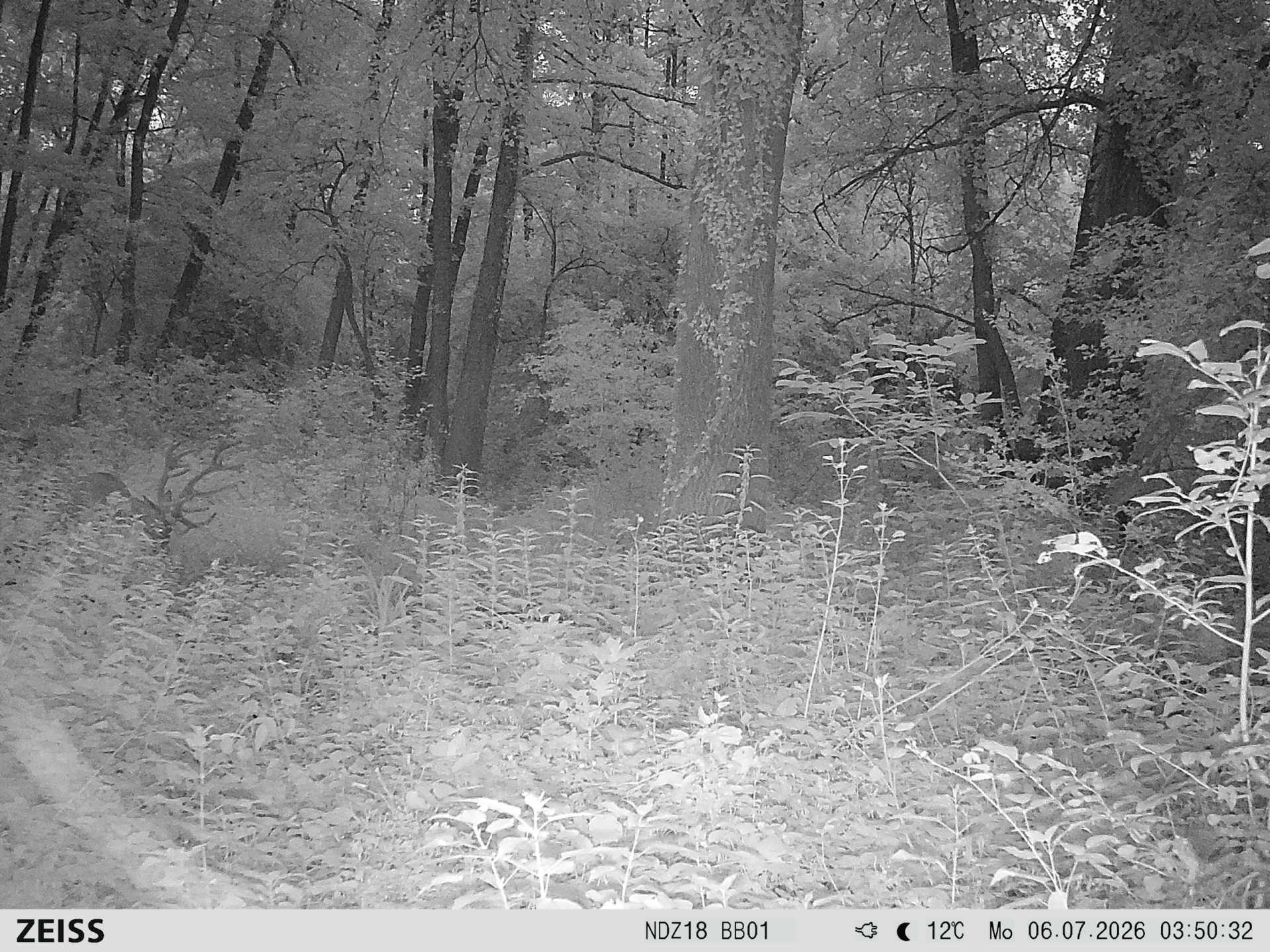
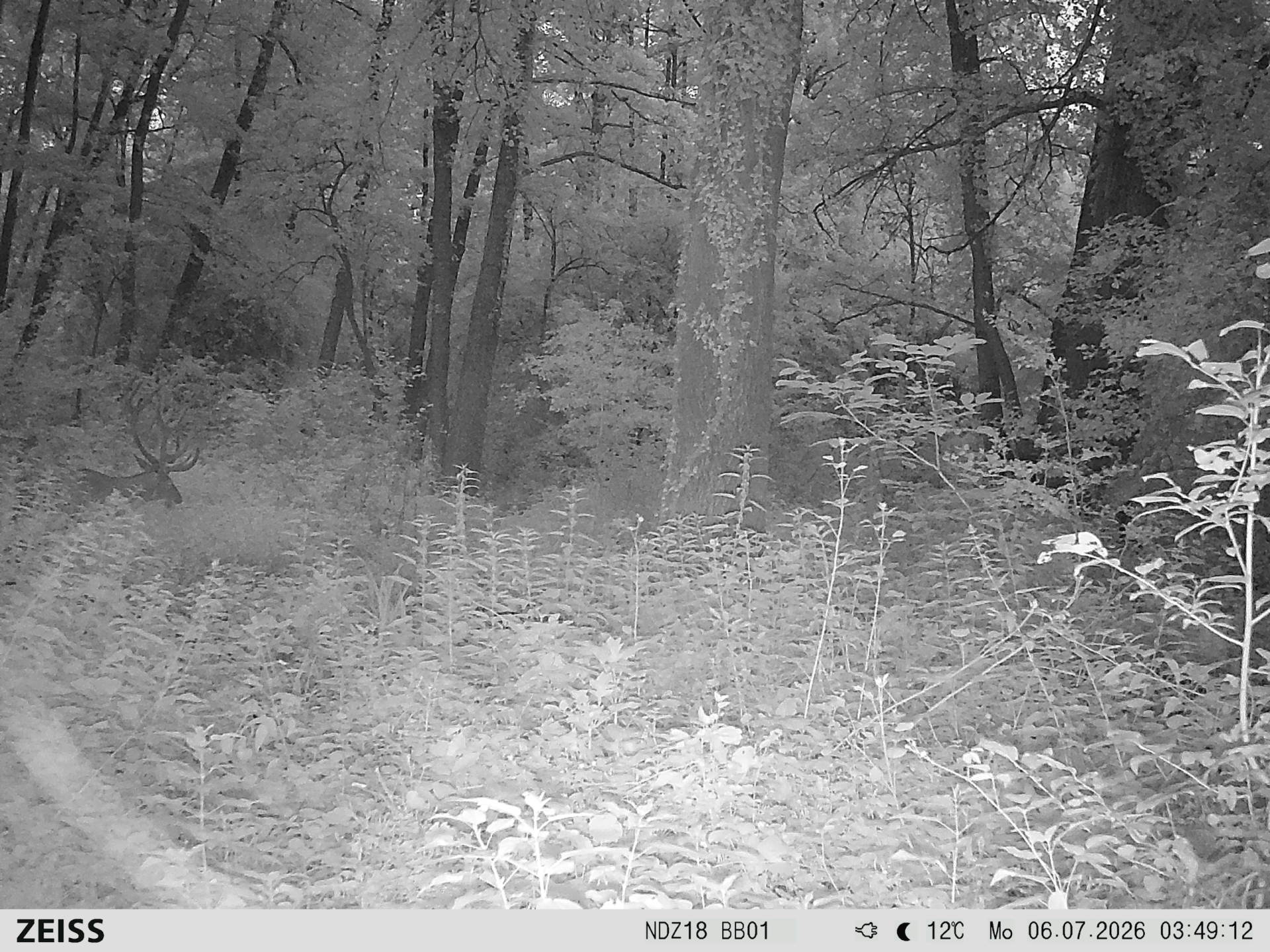
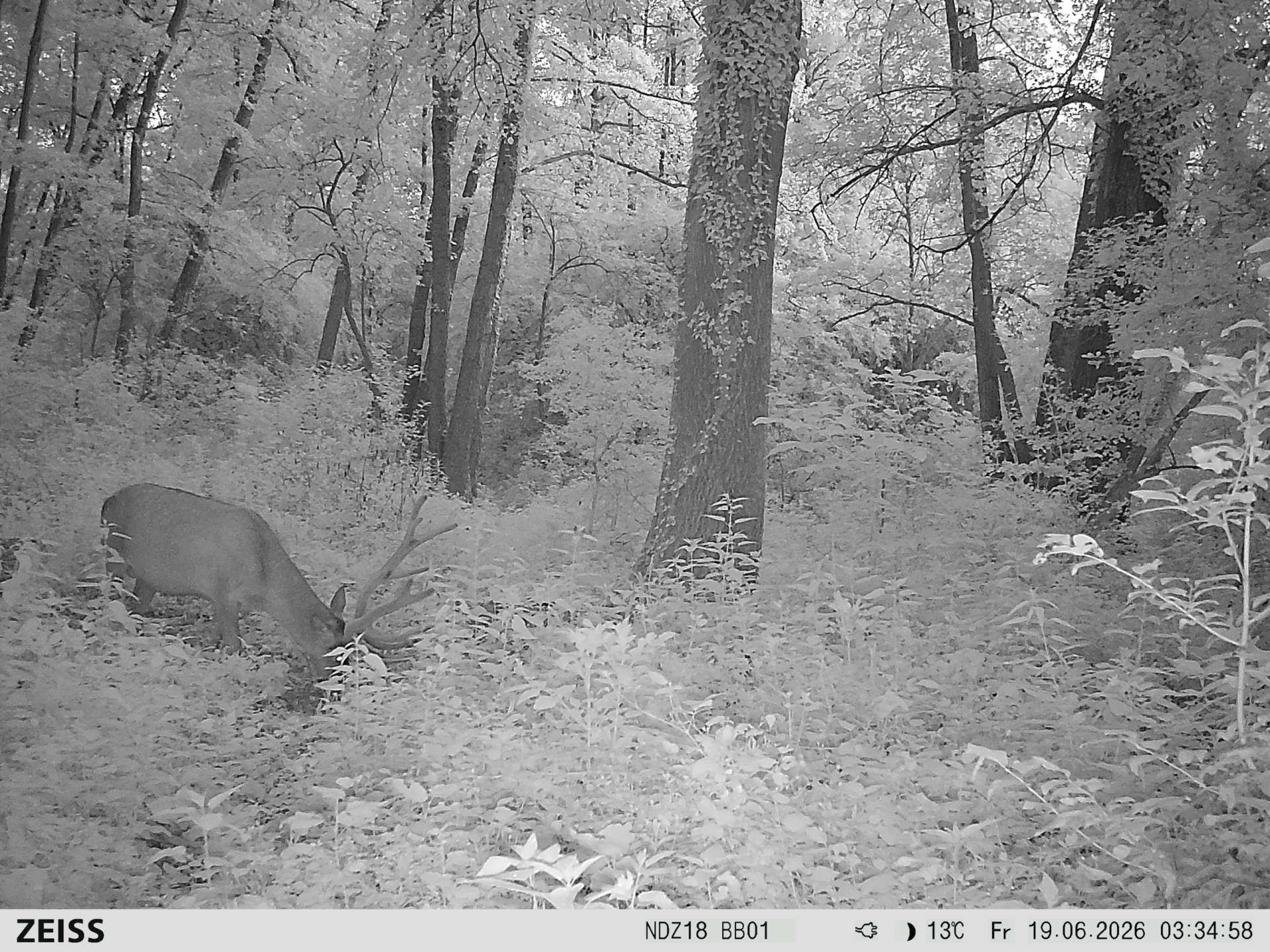
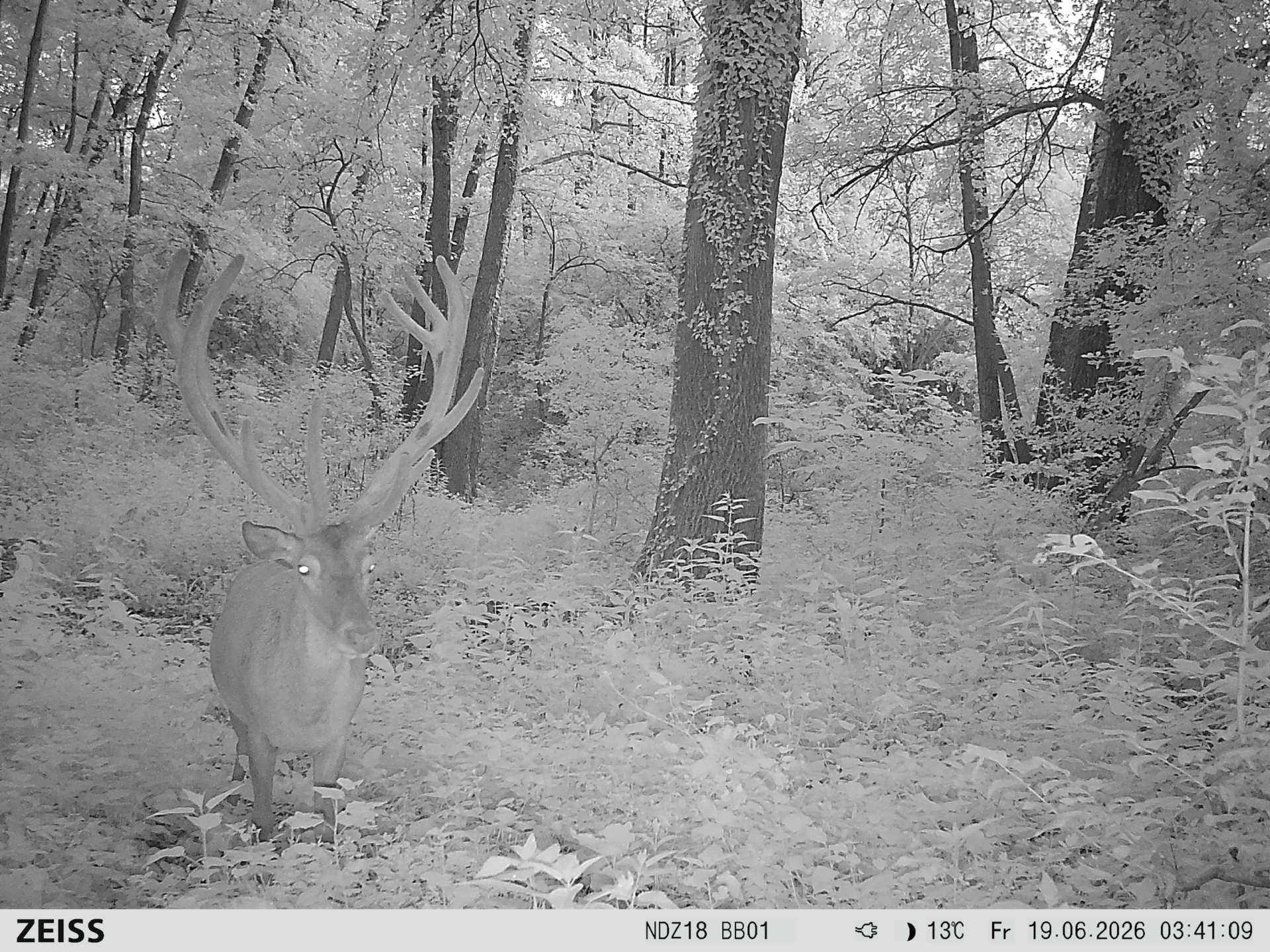
This morning, between 3:49 and 3:54, across six consecutive triggered images, a red deer stag — still carrying its velvet antlers, typical for this time of year — lingered calmly near the stump for an extended time, alternately grazing and turning toward the waterer.
The fact that the animal moved undisturbed in the area for nearly five minutes is in itself telling about the placement of the site: the animal had no reason for suspicion, which is the most important feedback in terms of regular, sustained use.
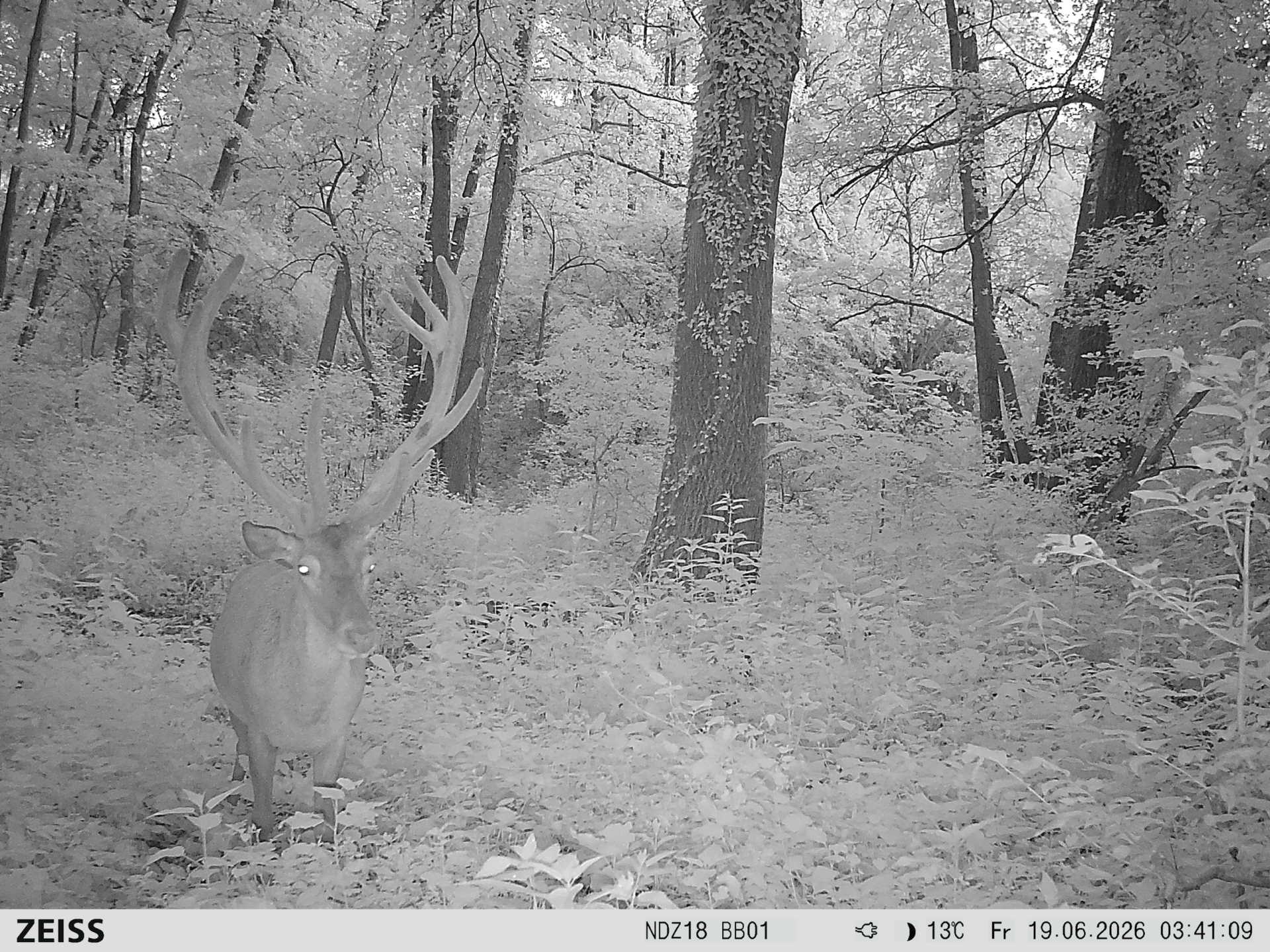
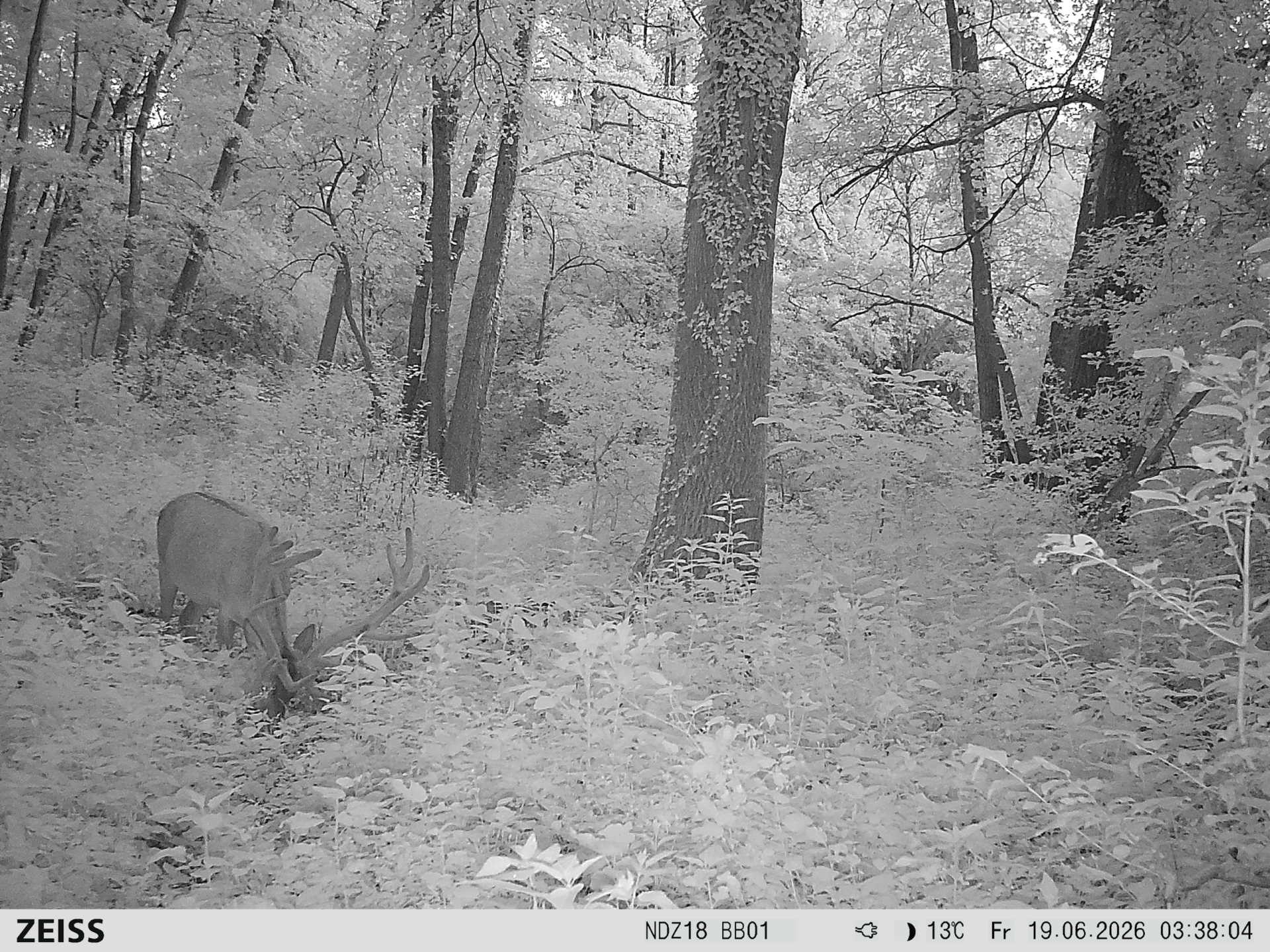
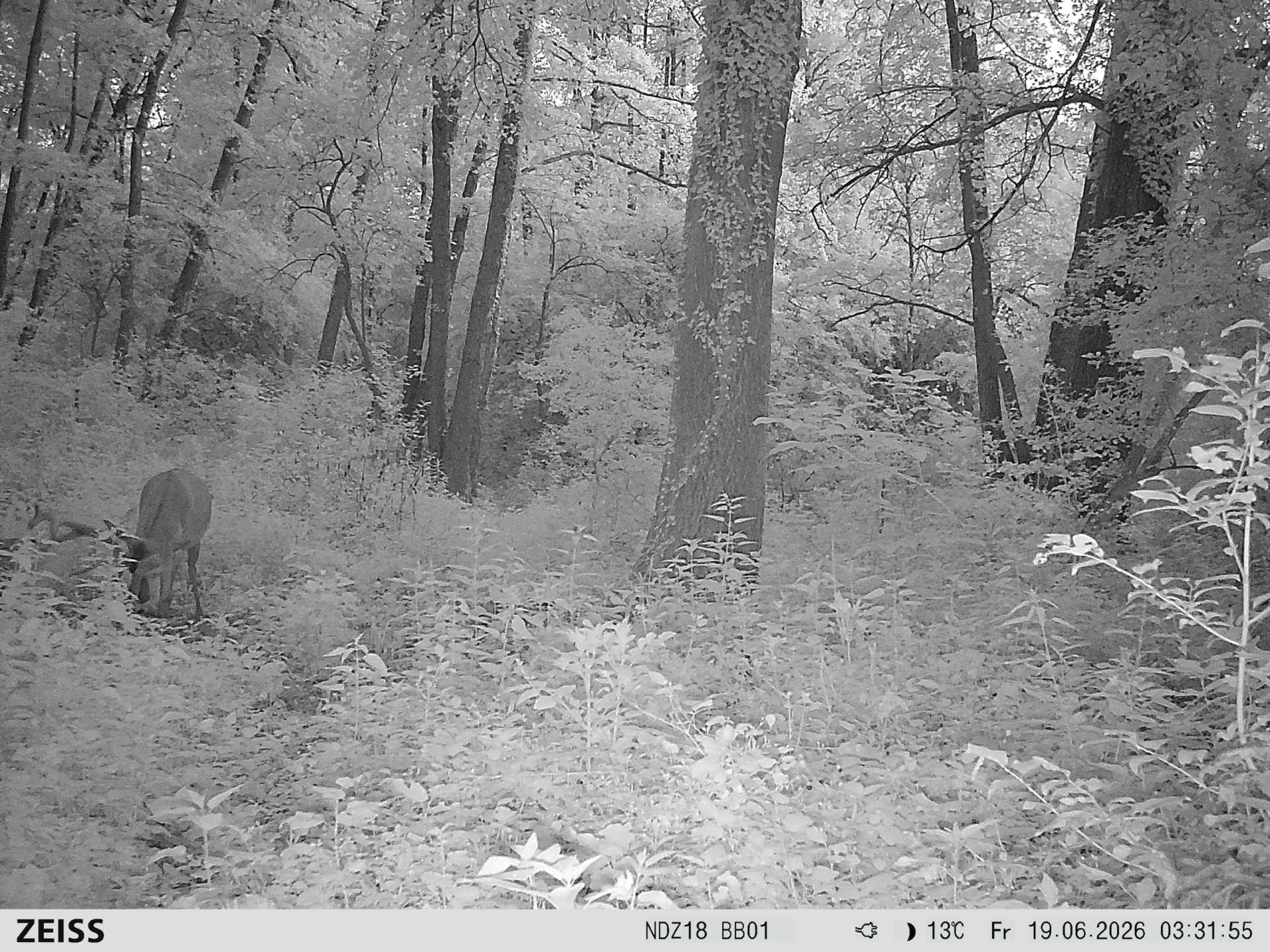
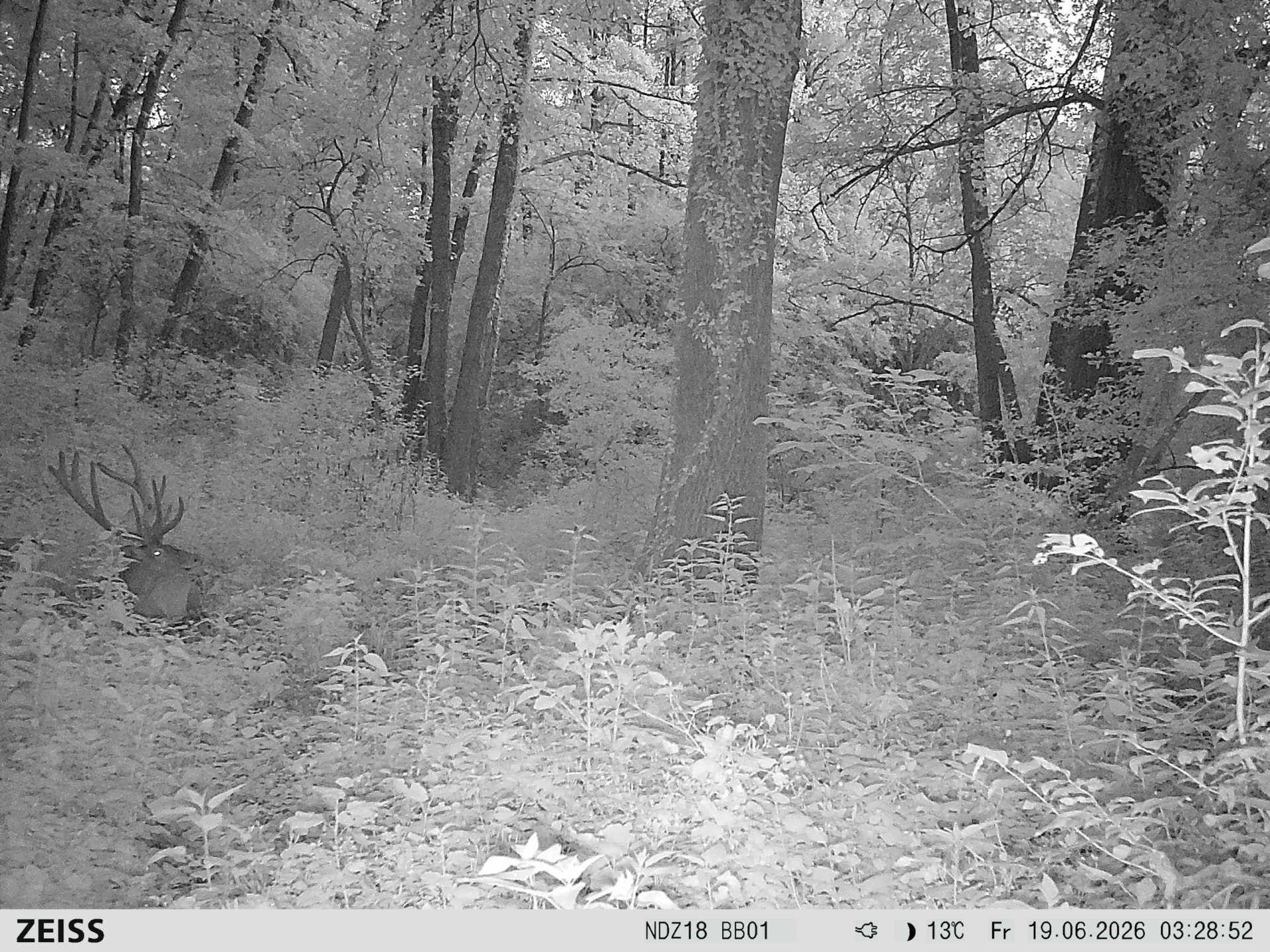
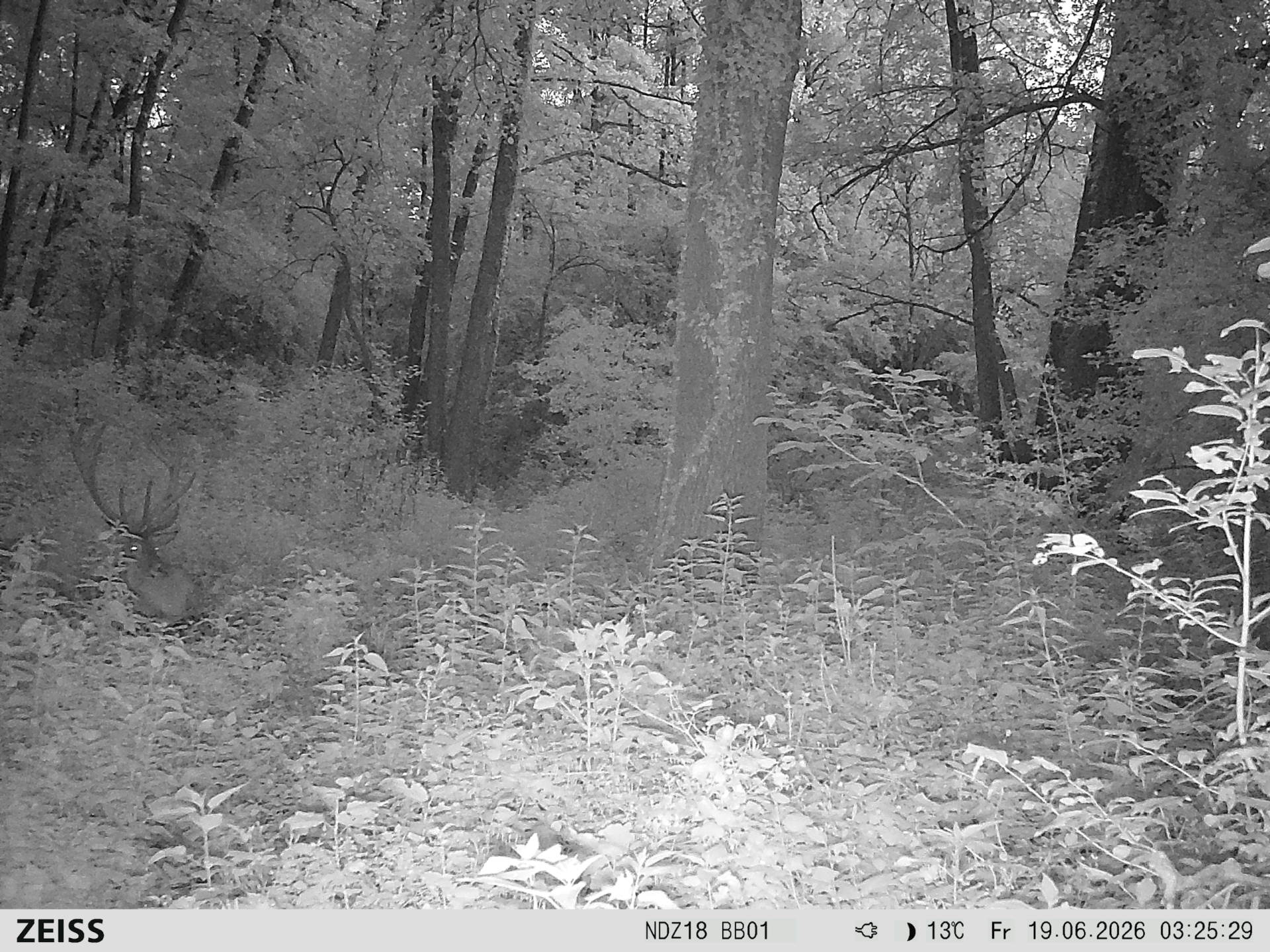
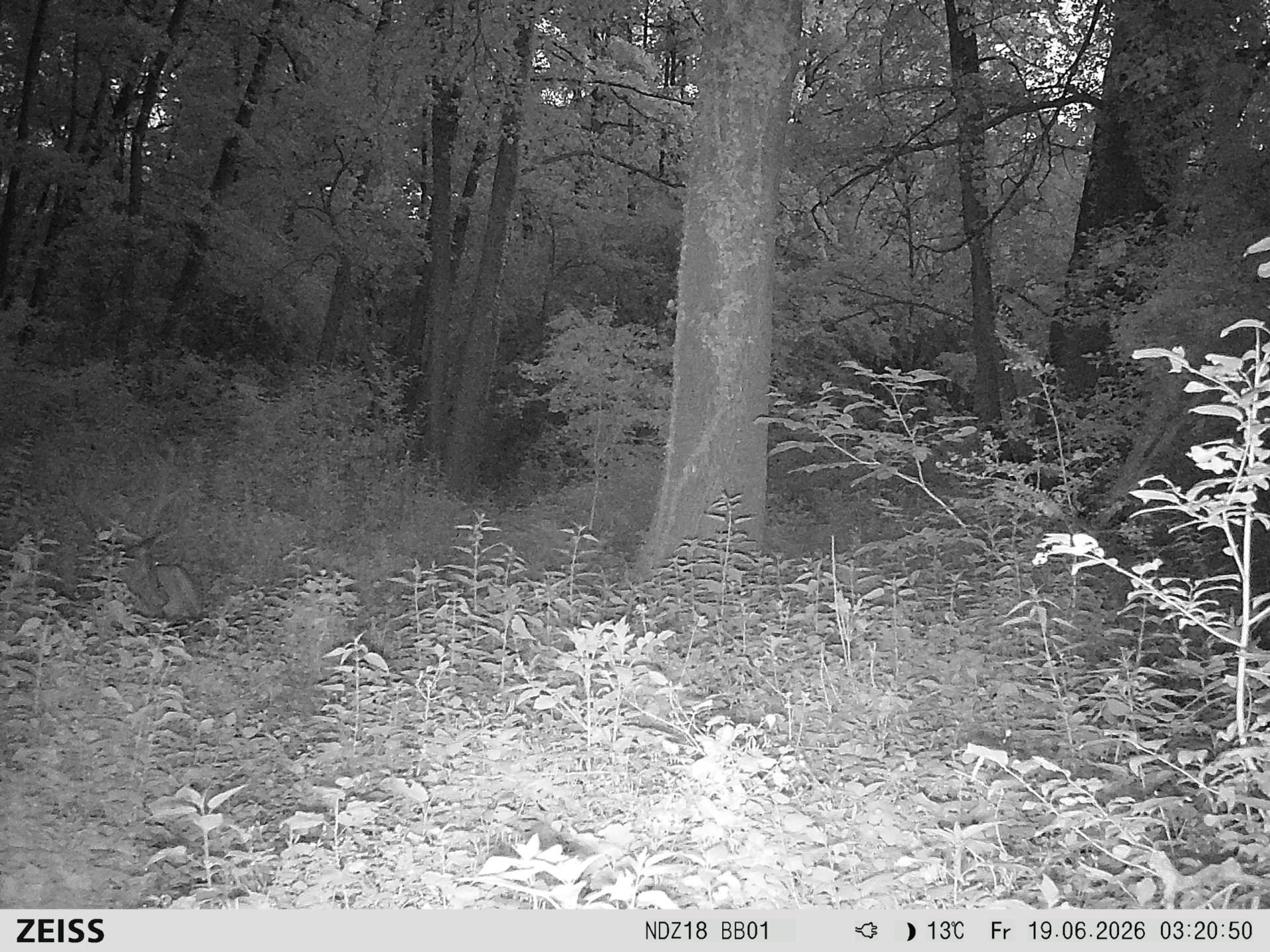
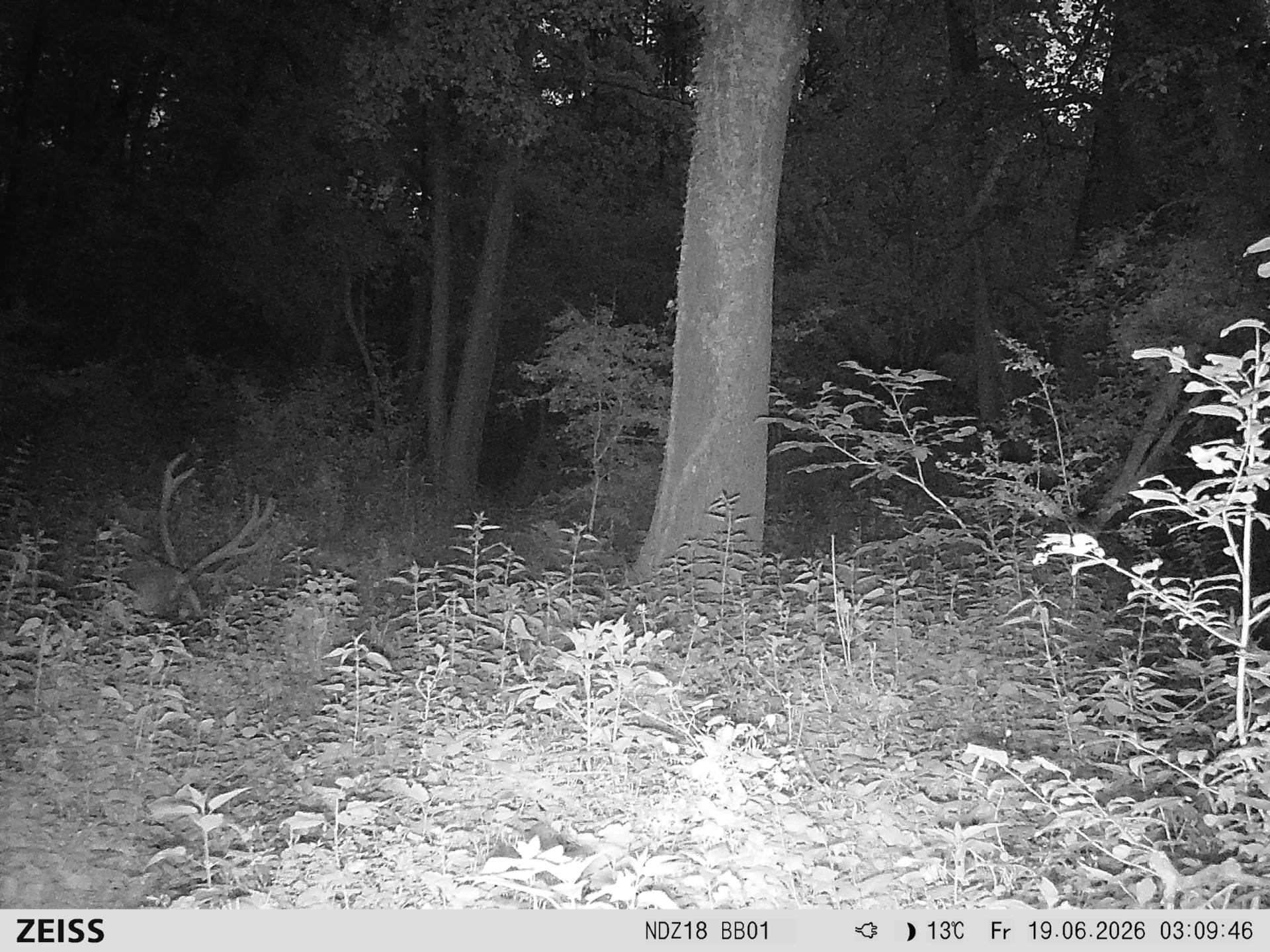
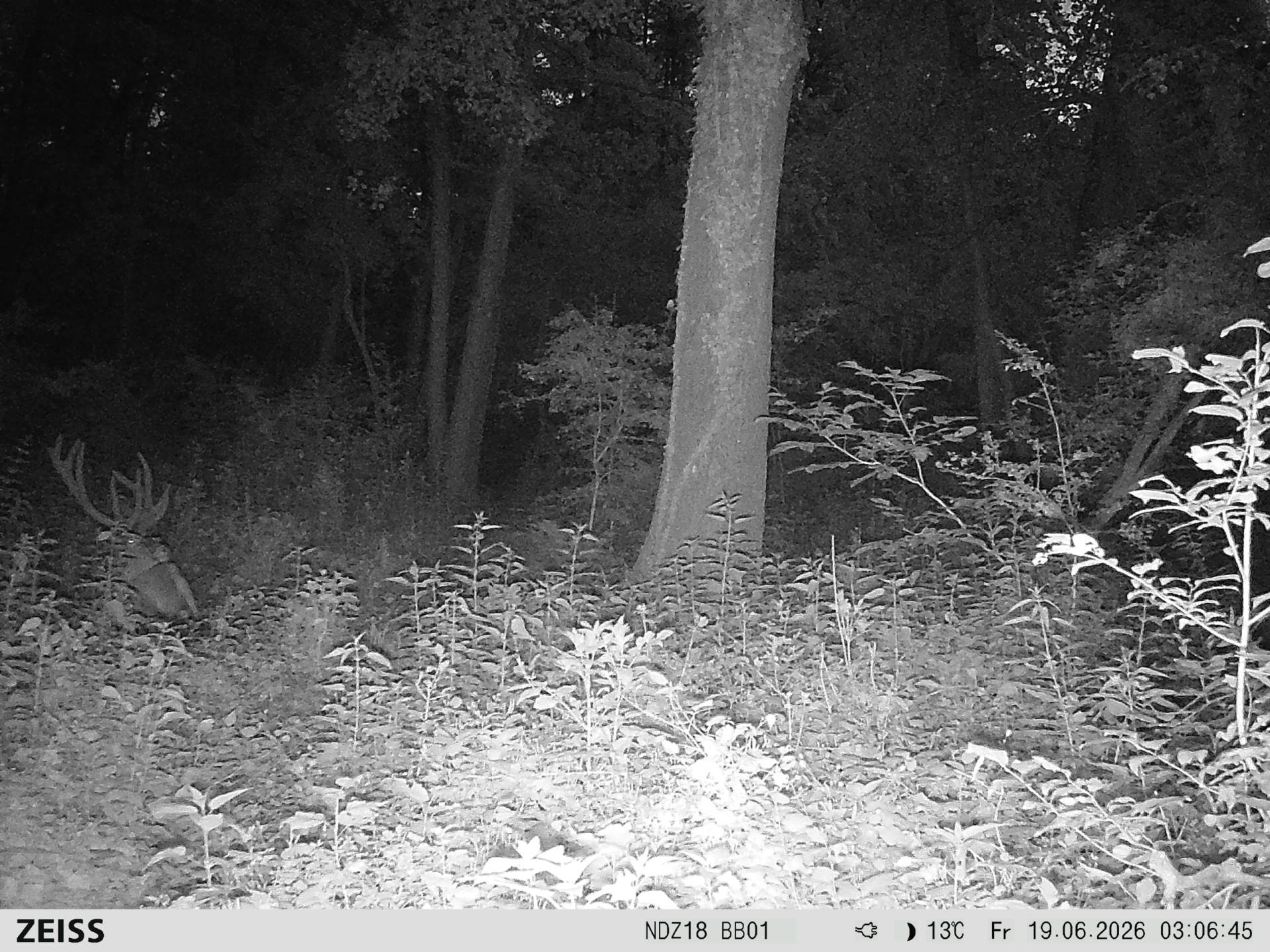
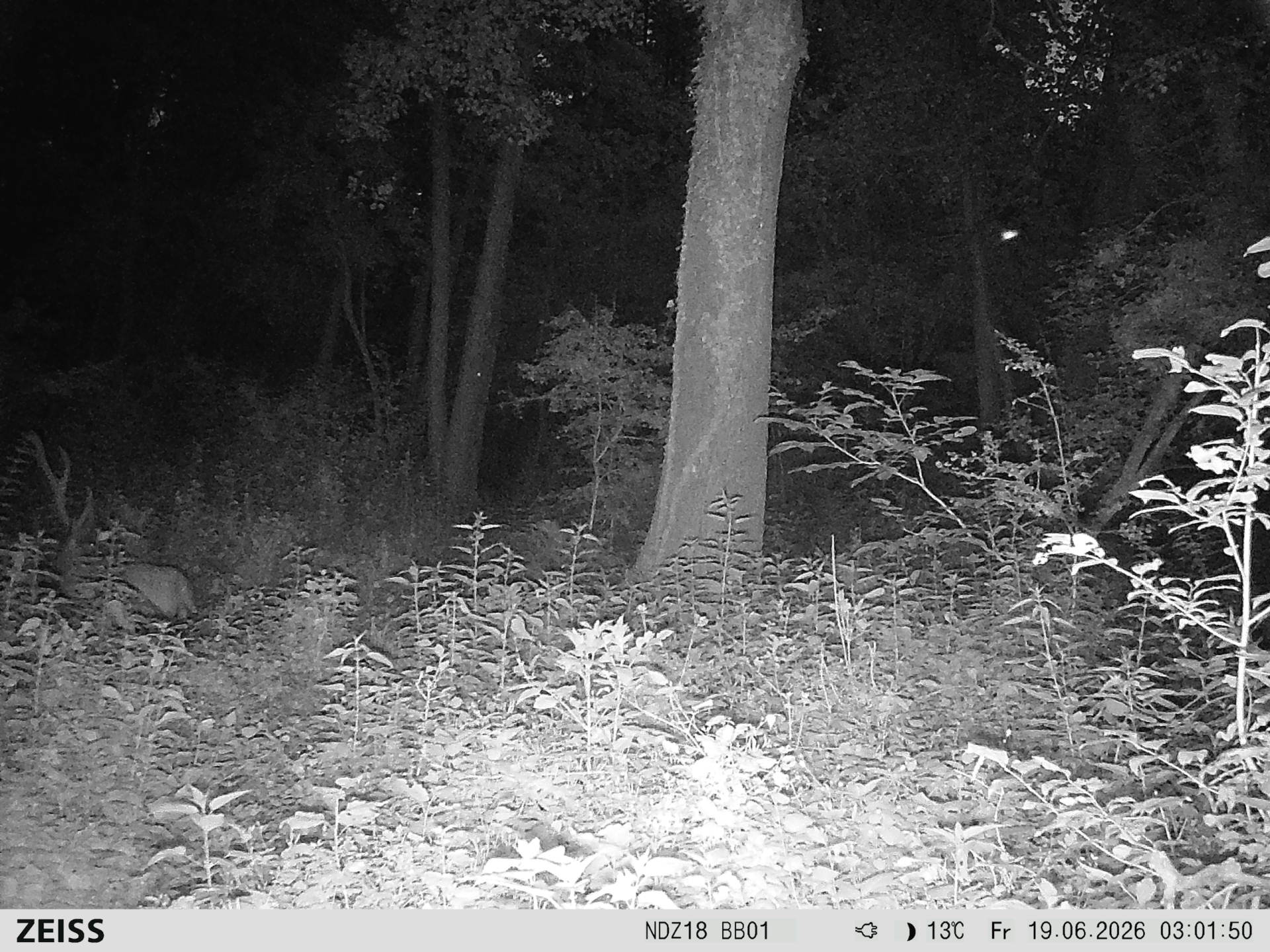
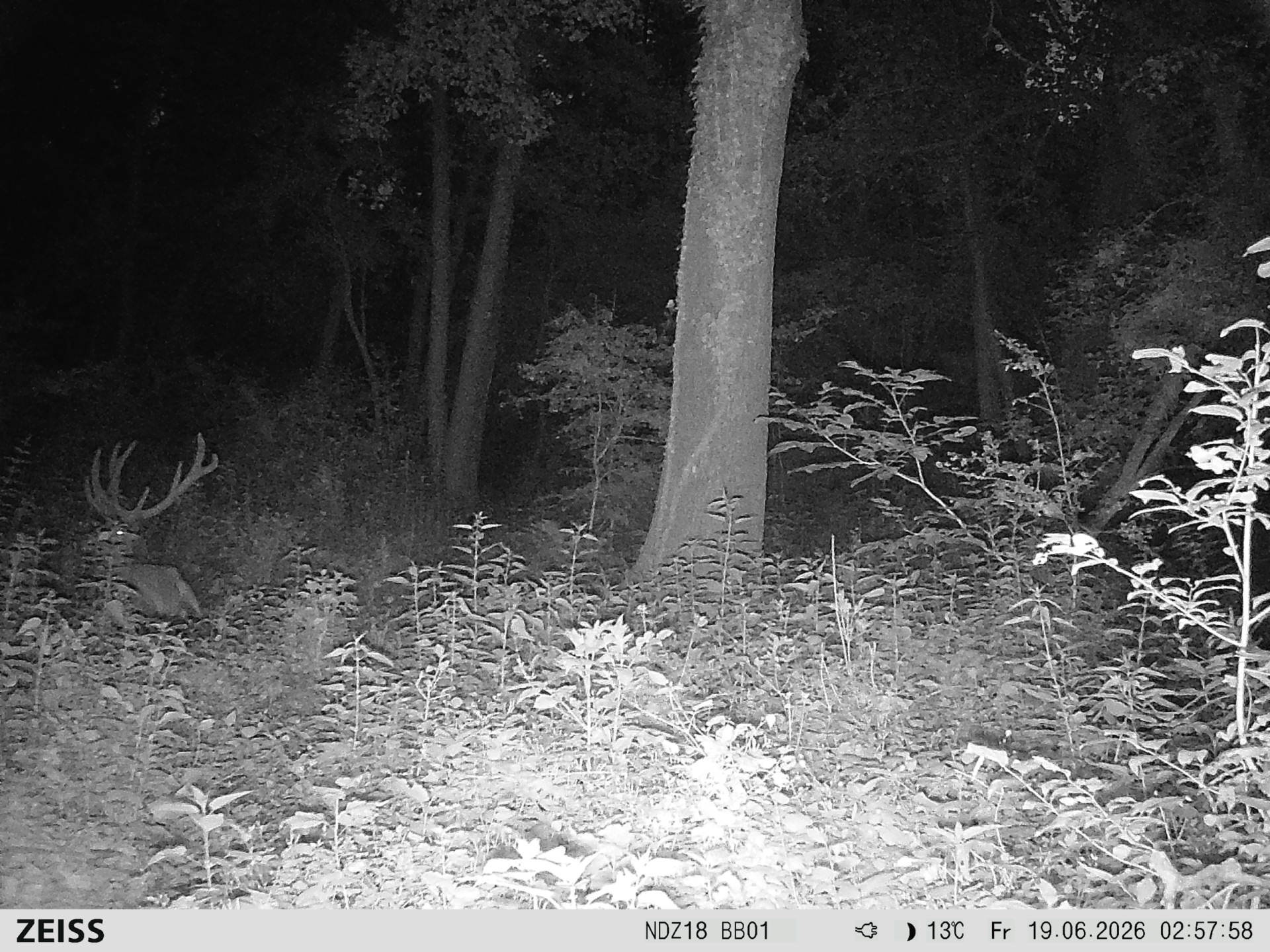
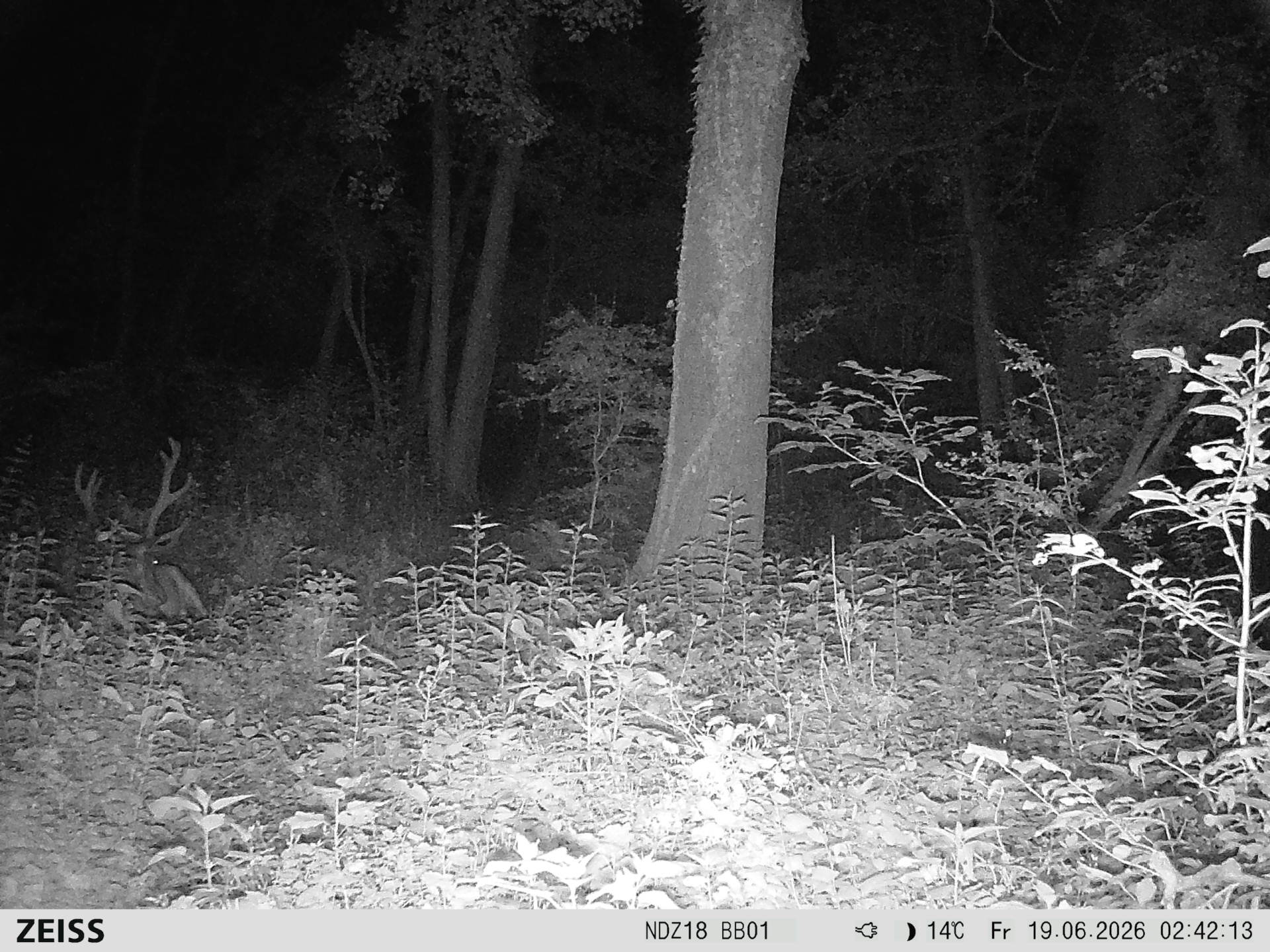
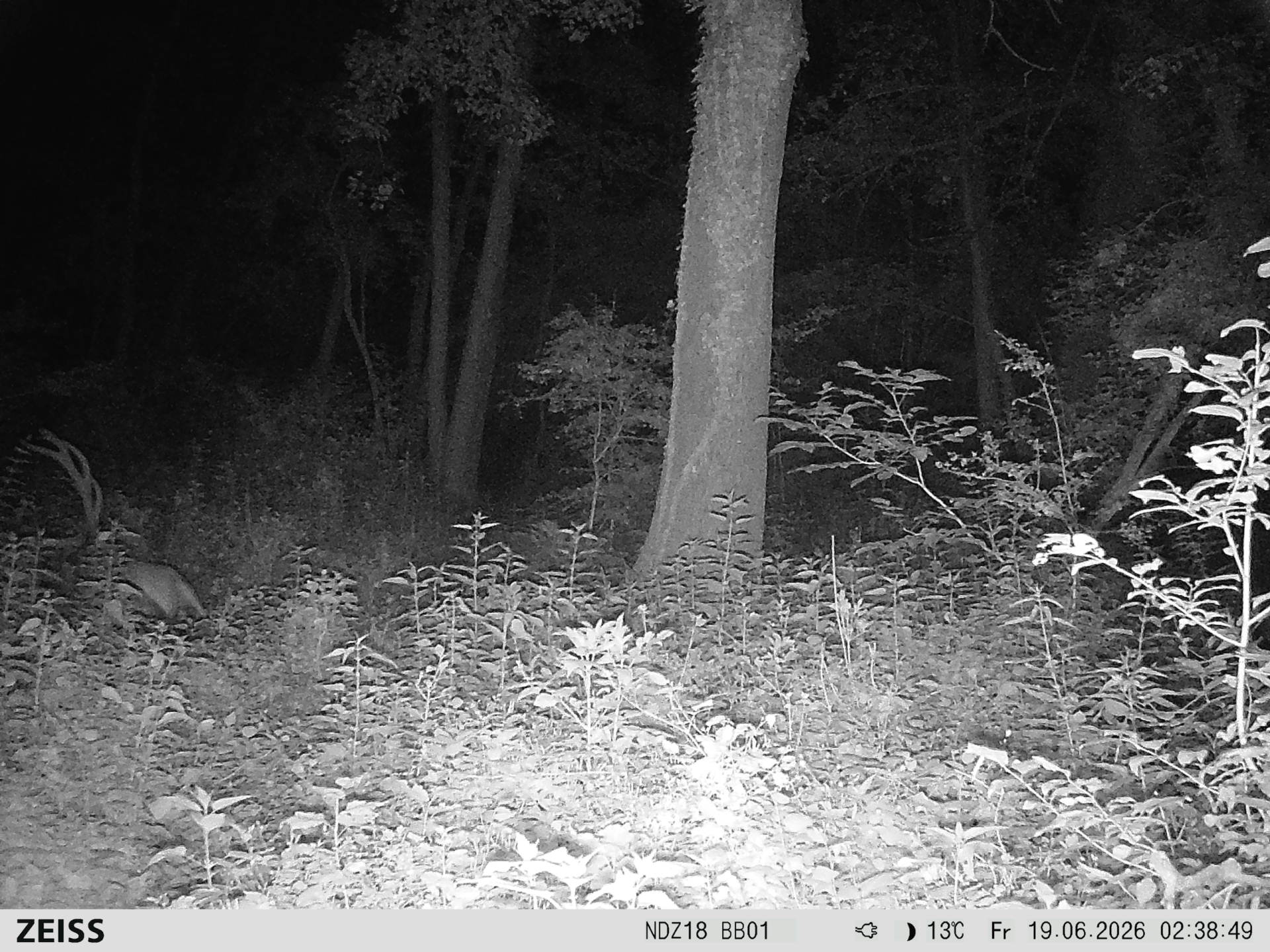
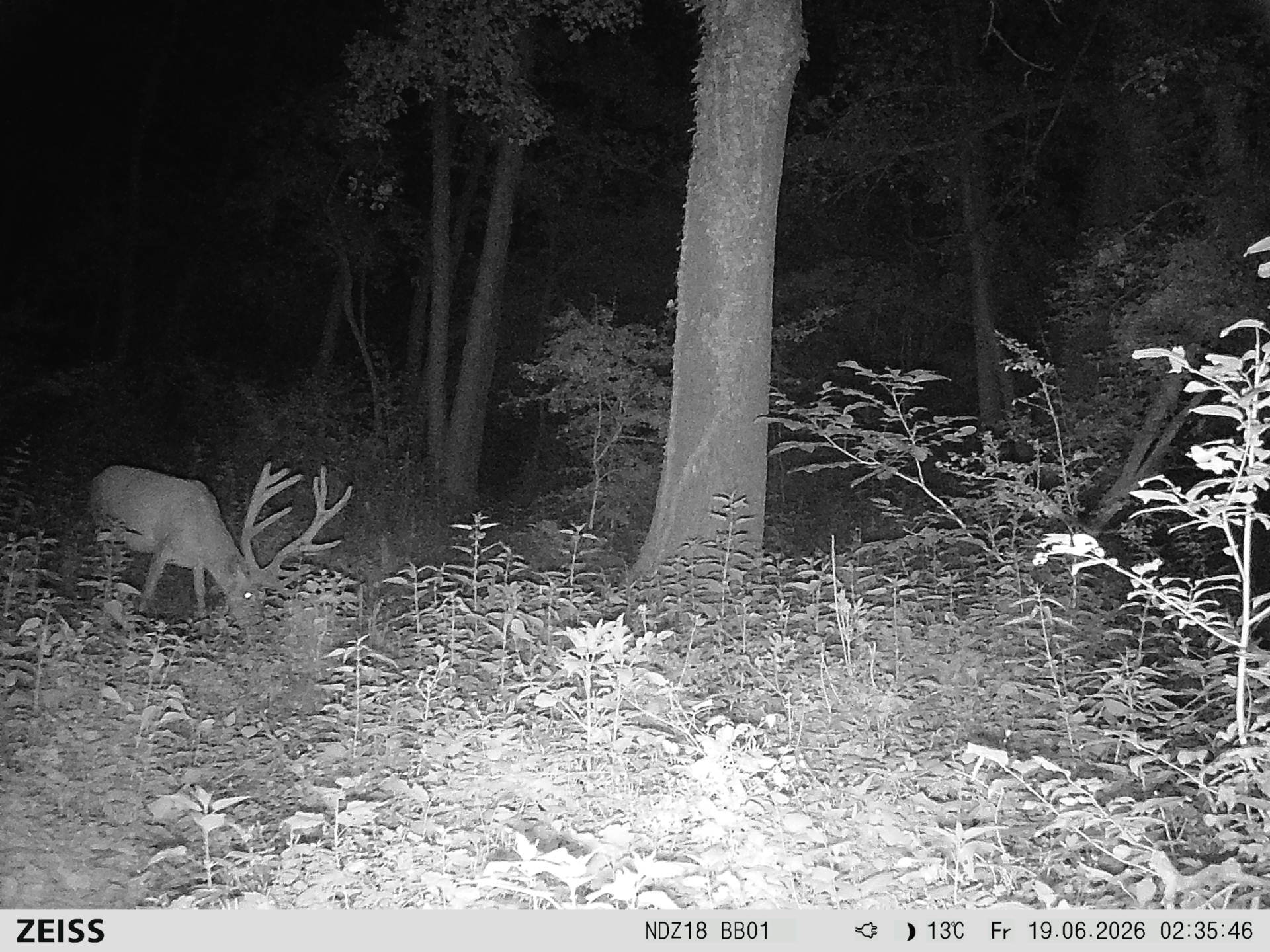
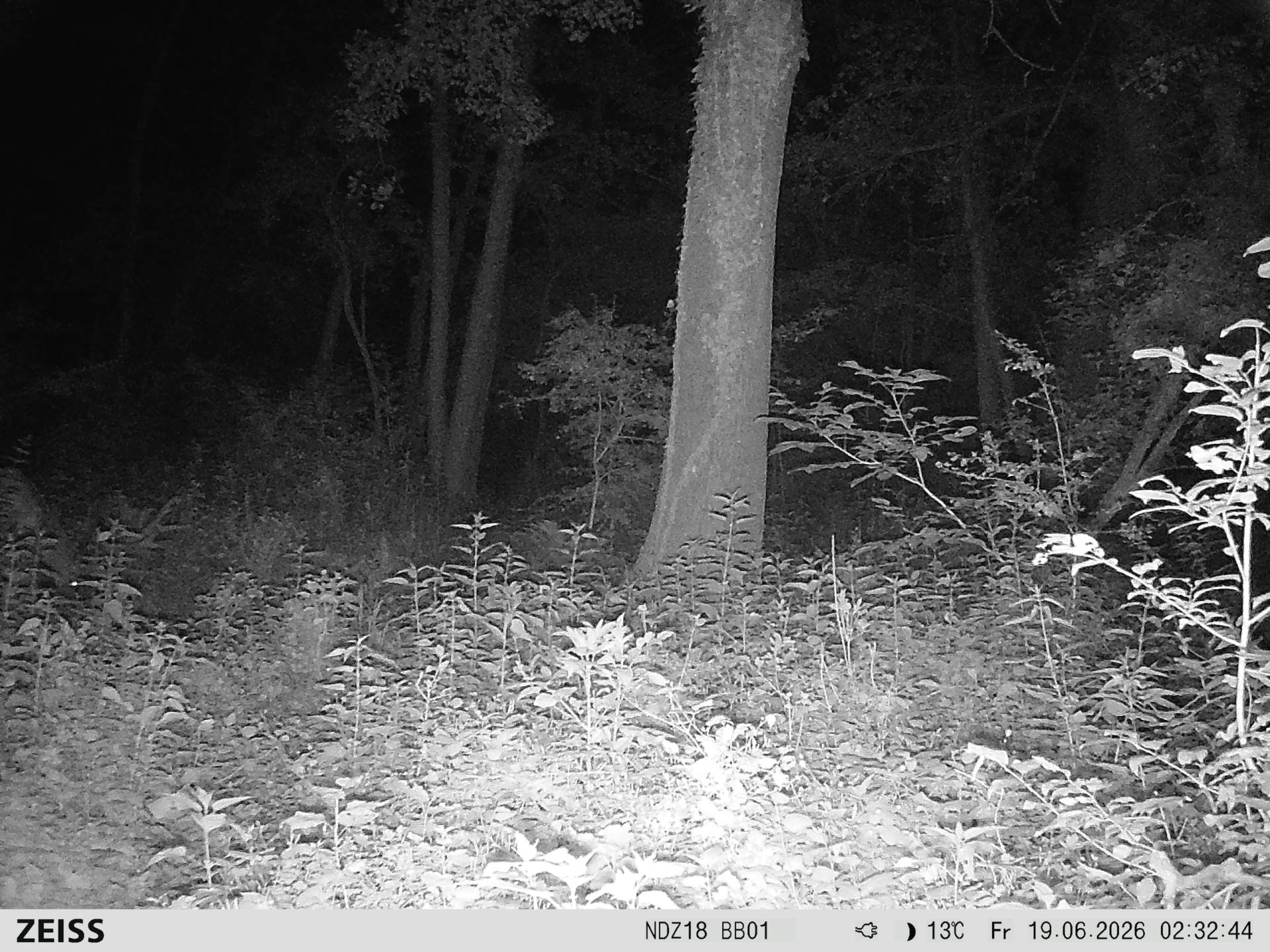
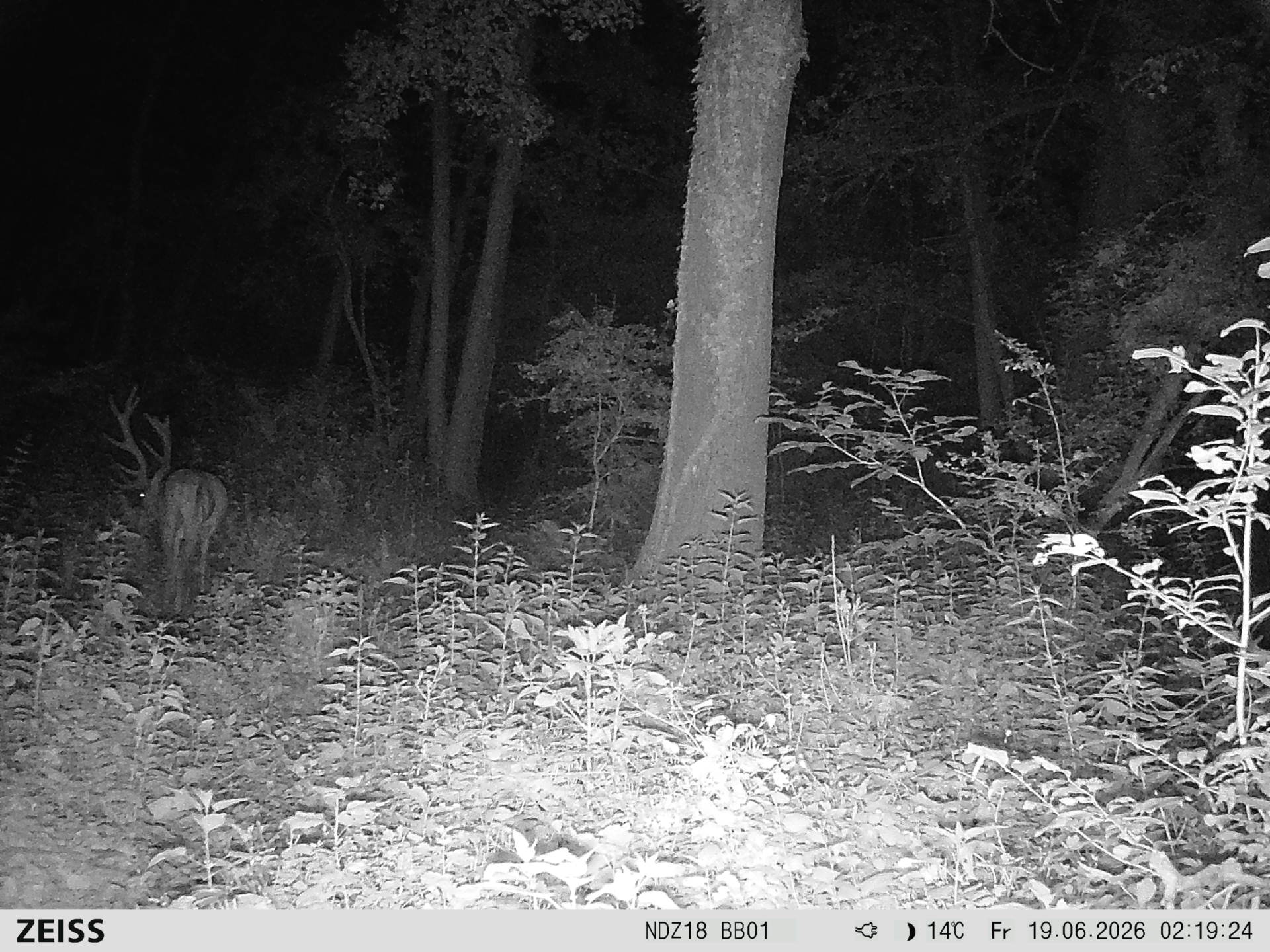
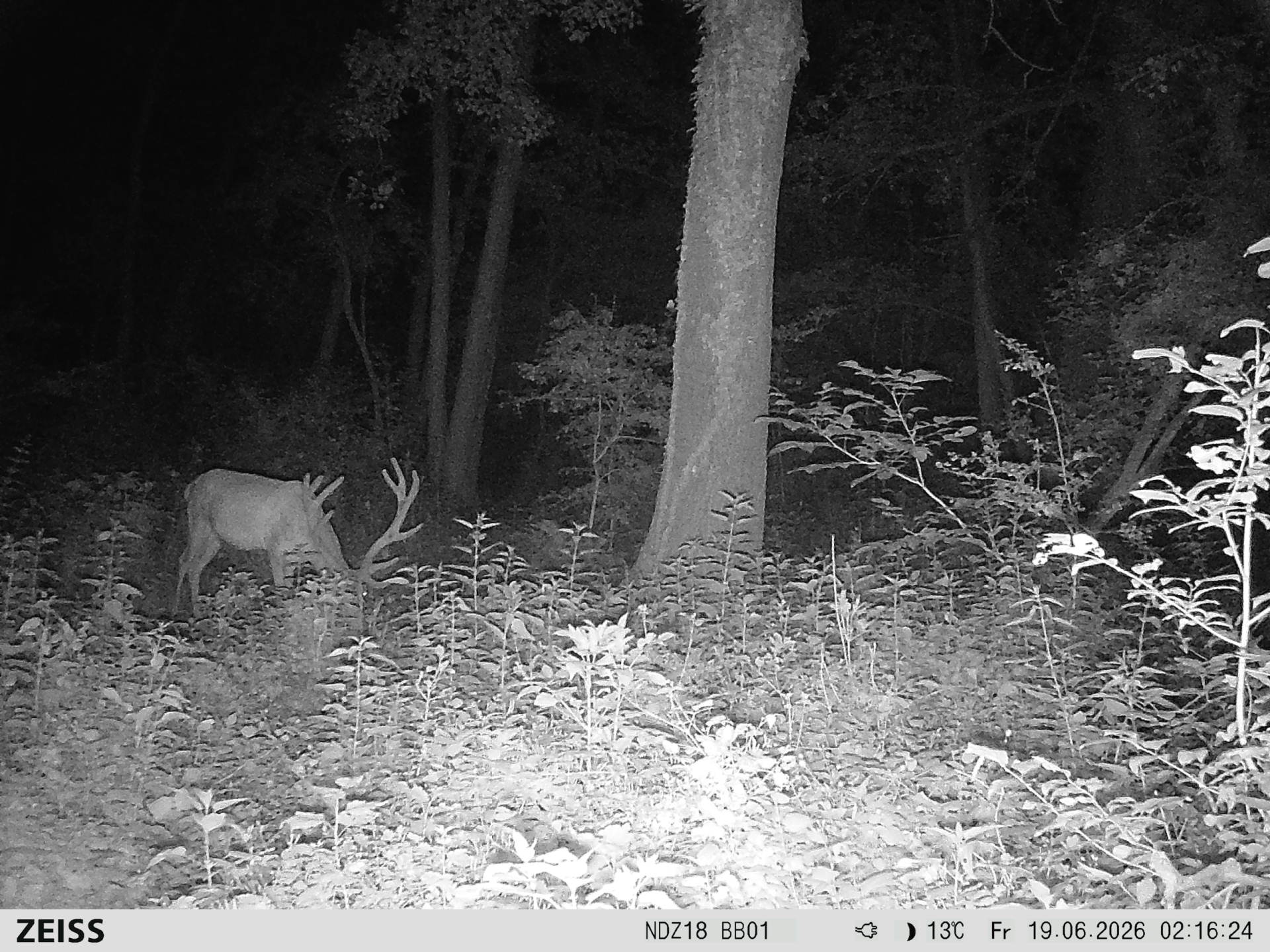
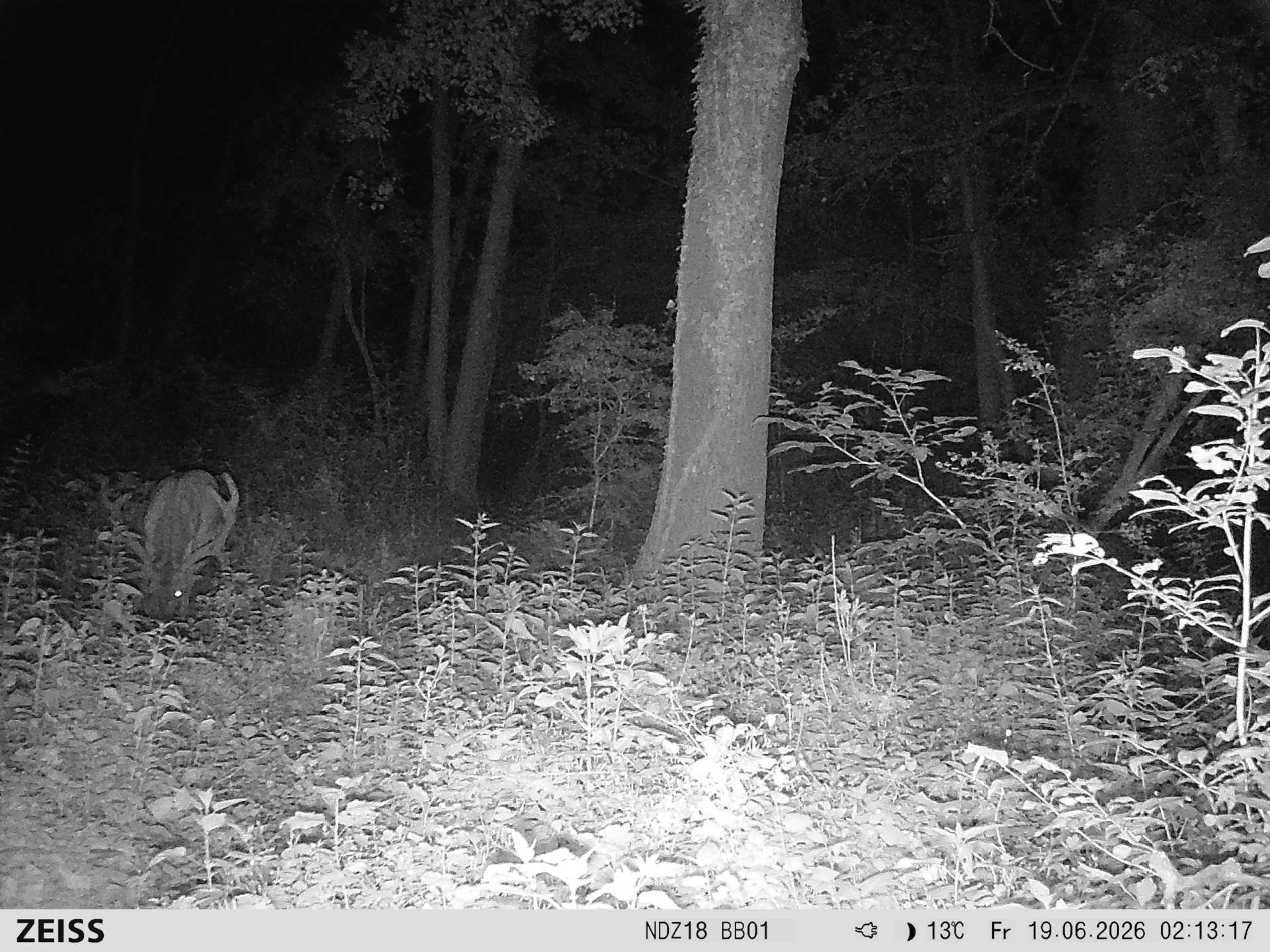
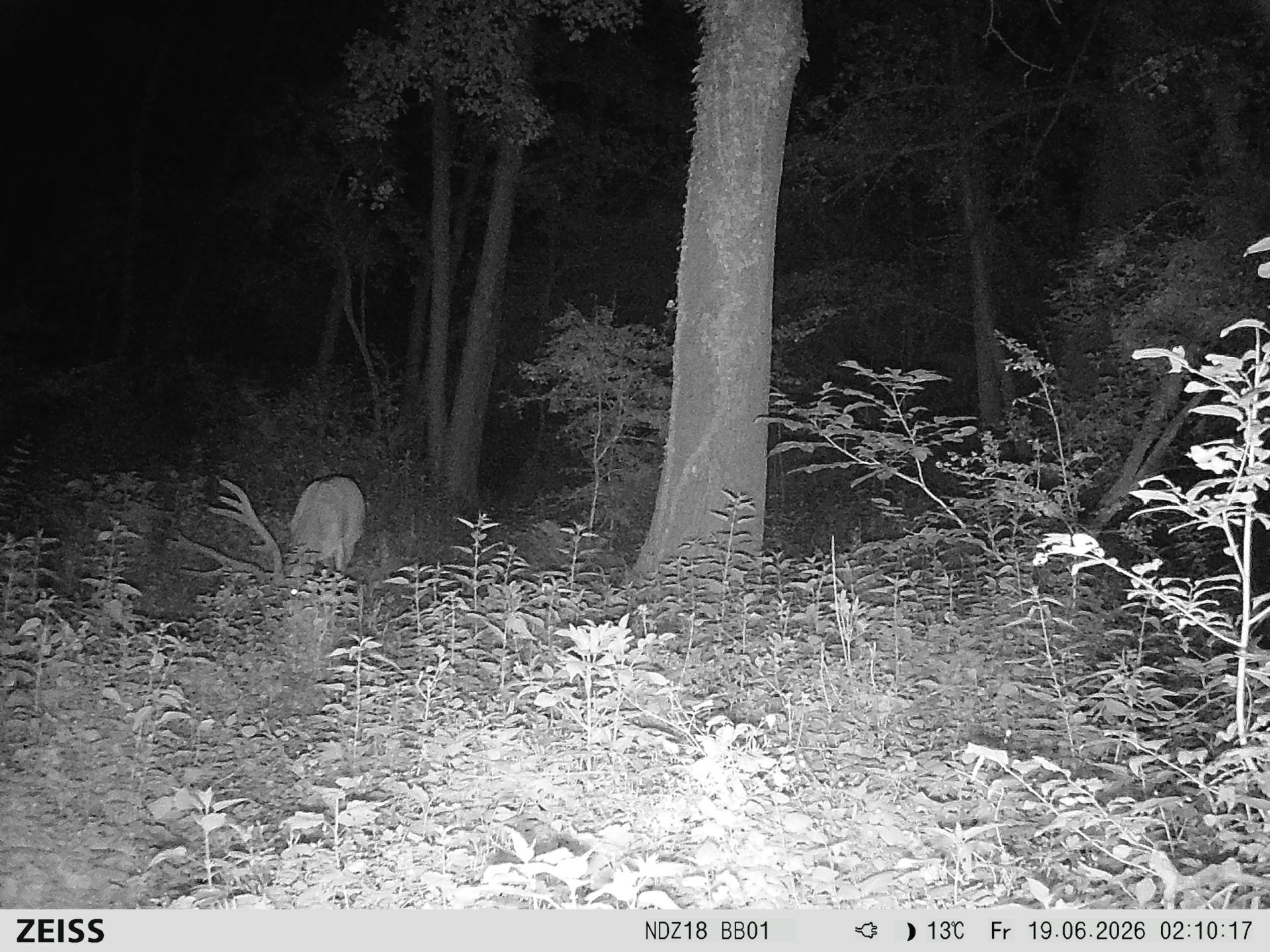
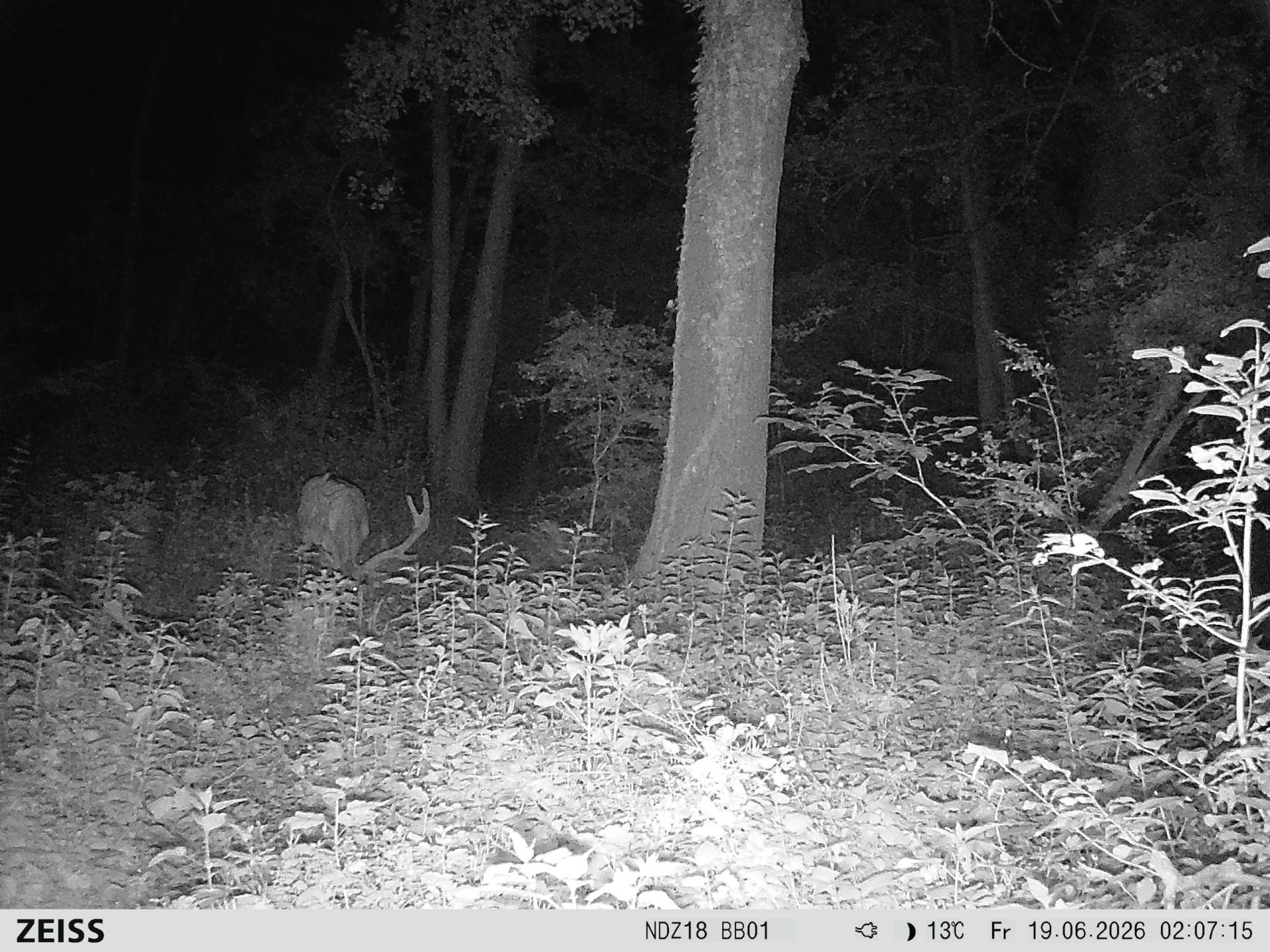
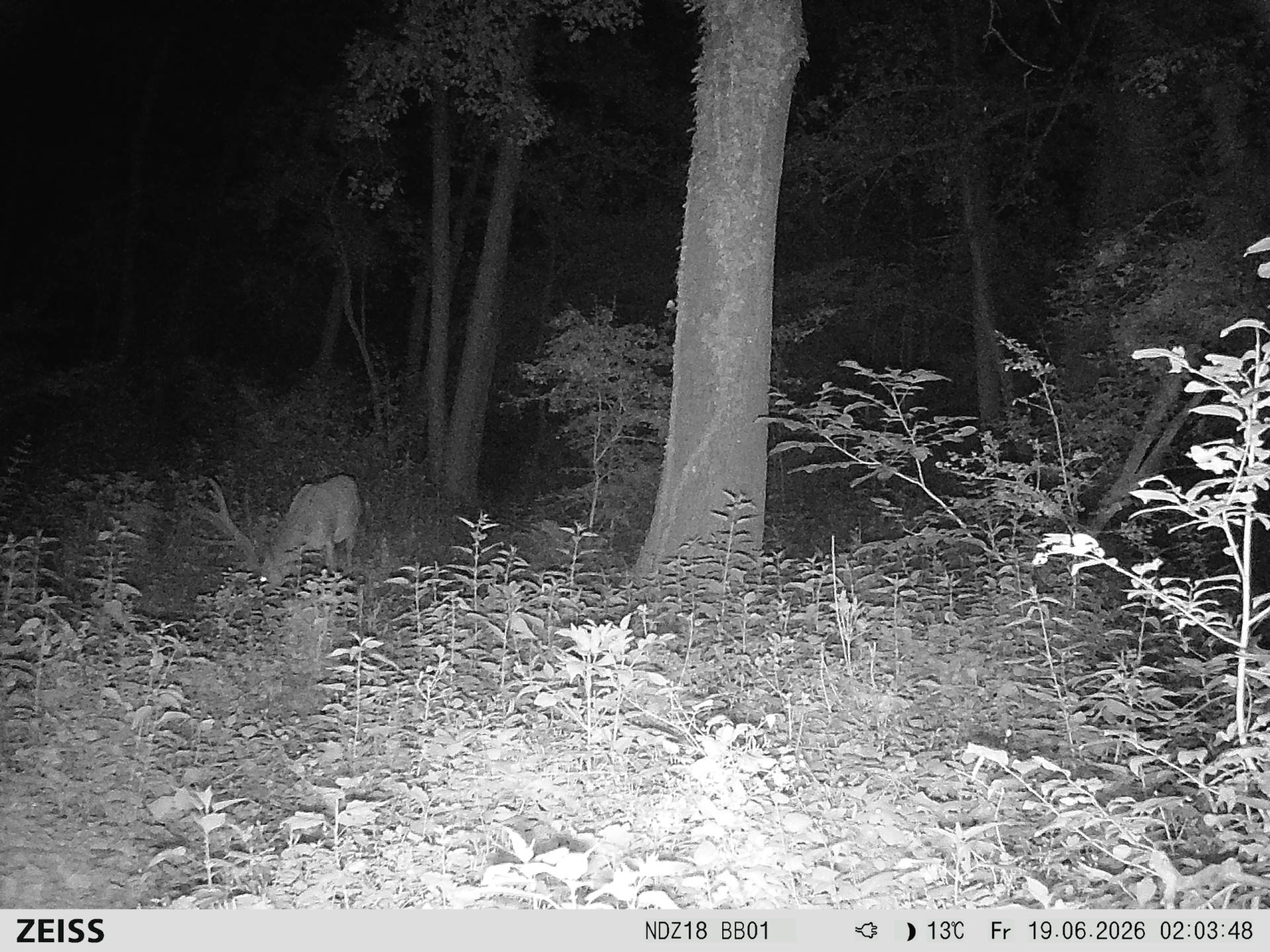
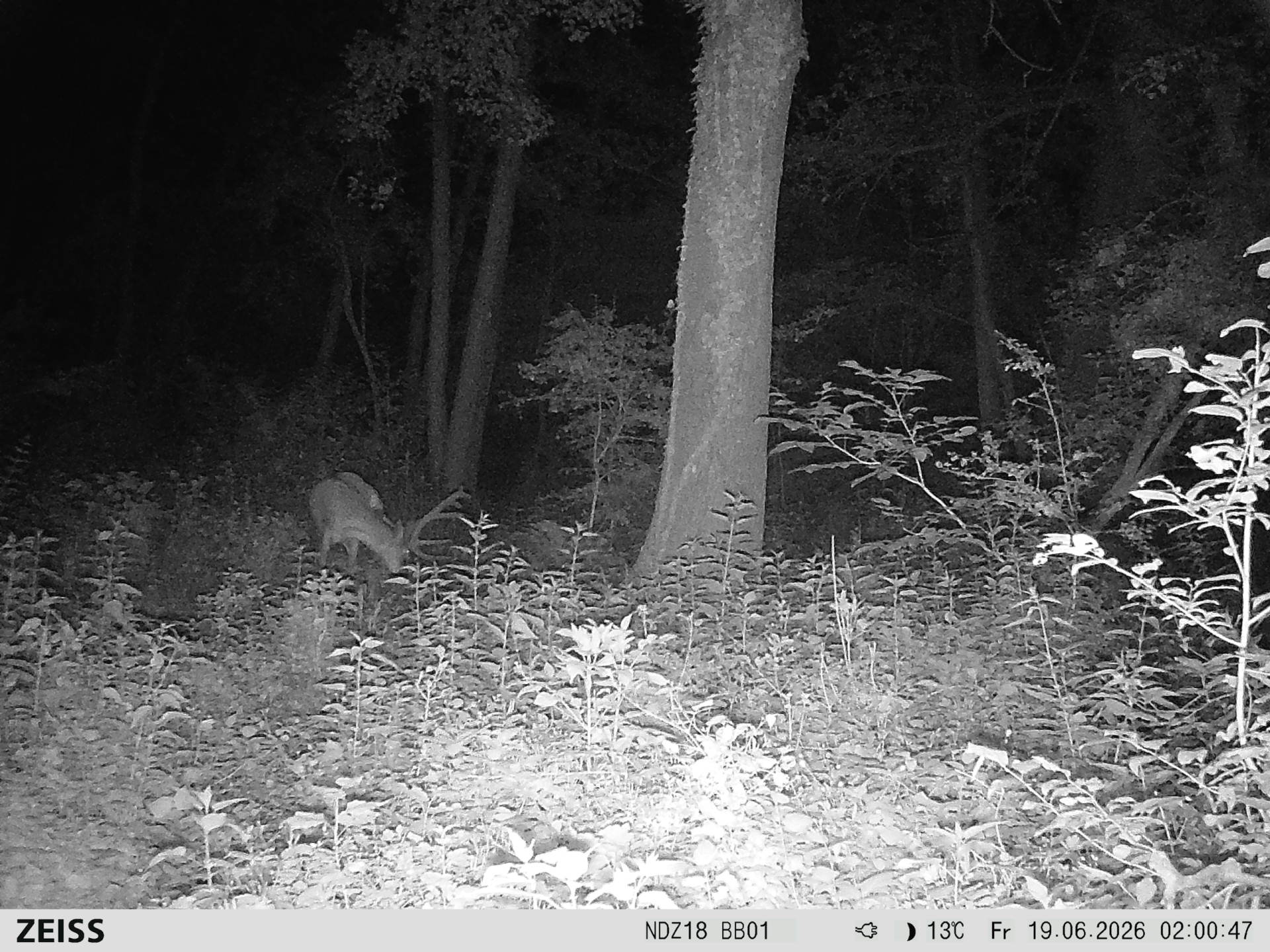
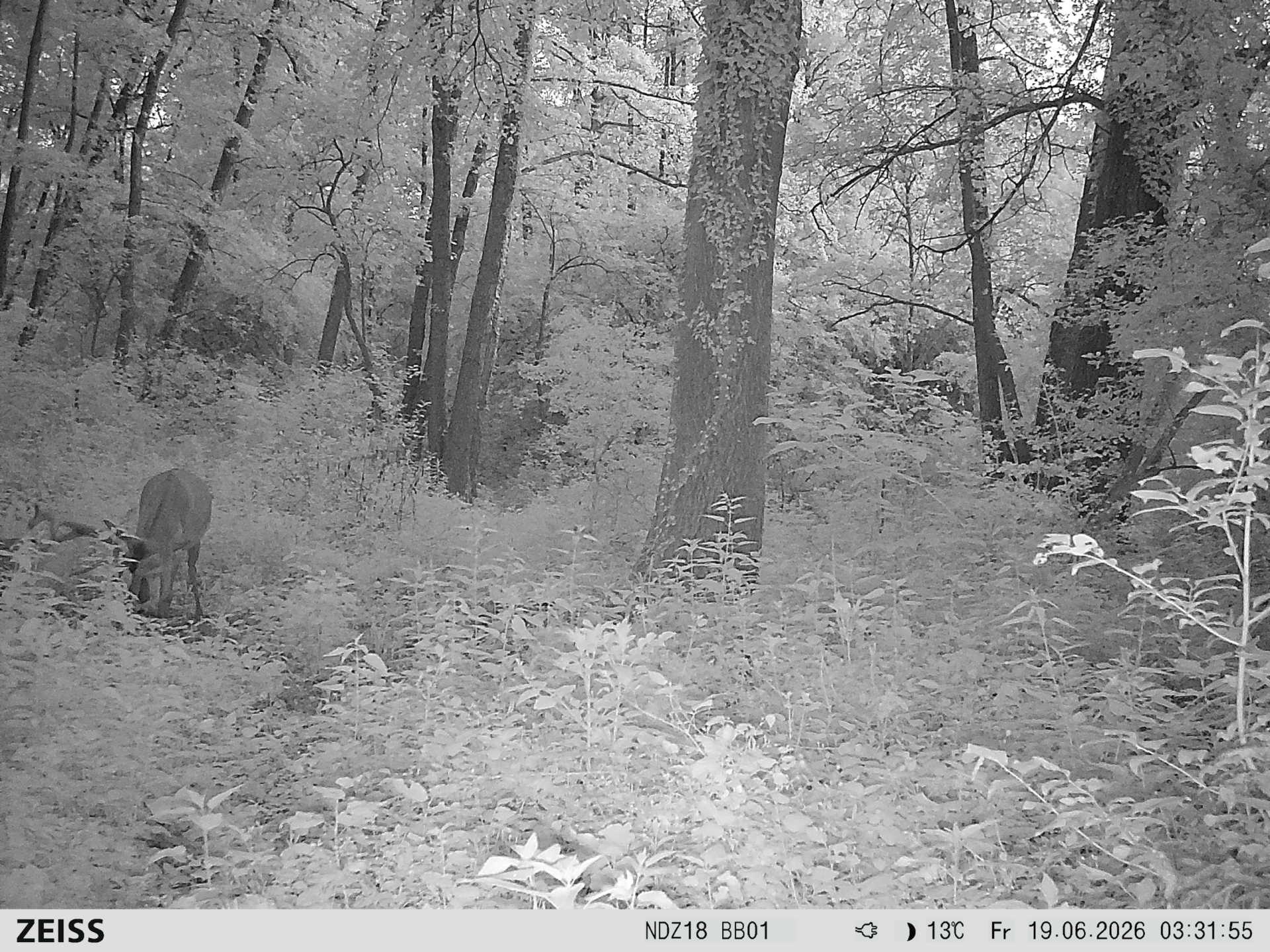
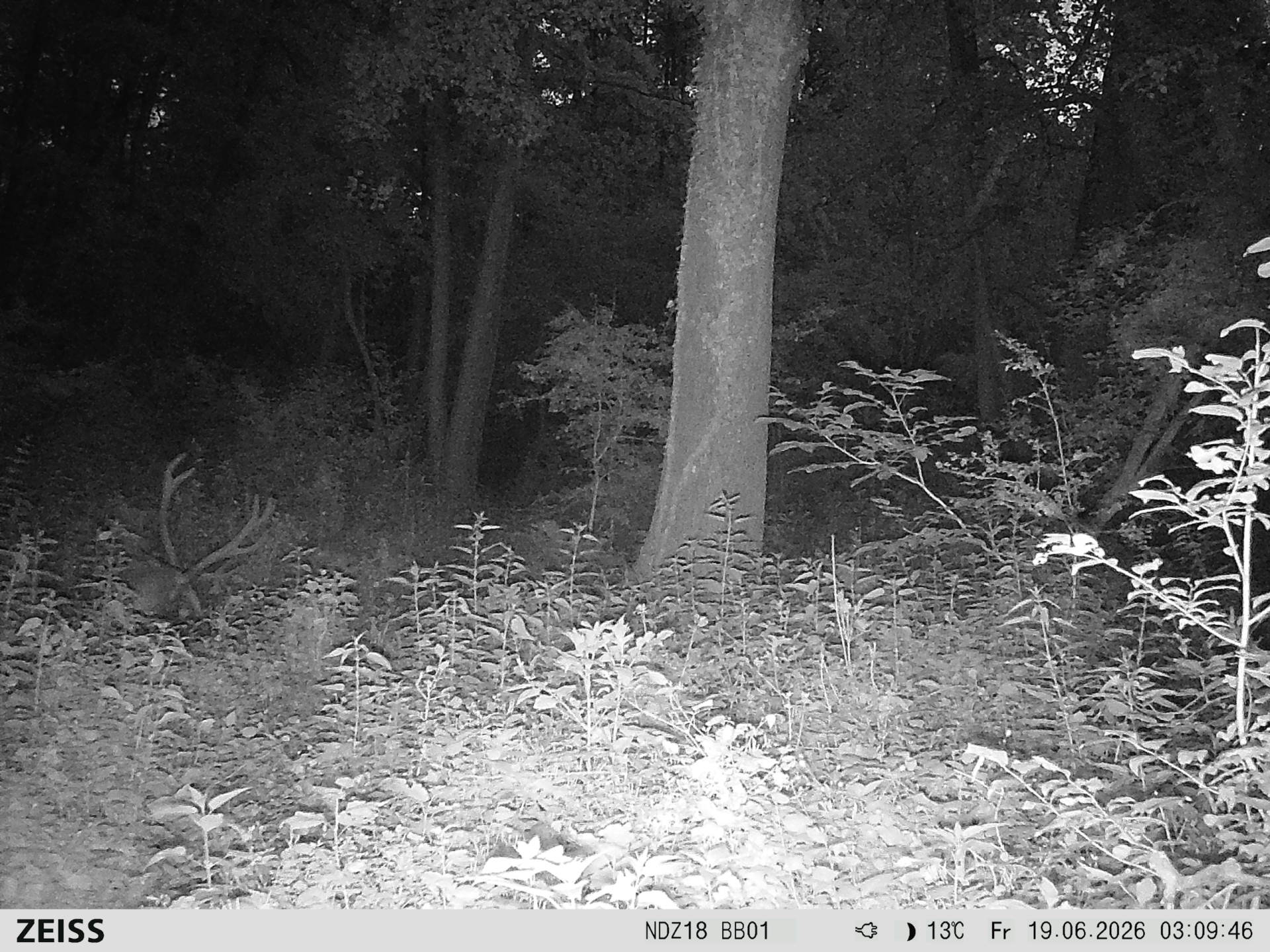
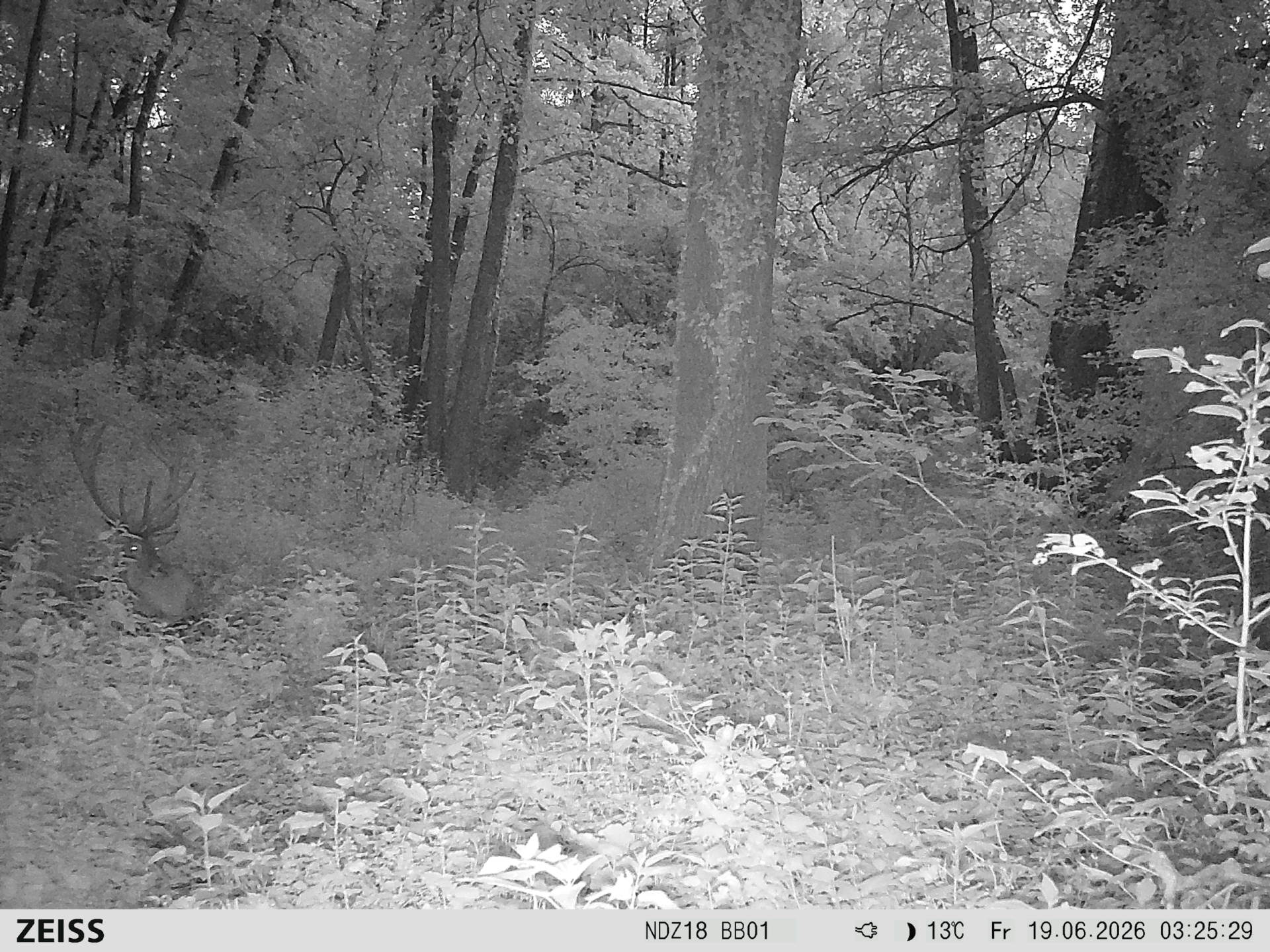
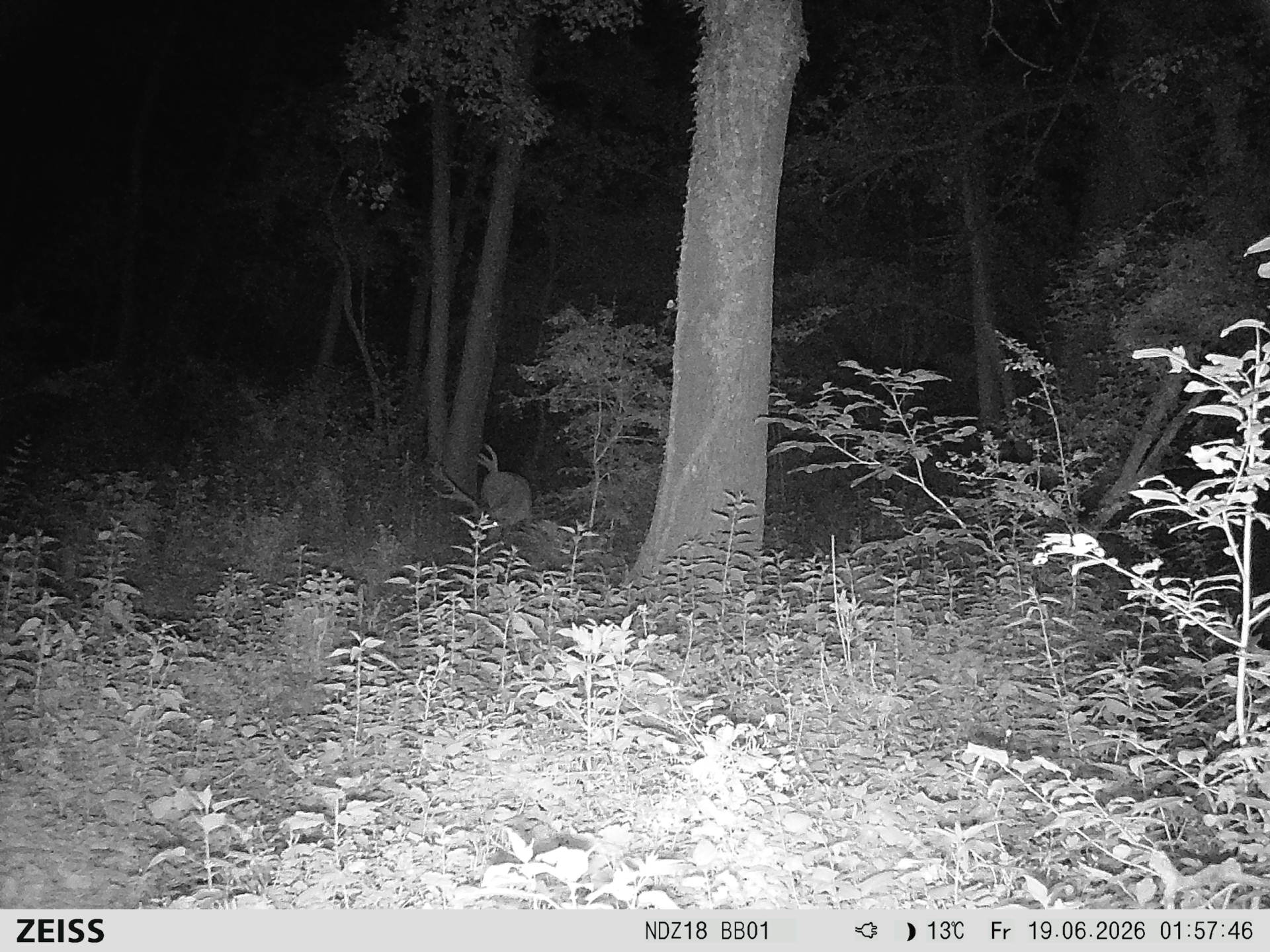
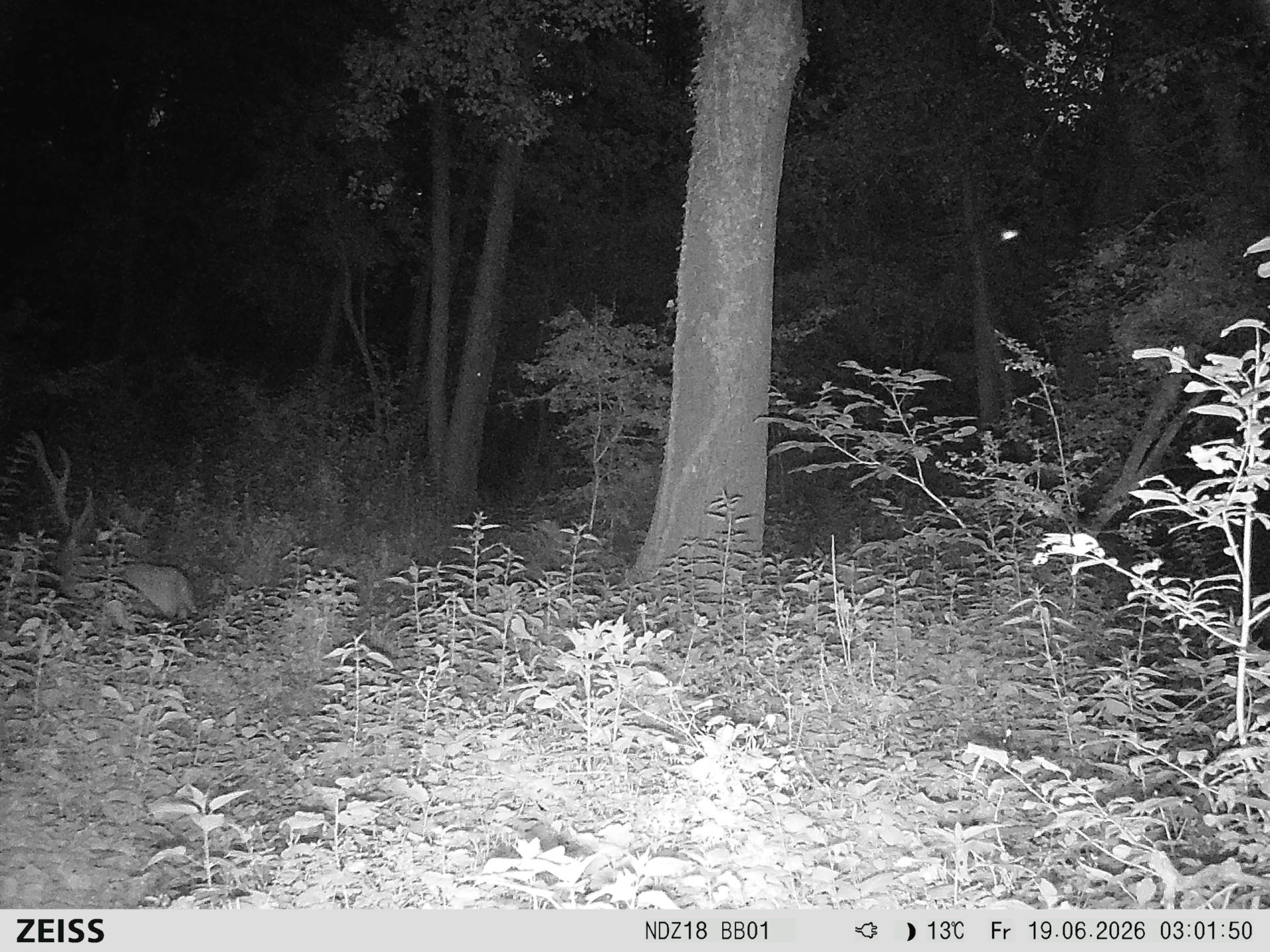
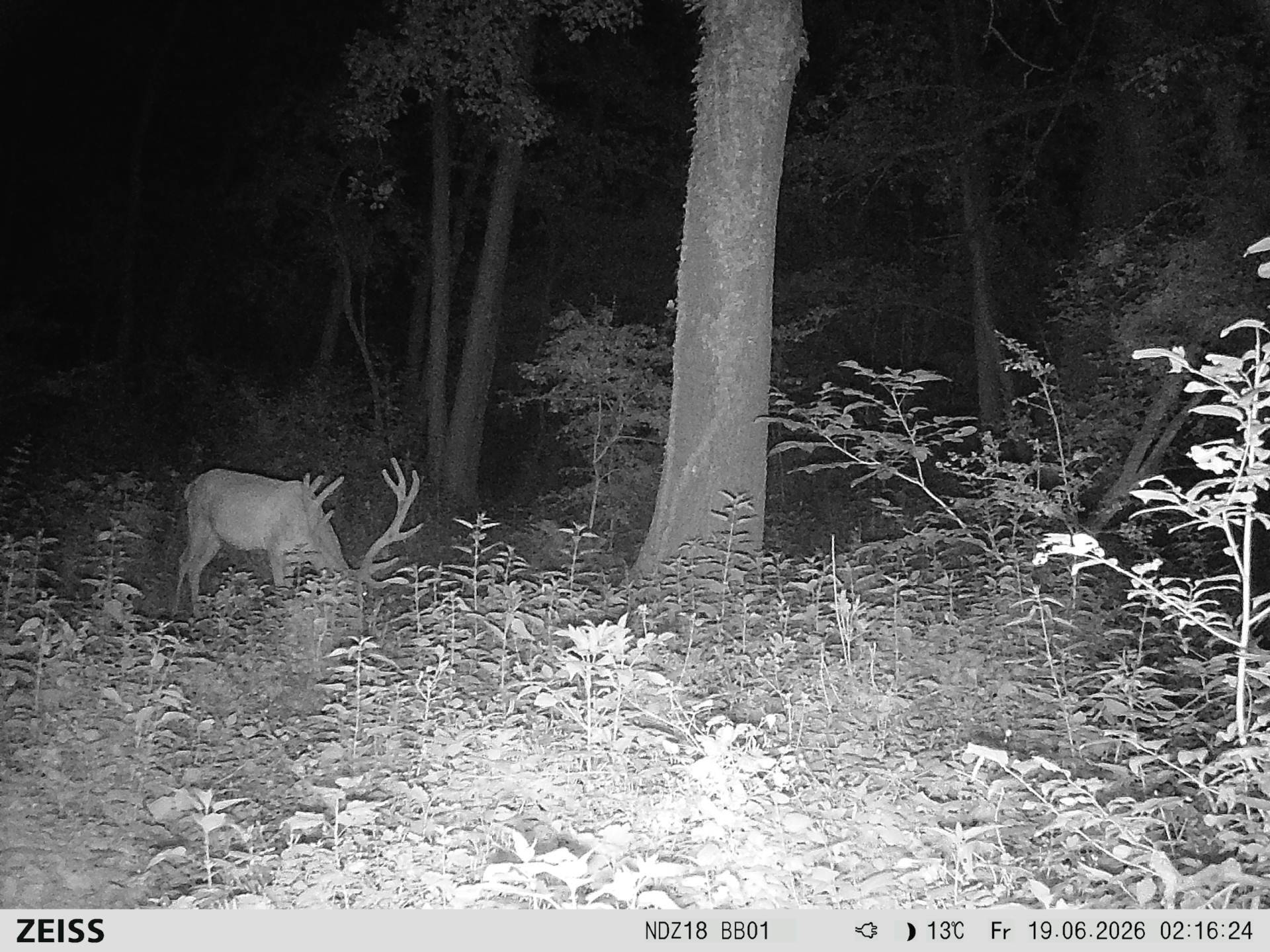
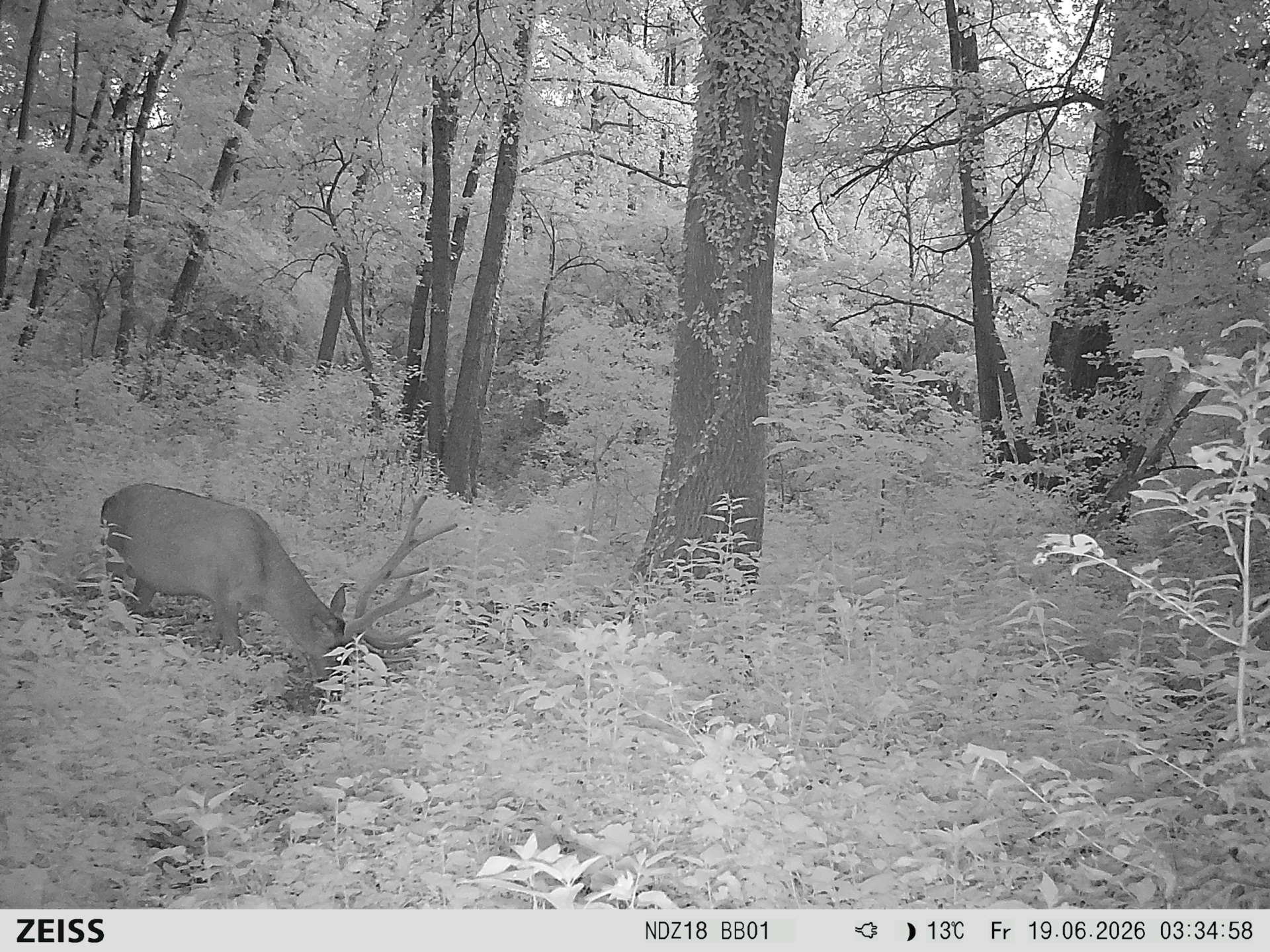
If we add to this the footage from the night 17 days earlier, on June 19, the picture becomes even clearer. That day, between 01:57 and 03:41 — nearly two hours, spanning from full darkness to first light — the same stag repeatedly appeared and remained near the stump for extended periods, documented across eight separate triggered images. It is hard to imagine more convincing evidence that the animal regards this spot not as an occasional passage but as a safe, regularly visited resting point: no wild animal spends nearly two hours, let alone lies down and falls asleep, in a place it perceives as even slightly threatening.
From a forestry perspective, the situation is instructive.
The stump of a poplar felled by storm damage would normally either be left to decay in place or be removed as part of storm-damage cleanup and salvage logging — both legitimate paths, but neither creates any immediate, tangible habitat value.
Converting the stump into a waterer creates lasting infrastructure with practically negligible resource investment, without having to sacrifice a living tree or hinder other uses of the timber.
From a wildlife management perspective, the role of summer waterers is growing year by year due to climatic trends.
Red deer water consumption rises significantly in heat, and this period coincides with the most intensive phase of antler growth, when the highly vascularized velvet tissue on the antler beam and the continuous mineral deposition demand increased fluid turnover.
A reliable water source within the forest relieves the animal of longer, riskier movements — toward agricultural land or watercourses more exposed to human disturbance — and thereby indirectly reduces the chance of human-wildlife conflict.
The two independent nighttime observations presented here — 17 days apart — confirm precisely this relief function in practice.
From an ecological perspective, the waterer goes far beyond its originally intended function for birds.
The water-filled hollow in the stump is in fact an artificially created dendrotelma, a tree-hole-like aquatic microhabitat that provides shelter and breeding sites for mosquito larvae and other aquatic invertebrates, and occasionally amphibians — with big game connecting to this system as a secondary but, based on the footage, clearly active user.
This layered utility well illustrates that even a palm-sized habitat intervention can yield a disproportionately large ecological return.
In a conservation context, all of this can truly be understood in light of the drying trend of Hungarian summers: as drought periods become more frequent and longer, the role of artificial water points in wildlife management is slowly becoming not an optional extra but a basic habitat element. And as a nature lover, these two independent nighttime recording series provide exactly the satisfaction that made this whole effort worthwhile: in the end, it is not the liter value calculated on paper but the animal’s repeated, calm behavior that confirms the correctness of the design.