The regular hunting weekend is here again. 🌿🏹
The regular hunting weekend is here again. 🌿🏹
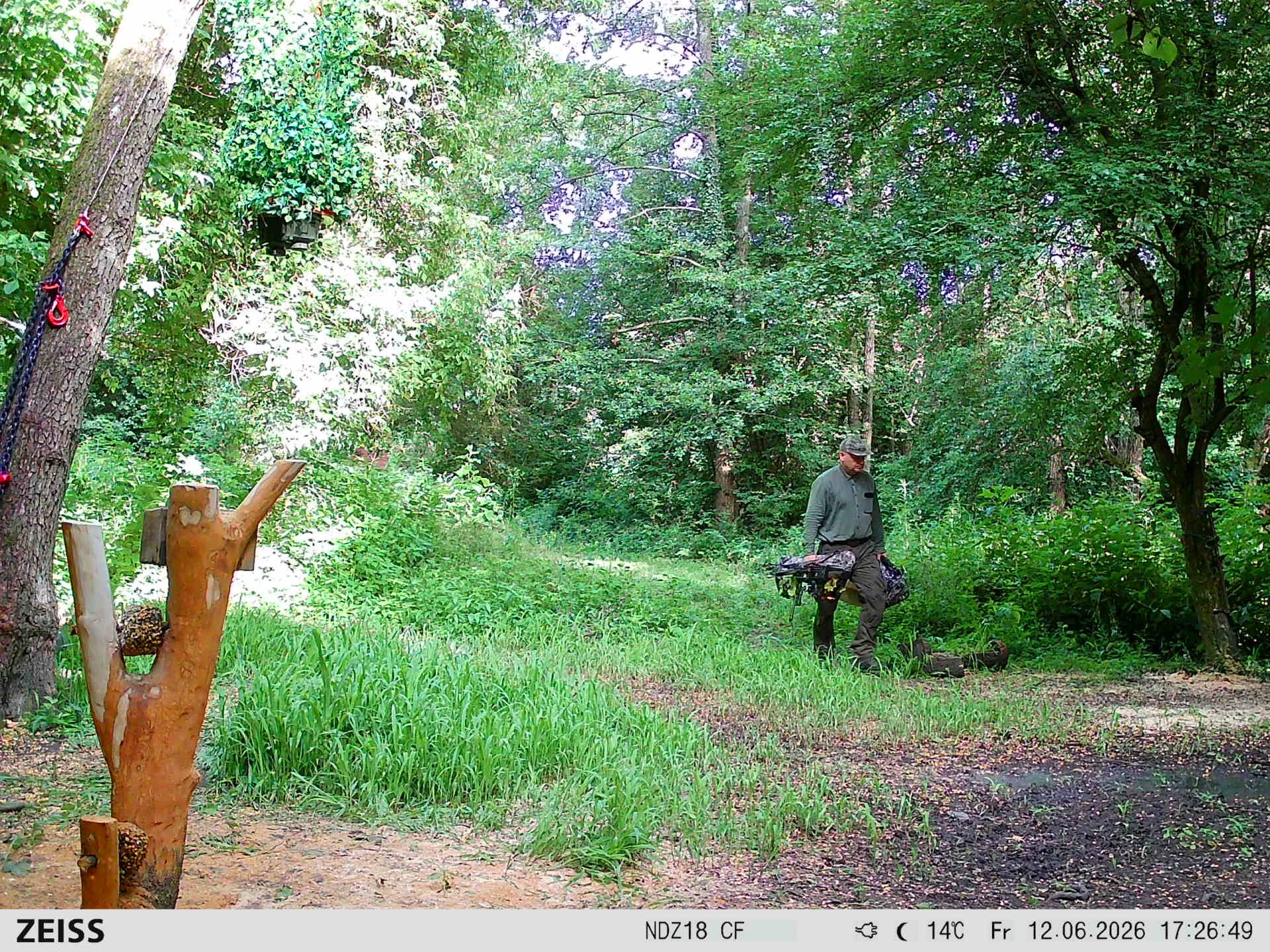
On Friday morning I replaced the post of the salt lick with a more interesting, more natural-looking, multi-branched ash bough.
A natural, branching, crooked bough blends into the surroundings better, draws less attention, and animals approach it with more confidence too.
(Of course, this is only my naive, idealistic notion. The reality is that on this hunting ground even the tiniest change in the environment can empty out the feeder for days, even weeks. A very vivid example of this: once, next to the dry corn, I thought some sweet, juicy beetroot — the kind of tuberous variety that’s an irresistible treat for game on other hunting grounds — would go down well.
I bought a few kilos at the local market and, quite enthusiastically, carried it out to what was then my feeder by the stream.
Neither boar, nor roe deer, nor red deer, no game at all came near the feeder for weeks — so much so that the beets, sitting there in a good spot, sprouted fresh green leaves and grew nicely into stalks.)
Ash (Fraxinus), by the way, is a rewarding timber: hard, tolerates moisture well, decays slowly, and the natural scent that lingers in its bark doesn’t spook game the way freshly cut sawn timber does.
– Its beautiful color, grain, the feel of the wood, its whole character make it one of my favorite timbers. – Besides, the old ash tree deserved to serve the forest once more — this too is forestry in its own quiet way: nothing goes to waste, everything returns to the cycle.
Salt is a physiological necessity for game. In spring and early summer, when the green forage is rich in water and potassium but poor in sodium, deer species actively seek out sodium supplementation — this is when salt licks see the most visits. A well-placed salt lick is not only a good spot for observing game, but also supports the herd’s condition and antler development.
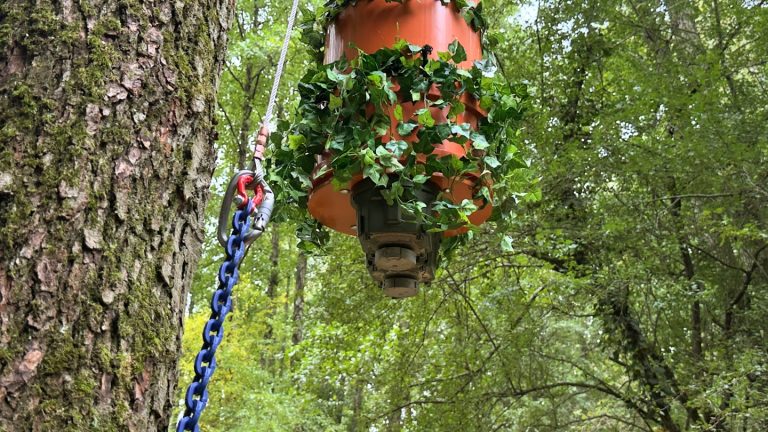
The Zeiss cameras also needed some attention. For some reason spiders particularly love to move in right in front of the cameras. I was inclined to assume that the 940 nm light, invisible to the human eye, must still attract flying insects… I looked it up, and science gently disagrees: insect photoreceptors typically see from UV (≈300 nm) to red (≈700 nm), with peak sensitivity for most species falling in the UV–blue–green range. 940 nm is well beyond that, in the near-infrared — practically invisible to them as well, visually speaking. What actually draws them in is the faint warmth of the camera and the IR LED array, which many nocturnal insects track with heat-sensing organs. And spiders don’t come for the light — they settle wherever there are insects. The rim of the camera is a perfect anchor point for a web. In other words, that spiderweb in front of the lens is evidence of a small, functioning food chain.
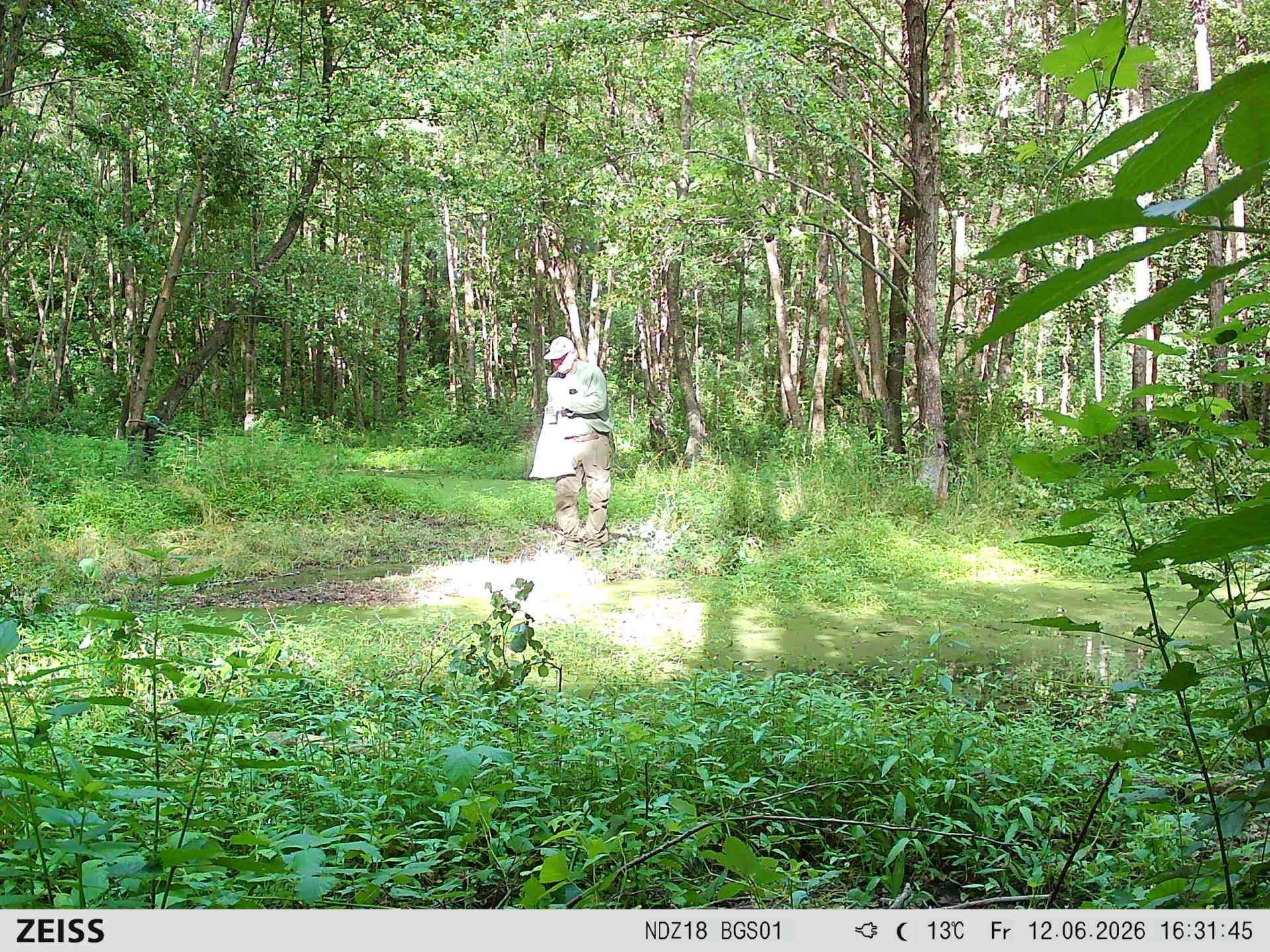
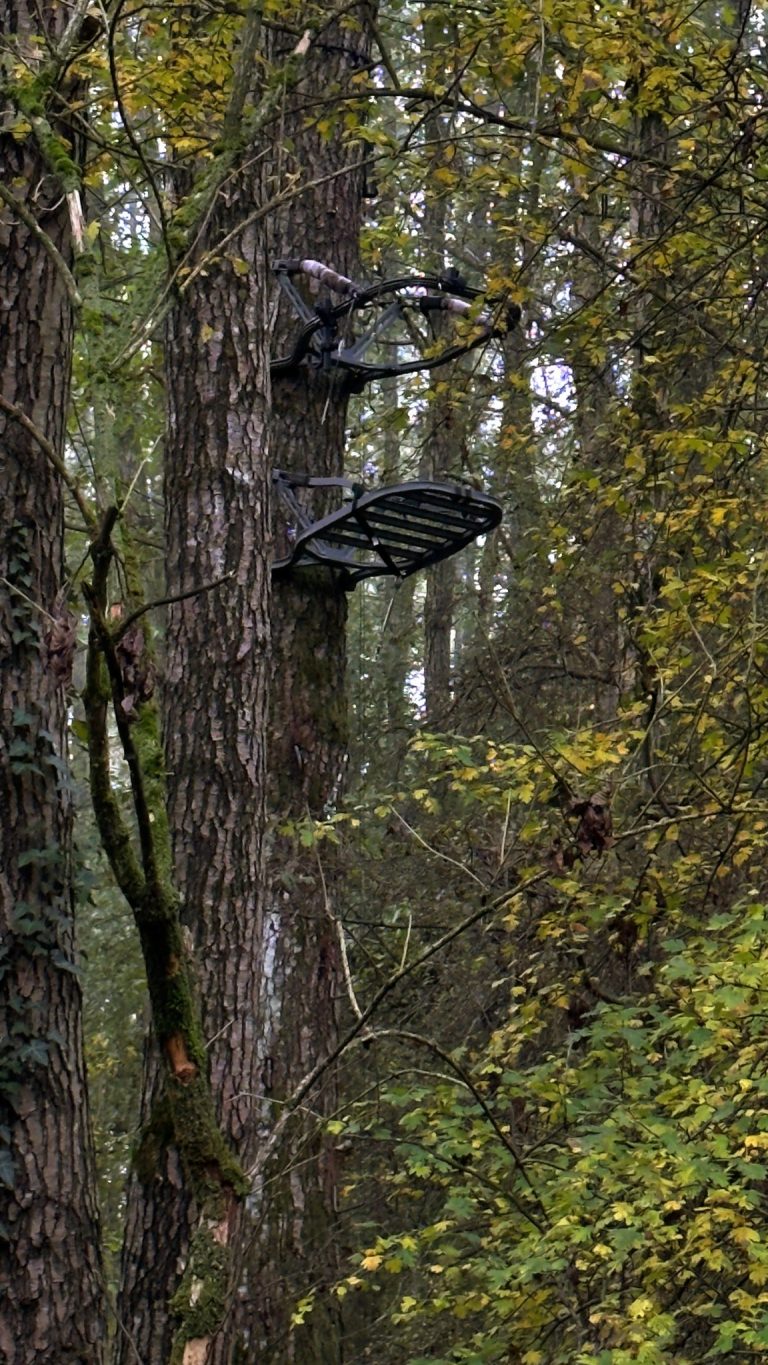
At six in the afternoon I brushed in my stand overlooking the wallow, camouflaged with hawthorn.
Hawthorn (Crataegus) is good cover for good reason: it’s dense, thorny, holds its foliage all summer, and its natural silhouette dissolves the outline of the human form — it’s the straight, “foreign” lines that game’s eyes are startled by. What’s more, its blossoms feed bees, and in autumn its berries are a treat for thrushes, waxwings, even foxes. A single well-chosen shrub contains an entire habitat.
Every minute I get to spend blended into nature like this, almost as an organic part of it, watching the life of the forest, is an exceptional gift.
I don’t disturb it, I’m simply present within it — and at such times it opens up: a roe deer calls, a buzzard glides past, insects start their work in the twilight.
This is the real essence of bowhunting — not the shot, but this intimate closeness to nature, to the forest.
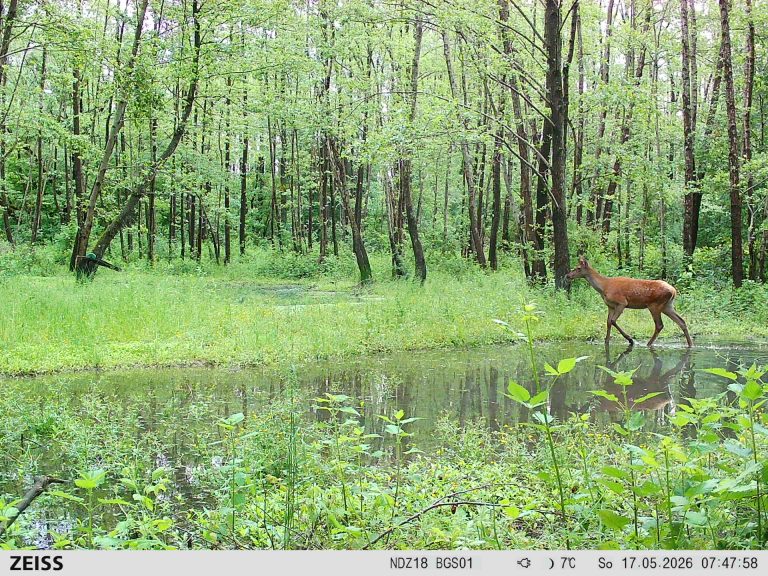
As dusk was falling, still in daylight, a middle-aged buck barked, from the section of forest facing me, about 80 meters away. I could clearly see his reddish coat closing the distance toward the wallow in long bounds. The buck kept barking continuously. Reaching the wallow, he circled once around the scattered corn, then stepped back to go thrash some innocent little branch.
He was clearly very worked up. He fought with everything that crossed his path.
The night passed relatively uneventfully, though there were a few very interesting moments. It must have been around midnight when — judging by the sound, roughly 100-150 meters away, off to my left and diagonally behind me — I heard a heavier branch snap. I listened with all my alertness for any further confirming sounds or signs. Nothing. I reached for the thermal camera, with infinite slowness, not another part of me moving, and switched it on.
The tiny, faint click audible when the microbolometer activates was enough for the “ghost” below me to bolt away with a great crash. I had probably spooked the scout of the sounder, who — well ahead of the rest, in total silence, completely undetectably — had been approaching the wallow from my direction.
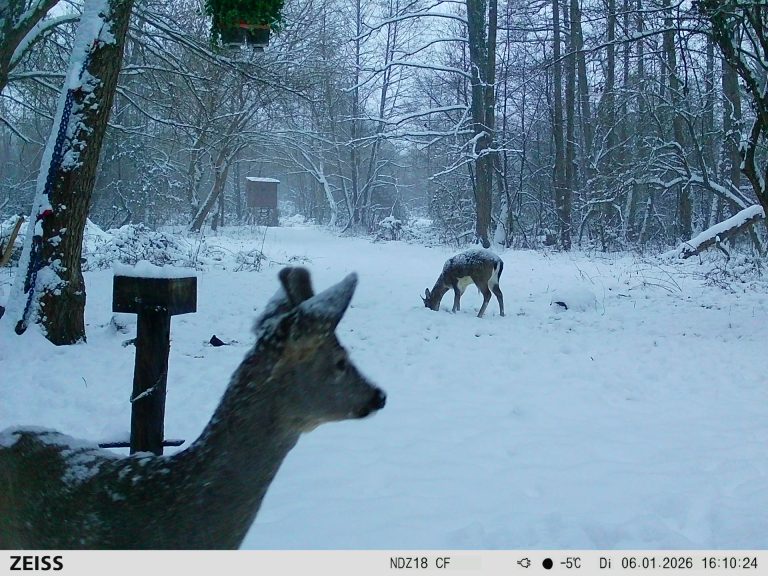
To the left of the stand overlooking the feeder, in an area usually baited only with acorns, the camera sent images of a young stag’s presence. The sound of the stag’s activity could be clearly heard even from the stand at the wallow.
Second night
Perfect silence everywhere.
It was an uneventful night.
Where could they have gone???
Not one of the 5 cameras sent a single sign of life from within its field of view.
Indeed, a letter came from the hunting association saying that ASF has appeared again in the Somogy area, and that even domestic pigs are now at risk.
They issued the task: no more than 1 wild boar may remain per 2 hectares.
My earlier claim that they’re wiping out the boar population around here with fire and iron wasn’t an exaggeration.
So good luck to any bowhunter still hoping to draw his bow from the stand at all . . .