This July’s hunting weekend was a little different from the usual ones.
This July’s hunting weekend was a little different from the usual ones.
After my 26-year-old Audi A4, on the way home last time, literally “breathed its last,” I had no way of getting to Somogy.
But a very kind acquaintance of mine offered to drive me there, and to bring me home again on Monday.
She knew how much this one long weekend a month means to me these days, given how relentless work has been — being able to break away from everyday life from Friday to Monday.
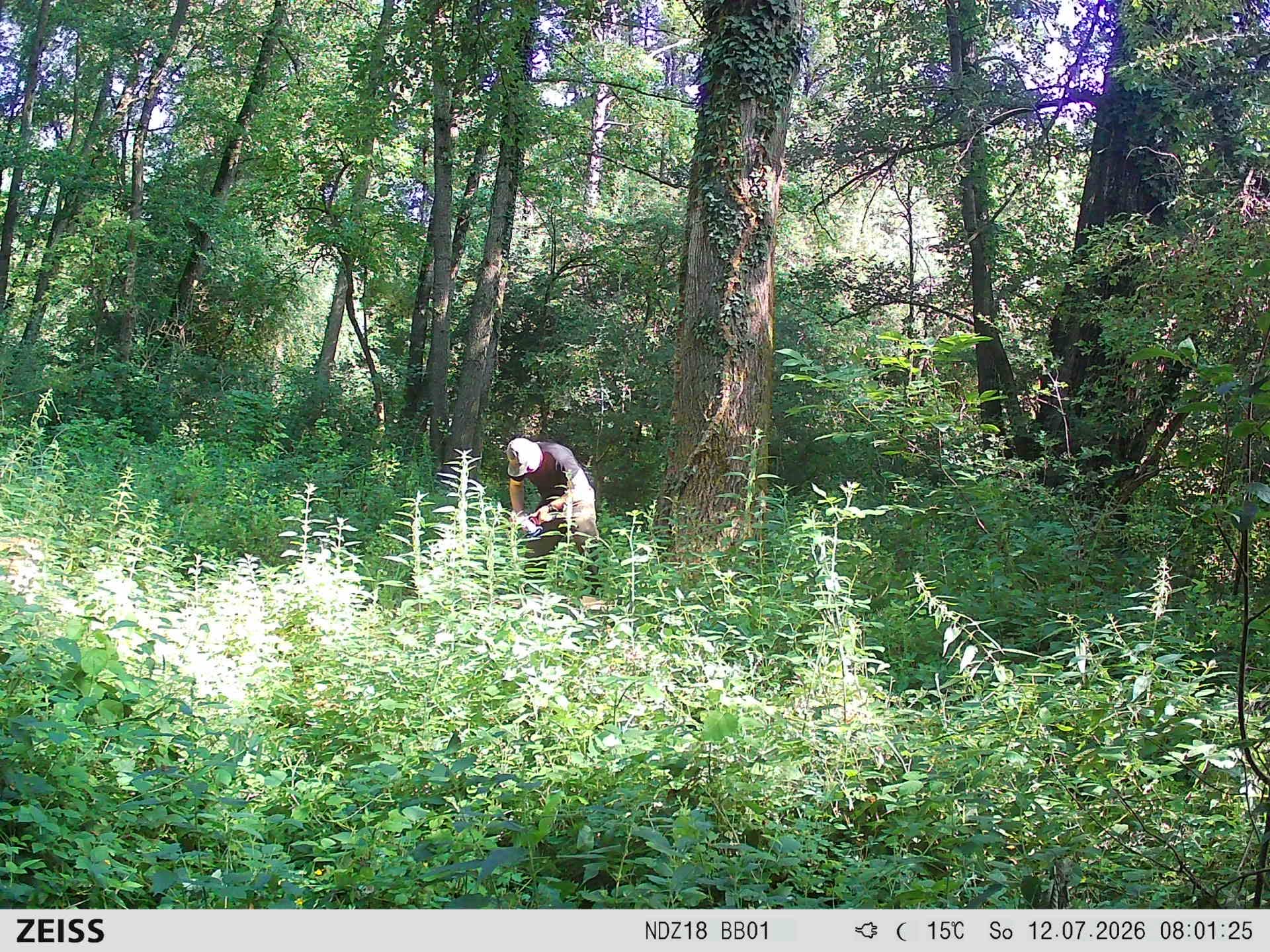
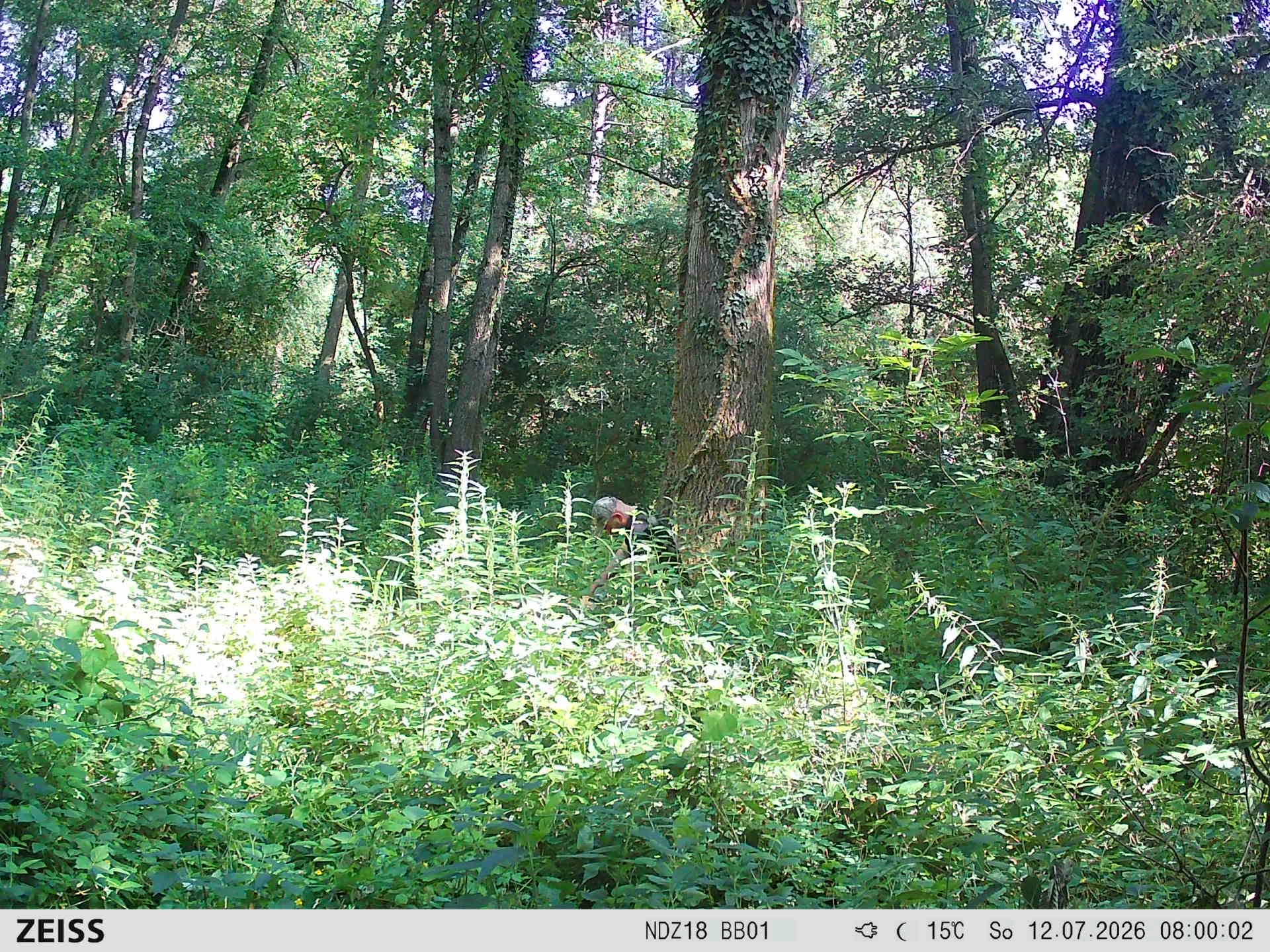
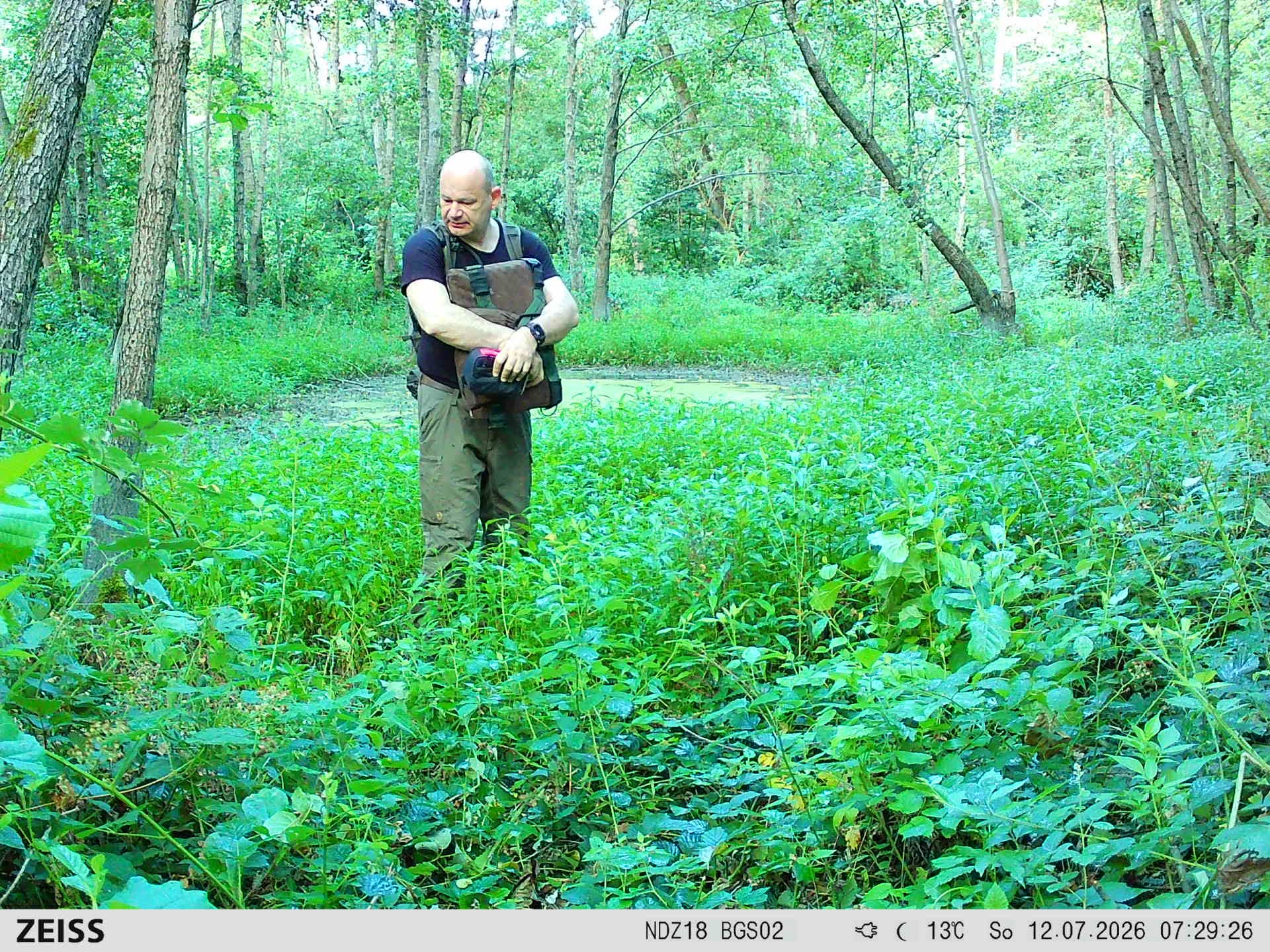
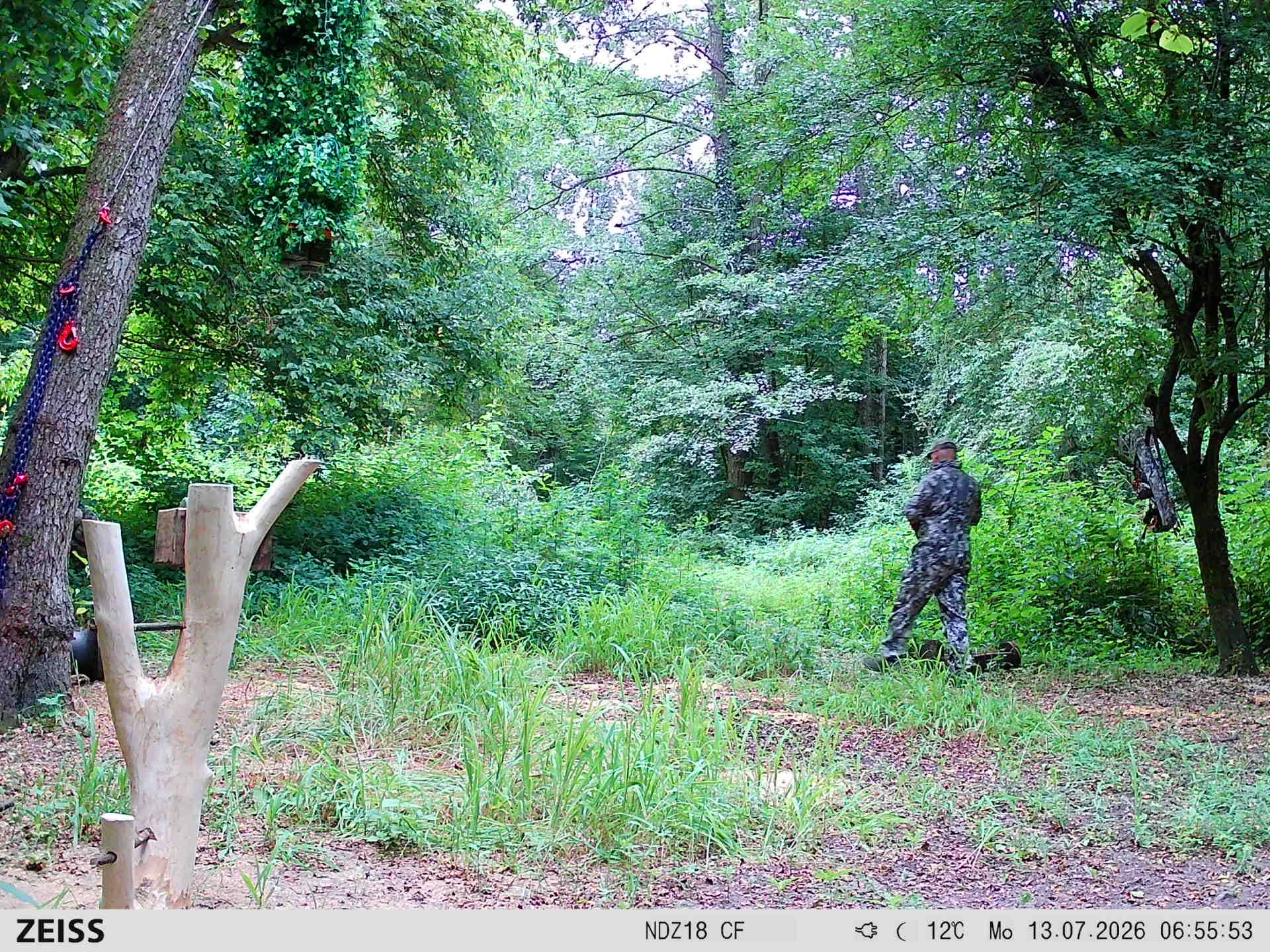
For me this isn’t just about the hunting. During these weekends I tidy up around the stands and feeders, clear away the cobwebs around my trail cameras — because heaven knows the good old spider doesn’t want to web up his dinner guests anywhere else, does he?! I refill the feeder hoppers, do a bit of adjusting on the birdbath stump setup, make some progress on a salt lick post as well — in short, I take care of the necessary game-management and fieldwork, all while recharging myself in the quiet of the forest.
This time we traveled in a small, five-door Suzuki Swift, so I could bring along far less gear than usual. In the end everything I actually needed fit in, though we made use of every last inch of the little car.
We arrived at the lodge around two in the morning, and after barely a few hours’ sleep I was already heading out again.
Dénes, my helper in Inke, lent me an old Lada Niva, which got me to the hunting ground without any trouble.
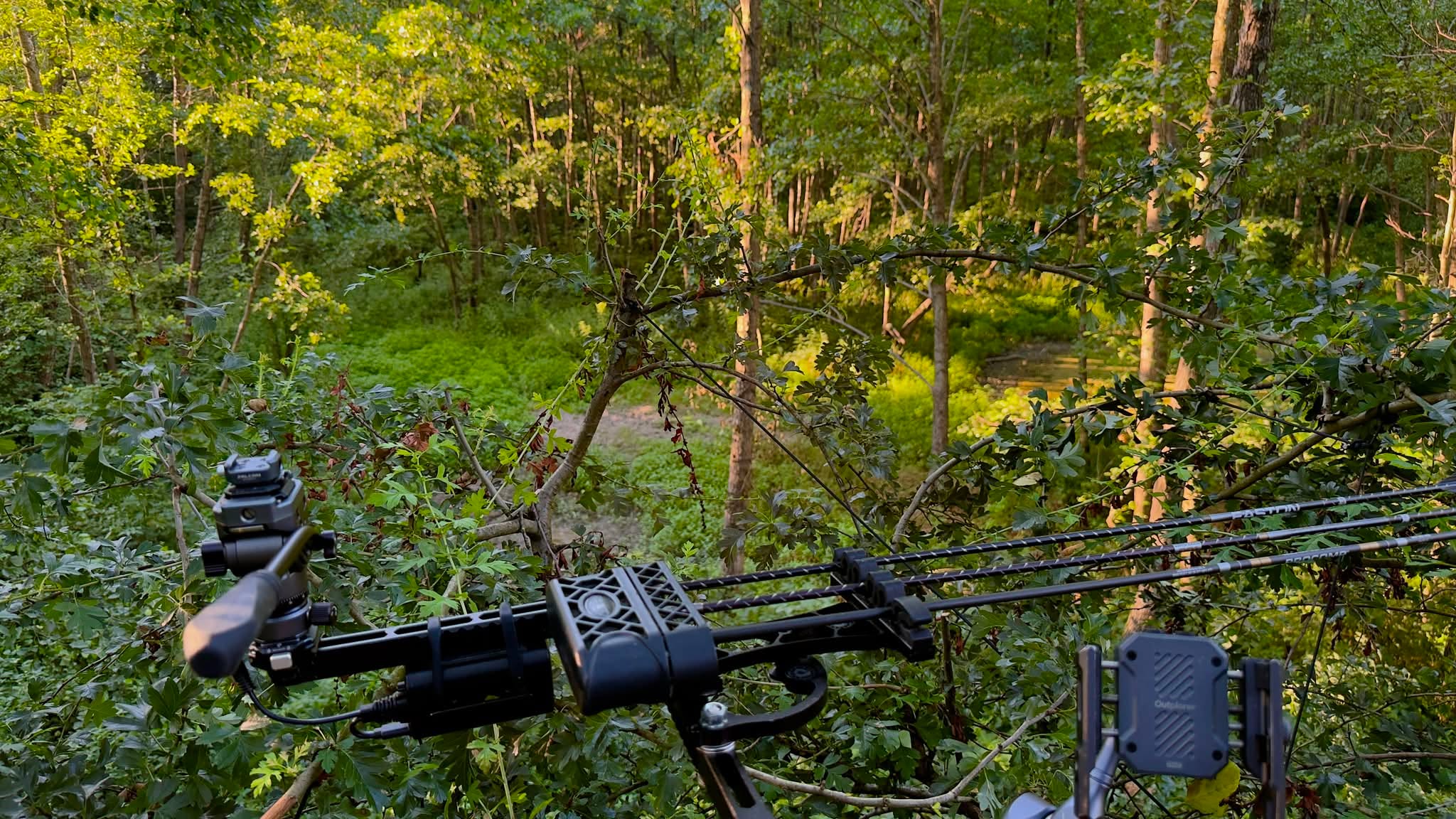
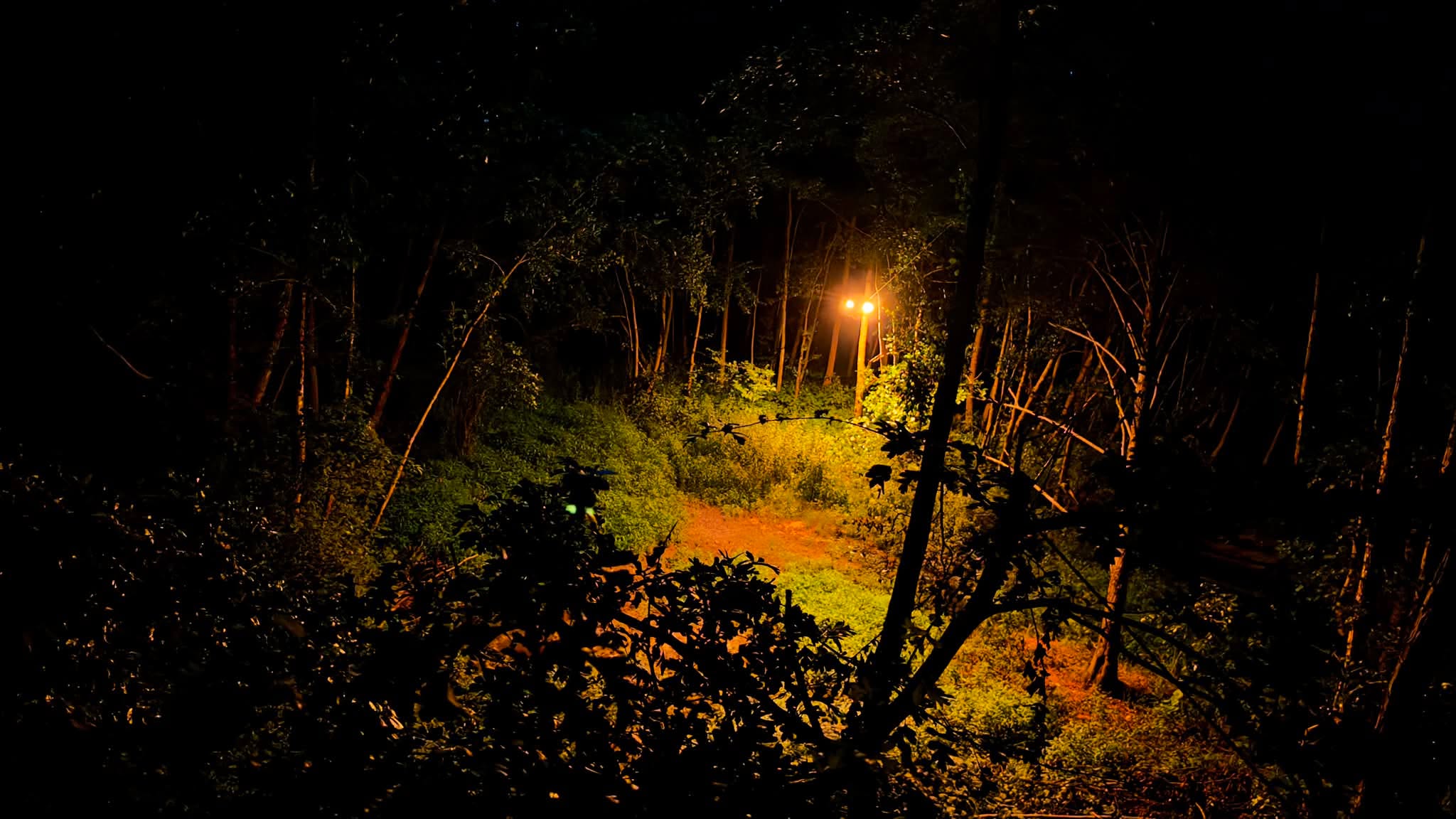
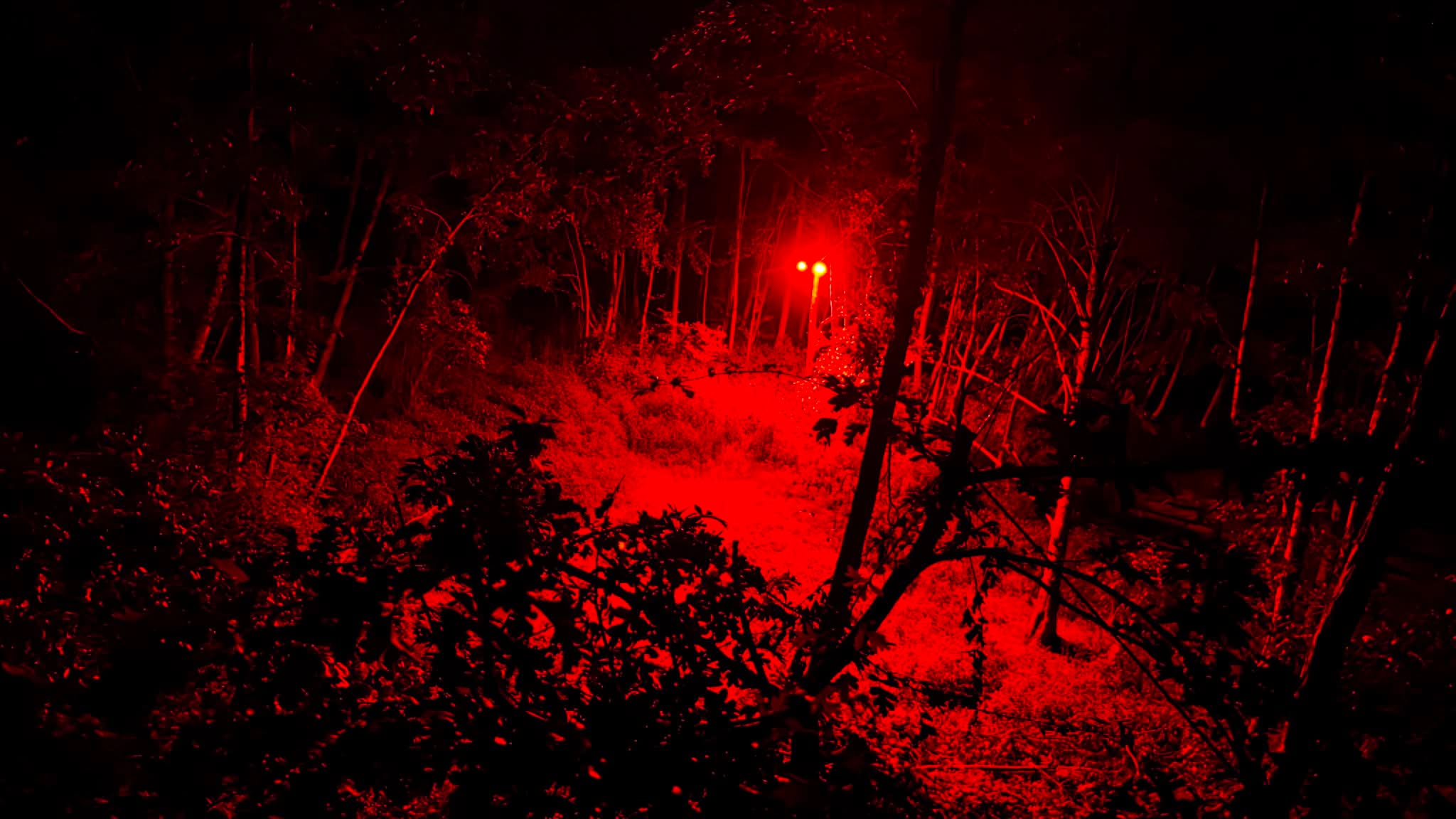
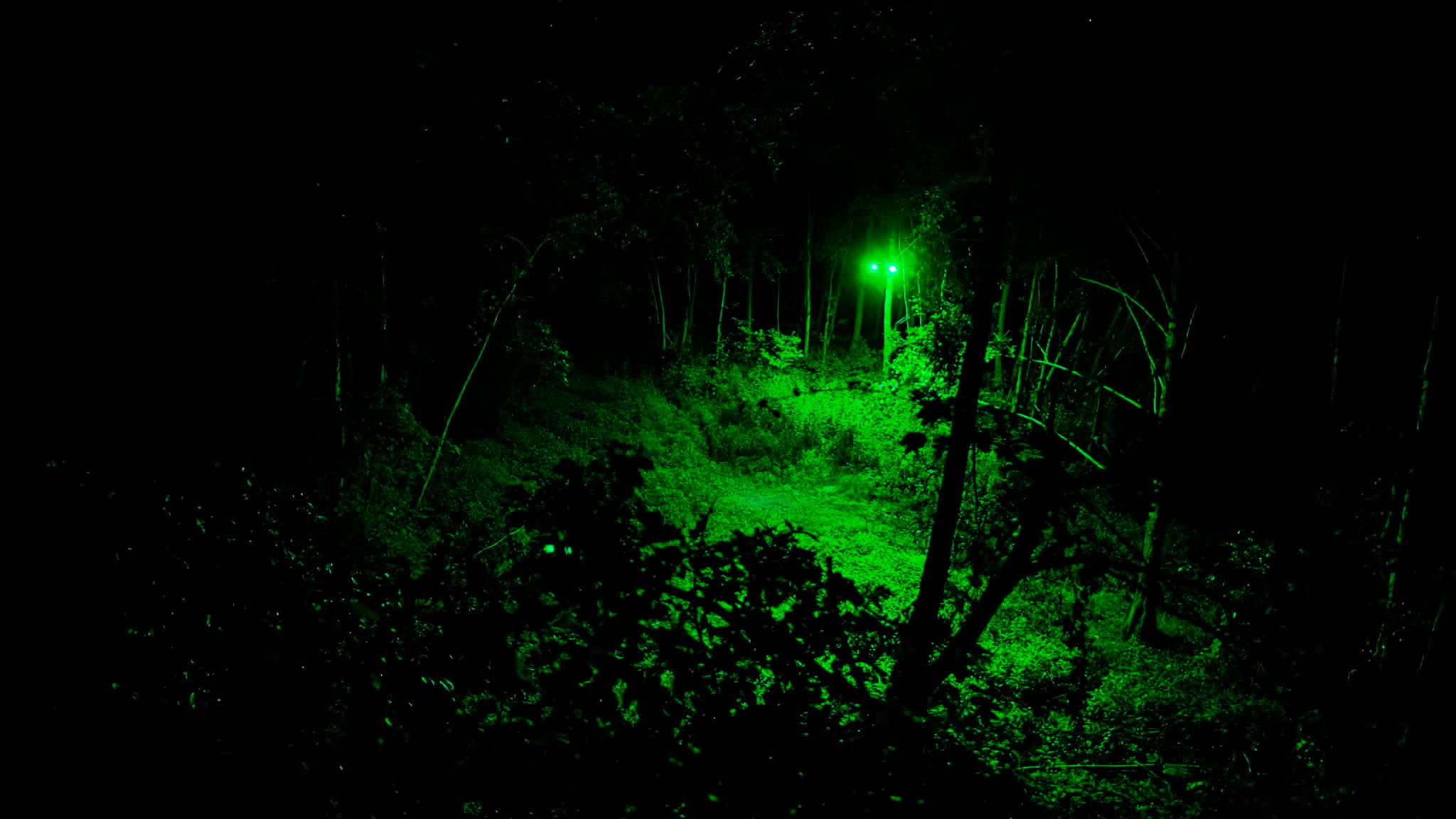
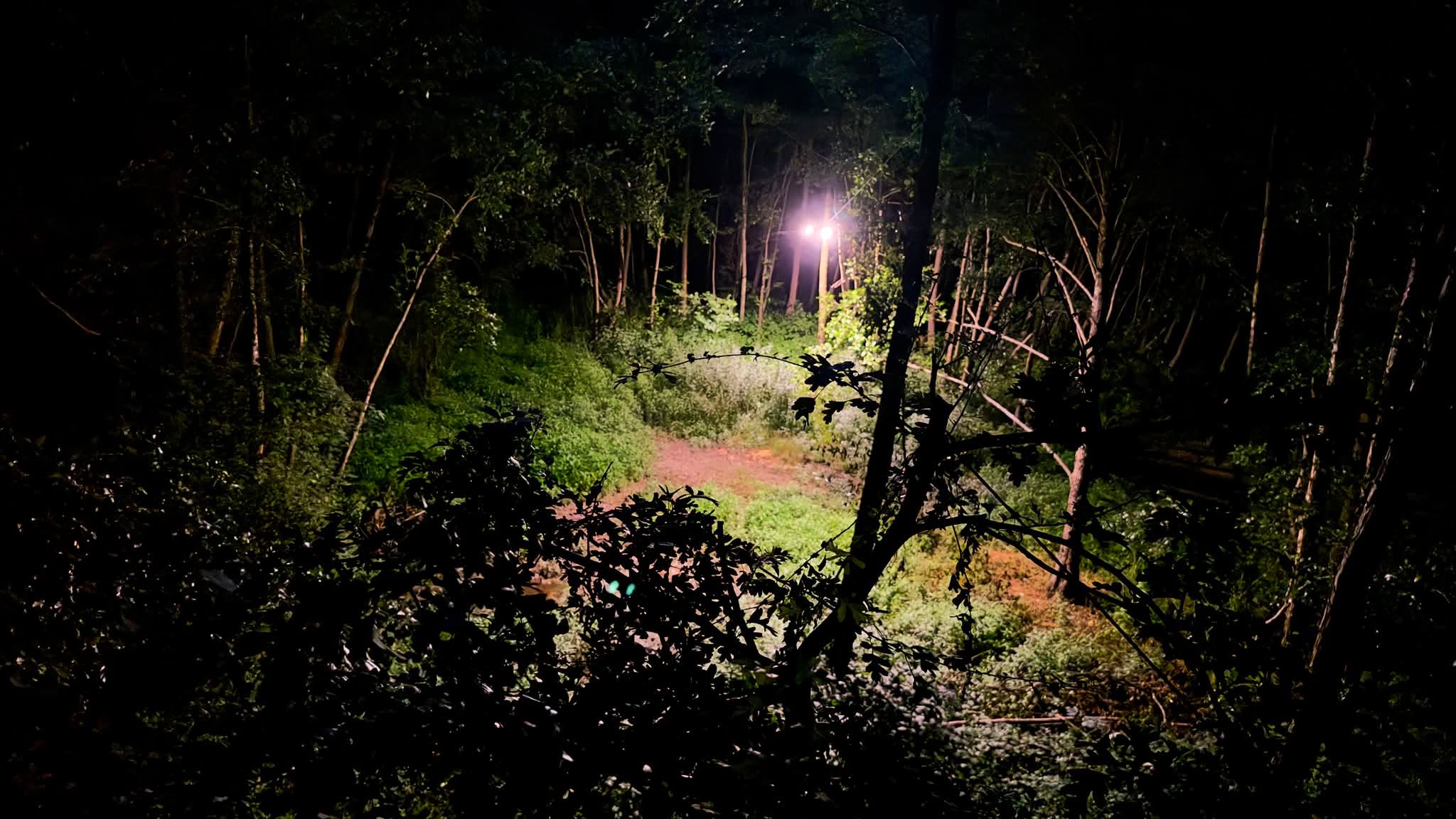
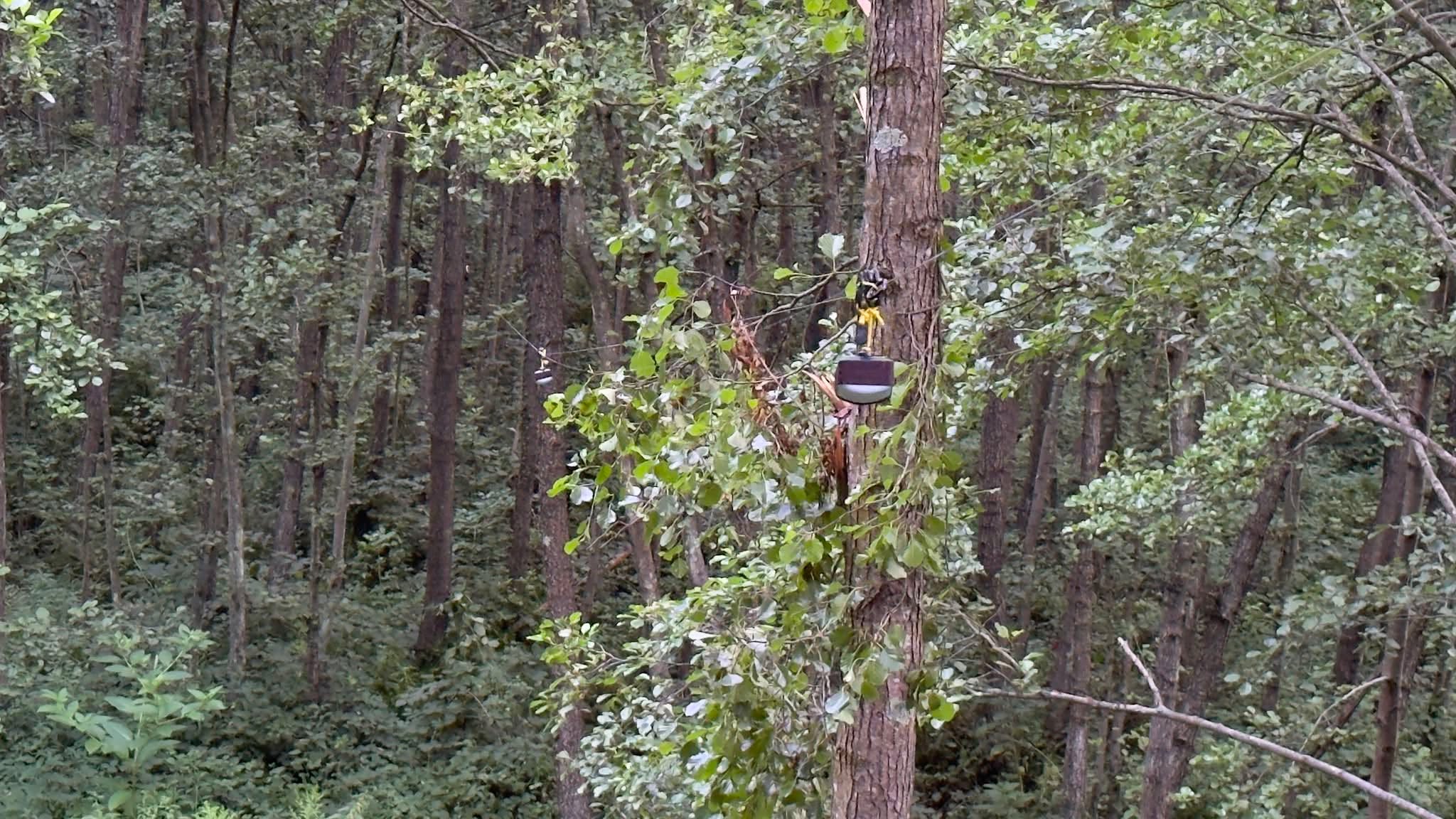
On Friday I worked on the finishing touches of the sloped zip-line moonlight lighting rig.
On the little pulleys running along the stainless steel cable I mounted Aputure MC Pro lamps, which I can lower down the sloped line to the desired spot from the stand, and pull back up again at the end of the hunt.
The first test, however, was an absolute disaster. It turned out that the sheer weight of the pull-down cord itself was slowing the lamps down and stopping them halfway.
I had to look for a new solution.
At first I thought of some kind of light, strong archery bandage material, but since there’s no archery shop nearby and I didn’t have my archery kit bag with me either, and the only shop around was a fishing tackle store, I ended up going with a 0.60 mm braided catfish line.
With that, even the first test runs went quite well.
The first night passed uneventfully.
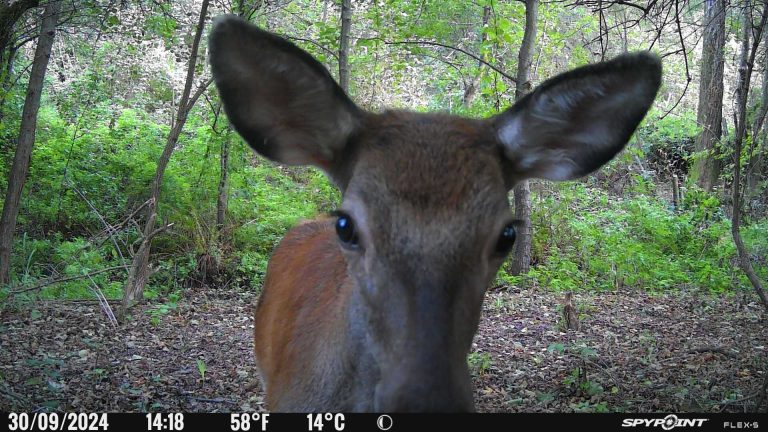
I heard branches cracking, distant rustling, wild boars clashing pugnaciously, and an approaching deer too, but I saw no game, and none of my four trail cameras picked up any movement either.
A storm was forecast for Saturday evening, but the various weather apps showed completely different pictures.
Some predicted a serious thunderstorm, strong wind and heavy rain. In the end, Meteoblue’s forecast proved the most accurate.
The big storm never came. Only a quiet, steady rain arrived.
Yet the most memorable moment of the night wasn’t that at all — it was when, around ten in the evening, I sensed that a wild boar had settled in barely ten or fifteen meters below me. I heard its breathing, its soft little grunts, and then there was total silence for a long time.
It rested there beneath me for four or five hours, almost unnoticed. It only jumped up and vanished when I finally stood up to stretch limbs that had gone still for hours.
I thought about this remarkable encounter a great deal.
These days, more and more hunting grounds are turning to thermal-imaging night hunting. As a result, game that’s disturbed regularly grows ever more wary, and it takes less and less sensory information for it to assume there’s danger.
Many people believe that if they sit motionless on the stand, wear proper camo, and the wind direction is favorable, the game won’t notice their presence. The reality is far more complicated than that. In the forest there is practically no such thing as a perfect wind direction. The human body constantly radiates heat, breathes, and gives off thousands of scent molecules.
Microclimatic air currents in the forest, the terrain, the vegetation, and turbulent eddies can carry these off in almost any direction, regardless of the macroscopic wind direction.
And that’s just one sense.
Game doesn’t use smell, hearing, or sight separately, but builds a single picture of its surroundings from all of them at once.
A barely perceptible scent, a tiny sound, an unnatural outline, or even the smallest movement might not, on its own, trigger a flight response, but together they can be enough for the animal to detect danger.
That’s exactly why it meant so much to me that this wild boar stayed beside me for so many hours.
I don’t believe it failed to notice me.
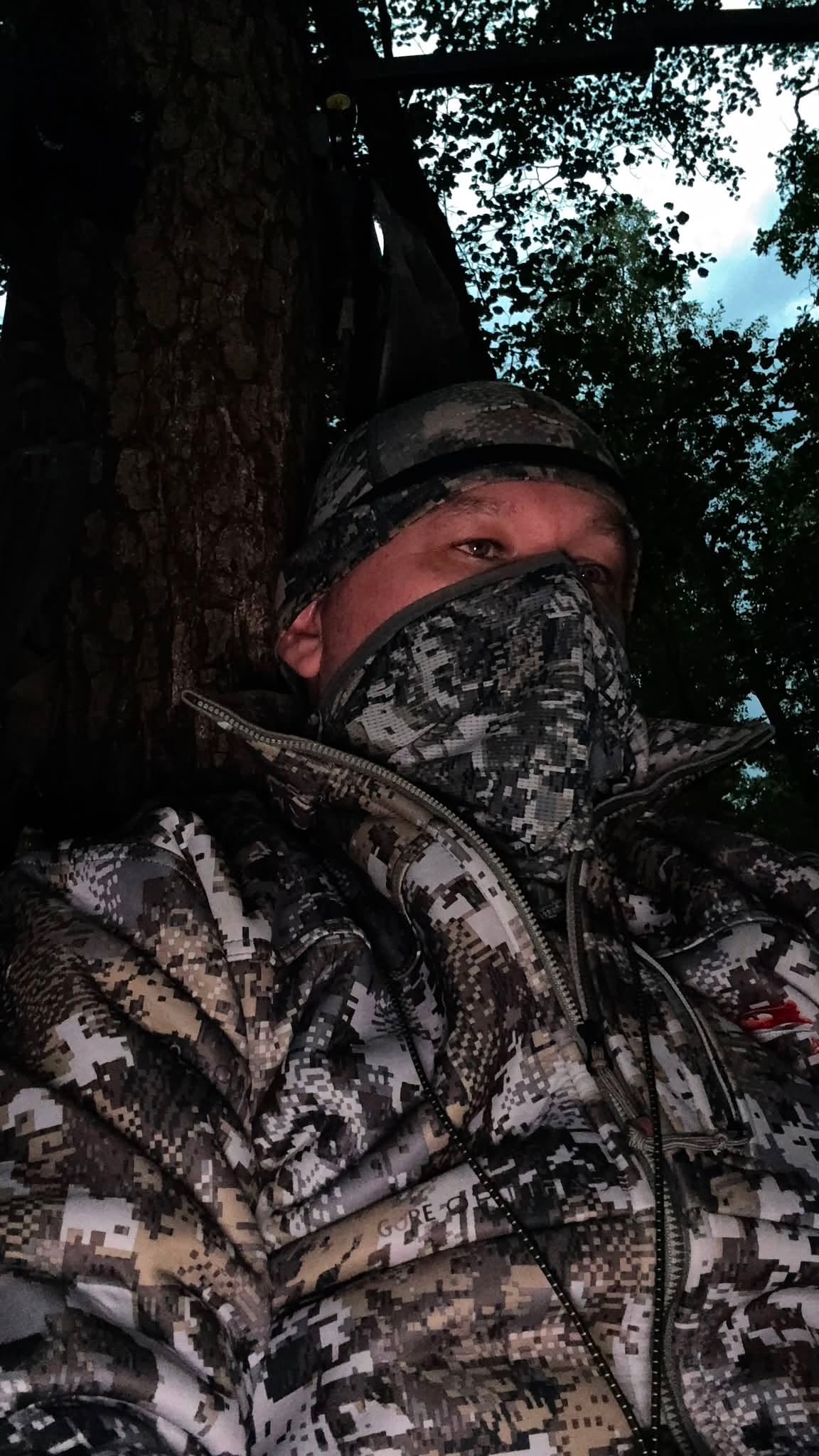
I think, rather, that based on the sum of the sensory information available to it, it simply didn’t judge me a source of danger. To me that means that on that night I managed to blend into the forest’s natural fabric as fully as perhaps a human being ever can.
I was able to be present in such silence and stillness that I wasn’t there as a foreign body in the forest, but as part of it.
That, to me, is a far greater confirmation than any trophy.
Moments like that are worth coming back to the forest for, again and again.
There was no trophy this weekend.
But sometimes these quiet moments are what matter most.
When a city-dwelling IT person like myself shares the very same few square meters of forest for hours on end with an animal possessing such extraordinarily refined senses, you truly come to understand just how incredibly complex these creatures’ sensory systems are.
And yet those rare moments do happen when nature takes you in, and you’re no longer present as a disturbance, but simply become part of the surroundings.
For me, that’s what hunting is about.
Not primarily about the trophy, but about the privilege of gaining, time and again, a glimpse into a world in which we humans are merely guests.