In pursuit of a sustainable game management innovation
In pursuit of a sustainable game management innovation
Experience and challenge in the service of automated feeding.
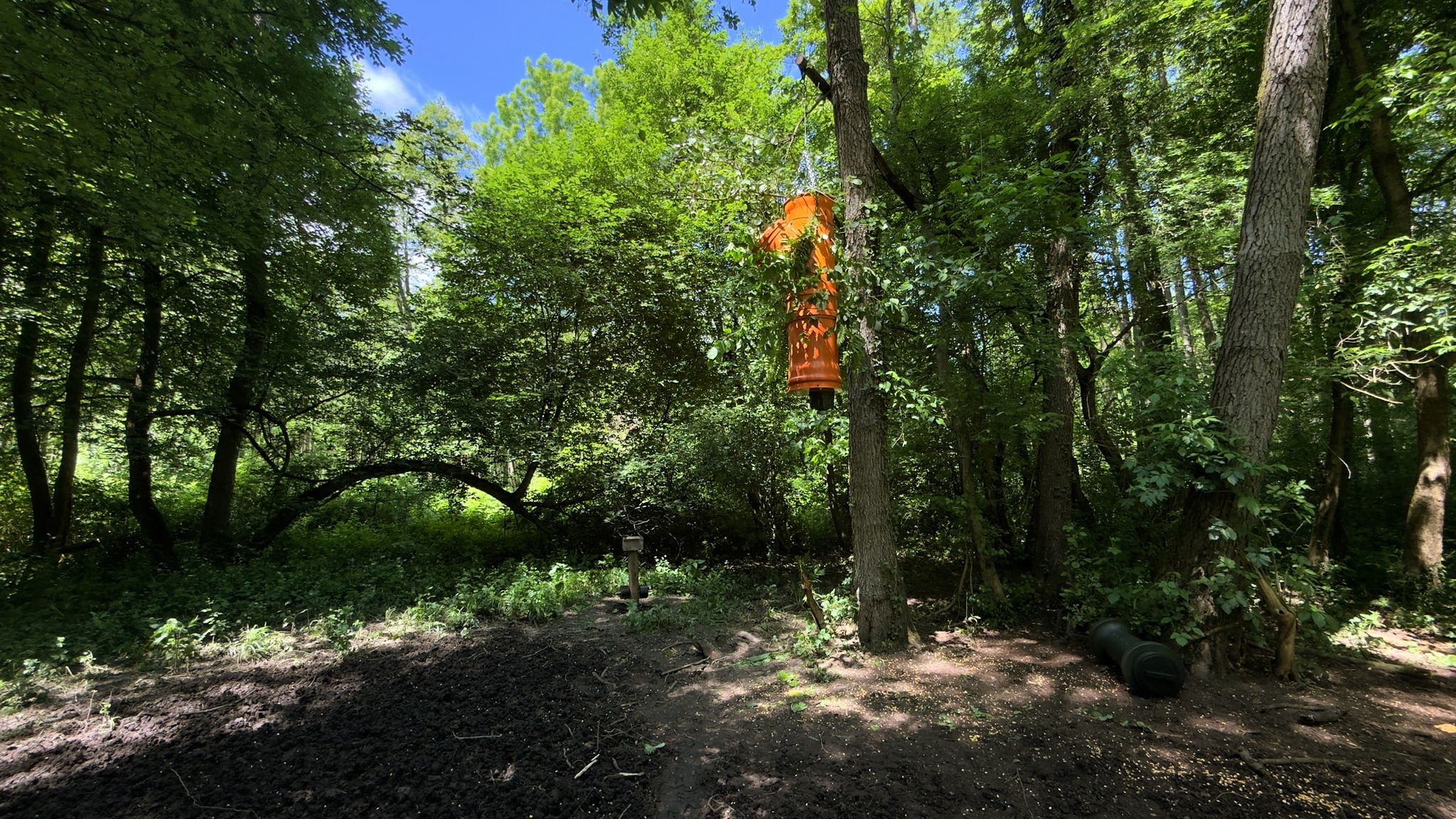
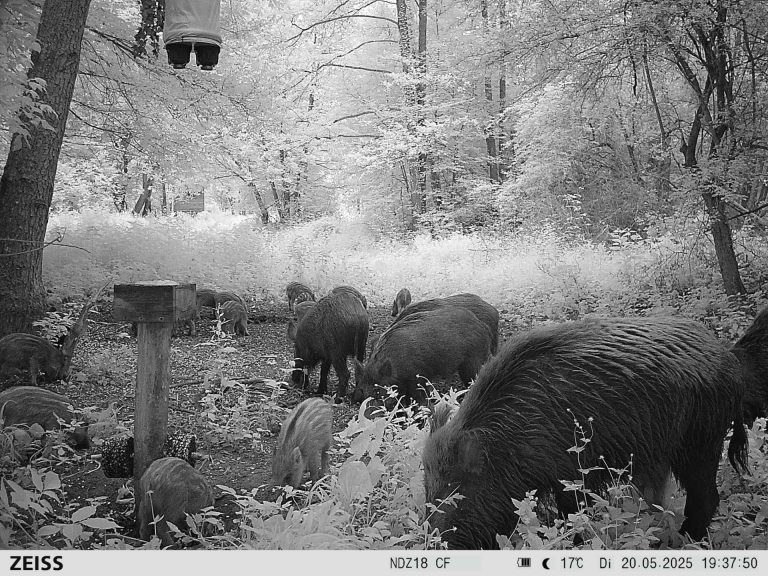
On a privileged hunting ground, where the undisturbed nature of the game population is guided by a shared spirit of conservation and professional game management, I set myself an ambitious goal: to build an automatic feeder system that combines sustainability, long-term operation, and the principle of minimal anthropogenic disturbance.
In practice, this means that even outside the hunting seasons, on-site intervention is needed only once every 4-6 weeks at most, while the game population still receives a stable, balanced supply of feed.
This approach not only increases the efficiency of game management but also aligns with the long-term sustainability goals of forest management – especially where the undisturbed state of natural habitats is key to preserving ecological balance.
The concept seemed simple enough: rethink the classic feeding logistics and develop a high-capacity automatic feeder that would guarantee undisturbed provisioning of the game population for at least a month – so that time spent in the field could be minimized, and, for example, a long hunting weekend could be fully enjoyed without wasting time servicing the equipment.
But the devil, as always, is in the details…
The idea that looked perfect on paper quickly collided with reality.
The 400 mm branching pipe fitting, for instance – which plays a key role in fast filling – barely fit through the shop door, let alone the trunk of my car.
The dimensions of the PVC pipe segments were practically industrial in scale.
The sight was a bit unsettling: how was I going to get all this out into the field, and in a perfectly ordinary civilian vehicle at that?
And to make the experience even more intense, I had only two nights available to assemble the whole structure and make it transportable.
The solution lay at the bottom of the toolbox.
The nearly written-off, dusty Bosch Nanoblade AdvancedCut 18V mini chainsaw was practically reborn in my hands. It cut through the 10 mm thick plastic pipes precisely and quickly – within fifteen minutes I’d gotten rid of the unnecessary parts, and 20 minutes later the main structure was already assembled.
The operation itself is a triumph of game management efficiency.
The system now literally swallows corn – a single fill took in more than 200 kg (!) of feed, and we still hadn’t reached its full capacity. The internal structural reinforcement consists of four steel cables, each rated for 160 kg load capacity, which hold the entire system together in a self-supporting way. From the outside it shows nothing, but inside, a load distribution conceived with technical precision provides the stability.
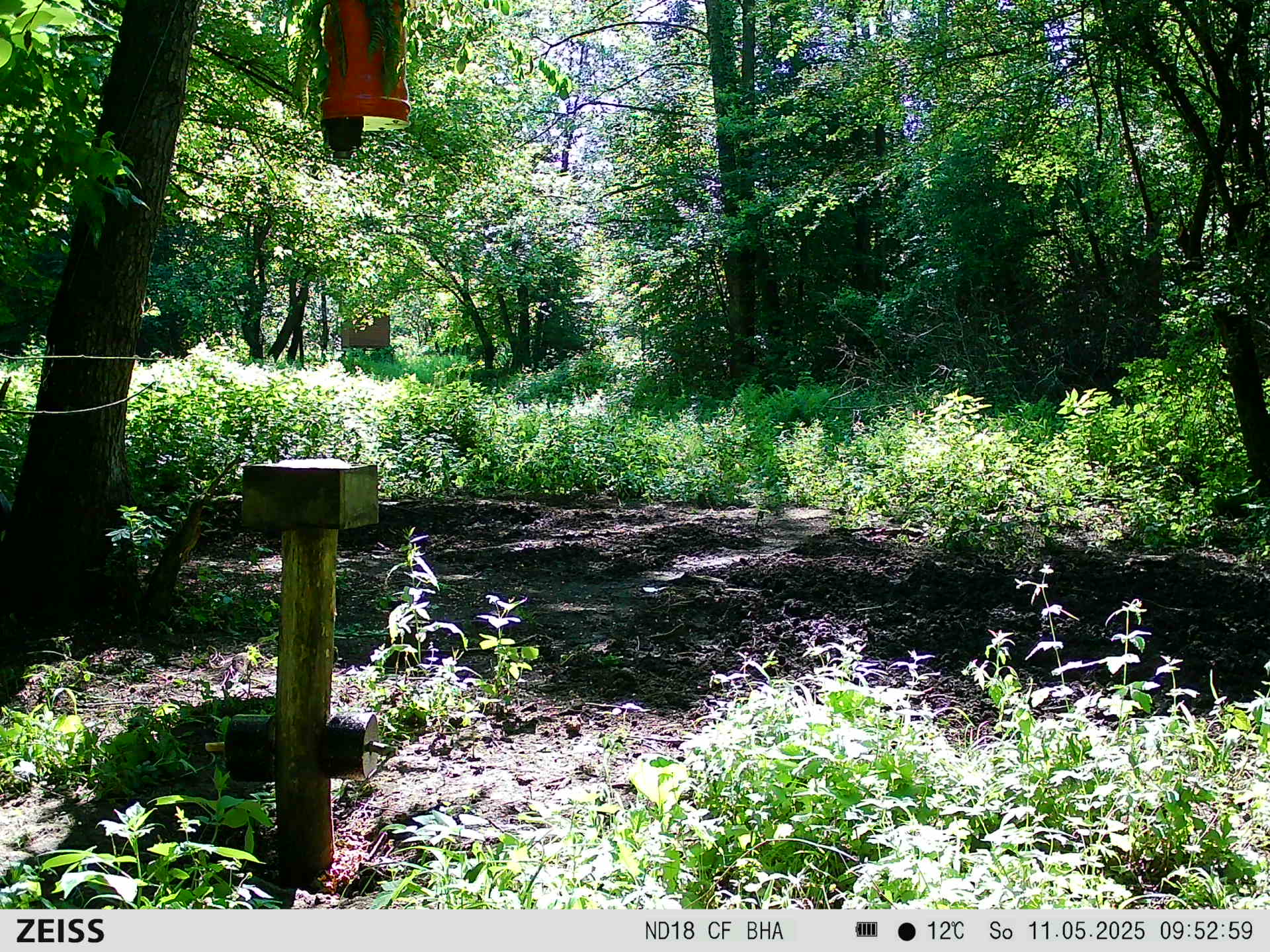
Currently a single EuroHunt Evolution automatic unit handles the feed dispensing, but a second unit will join it soon – and then it will offer not just efficiency but a visually impressive sight in the forest setting.
Naturally, concealment couldn’t be left out either.
A temporary camouflage with a few dry branches has already been done, but the final version will blend into its surroundings with artificial moss, ivy, and other natural-looking cover elements – so that the original color will barely be recognizable, only a few percent of it.
This project was at once a technical challenge, an experience, a nature-close adventure, and a professional innovation – the kind of experience that any forest and game manager only truly understands once they’ve lived it out in the field themselves.