Investigating the Effectiveness of a Dual-Dispenser Feeder in Wildlife Management
Investigating the Effectiveness of a Dual-Dispenser Feeder in Wildlife Management
Abstract:
This paper examines the wildlife management effectiveness of an innovative feeder container equipped with a dual dispensing system, with particular attention to the use of different attractants and their effect on the frequency of feeder visits by wildlife.
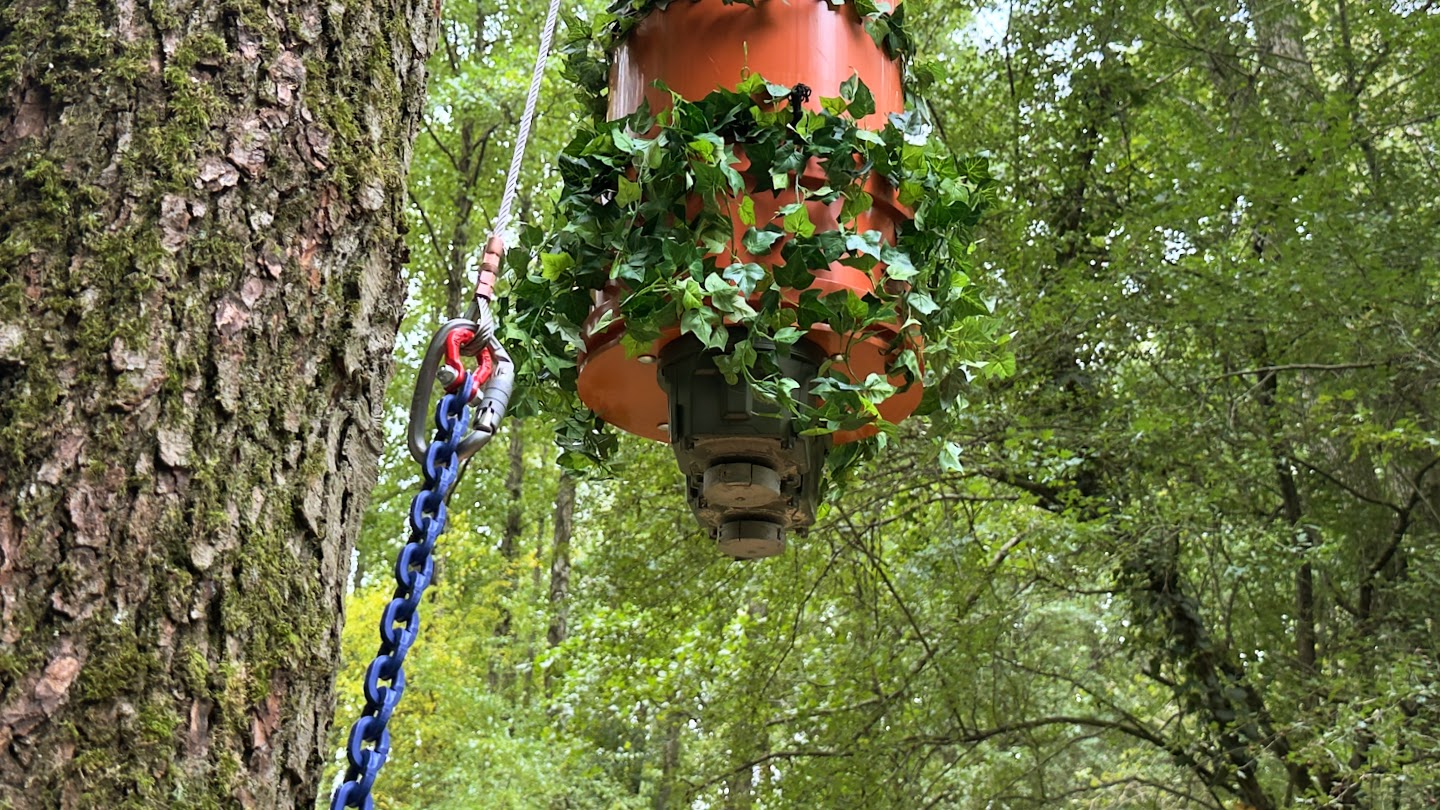
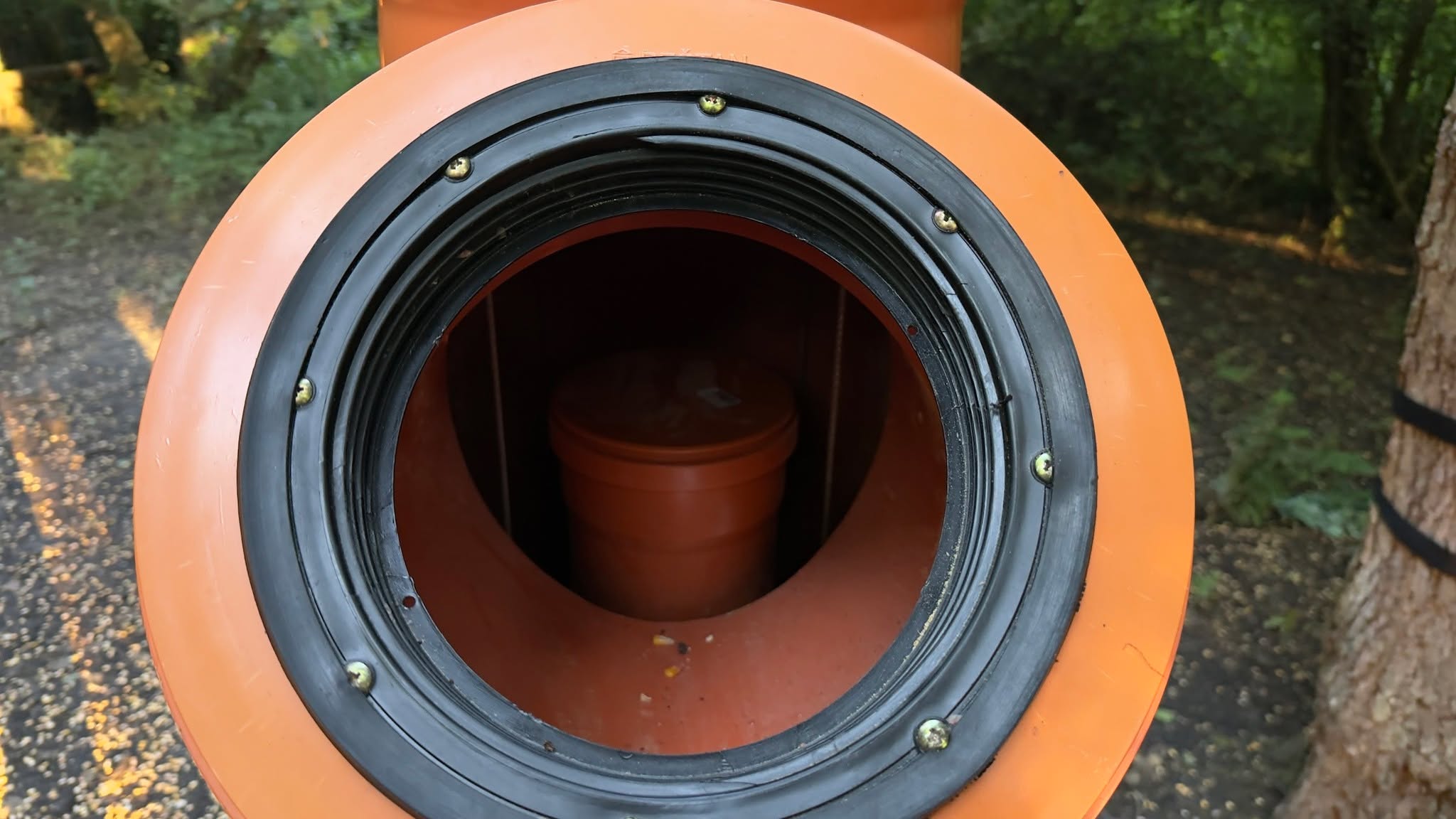
The prototype consists of a large main container providing a 30-day supply of corn, and a smaller, supplementary container, which was originally used to dispense premium feed and later specialized attractants.
The initial attempts (bio-pellets, Wildlutscher Magic Boilies) proved unsuccessful due to technical and material characteristics.
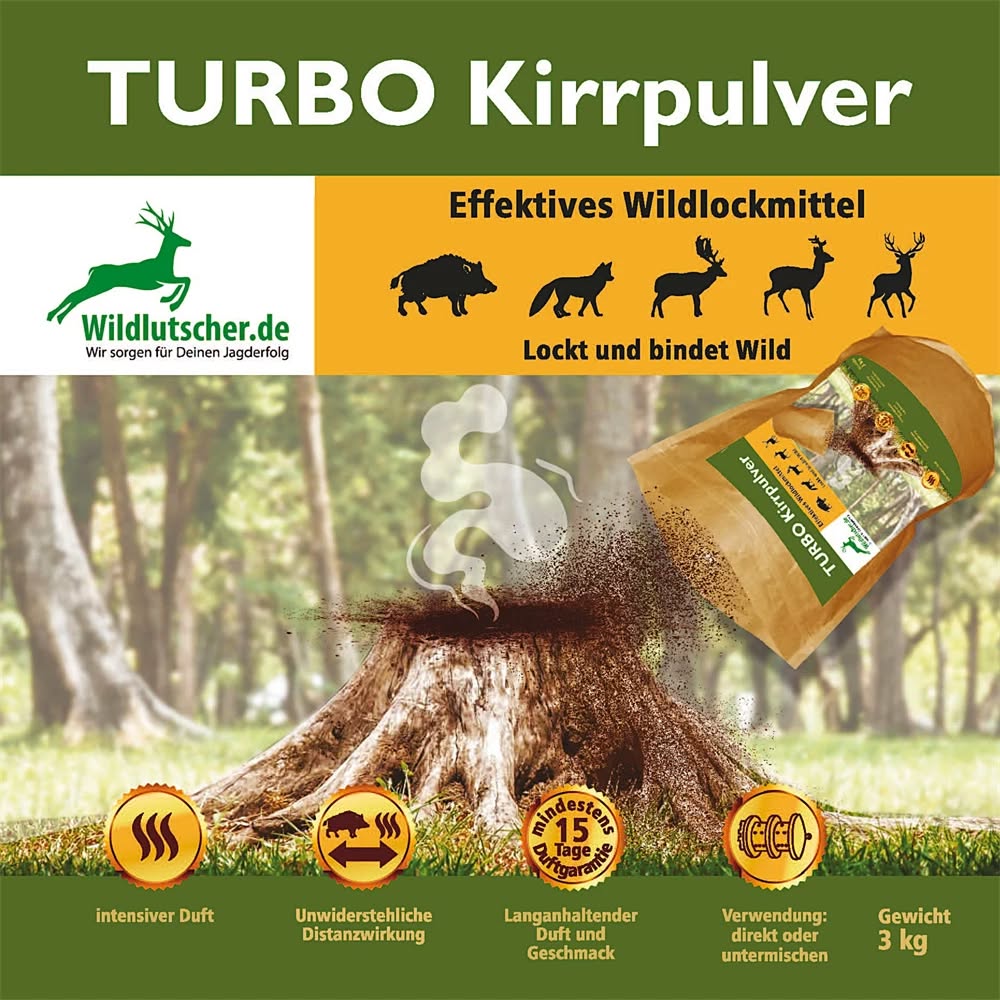
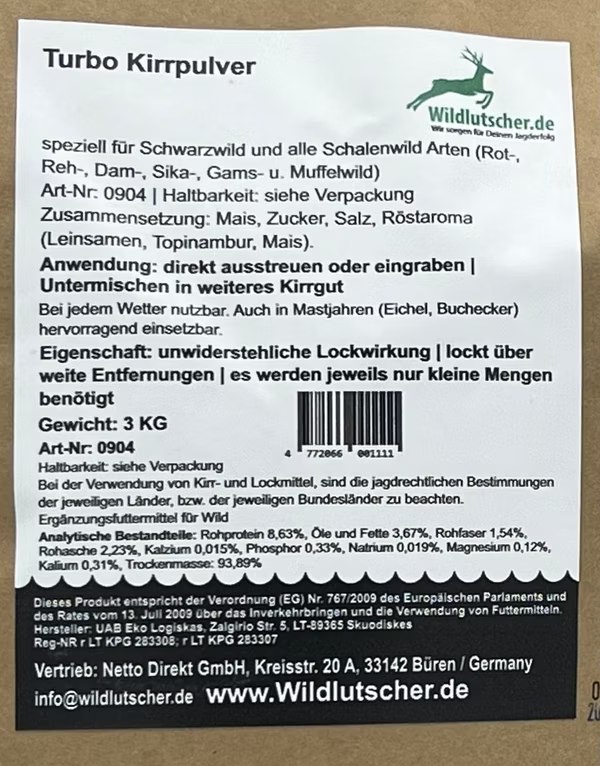
However, using Wildlutscher Turbo Kirrpulver attractant powder mixed with corn proved extremely effective, significantly increasing the intensity of feeder visits by wildlife.
Introduction:
A fundamental element of effective wildlife management is the proper feeding of the game population, especially during periods of food scarcity.
Feeders play a key role in drawing game, maintaining their condition, and optimizing hunting opportunities. Traditional feeders often require frequent refilling and do not always allow for the discreet and efficient dispensing of specialized attractants.
This study presents a novel approach by evaluating a prototype feeder with a dual dispensing system.
Materials and Methods:
1. Description of the Feeder Prototype:
Main Container: Capacity: ~150 kg of corn (assuming 5 kg/day consumption, sufficient for 30 days). Dispensing: Automatic, 5 kg of corn daily.
Supplementary Container: Capacity: ~20 kg of corn, with a separate automatic dispenser head. Dispensing: Automatic, once daily, for a duration of 8 seconds.
2. Experimental Materials and Results:
Bio-pellets (alfalfa, meadow hay, sugar beet):
Goal:
Premium feeding.
Problem:
High hygroscopicity, rapid softening and disintegration. The sugar beet was prone to mold.
Result:
Not usable for continuous dispensing.
Wildlutscher Magic Boilies:
Goal:
Special attraction.
Problem:
The automatic dispenser head was not suited to the size and shape of the boilies, causing jams. The automatic mechanism was specifically optimized for corn-sized grain feed.
Result:
Not applicable due to existing technical limitations.
Wildlutscher Turbo Kirrpulver attractant powder:
Goal:
Achieving a strong attracting effect.
Application:
The powder was mixed with corn and loaded into the supplementary container.
Result:
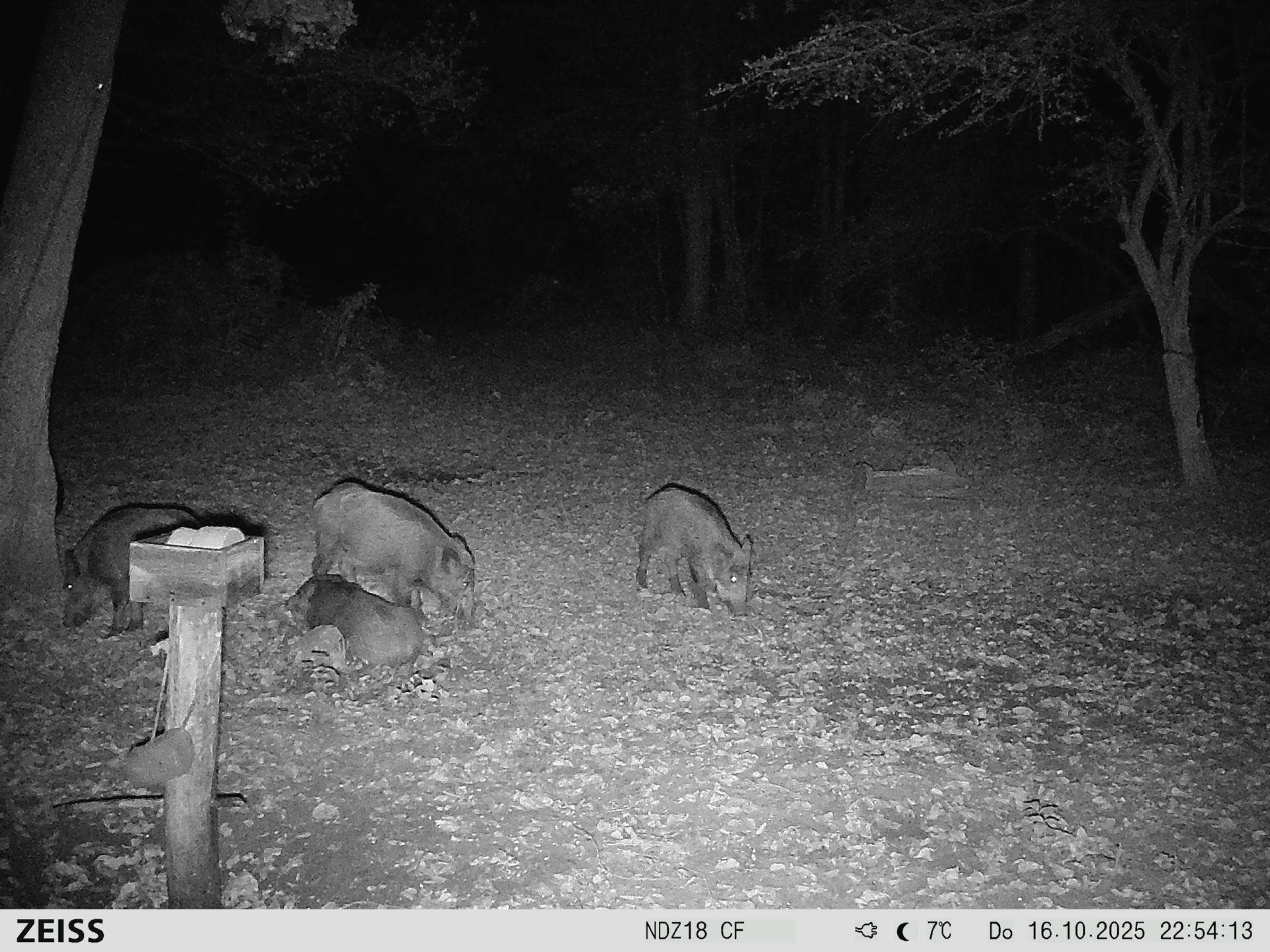
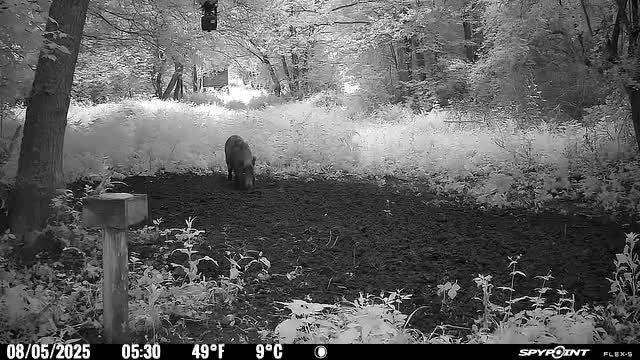
Since the mixture of powder and corn began being dispensed, the frequency of wildlife visits has increased dramatically, with the feeder being visited in an almost continuous rotation nearly all night.
Results and Discussion:
The dual dispensing system fundamentally proved to be a promising concept in wildlife management, as it allows for maintaining basic, sustained feeding (main container) and intensive, targeted attraction (supplementary container) simultaneously.
The initial attempts highlighted the sensitivity of automatic feeders to material properties and mechanical characteristics. The high moisture absorption of the bio-pellets and the sugar beet’s tendency to mold excluded these materials from continuous dispensing. The mechanical jamming of the Wildlutscher Magic Boilies drew attention to the specificity of the dispenser head’s design. An important lesson is that the physical parameters of the material to be dispensed (size, shape, density, hygroscopicity) must be taken into account when designing a feeder system.
Mixing and dispensing Wildlutscher Turbo Kirrpulver attractant powder with corn proved to be the most effective solution.
This is likely due to the combined effect of the intense aromatic compounds in the powder and corn as a favored feed.
The powder spreads around the feeder, forming an attractive scent cloud that draws wildlife in from a distance, while the corn provides the food.
The once-daily but targeted dispensing of the "delicacy" (powder-mixed corn) proved sufficient to sustain wildlife activity without oversatiating them.
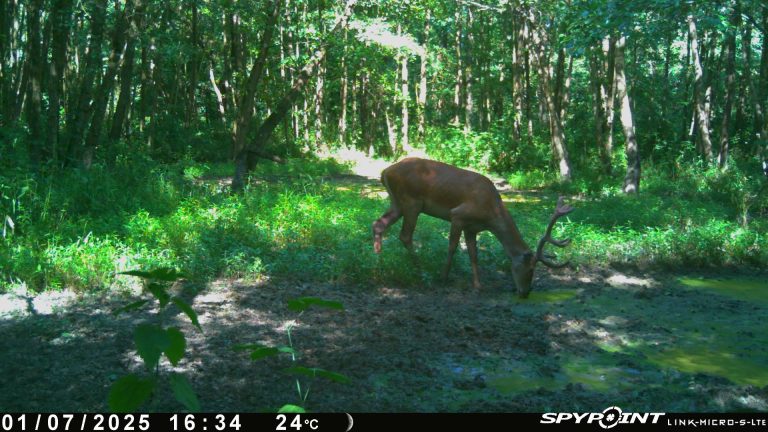
The attractant significantly extended the period of activity around the feeder and increased the fluctuation among different wildlife species.
Conclusions and Future Research:
The dual-dispenser feeder, especially when supplemented with Wildlutscher Turbo Kirrpulver, holds significant potential for improving wildlife management practices. The system allows for more effective drawing of game, optimization of hunting opportunities, and can contribute to maintaining the healthy condition of the game population.
Directions for future research:
Testing different attractants:
Examining the effectiveness of additional commercially available powders and granulates.
Optimized dispensing mechanisms: Adapting the dispenser head design to attractants of different sizes and consistencies.
Species-specific responses: Detailed observation of the feeder-visit frequency and behavior of individual wildlife species (e.g., wild boar, red deer, roe deer) when different attractants are used, e.g., through analysis of trail camera footage.
Cost-effectiveness analysis: Comparing the installation and operating costs of the dual dispensing system with traditional feeders, taking into account the increased effectiveness.
Environmental impacts: Examining the ecological effects of intensive attraction, such as its possible influence on wildlife movement ranges and local flora and fauna.
This prototype and the experience gained with it provide a valuable foundation for further developing modern, technology-driven wildlife feeding strategies.