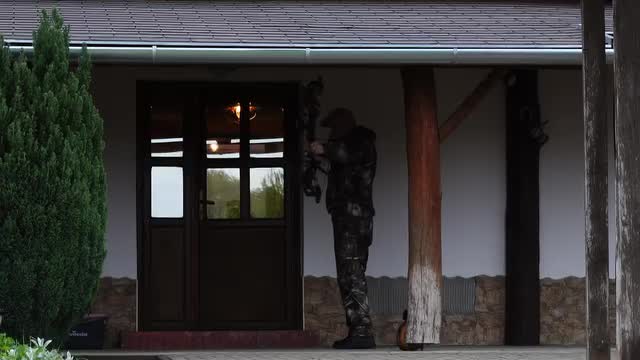
Yesterday, Saturday, already at dawn, at 5 a.m., I was out at my feeder. The day…
Yesterday, Saturday, already at dawn, at 5 a.m., I was out at my feeder. The day had two main objectives:
1. Increasing the capacity of the corn feeder tank
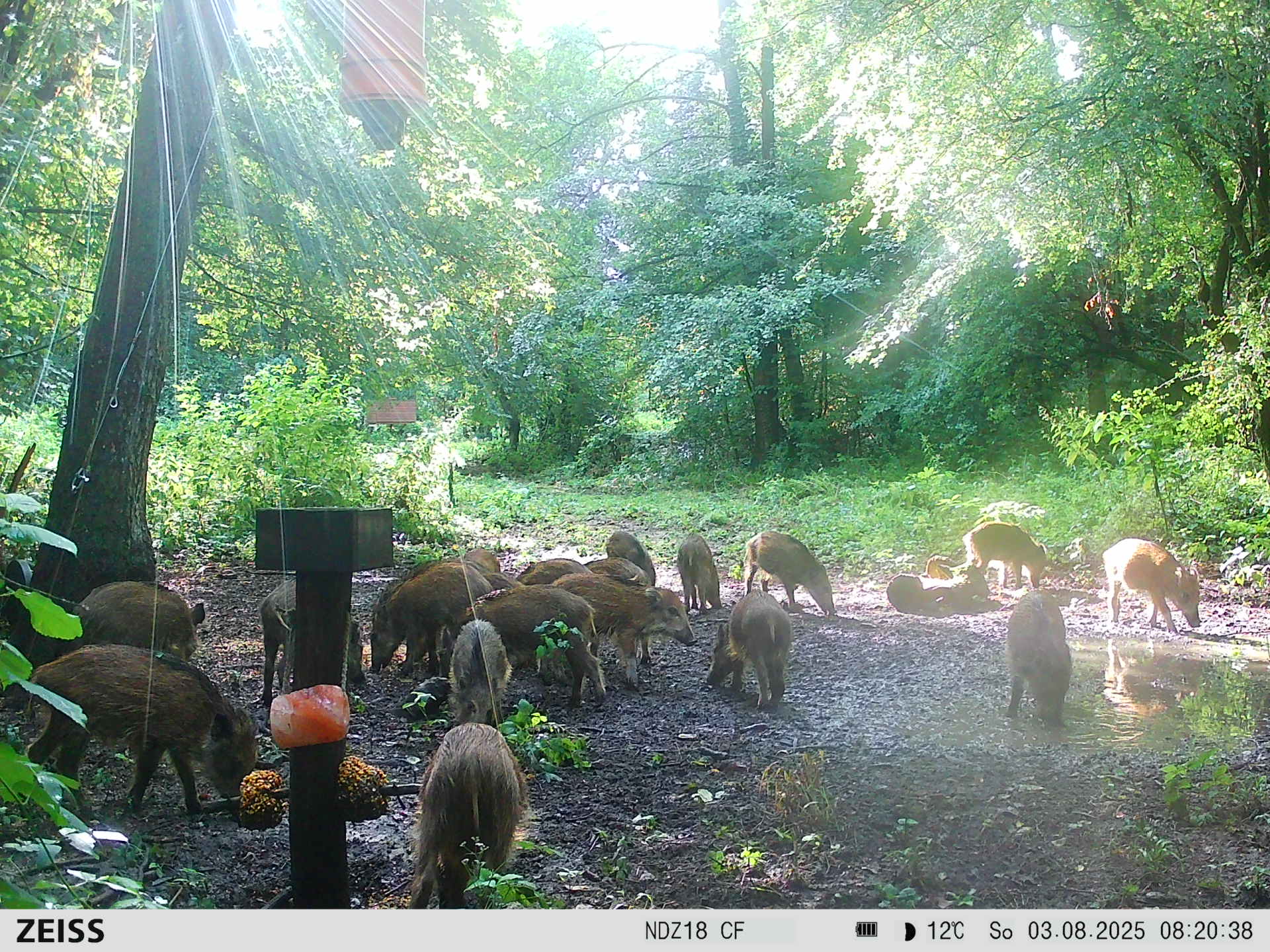
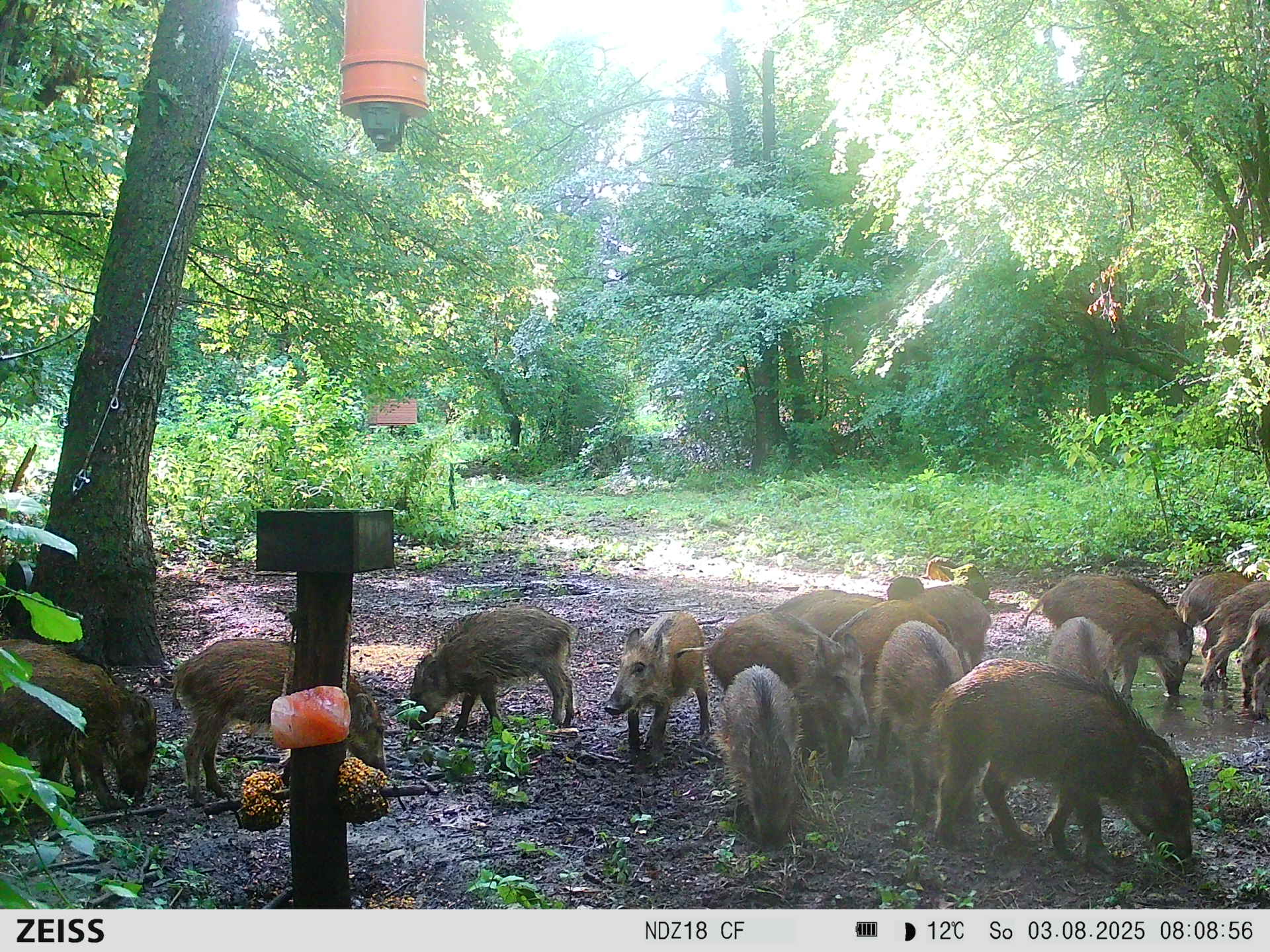
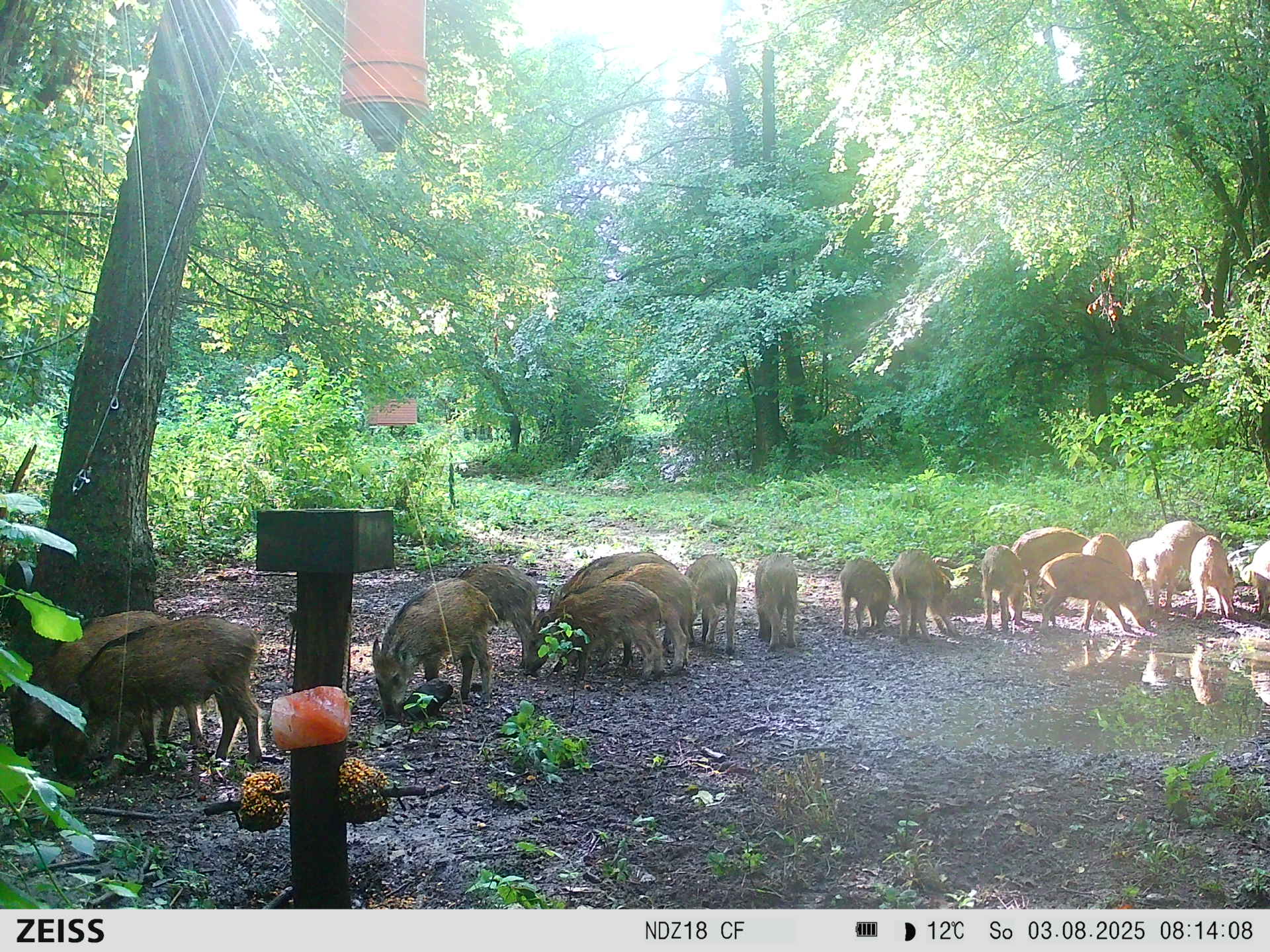
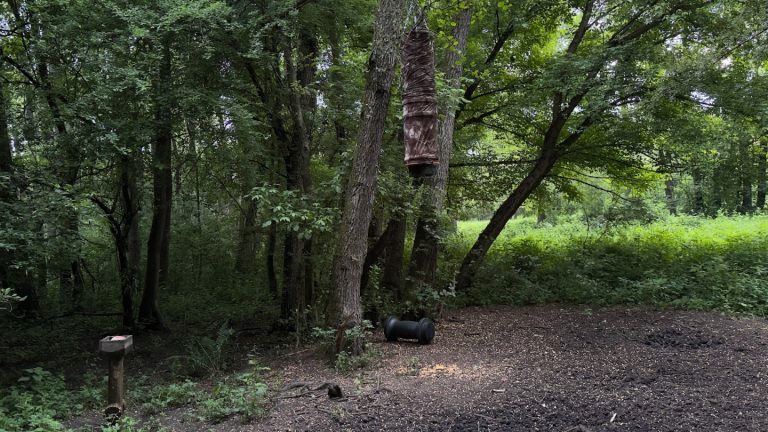
Based on my past experience (reckoning with a daily dispensing rate of 5-6 kg), I decided to enlarge the tank size. The new size needs to guarantee at least four weeks of continuous operation without refilling – which means storing 140-168 kg of corn. Installing the larger tank component, however, was no ordinary task: it was a struggle with heavy parts, a hidden internal tube system, and tensioning cables that practically seemed to have a life of their own.
The greater size and mass not only increases storage capacity but is also critical for preserving the feeder’s stability in the field. Longer operating time, meanwhile, brings a strategic advantage: it significantly reduces the number of disruptive maintenance visits to the area, thereby minimizing disturbance and stress to the game.
Another important consideration was the tank’s material quality (UV-stable PE) and its watertight design, since if the seed and the soft moisture-absorbing crumb feed get damp, even without going moldy, they clump together and obstruct dispensing, or can even block the dispensing head entirely.
2. Replacing the climbing stand
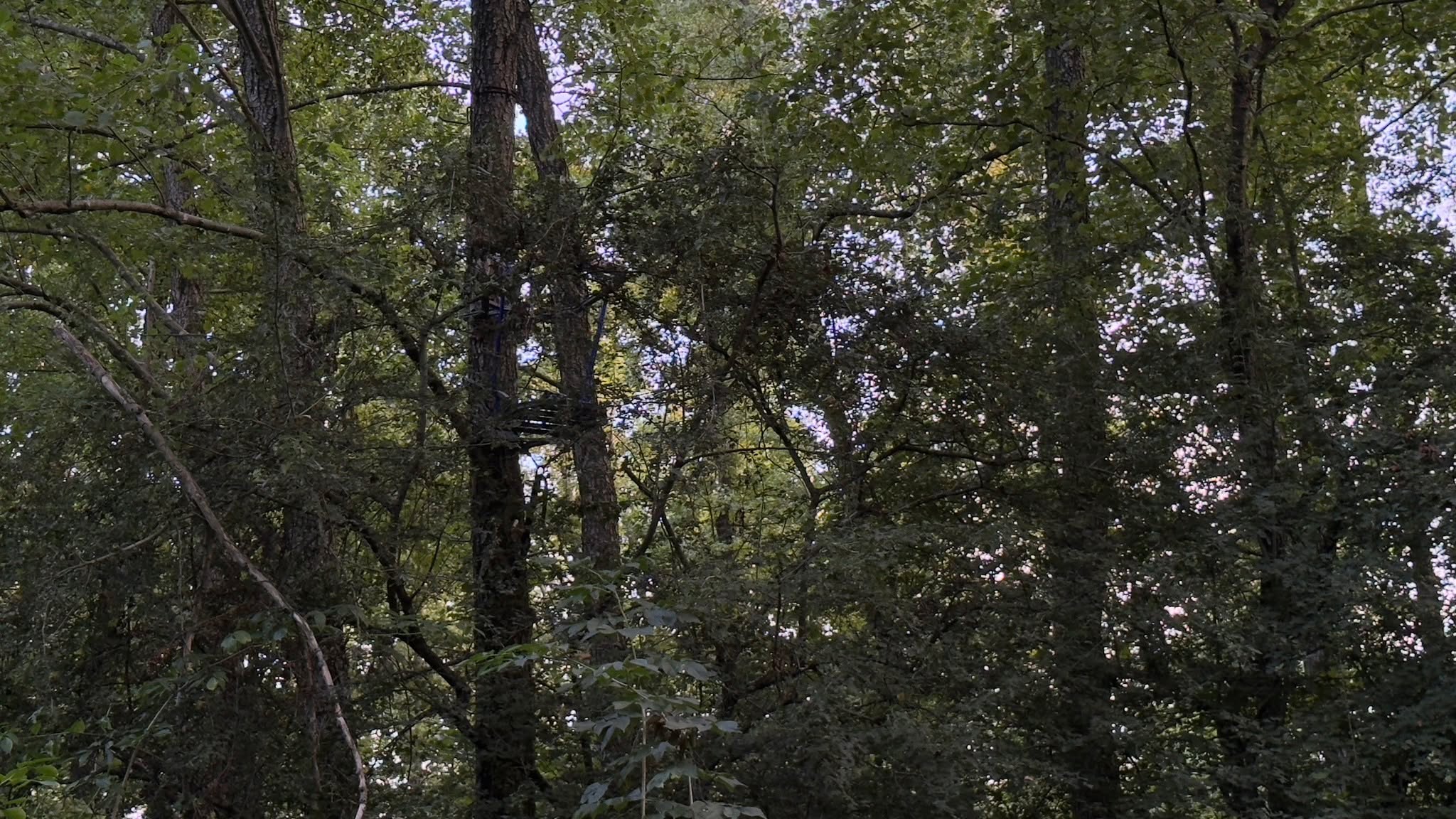
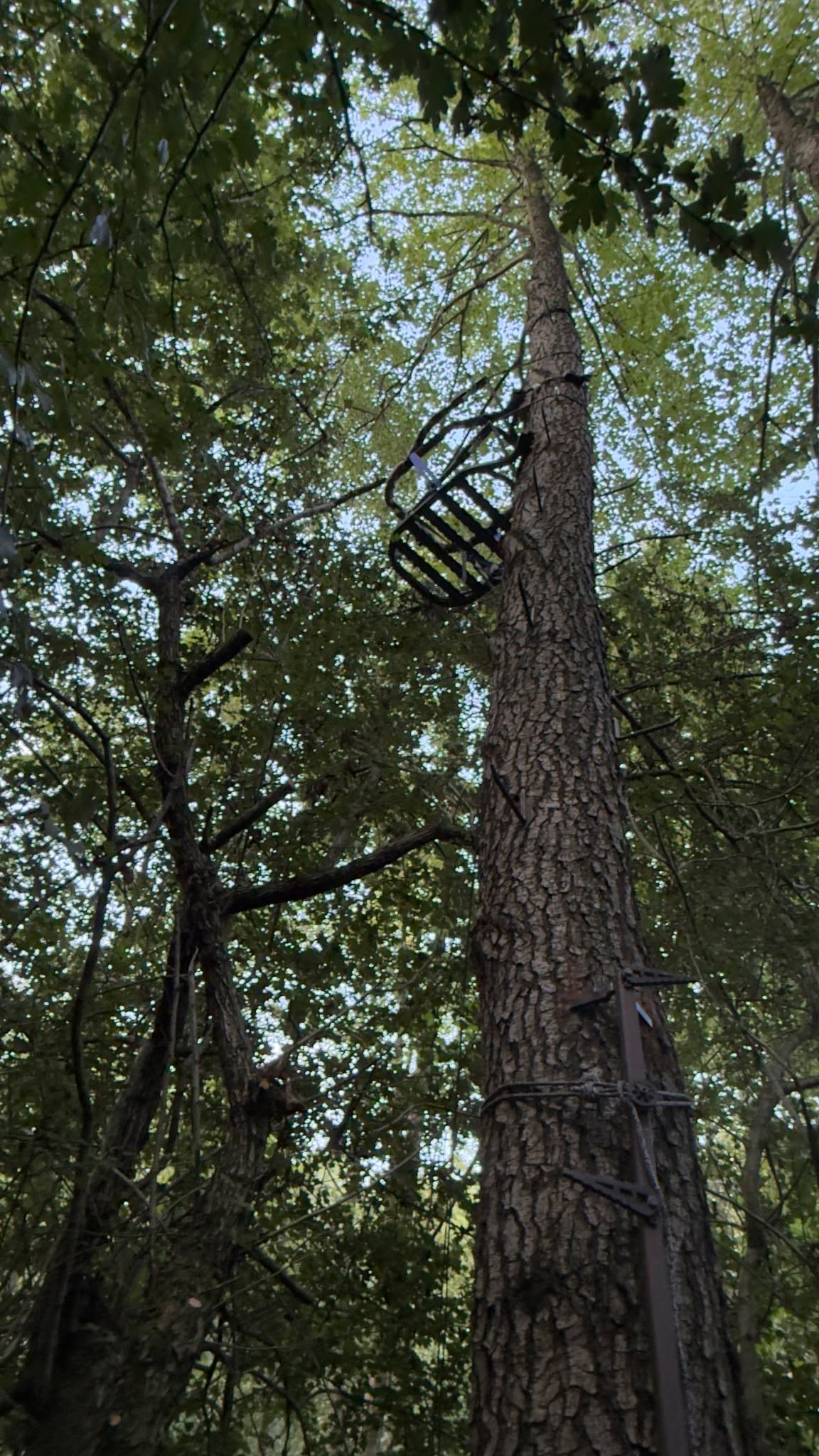
Instead of the LoneWolf Sit and Climb, I installed a considerably more comfortable Summit Viper Pro climbing stand on the stand tree next to the "Big Green Wallow," concealed by a blackthorn bush, at a height of about 7 meters.
I’ve always held the LoneWolf climbing stand in high regard. Its exceptionally good-quality materials (e.g. cast aluminum platform), excellent technical solutions (such as infinitely adjustable seat angle), and flat, foldable design made it an ideal compromise for short hunts lasting a few hours.
My hunting style, however, is radically different: I often spend 14-16 hours motionless in the stand, hunting with a bow.
Since my permanently fixed stands are out in the field year-round, portability isn’t a factor for me. What matters most to me is silence and comfortable, motionless sitting through long hours – especially since this way I can avoid the joint problems (hip, knee, spine) and circulation issues that develop over the long term. That’s why I chose the Summit, which, although it falls behind the LoneWolf in technical terms and materials used (e.g. welded aluminum alloy), is unbeatable in comfort.
The advantage of a permanent stand is reduced disturbance (less walking around, noise, scent), but it comes with a trade-off in exposure to the elements (rain, UV, frost). That’s why I regularly check the structure for rust, the condition of the straps fastening it to the tree, and the health of the tree itself – the latter I consider especially important, since poorly fastened stands damage the bark and speed up the tree’s decline.
The blackthorn bush provides excellent camouflage and shelters against the wind.
When setting up on the stand tree, as I climbed up I made sure to remove only the absolutely necessary branches, keeping the climb unobstructed and safe.
I don’t cut off the branches of the camouflage bush that get in the way; instead I position them with a thin, strong cord for optimal cover.
This "tying-in camouflage" is useful in more ways than one: on one hand it increases the density of the cover instead of thinning it out, and on the other hand the tension of the pulled-down branches, positioned horizontally nearby, stimulates the blackthorn (Prunus spinosa) to grow side shoots, which over the long term results in even denser foliage and cover.
My technique is an eco-friendly alternative to radical pruning: it preserves the blackthorn’s berries and blossoms – which are essential for insects, birds (for example blackbirds, ring ouzels) and small mammals – while, thanks to the regenerative capacity of the affected branches, it durably improves the camouflage effect.
Using thin cord (bow serving thread) is decisive here: it causes no visible damage, and over time it becomes "overgrown" by the vegetation.