The First Adventure – Some Scientific Reflections on the Meeting Between a Wild Piglet and the World…
The First Adventure – Some Scientific Reflections on the Meeting Between a Wild Piglet and the World, from the Perspective of Wildlife Biology, Forestry, and Game Management
I. The Beginning – Ethological and Ecological Context
The reproductive biology of the wild boar (Sus scrofa L.) follows a distinctive rhythm within the annual cycle of European deciduous forests.
Sows typically farrow around the February-March turn, and the newborn piglets spend their first two to three weeks almost exclusively in the farrowing nest, under maternal protection.
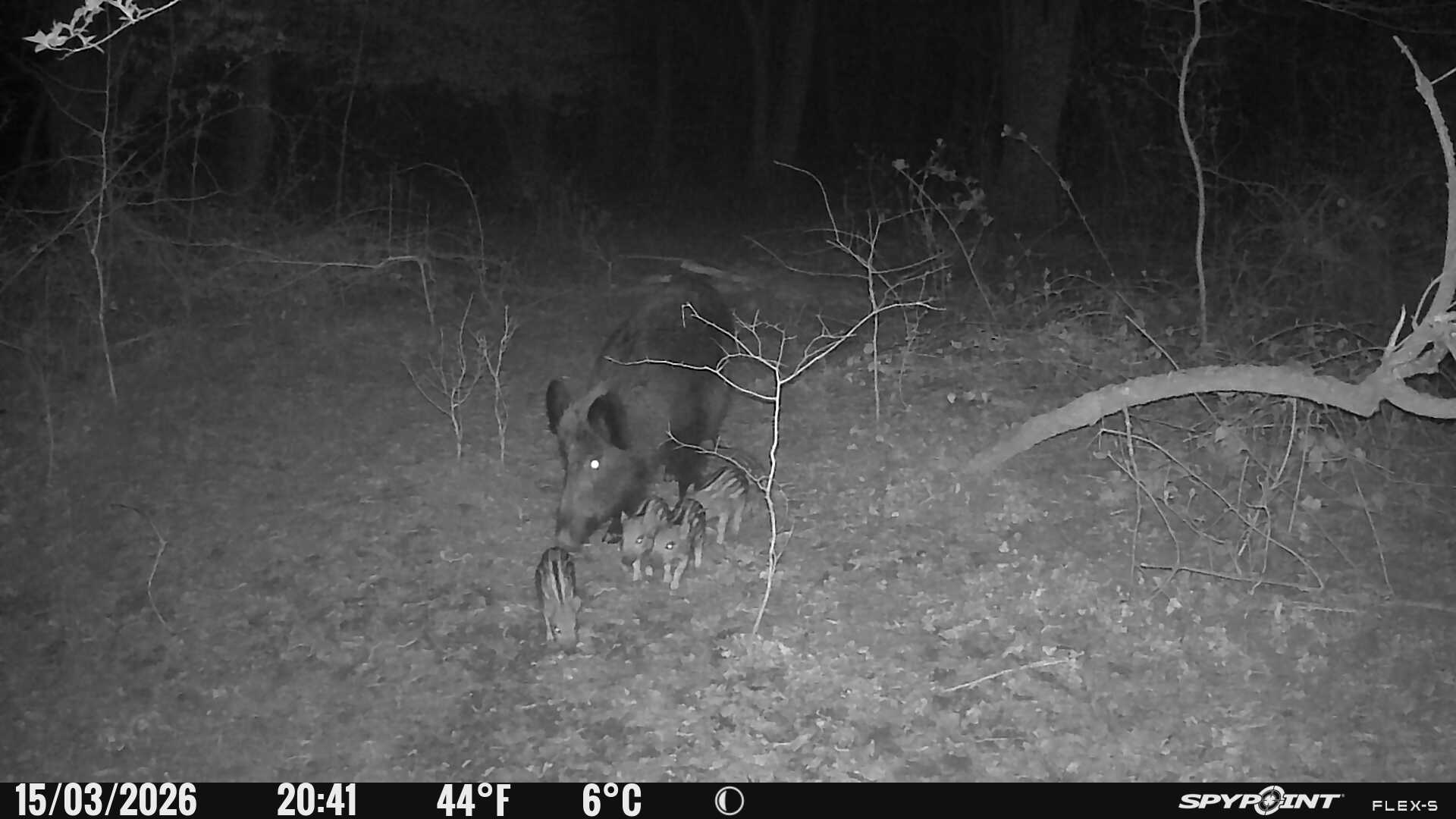
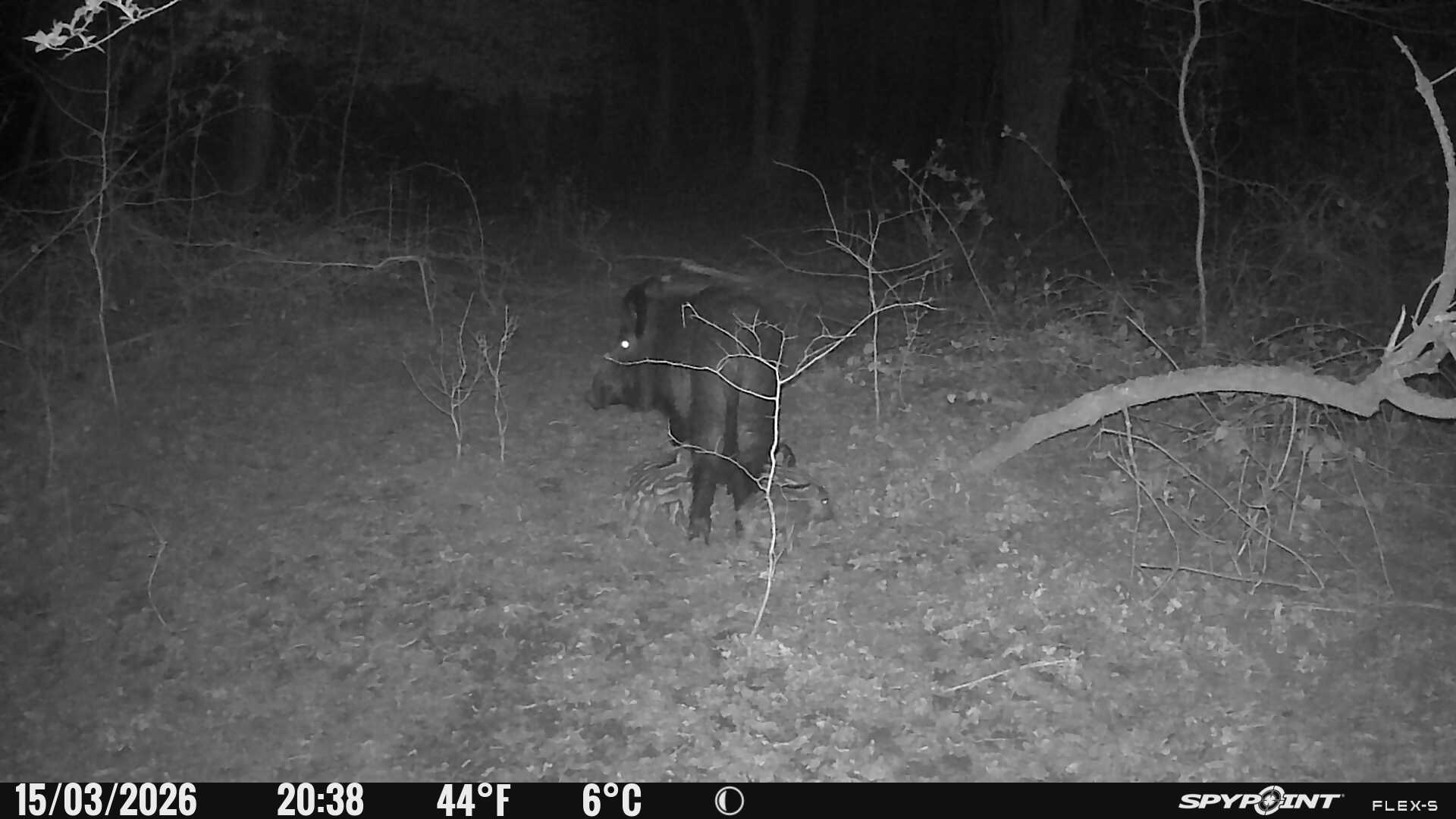
When the piglets grow stronger and nature allows it – the soil warms, the tender shoots of the undergrowth emerge – something happens that the field professional awaits with special excitement every year: the sow takes the first cautious steps, and in her wake, stumbling, noses held to the wind, the first little striped figures venture forth.
This moment is not merely an aesthetic experience.
From a scientific standpoint, it marks the beginning of an extraordinarily dense and formative sensitive period, whose quality influences the animal’s survival chances, behavioral repertoire, and social standing within the population over the long term.
II. The Secret of the Stripes — An Evolutionary Message in the Coat
The wild piglet’s characteristic longitudinal yellow-brown striped pattern (Streifenkleid) is not a random pattern but an evolutionarily crystallized cryptic coloration, precisely adapted to the light-shadow conditions of the forest floor. Within the striped coat, retained for 4-6 weeks, the melanin distribution breaks up the lateral, along-the-hair illumination – typically sunlight filtering between tree trunks.
Viewed through the forester’s eye, this can be closely linked to stand structure: in closed, even-aged coniferous stands, where light conditions are relatively uniform, this pattern is less effective, whereas in mosaic-like, mixed stands with heterogeneous light conditions, it truly provides masterful camouflage.
This correlation is in itself a compelling argument for structurally diverse, close-to-nature forest management.
III. The Awakening of the Senses – Neurological and Behavioral Processes
During the first free excursion, the piglets’ sensory system undergoes an intense imprinting process.
The developmental order of the three dominant sensory modalities, as observed in the field:
1. The primacy of olfaction
The nose is the first and most important tool for orientation. The wild boar carries around 2,000 odor-receptor genes – compared to 400 in humans – and the piglets are already able to identify and distinguish scent trails within the first few days.
We can observe their tiny noses constantly at work: soil odors, fungal spores, decaying wood, insect larvae – every piece of information is processed and stored.
2. Mapping the acoustic space
Reactions to sounds are at first almost reflexive – at every unfamiliar noise, the piglets tuck in behind the sow’s body.
Gradually, however, they begin to differentiate between stimuli: they grow accustomed to the rustling of wind, the cracking of branches, birdsong.
This is a continuous calibration of the arousal threshold, occurring in parallel with the maturation of the nervous system.
3. The limits and possibilities of visual learning
The wild boar’s eyesight is relatively low in resolution, but motion detection and twilight vision are excellent.
The piglets supplement the recognition of visual patterns – a predator’s silhouette, terrain features – by continuously observing their mother’s behavior: this is the basic mechanism of social learning.
IV. The Sounder as a School – The Sociobiological Dimension
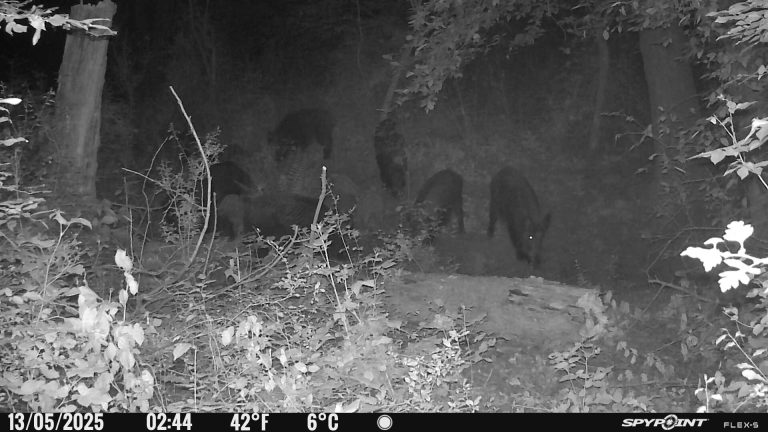
The wild boar is a highly social species.
From birth, piglets develop not only as biological but as social beings. Through the hierarchy around the sow, rivalry among siblings, and observation of the elders, an informal yet remarkably effective system of knowledge transfer emerges.
From a game management perspective, it is particularly noteworthy how strongly the piglets’ early experiences shape their adult habitat preferences, their propensity for crop damage, their use of water-related travel routes, and even their tolerance threshold for human disturbance.
A population socialized undisturbed in a natural forest setting behaves quite differently from a herd made up of individuals raised on agricultural land – and this knowledge has a direct bearing on game management strategy as well.
V. The Responsibility of the Game Manager and the Forester
During these first weeks of the little striped lives, the balance that it is game management’s noblest task to maintain becomes especially fragile. Forest disturbance – whether logging, stalking-path maintenance, or tourist traffic – can cause disproportionately great stress at this time.
A disturbed sow may abandon the nest, the piglets may scatter, and that delicate, complex learning process on which their entire later life is built may be interrupted.
Responsible forest use at this time means that:
– near the farrowing nest, from mid-February to the end of April, noisy work should be avoided,
– the route of stalking paths should be deliberately planned so as not to cross known farrowing areas,
– trail-camera checks and stock-monitoring activities should be carried out before the morning activity peak, or in the late afternoon.
VI. Closing Thought
Every spring, when we catch sight of the first little striped figures in the forest – stumbling, curious, discovering the world in their mother’s shadow – we are, in truth, watching an ancient and perfect system at work.
Nature has made the whole forest into a school for them.
And our task is to preserve this school for them – the forest, the oak grove whispering in the noisy wind, the scent of damp leaf litter, the silence of dawn.
"Wildlife does not need law, but silence."
– the wisdom of an old hunter, which today could well pass for an ecological axiom.