Wednesday evening, April 29, 2026.
Wednesday evening, April 29, 2026.
Another hunting weekend is approaching.
The tools of independence, freedom, and the experience of nature are gathering in the car.
On the sixth, seventh, eighth trip I somehow manage to cram everything I’ve judged important and useful into the car. Gear, clothing, equipment, and everything else.
Because, as we know, "it’s always the thing you don’t have that you need!"
It’s no simple matter!
Fitting all that stuff, with which I can independently handle every task involved in hunting, terrain management, and feeder maintenance, into an average passenger car.
If the car had a soul, it too would protest: the springs groan, the trunk and various doors beg for mercy . . .
But in the end I always manage it.
Always with the hope that next time I won’t need half of this, because, well, I’ve done the terrain work, maintained the feeder, and taken care of everything else that, beyond the usual hunting gear, required so many extra items.
It’s undeniable, though, that this is starting to border on self-deception, because my creativity is nearly boundless :-), so just as I run out of tasks, new ideas strike . . .
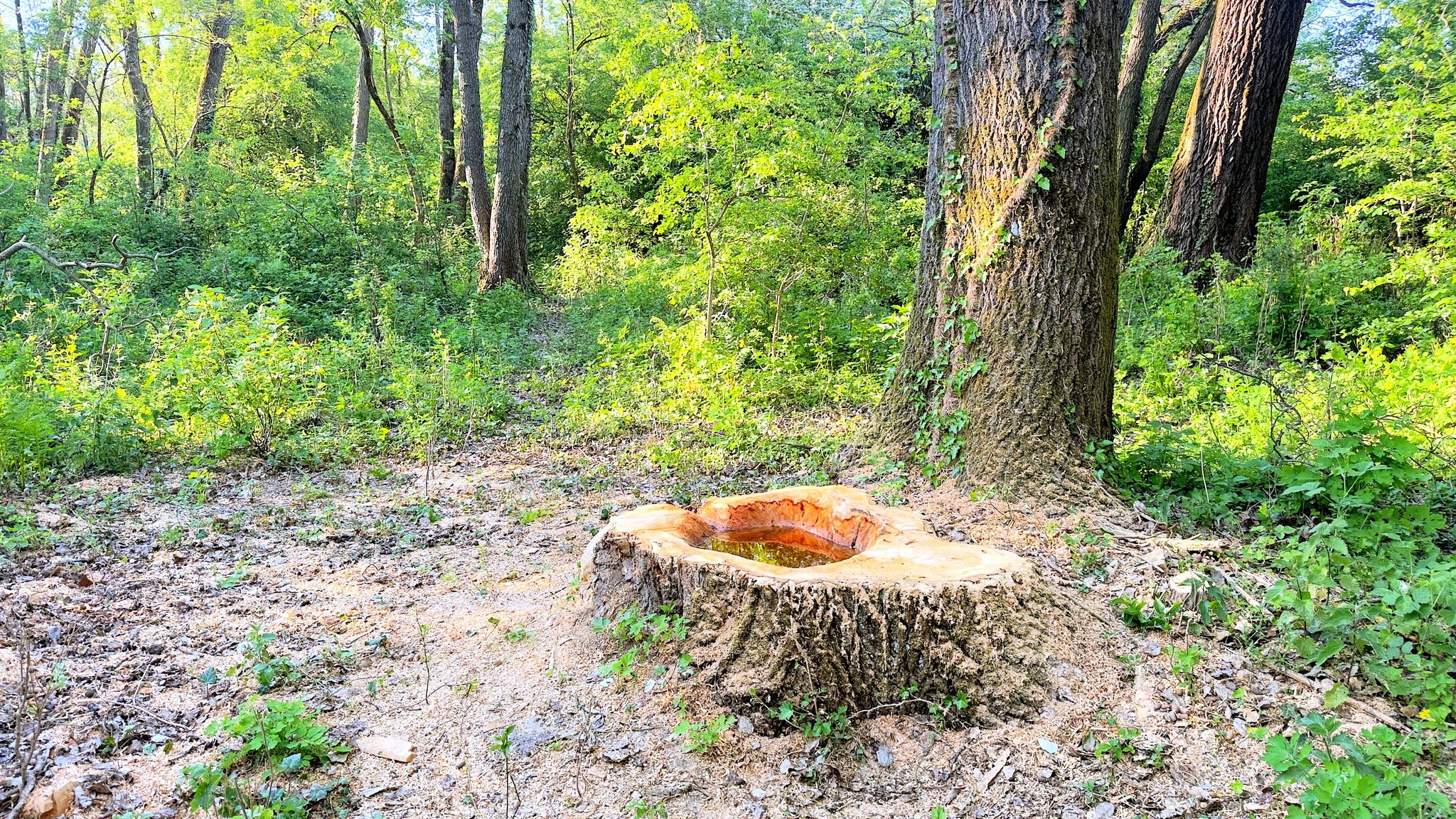
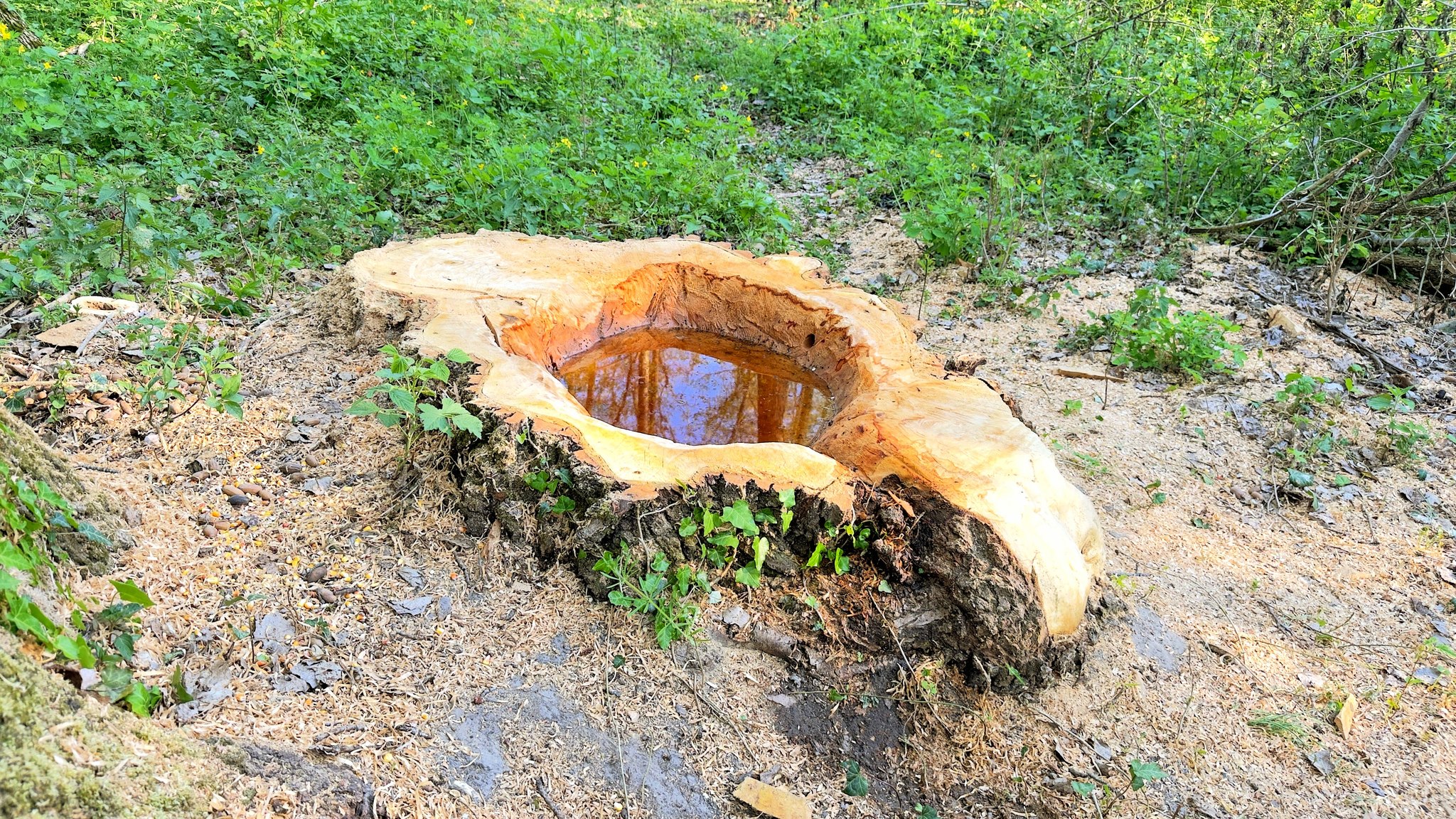
– Take the latest birdbath–hunting-trail project.
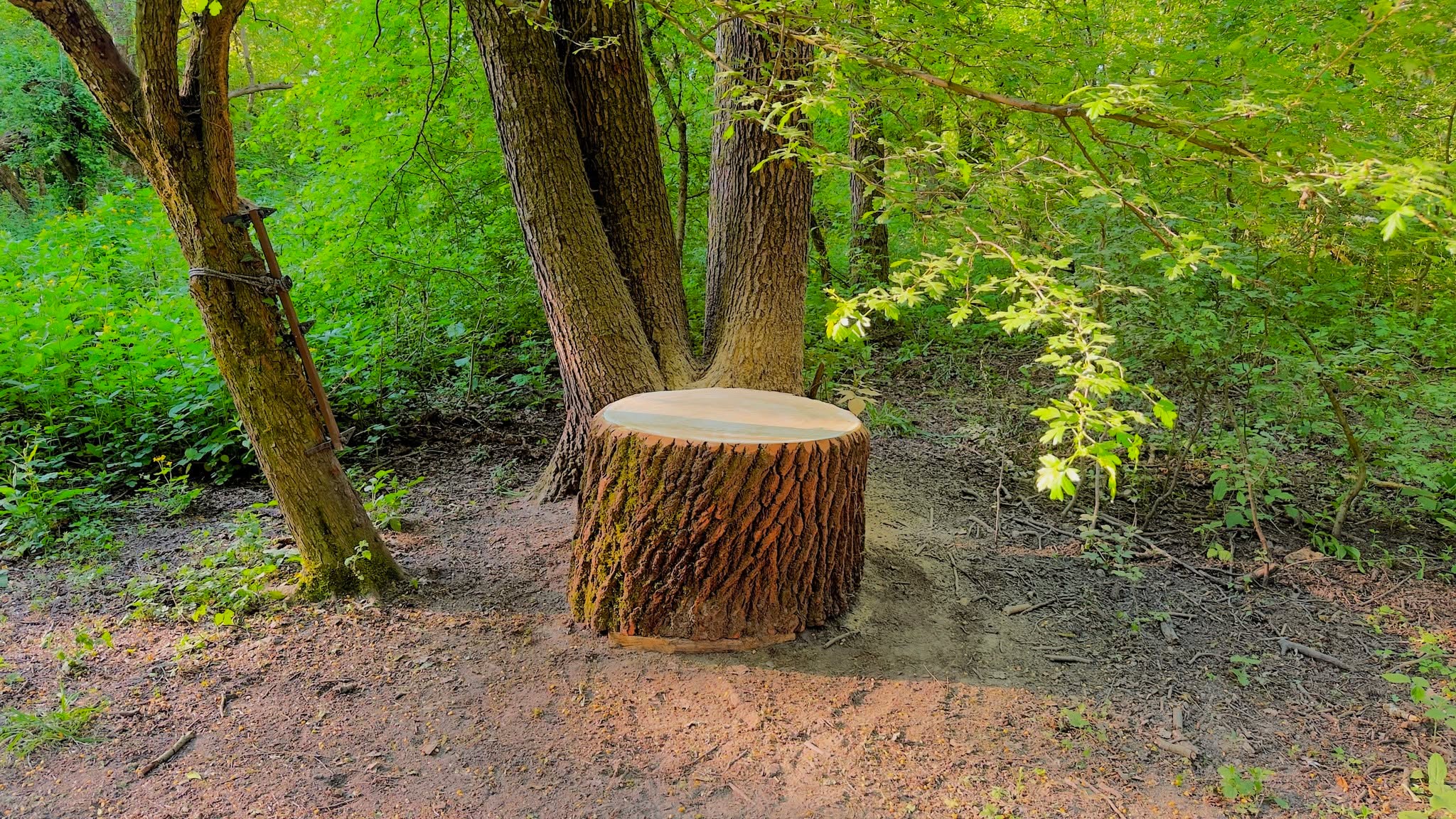
– Or the poplar log weighing around 2 tons that followed it, the winch platform . . .
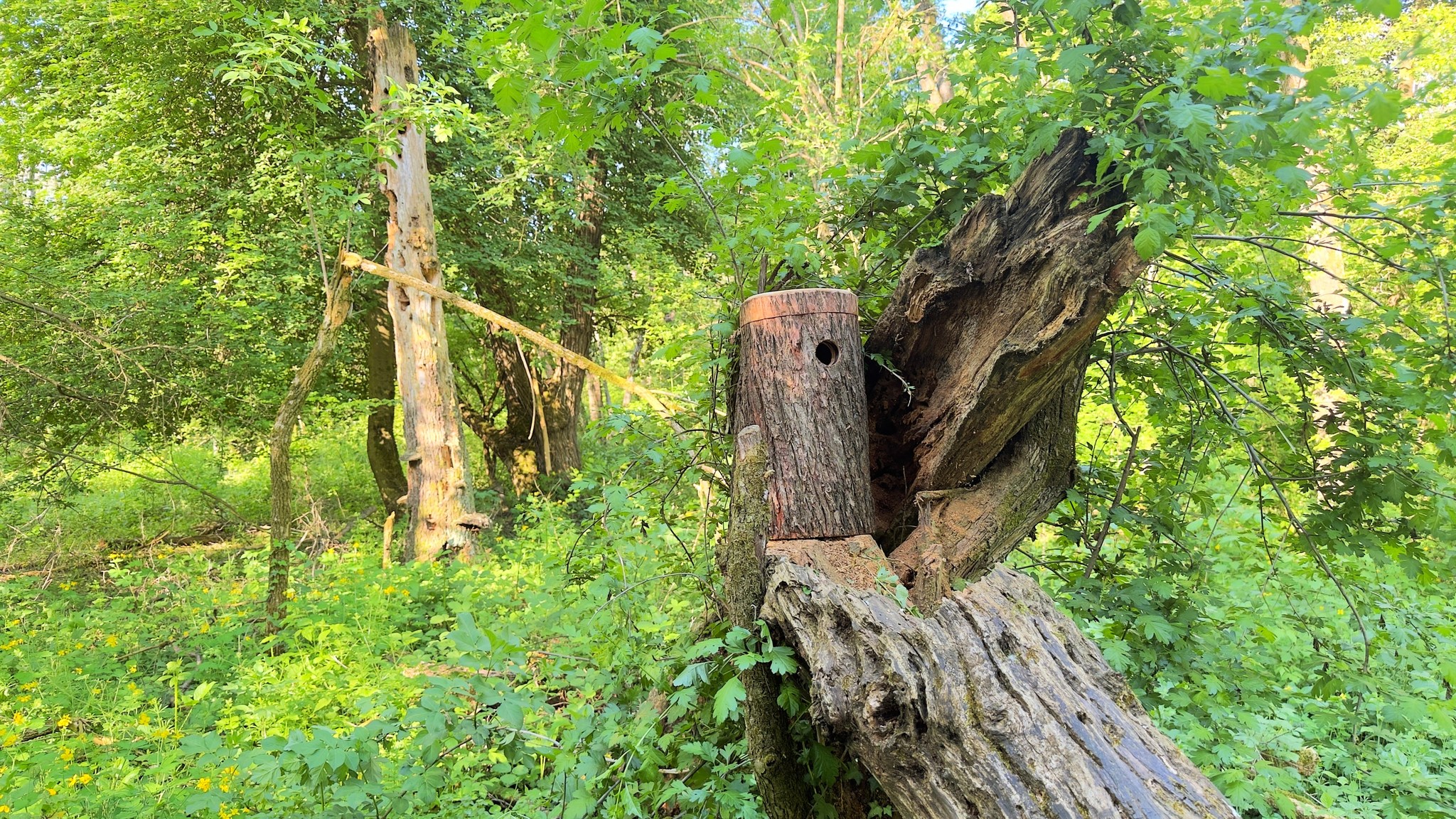
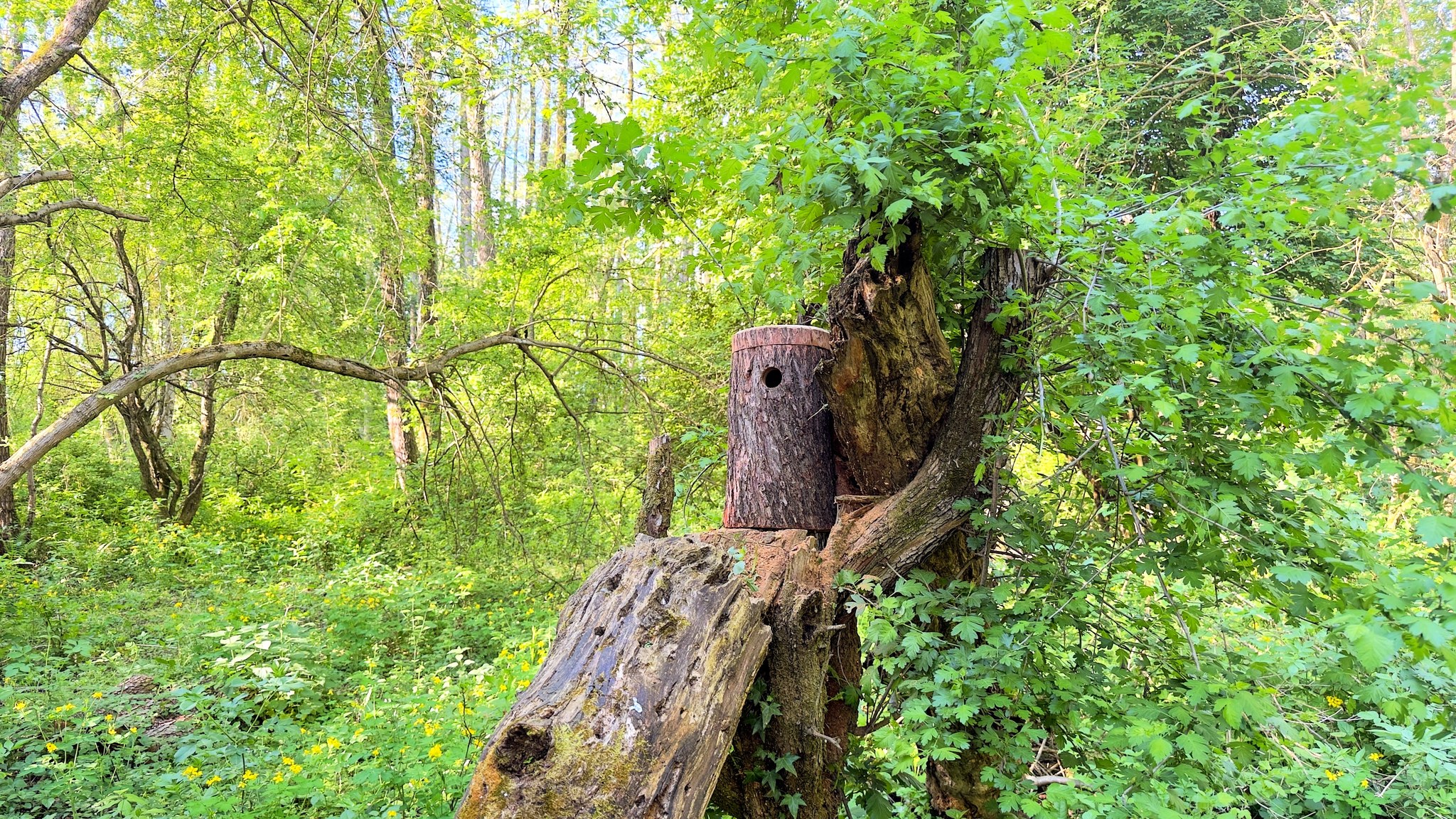
– Or I could mention the almond-wood birdhouse I put up just today.
– Before that there was the design, development, prototype, and refinement of the twin-spout automatic feeder capable of dispensing a month’s supply on its own.
– Securing its chain, locking it, camouflaging it.
– Or there’s the fixed mounting of the Summit Viper SD Pro stands with sailboat-style guy-wire tensioners.
Or before that, converting the Viper SD Pro’s seat cushion for seat heating . . .
Or even "marrying" the UV slider with the good old HoloSight
. . .
I never run out
The next day, Thursday.
I’m just counting the hours, the minutes.
Departure after work, but the real freedom begins in the Budapest traffic jam – or rather, in suffering.
Struggling across town through downtown at this hour takes almost an hour.
For this reason I’ve adopted the "shorter this way, but faster that way" principle.
So I take on an eighty-kilometer detour, just to be able to roll along at a sensible pace and get away from brake lights and honking taxi drivers as soon as possible.
By the time I reach the area, the sun has already set.
I arrive late.
There’d be no point climbing into the stand now – the game is already moving through the forest at this hour.
So I drive further in and spend the night at the guesthouse lodging.
I’m planning the real hunt for the following evening.
Morning
As is my habit, I prepare the stand.
The seat cushion, the bow holder, the backpack, the stand bag, the feeder lights – everything goes into place.
I even check the wind direction. I leave nothing to chance.
I even spray a bit of acorn scent on the hawthorn leaves that provide cover.
My goal: to move with as little gear as possible in the evening, because silence and calm are the best hunting companion.
Around half past six in the evening
I climb up into the stand.
Then, after a bit of settling in, silence sets in.
The living, alert forest silence, full of rustlings, hidden lives. I too become part of the silence.
I watch.
Meanwhile I take out my phone and use a bird-call recognition app to identify the forest and songbirds buzzing around me.
Blackbirds, tits, nuthatches, cuckoos – they’re all here, all participants in the evening’s stage show.
One o’clock at night.
Nothing.
I’m starting to doze off when, sensing movement, my alertness snaps right back.
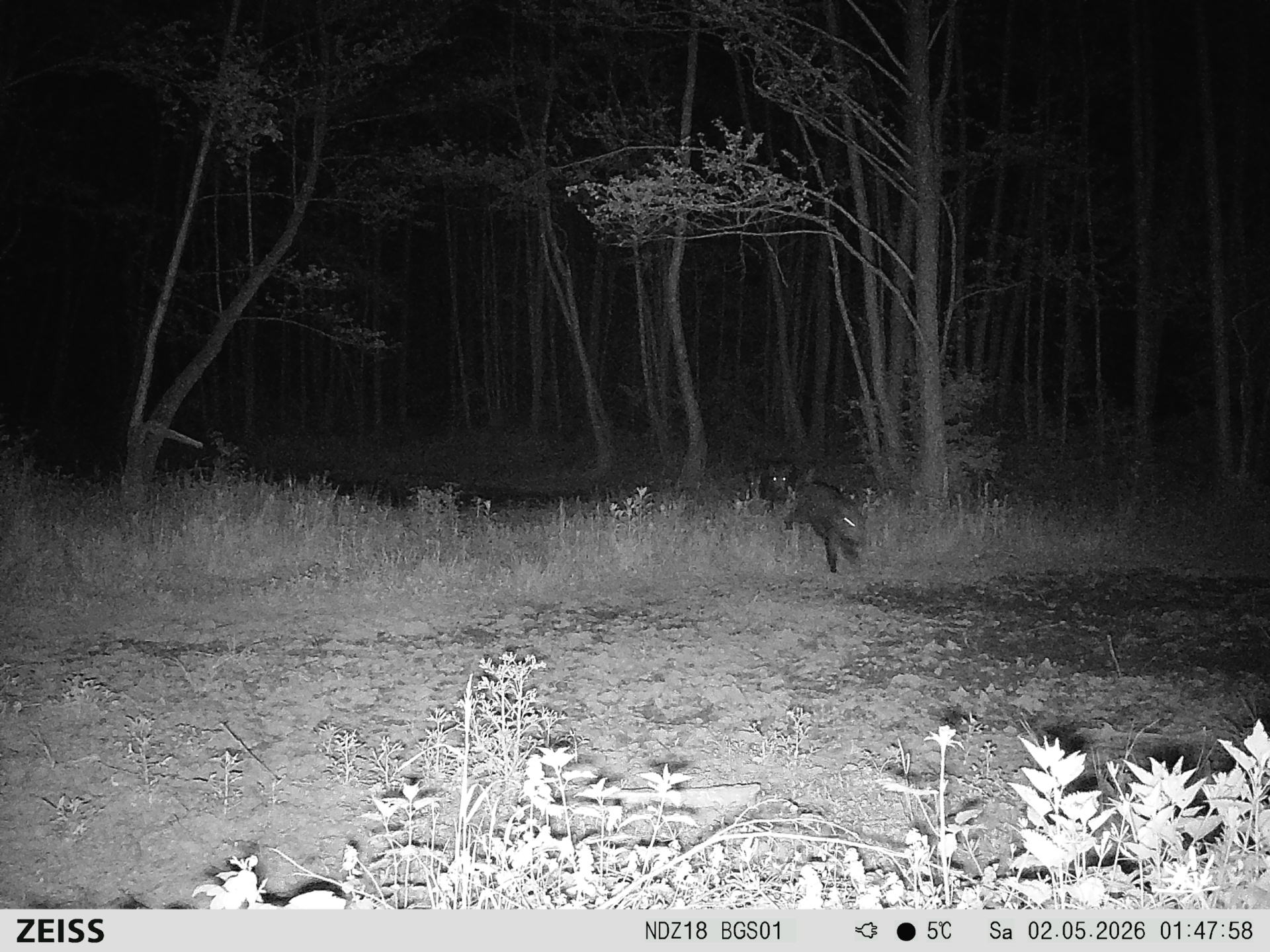
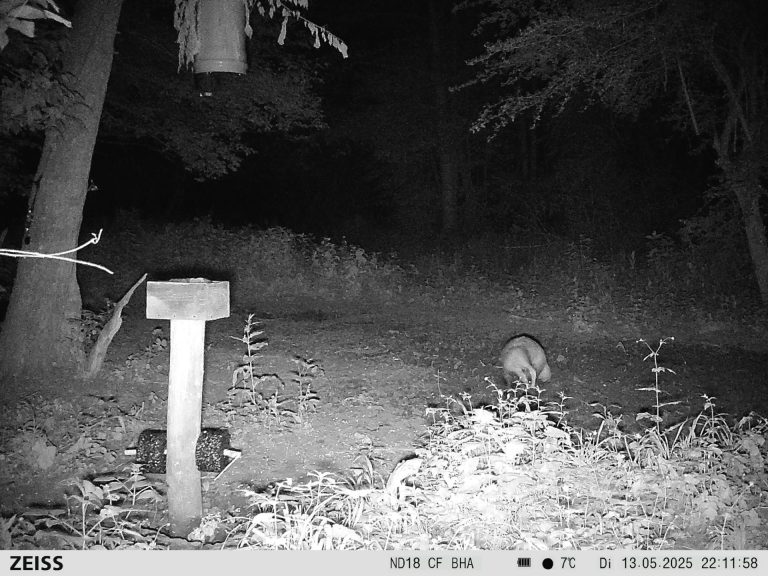
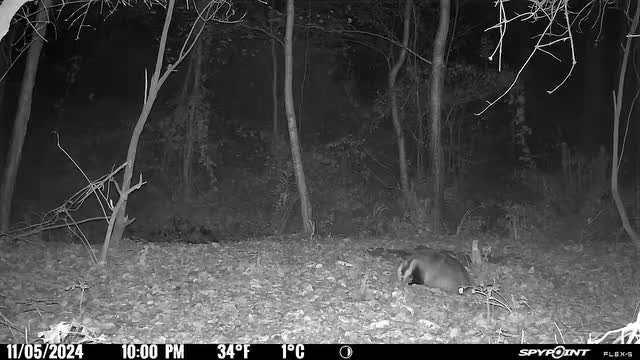
The badger, well known from the trail camera footage, appears.
The Pulsar Oryx camera produces an excellent, detailed image of it – I can see the stripes, the thick fur, the small head’s watchful movements.
The distance: twenty-two meters.
The badger doesn’t react to the slowly brightening feeder light.
There’s moonlight anyway; when a passing cloud covers the moon, the brightness changes imperceptibly.
The badger is used to this.
I had previously placed the thermal camera on the tripod and carefully set up the recording mode through the app.
As it turned out afterward, I’d set everything up except I forgot to press the record button.
But that evening I didn’t know this yet.
The bow comes off the holder.
I hook the UV Button Steel release onto the D-loop. Slowly, very slowly, I rise up in the stand.
I don’t have to think about anything at this point.
The movements are completely instinctive.
Even the muscles that have gone still through the heavy clothing and the long hours know their job unconsciously.
All my attention is on the badger.
I take aim.
The hit.
The badger, as they say, dropped in its tracks.
It only manages to move about a meter from where it was shot.
Entering through the upper part of the left shoulder blade and exiting at the base of the right shoulder blade, the 634-grain total weight, 4mm FMJ match grade arrow with a 125-grain G5 Dead Meat broadhead passed relentlessly through the small body.
Half a minute, and it’s over.
No suffering.
A clean end.
Since it’s still "early," and I’d been expecting the regularly appearing wild boars only later, I don’t climb down to the kill.
So the pigs don’t catch the human scent and avoid the spot.
I decide to stay put, quiet, up in the stand.
The boars don’t come.
Instead, another badger arrives.
It spots its companion.
It breaks into frantic, almost wailing chattering.
It tries to get the motionless body to leave: pulling, dragging, tugging at it.
It wants to rescue it from the scene as if it were still alive.
A heartbreaking sight, yet natural.
I try every means to scare it off – but quietly, without noise, because I need silence for the boars that are due to arrive soon.
In the end I manage to chase it away with a very strong spotlight.
But even so, it makes numerous further attempts to approach from this side and that and drag off my quarry.
Then, all at once, it gives up.
It disappears into the darkness.
Meanwhile the cameras at the wallow signal approaching young pigs, reacting to the commotion audible not far from me (the little badger’s desperate struggle, my hissing, . . .) by bolting away in headlong flight.
There was nothing more to do.
I packed up my gear.
Then I logged the event and handed in the badger’s ear as proof at the hunting association office.
(Note: the hunting association holds an off-season culling permit for badger)
The video of the badger feeding at the feeder was recorded the very next day, and it perfectly illustrates how the slightest stir in the stand at 23 meters is enough, and the badger is gone in a flash . . .